Have a question about Buttock Augmentation?
In this article
- Fat transfer vs implants: who usually suits each option?
- What looks and feels different after surgery?
- Which option is safer?
- What is recovery like for fat transfer compared with implants?
- How do surgeons decide whether you are a good candidate?
- What affects the cost and what is usually included in a quote?
- How long should medical tourists stay and how should they choose a surgeon?
When patients ask whether is fat transfer or implants better for buttock augmentation, they are usually really asking a more personal question: which option fits my body, my goals, and the recovery I can realistically manage? The answer is not the same for everyone, because the best choice depends on how much volume you want, how much spare fat you have, and how comfortable you are with the trade-offs of each operation.
Fat transfer vs implants: who usually suits each option?
Both procedures aim to improve buttock shape, but they do it in very different ways. Fat transfer, often called a Brazilian butt lift or BBL, uses your own fat after liposuction from areas such as the abdomen, flanks, back, or thighs. Implants use solid silicone devices placed through surgery to add projection when the body does not have enough fat to harvest.
In simple terms, fat transfer tends to suit people who want a softer, more natural-feeling result and also like the idea of slimming donor areas at the same time. Implants tend to suit people who are naturally slim, have limited body fat, or want stronger projection that fat alone may not achieve. Some patients are also candidates for a combined approach, where an implant provides core volume and fat transfer softens the edges and improves contour.
The International Society of Aesthetic Plastic Surgery (ISAPS) has shown in its global statistics work and its 2024 analysis in Aesthetic Plastic Surgery that gluteal fat grafting has become one of the major body contouring procedures worldwide. That popularity does not make it the better option for every patient. It simply shows how often surgeons now use fat to reshape the buttocks when the right safety standards and patient selection are in place.
📋 Quick comparison Fat transfer usually suits patients with enough spare fat and a goal of softer, natural contour change. Implants usually suit slimmer patients or those wanting more fixed projection. Fat transfer recovery often involves protecting both the buttocks and liposuction areas; implant recovery can feel more restrictive when sitting, walking, and sleeping early on. Main risks differ too: fat transfer raises specific safety issues around injection technique, while implants carry device-related risks such as shifting, wound problems, or implant visibility.
You have enough donor fat, want body contouring as well as buttock enhancement, and prefer using your own tissue rather than an implant.
You are lean, want more projection than fat alone is likely to give, or have little spare fat in common liposuction areas.
A combined plan can help create projection with an implant while using fat to smooth shape transitions and improve the outer contour.
What looks and feels different after surgery?
The biggest difference is the kind of enhancement you are buying into. Fat transfer can look very natural because it uses your own tissue and blends into your existing shape. It also changes the waist, back, or thighs if those areas are treated with liposuction, so the final effect is often about proportion rather than just bigger buttocks.
Implants create volume more directly. That can be very useful when a patient wants central fullness or clear projection and there is not enough fat available. In the right patient, implants can achieve a shape that would be difficult to build with fat alone. A 2003 review in Aesthetic Surgery Journal discussed how implant selection and placement are central to shaping the buttock area, which is one reason surgeon experience matters so much with this operation.
Feel is different too. Fat that survives the transfer becomes living tissue, so the buttocks generally feel soft. A 2022 review in Clinical Dermatology noted that one of the long-running questions in fat grafting is how much transferred fat survives over time, because not all of it remains. Implants do not rely on fat survival, but they can feel firmer depending on tissue thickness, implant size, and placement.
This is why the “better” option often comes down to priorities. If your priority is a natural texture and contouring around the waist and hips, fat transfer often makes more sense. If your priority is stronger volume with limited donor fat, implants may be the more practical route.
Which option is safer?
Neither option is risk-free, and safety is where the choice needs the most honesty. Buttock fat transfer has a specific safety history that patients should understand. According to the ASPS and multiple professional safety statements, gluteal fat grafting must be performed with strict technique because injecting fat into or below the gluteal muscle has been associated with life-threatening fat embolism. A 2023 review in Clinics in Plastic Surgery focused on how safety in gluteal augmentation has evolved, with modern emphasis on safer injection planes, careful cannula control, and better surgical planning.
That does not mean implants are the “safe” option by default. Buttock implants have their own set of concerns, including wound healing problems, fluid collection, infection, implant movement, implant visibility, asymmetry, and the possible need for revision surgery later. Because the incision is usually placed in a high-friction area between the buttocks, healing can be slower or more delicate than patients expect.
The NHS guidance on cosmetic procedures makes a broad but important point that applies here: cosmetic surgery should only be considered after you understand the risks, recovery, and limits of what surgery can achieve. With buttock augmentation, that means asking very direct questions about where fat will be placed, how the surgeon manages safety in BBL surgery, what happens if an implant shifts, and what revision planning looks like if healing is not straightforward.
A safe choice is less about the name of the procedure and more about the surgeon’s training, judgement, and case selection. For either method, look for a plastic surgeon with relevant board recognition, a clear record of performing the operation you want, and a clinic or hospital setting that can explain its standards without being vague.
⚠️ Important safety point for fat transfer Ask exactly how the surgeon approaches gluteal fat grafting safety. Professional guidance from ASPS has stressed that fat should not be injected into the muscle because of the risk of fatal fat embolism.
⚠️ Important safety point for implants Ask about wound care, sitting restrictions, implant position, and the surgeon’s revision rate for implant-related complications such as shifting or wound breakdown.
What is recovery like for fat transfer compared with implants?
Recovery is one of the most important practical differences, and many patients underestimate it. With fat transfer, you are healing in two places at once: the buttocks and the liposuction areas. Early swelling, bruising, drainage from tiny liposuction incisions, and stiffness are normal parts of the first phase. Sitting restrictions are usually strict at the start because prolonged pressure can affect healing and may reduce fat survival.
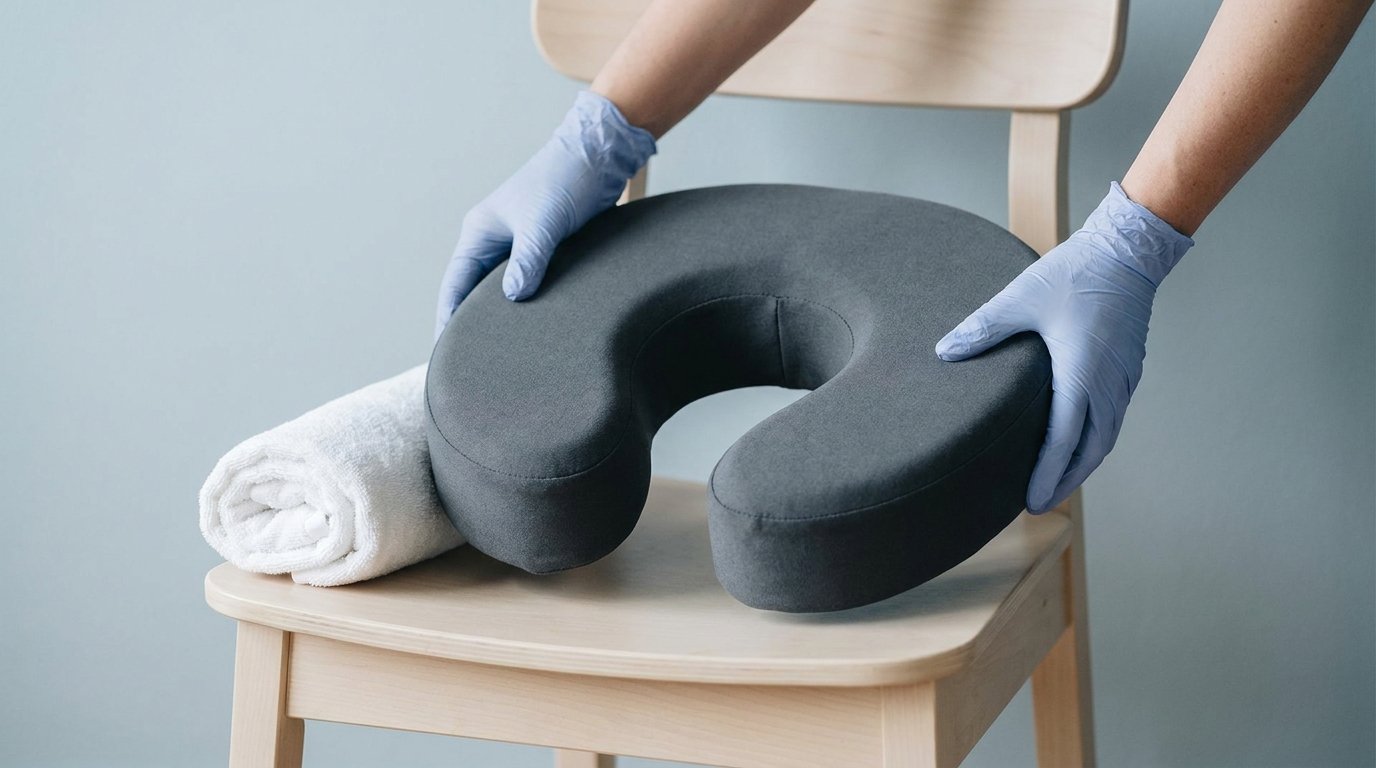
Implant recovery can feel more intense in the buttock area itself. Sitting, lying on your back, climbing stairs, and moving from standing to sitting can all be more uncomfortable at first because the tissues have been surgically opened to place the implant. Walking is encouraged early, but movement often feels tighter than patients expect for the first days and weeks.
The NHS advises that recovery after cosmetic surgery varies by procedure and person, and that you need realistic expectations about time off work, help at home, and limits on activity. ASPS patient guidance similarly stresses that recovery instructions matter as much as the operation itself. In real terms, both operations need planning. You may need help with luggage, sleeping position, getting up from bed, and avoiding long periods of sitting.
For medical travellers, this affects logistics as much as comfort. You need to stay long enough for early checks, dressing review, and surgeon clearance before flying home. That stay is often shaped by drain use, mobility, swelling, and how your wounds are healing rather than by a fixed calendar promise.
If you want a fuller overview of the fat-based option itself, the clinic’s page on Brazilian butt lift surgery explains the procedure pathway, while buttock augmentation with implants covers the implant route. Those pages are useful for background, but your own recovery plan depends on your anatomy and surgical plan.
How do surgeons decide whether you are a good candidate?
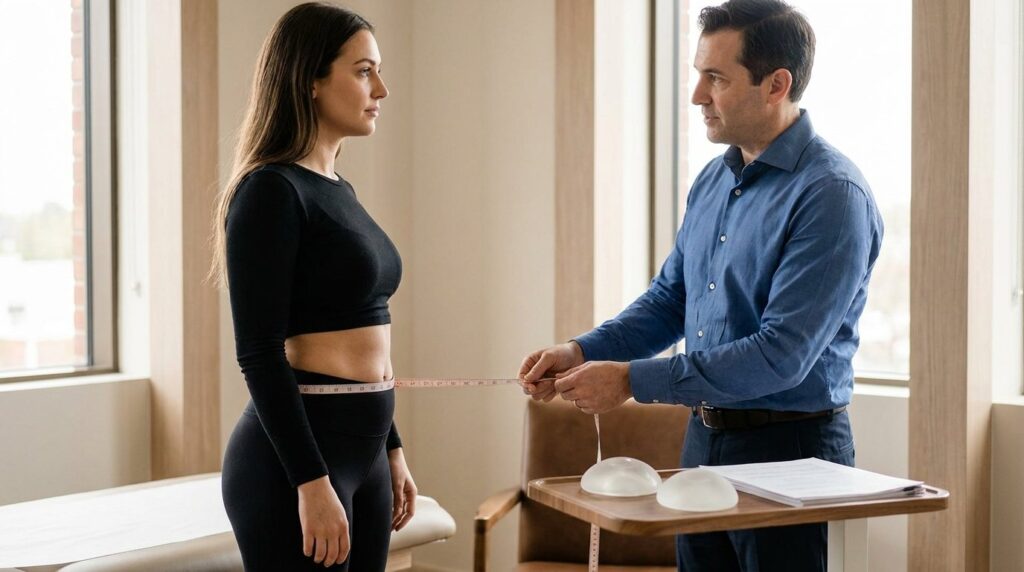
The first question is simple: do you have enough donor fat for transfer? If the answer is no, implants or a combined plan become more likely. But candidacy goes beyond that. Skin quality, hip shape, pelvic width, scar tolerance, weight stability, smoking status, and previous surgery all matter.
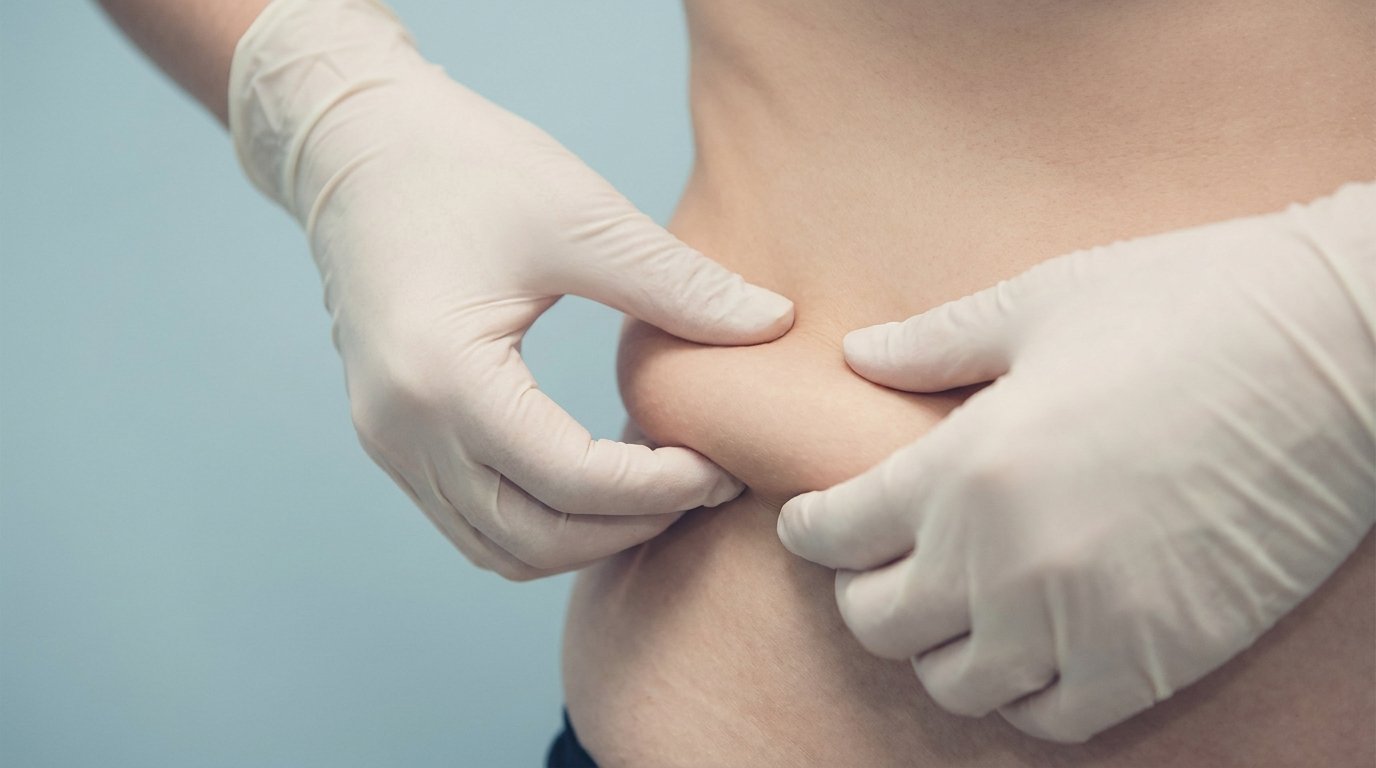
Patients sometimes assume they can choose only by looking at before-and-after photos. In practice, surgeons look at structure. A patient with flat upper buttocks but decent donor fat may do well with fat transfer alone. A very slim patient wanting significant projection may not reach that goal with fat, even if small-volume transfer is technically possible. According to the 2023 Clinics in Plastic Surgery article on combining fat and implants, there are cases where blending both techniques produces a more balanced shape than either one alone.
Your health matters too. The NHS advises that smoking increases the risk of surgical complications and poor healing, and this is especially relevant in procedures that rely on tissue healing and blood supply. Weight swings after surgery can also affect fat-transfer results because grafted fat behaves like fat elsewhere in the body.
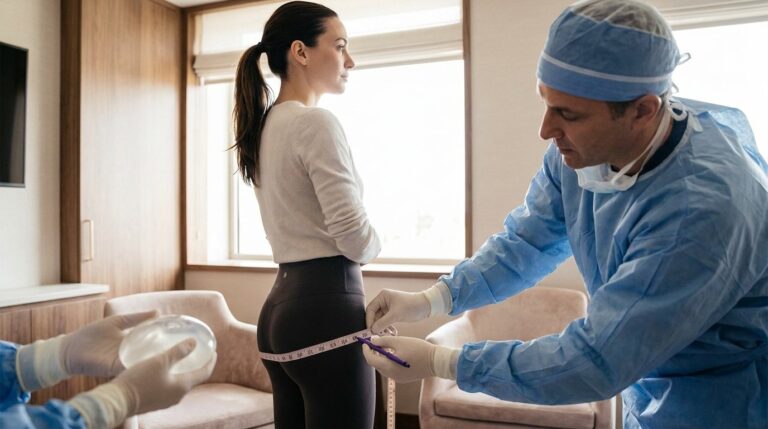
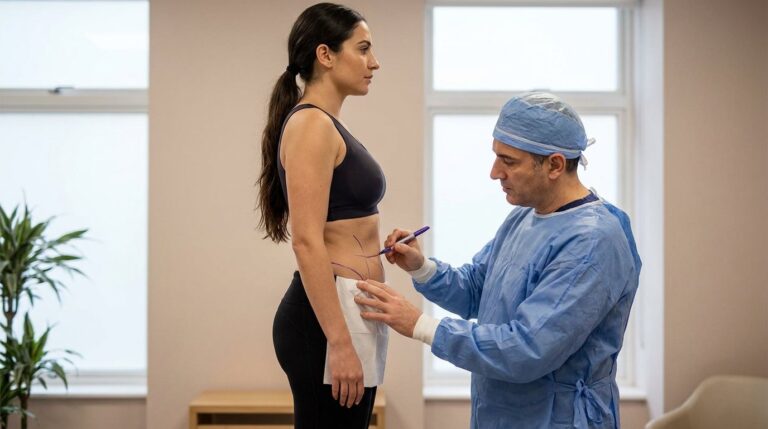
A careful consultation should include an exam, a discussion of your goals from different angles, and a frank conversation about what is not realistic. If a clinic offers a recommendation without asking about your medical history, donor fat, previous operations, or recovery circumstances, that is not a good sign.
- ✓Enough donor fat usually points toward fat transfer as a possible option.
- ✓Very low body fat often makes implants or a combined approach more realistic.
- ✓Smoking, unstable weight, and uncontrolled medical conditions can affect safety and healing.
- ✓Previous scars, asymmetry, and skin quality may change which method is technically better.
What affects the cost and what is usually included in a quote?
Cost is not just about the operation name. Fat transfer pricing is usually influenced by how many donor areas need liposuction, how complex the contouring plan is, and how long the surgery is likely to take. Implant pricing is usually shaped by implant choice, operating time, surgical complexity, and the level of aftercare needed.
For international patients, the quote may also reflect practical items beyond the surgeon’s fee. These can include hospital or operating theatre charges, anaesthesia, garments, transfers, interpreter support, medicines, follow-up visits, and whether overnight nursing or hotel planning is part of the package. A personalised quote is normally confirmed after consultation because anatomy and goals change the plan.
The better question is not “Which one is cheaper?” but “What am I paying for, and what happens if I need extra follow-up?” Ask whether revision surgery, extra nights, blood tests, replacement garments, or treatment for complications would be charged separately. That helps you compare options fairly instead of focusing on a single headline number.
How long should medical tourists stay and how should they choose a surgeon?
For buttock augmentation, rushing home too early is unwise. Both procedures need early review, and both can make travel awkward at first because of swelling, sitting limits, and the simple effort of moving through an airport. The right stay length depends on your healing, not on marketing language.
When choosing a surgeon, look for training and credentials you can verify. EBOPRAS is a recognised European board body in plastic surgery, and national professional standards also matter. Ask whether the surgeon performs buttock augmentation regularly, which technique they use most often, and why they think it suits your body. You should also ask where the operation takes place, who provides anaesthesia, and how aftercare is handled if you develop a problem once you are back home.
A trustworthy consultation usually includes limits as well as possibilities. Good clinics talk clearly about scars, the possibility of revision, temporary asymmetry during healing, and what support garments or sitting aids may be needed. They do not describe the procedure as easy, risk-free, or suitable for everyone.
If you want to check professional background or arrange a formal assessment, you can review the clinic’s surgeon information or request an evaluation through the consultation page. Keep the focus on credentials, planning, and informed consent rather than on sales language.
This article is for informational purposes only and does not constitute medical advice. Always consult a qualified surgeon for personalised guidance.
The surgeon explains why one method suits your anatomy, discusses risks in detail, and gives realistic recovery guidance without pressure.
You are promised dramatic results without an examination, safety questions are answered vaguely, or the clinic avoids discussing revision and aftercare.
Frequently Asked Questions
References
- 📎Trends in Surgical and Nonsurgical Aesthetic Procedures: A 14-Year Analysis of the International Society of Aesthetic Plastic Surgery-ISAPS — Aesthetic Plastic Surgery, 2024
- 📎Gluteoplasty — Aesthetic Surgery Journal, 2003
- 📎Safety in Gluteal Augmentation — Clinics in Plastic Surgery, 2023
- 📎Fat grafting in aesthetics — Clinical Dermatology, 2022
- 📎Combining Fat and Implants for Gluteal Augmentation — Clinics in Plastic Surgery, 2023
- 📎ASPS Cosmetic Procedures
- 📎ISAPS Global Statistics
- 📎NHS Cosmetic Procedures
- 📎EBOPRAS
Related Articles
You Might Also Like


Related articles

Our specialists
 Clineca SpecialistErkan PinegözPlastic & Reconstructive Surgery
 Clineca SpecialistHakan AktaşPlastic & Reconstructive Surgery
 Clineca SpecialistOrkun UzuneyüpoğluPlastic & Reconstructive Surgery
 Clineca SpecialistSalim İskenderPlastic & Reconstructive Surgery
 Clineca SpecialistEngin SelamioğluPlastic & Reconstructive Surgery
 Clineca SpecialistCem AydınPlastic & Reconstructive Surgery
 Clineca SpecialistAlperen ÖnalEar, Nose & Throat (ENT)