
Have a question about Buttock Augmentation?
In this article
- What is usually the best technique if you want more volume but do not have much donor fat?
- Why is a BBL not always realistic when donor fat is limited?
- When are buttock implants the better choice, and when are they not?
- Is buttock augmentation safe?
- What is recovery like after implants, BBL, or a hybrid approach?
- How much does buttock augmentation cost, and what affects the quote?
- How do you decide between implants, BBL and a hybrid plan?
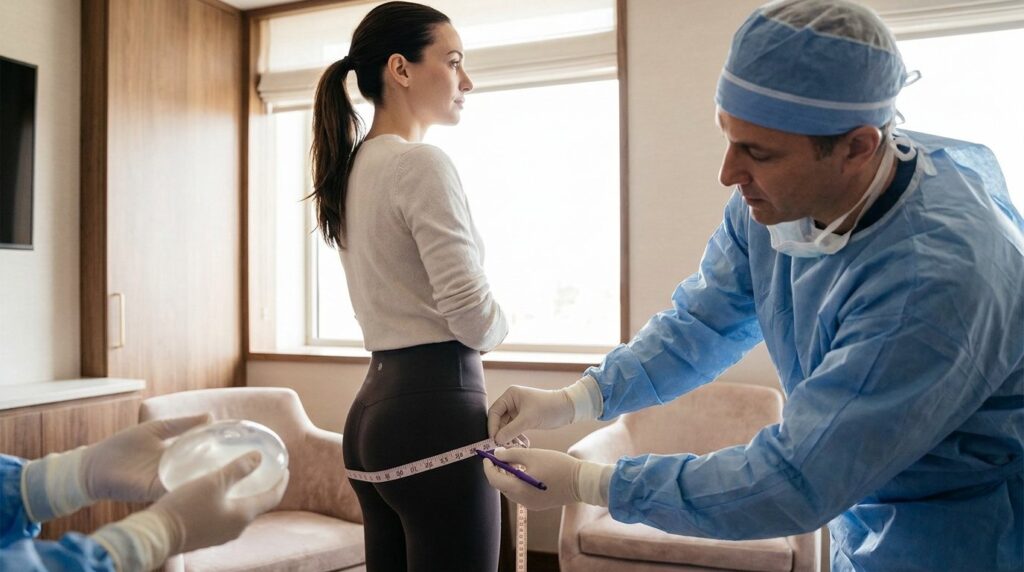
If you are asking which technique is used for buttock augmentation if I want more volume but have limited donor fat, the short answer is that buttock implants are often the more realistic option when a larger size increase is the goal and there is not enough fat for a Brazilian butt lift (BBL). A hybrid approach can help some patients, but only if there is enough safe, usable fat to transfer; the right choice also depends on safety, recovery time, body shape, and whether your tissues can support an implant.
What is usually the best technique if you want more volume but do not have much donor fat?
For this specific question, the decision is usually simpler than many people expect. A BBL, which stands for Brazilian butt lift, uses your own fat. That means the final result is limited by how much extra fat your body actually has in areas such as the abdomen, flanks, back, or thighs. If you are naturally slim, very athletic, or have had prior liposuction that left little usable fat, a fat-only BBL may not deliver the volume you want.
In those cases, buttock augmentation with implants is often the more realistic technique. Implants do not depend on donor fat, so they can create projection even in thinner patients. This is why surgeons often discuss implants when the goal is “more volume” rather than only subtle shaping.
A hybrid approach means a small or moderate implant is used for core projection, then fat transfer is added around it to soften edges, improve contour, and make the result look more natural. That can work well, but only when there is still enough fat to harvest safely. It is not a magic fix for someone with almost no donor fat.
The important point is that “limited donor fat” does not automatically mean implants for everyone. The surgeon also has to assess your skin quality, how much natural tissue covers the implant area, whether you have sagging, and whether you can accept the specific recovery rules that come with implants. If you want a firmer answer before consultation, this is the practical summary: for a clearly larger buttock in a slim patient, implants are usually the more dependable option; for a softer, smaller change, fat transfer may still be possible; for patients in between, hybrid augmentation may be worth discussing.
⚠️ A bigger result is not always safely achievable with fat alone Trying to force a large-volume BBL in a patient with very little donor fat can lead to poor contouring elsewhere, small graft take, or pressure to inject in unsafe ways. The safest plan is not always the biggest one.
Slim patients with limited donor fat who want a noticeable increase in projection and understand the longer sitting restrictions and implant-specific risks.
Patients with enough extra body fat who want a softer feel, contouring from liposuction, and a more moderate volume increase.
Patients who have some donor fat, but not enough for the full size increase they want, and who need both shape refinement and stronger projection.
When donor fat is limited, buttock implants are often the main surgical option for patients who want a clear increase in projection and fullness. Fat transfer alone may not create enough volume, and a hybrid plan only works when there is still enough harvestable fat to transfer safely.
Why is a BBL not always realistic when donor fat is limited?
A lot of patients hear “BBL” and picture dramatic before-and-after photos. In practice, what is possible depends heavily on your starting body shape. Surgeons need enough fat not just to collect, but to collect safely and without making the waist, hips, or thighs look over-suctioned.
Then there is another limit: not every transferred fat cell survives. Some of the grafted fat establishes a blood supply and stays, and some is naturally reabsorbed during healing. That is why surgeons plan carefully and why a slim patient may simply not be able to reach a large-volume result with fat transfer alone.
This also links directly to safety. The major safety concern in BBL surgery is fat embolism, which can happen if fat is injected into or below the gluteal muscle and enters large veins. The widely cited multi-society safety statements from plastic surgery groups, including guidance supported by the American Society of Plastic Surgeons (ASPS), stress that fat should be placed in the subcutaneous plane above the muscle, not deep in the muscle. Ultrasound guidance is increasingly emphasised because it helps confirm where the cannula tip is during injection.
So when a patient has very little donor fat, a careful surgeon should not “make up for it” by using riskier injection habits or promising oversized results. A medically grounded plan respects both the limits of your body and the current safety principles around modern BBL surgery.
If you want to understand the procedure options in more detail, the clinic’s page on Brazilian butt lift surgery explains the fat-transfer approach, while buttock augmentation with implants covers the implant route.
🚨 Specific BBL safety point Current multi-society guidance emphasises that gluteal fat should be injected into the tissue above the muscle, not into the muscle, because deep injection is linked to fatal fat embolism risk.
A BBL only works if there is enough fat to remove, purify and inject while still preserving smooth body contours in the donor areas. Limited donor fat restricts the amount available, and some of the transferred fat will not survive, so the achievable volume may be modest.
When are buttock implants the better choice, and when are they not?
Implants are most useful when the main problem is not enough volume source rather than poor contour alone. If you are slim and want a fuller, rounder buttock shape, an implant can create structure that fat transfer cannot reliably produce on its own.
That said, implants are not a simple substitute for every patient. A surgeon has to assess whether your tissues can cover the implant well enough. Very thin soft tissue over the buttocks can make edges more visible or make the result feel less natural. Existing asymmetry, prior surgery, scarring, or skin problems in the area also matter.
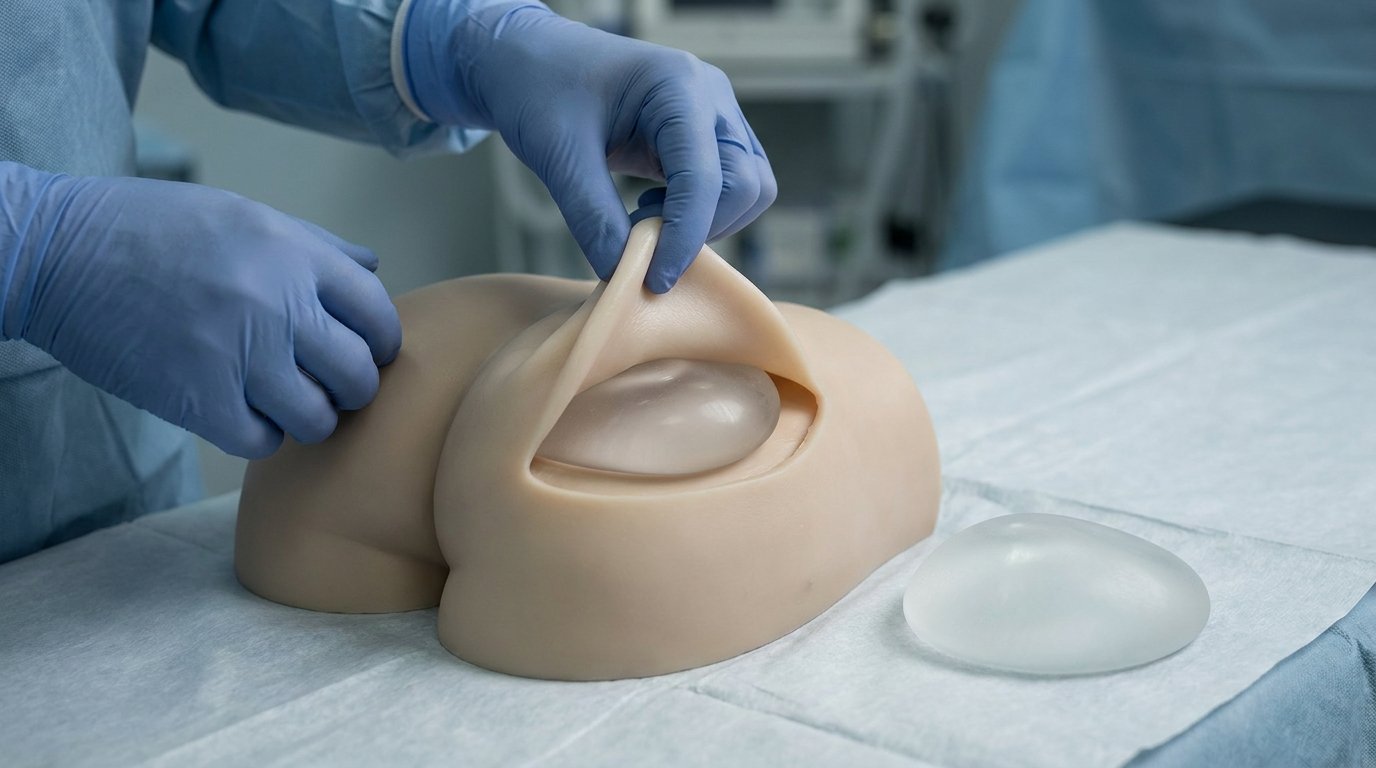
There are also clearer medical limits. Implant surgery is usually a poor choice if you have an active skin infection, uncontrolled diabetes, serious smoking-related healing risk, or conditions that raise the chance of wound breakdown. If you already have marked sagging, skin excess, or droop rather than just low volume, you may need a buttock lift with augmentation instead of volume surgery alone. In some cases, combining lift and augmentation gives a better shape than adding size to sagging tissue.
Implants also come with their own specific risks. These include fluid collection, wound separation, implant shifting, visible asymmetry, chronic discomfort when sitting, and infection that may require implant removal. Unlike fat transfer, implants are foreign devices, so patients need to be comfortable with the possibility of revision surgery later.
A grounded consultation should therefore cover not only what can add volume, but what your anatomy can support long term.
- ✓Implants may suit you if: you have limited donor fat, want a stronger increase in projection, and have enough tissue quality to cover an implant.
- ✓Fat transfer may suit you if: you have enough harvestable fat, want a softer look and feel, and are happy with a more moderate volume increase.
- ✓Hybrid may suit you if: you have some usable fat but not enough for your full goal, and your surgeon thinks fat can safely refine the implant result.
- ✓A lift may be needed if: skin laxity or drooping is a major part of the problem, because volume alone will not correct a low or sagging buttock shape.
Implants are usually better for thin patients who want stronger projection than fat alone can provide. They are less suitable if you have active infection, poor wound healing, major uncontrolled medical problems, significant untreated sagging, or very little soft-tissue coverage over the implant area.
Is buttock augmentation safe?
This is where the detail matters. BBL surgery and implant augmentation have different risk profiles, and neither should be described as “safe” in a vague, blanket way.
For a BBL, the critical issue is injection plane. ASPS-supported safety recommendations and published expert consensus have stressed that fat should stay in the tissue above the gluteal muscle because deep injection has been associated with fatal pulmonary fat embolism. Many specialists now also support real-time ultrasound guidance as an added safety measure during fat placement.
For implants, the biggest concerns are different. The immediate life-threatening embolism issue linked to deep fat injection is not the main problem, but implants carry a higher risk of local complications such as infection, wound breakdown, implant malposition, and need for revision. Recovery can also be more uncomfortable, especially in the first weeks.
The NHS notes that cosmetic surgery carries risks such as bleeding, infection, scarring, anaesthetic complications, and the possibility of further surgery. That broad advice applies here. A realistic surgeon should explain both the serious but technique-dependent risk in BBL and the more mechanical, wound-related risks with implants.
How to choose a safer route
Look for a surgeon who performs this operation regularly, discusses whether you are a poor candidate for a high-volume BBL, and can explain exactly how they approach gluteal fat placement or implant pocket creation. The clinic setting should be properly accredited, and you should be told what happens if you develop a complication after returning home.
Medical tourism adds another layer. Ask how many days of local follow-up are built into the plan, what help is available if you have swelling, drainage, or wound issues, and whether remote follow-up is organised once you leave Turkey.
Red flags to take seriously
If a provider promises a dramatic BBL despite almost no donor fat, avoids discussing embolism risk, or brushes off implant complications as rare and simple, that is not reassuring. The safest consultation is usually the one that includes limits and trade-offs, not just ideal results.
⚠️ Safety depends on the exact technique A modern, safety-focused BBL plan should include discussion of superficial fat placement and whether ultrasound guidance is used. If that conversation never happens, ask directly.
You are told that a very large BBL is possible despite minimal donor fat, with no clear explanation of injection plane or safety protocol.
Your surgeon explains why your anatomy may limit fat transfer volume, discusses implant-specific risks plainly, and sets out a realistic recovery plan.
Buttock augmentation can be performed more safely when the method matches the patient, the surgeon follows modern BBL injection safety principles, and the operation is done in an accredited setting. Safety is not just about the procedure name; it depends on technique, anatomy, aftercare, and honest patient selection.
What is recovery like after implants, BBL, or a hybrid approach?
Recovery is one of the biggest practical differences between techniques. With a BBL, you are recovering from both liposuction and fat transfer. That means soreness in the donor areas, swelling, bruising, and a period where direct pressure on the buttocks is limited because the transferred fat needs time to settle.
With implants, the discomfort often feels deeper and more movement-related, especially when changing position, climbing stairs, or sitting. The implant pocket and incision need protection while tissues heal. If you also had a lift, recovery is usually more involved again because the skin closure is under more tension.
A hybrid procedure often brings the longest list of restrictions because you are healing from liposuction, fat transfer, and implant placement together. It can be an excellent shape solution in the right patient, but it is not the “easy middle ground.”
For medical tourists, the key question is not only how long swelling lasts, but how long you should stay locally for checks, dressings, and early complication monitoring. A short trip may sound attractive, but buttock surgery often needs more structured follow-up than patients expect.
📋 How to sit after buttock augmentation The exact advice depends on your surgeon’s technique, but many patients are told to minimise direct pressure on the buttocks early on and use modified sitting positions or support cushions when permitted.
Most patients need an initial period of reduced pressure on the buttocks, limited activity, and close wound care. Implant recovery is often more uncomfortable than fat transfer alone, while a hybrid procedure combines elements of both. Travel plans need to allow time for early follow-up before flying home.
How much does buttock augmentation cost, and what affects the quote?
If you are comparing how much for a buttock augmentation or how much does buttock augmentation cost, the biggest point to understand is that implants, BBL, and hybrid surgery are priced differently because they involve different operating time, equipment, and aftercare needs.
A fat-transfer BBL quote is affected by how many areas need liposuction, how much contouring is planned, and how complex the transfer is. Implant augmentation is influenced by the implant plan, surgical pocket creation, and the level of post-operative monitoring needed. A combined lift with augmentation is usually more complex again because it is doing more than adding volume.
For international patients, the quote should also make clear what is and is not included. Some plans include accommodation, airport transfers, compression garments, medicines, and follow-up visits, while others separate those costs out. The most useful quote is not the shortest one; it is the one you can actually understand.
If you are still comparing procedure types, you may find it useful to request a consultation through the clinic’s online consultation page so a surgeon can assess whether limited donor fat makes implants or hybrid augmentation more appropriate.
The cost depends on the technique used, the complexity of your anatomy, whether implants, fat transfer or a lift are involved, and what the package includes. A proper quote should explain surgery, hospital care, anaesthesia, garments, follow-up, and any travel-related logistics.
How do you decide between implants, BBL and a hybrid plan?
The cleanest way to decide is to separate your goal into shape, size, and starting anatomy.
If your main goal is a noticeable increase in projection and you simply do not have enough spare fat, implants are usually the more dependable route. If your main goal is a softer contour change and you do have enough fat in the waist, abdomen, back, or thighs, BBL surgery may give a more natural-feeling result while also improving those donor areas.
A hybrid plan is realistic only when all of the following are true: you have at least some usable donor fat, your tissues can cover an implant properly, and your surgeon thinks added fat will improve the contour rather than just add swelling and uncertainty. It is not realistic when donor fat is extremely limited, when tissue quality is poor, or when you want a dramatic result without accepting implant-specific risks.
If there is significant sagging, the conversation changes again. Volume alone may not lift the buttock, so a buttock lift with augmentation may be more appropriate than either fat transfer or implants alone.
The best consultation does not start with “Which procedure is trending?” It starts with “What result is anatomically achievable, and at what safety cost?” That is the question that leads to the right plan.
The decision comes down to three things: your available donor fat, the amount of extra projection you want, and how much risk and recovery burden you are willing to accept. Thin patients seeking a larger size increase usually lean toward implants; moderate goals with adequate fat lean toward BBL.
Frequently Asked Questions
References
- 📎ASPS cosmetic procedures
- 📎NHS cosmetic procedures
- 📎PubMed search: gluteal fat grafting safety consensus statement ultrasound
- 📎PubMed search: buttock implants complications augmentation gluteal implants

You Might Also Like



Related articles


Our specialists
 Clineca SpecialistErkan PinegözPlastic & Reconstructive Surgery
 Clineca SpecialistHakan AktaşPlastic & Reconstructive Surgery
 Clineca SpecialistOrkun UzuneyüpoğluPlastic & Reconstructive Surgery
 Clineca SpecialistSalim İskenderPlastic & Reconstructive Surgery
 Clineca SpecialistEngin SelamioğluPlastic & Reconstructive Surgery
 Clineca SpecialistCem AydınPlastic & Reconstructive Surgery
 Clineca SpecialistAlperen ÖnalEar, Nose & Throat (ENT)