
Have a question about BBL?
In this article
- A quick week-by-week snapshot
- What does the first week after a BBL usually feel like?
- How do weeks 2 to 4 usually progress?
- When can you sit, sleep normally, exercise, and fly?
- What swelling, bruising, numbness, and shape changes are normal?
- Which symptoms are red flags during BBL recovery?
- How long should you stay, and what should a recovery plan include?
If you are searching for what to expect during BBL recovery week by week, the hardest part is usually not the surgery itself but understanding how daily life changes afterward. A Brazilian butt lift combines liposuction with fat transfer, so recovery is really two recoveries happening at once: the areas where fat was removed and the buttocks where fat was placed.
A quick week-by-week snapshot
Recovery after a BBL is usually most intense in the first two weeks, then gradually becomes more manageable. In broad terms, week 1 is about swelling, soreness, drainage, careful walking, and protecting the transferred fat by avoiding direct pressure; weeks 2 to 3 are when bruising often starts to fade and movement feels easier, but sitting limits usually still matter; weeks 4 to 6 are when many people feel more normal day to day, although swelling can still come and go; and the shape continues to settle over the following months.
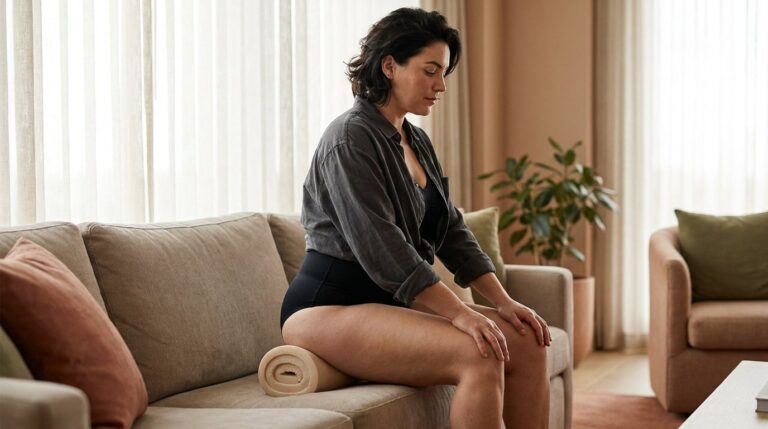
Most surgeons ask patients to avoid sitting directly on the buttocks early on, or to keep it very limited and carefully supported if sitting is unavoidable. Return to desk work often depends on how well you can move, whether your job allows pressure relief, and how your own surgeon wants you to protect the fat graft. Swelling lasts longer than many patients expect, and the final result is not judged in the first few weeks.
The NHS advises that cosmetic surgery recovery can take time and that patients need clear aftercare instructions and follow-up. For BBL specifically, published safety guidance in Aesthetic Surgery Journal and Plastic and Reconstructive Surgery has also stressed that this is a procedure where technique and aftercare matter, especially in the early healing period.
What does the first week after a BBL usually feel like?
The first few days are usually the toughest. You can expect soreness in the liposuction areas, tightness from swelling, and a heavy or tender feeling when you move. Many patients say the buttocks are less painful than the areas where fat was removed, especially the lower back, waist, abdomen, or thighs.
Swelling starts early, and so does bruising. Some fluid leakage from the small incision sites can happen in the first day or two, especially if tumescent fluid was used during liposuction. That can look alarming if you are not prepared for it, but mild drainage is often expected. What matters is whether it stays within the range your surgical team described.
Walking usually starts early, often the same day or the next day, but only in short, gentle bursts. This is not exercise. It is mainly to support circulation and reduce the risk of complications from staying still too long. The NHS and Mayo Clinic both emphasise the importance of early mobilisation after surgery when advised by the treating team.
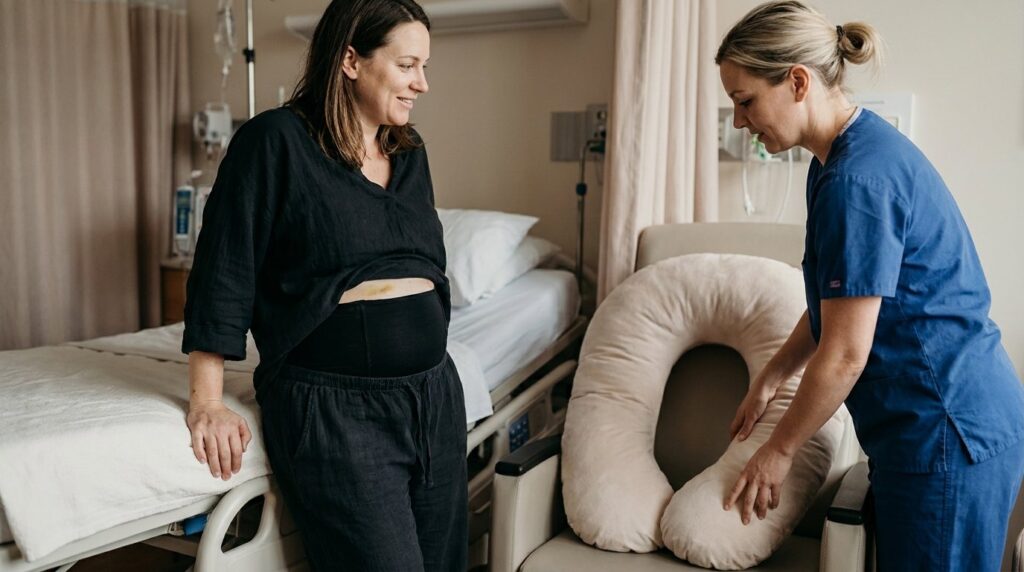
Sleeping and resting take planning. Most patients are told to avoid lying flat on the buttocks and to rest on the stomach or side instead. Sitting is often restricted or modified during this stage because direct pressure may affect the newly transferred fat. Different surgeons use slightly different protocols, so the safest rule is to follow your own written aftercare rather than another person’s timeline online.
⚠️ The first week is not the time to judge your result A very round look early on is often partly swelling. A smaller look later does not always mean something has gone wrong. Some of the transferred fat does not survive, and swelling changes quickly in the first weeks.
How do weeks 2 to 4 usually progress?
By the second week, many people feel more mobile and less dependent on help, but that does not mean recovery is finished. Bruising often starts to settle and everyday movement becomes easier, yet swelling can still be obvious, especially by the end of the day. The liposuction areas may feel firm, numb, itchy, or lumpy as healing continues.
This is also the phase when patients can become overconfident. You may feel well enough to do more, but the tissues are still healing and the fat transfer is still in a vulnerable stage. If your surgeon has limited sitting time, gym activity, lifting, or travel, this is usually the point where following those restrictions matters most because you feel better before your body is fully ready.
Return to work often happens somewhere in this window for patients with light, non-physical jobs, but there is no fixed rule. A desk job is not automatically simple after BBL because sitting itself can be the issue. If work requires long meetings, commuting, or sitting continuously, many patients need adjustments.
By weeks 3 and 4, discomfort is often much lower, but swelling can still fluctuate. One side may settle faster than the other. The shape can look high, firm, or uneven before it softens. That can be normal in early recovery, provided your surgeon has assessed you and there are no warning signs such as worsening pain, spreading redness, sudden one-sided swelling, or fever.
- →If you work at a desk, think about pressure relief before you return, not on the morning you go back.
- →If you are travelling home during this phase, plan breaks to stand and walk as advised by your surgical team.
- →If swelling seems worse at night than in the morning, that is often part of normal fluid shift during healing.
- →If one area feels firmer than expected, ask your surgeon before trying massage or self-treatment.
When can you sit, sleep normally, exercise, and fly?
This is where recovery advice varies most between surgeons, because fat transfer technique, volume, and the areas treated with liposuction all affect aftercare. Even so, there are broad patterns that most patients see.
Sitting is usually restricted at first, or kept very brief with careful positioning if it cannot be avoided. The purpose is to reduce direct pressure on the grafted area during the early healing phase. Some surgeons allow short, essential sitting sooner than others, often with modified posture or a support strategy, while others prefer stricter avoidance early on. There is not one universal day that suits every patient.
Sleep is often easier once you can turn more comfortably without pulling on sore liposuction areas. Many patients remain on their side or stomach for a while before returning to their usual sleeping position. Exercise returns in stages. Gentle walking comes first, then light activity, and only later more intense exercise once swelling, tenderness, and wound healing allow it.
Flying after BBL needs individual advice. The concern is not only comfort or sitting, but also the general risk that comes with surgery and travel close together, including reduced mobility and venous thromboembolism risk. The NHS warns that long-distance travel after surgery can increase clot risk, and surgeons commonly advise a recovery stay long enough for early checks and for safer mobilisation before travel. If a patient is recovering in Türkiye, it is sensible to ask for a written travel plan and clear guidance on how often to stand, walk, hydrate, and manage compression during the journey.
For general background on the procedure itself, readers sometimes find it helpful to review a plain overview of a Brazilian butt lift procedure, but recovery instructions should always come from the operating surgeon.
📋 Travel planning matters after BBL Do not rely on a general internet rule for flying. Ask the treating surgeon when travel is appropriate for you, what position changes to use, and what symptoms should stop you from travelling.
What swelling, bruising, numbness, and shape changes are normal?
Swelling is the main reason BBL recovery feels unpredictable. It affects both the liposuction areas and the buttocks, and it rarely fades in a smooth straight line. You may wake up looking less swollen, then feel tighter again later in the day. That pattern can continue for weeks.
Bruising usually improves before swelling fully settles. Numb patches, itching, tingling, firmness, and a slightly uneven feel can all happen during normal healing. Liposuction areas in particular can feel hard or woody before they soften. Compression garments are often used for the liposuction zones because they help support tissues and manage swelling, but patients should use them exactly as directed. Compression over grafted areas may be handled differently from compression over donor areas, so this is one more reason to follow your own surgeon’s instructions rather than generic advice online.
Shape changes can be emotionally difficult. In the first weeks, the buttocks may sit higher, feel firmer, or look more dramatic than the eventual result. Later, when swelling reduces and some transferred fat does not persist, patients sometimes worry they are ‘losing everything’. That is usually too early a conclusion. Published discussions in Aesthetic Surgery Journal and Plastic and Reconstructive Surgery note that fat graft take and contour settling evolve over time, not in a few days.
A practical mindset helps here: photograph progress only at sensible intervals, wear loose clothing, and expect recovery to be uneven rather than perfectly linear.
Day-to-day changes in swelling, firmness in liposuction areas, mild numbness, and a shape that looks different from week to week.
Swelling that suddenly worsens, severe asymmetry that appears quickly, hot red skin, worsening pain, or discharge with a bad smell.
Which symptoms are red flags during BBL recovery?
Most BBL recoveries involve swelling, bruising, and discomfort, but some symptoms should never be watched casually at home. Fever, increasing redness, rapidly worsening pain, shortness of breath, chest pain, calf pain or swelling, fainting, or a sudden feeling that something is very wrong need urgent medical advice. These can point to infection, a blood clot, or another serious complication.
BBL also has procedure-specific safety concerns. Multi-society safety statements, including those discussed in Aesthetic Surgery Journal and Plastic and Reconstructive Surgery, have stressed the importance of surgical technique because fat embolism has been a known serious risk in gluteal fat grafting. That risk relates to how the procedure is performed rather than something a patient can diagnose at home, but it is one reason sudden breathing symptoms after surgery should be treated as urgent.
Incision problems also matter. A little seepage early on can be expected, but increasing drainage, foul smell, opening wounds, or spreading warmth should be checked. If you are recovering away from home, make sure you know exactly who to call, where to go out of hours, and how to send wound photos securely if your team requests them.
If you have not yet had surgery and are still preparing, it is reasonable to ask about surgeon credentials and training through pages such as the clinic’s doctor information page or a formal consultation request, but those decisions should support informed consent rather than replace independent checks of qualifications and hospital arrangements.
🚨 Get urgent help for breathing or clot symptoms Shortness of breath, chest pain, sudden dizziness, or a swollen painful calf after surgery are not routine recovery symptoms.
How long should you stay, and what should a recovery plan include?
A sensible recovery plan is not only about the operation day. It includes enough time nearby for early review, help with moving around, and a realistic plan for the journey home. Because BBL recovery affects sitting, walking, dressing, sleep, and travel, patients should not treat it like a weekend procedure with no backup.
If you are travelling for surgery, ask in advance how long the treating team expects you to remain locally before flying, what follow-up is scheduled, who deals with problems outside office hours, and whether garment use, wound care, and mobility advice are written down clearly. The length of stay varies by patient and by procedure details, so this should be individual, not guessed from social media.
Cost is worth understanding only in that practical sense: what is included in the quote, whether follow-up visits, garments, medications, accommodation support, or airport transfers are separate, and what happens if extra reviews are needed. A personalised price is normally confirmed after consultation, but for recovery planning, the more important question is whether your quote matches the level of aftercare you may realistically need.
What usually helps most is simple: a pressure-aware seating plan, loose clothes, someone to assist you at least early on, easy meals, enough time off work, and direct contact details for urgent concerns.
Frequently Asked Questions
References
- 📎NHS: Cosmetic procedures
- 📎Mayo Clinic: Tests and procedures
- 📎PubMed search: gluteal fat grafting safety Aesthetic Surgery Journal Plastic and Reconstructive Surgery
- 📎PubMed search: liposuction compression garments recovery postoperative swelling
Related Articles
You Might Also Like


Related articles
Our specialists
 Clineca SpecialistErkan PinegözPlastic & Reconstructive Surgery
 Clineca SpecialistHakan AktaşPlastic & Reconstructive Surgery
 Clineca SpecialistOrkun UzuneyüpoğluPlastic & Reconstructive Surgery
 Clineca SpecialistSalim İskenderPlastic & Reconstructive Surgery
 Clineca SpecialistEngin SelamioğluPlastic & Reconstructive Surgery
 Clineca SpecialistCem AydınPlastic & Reconstructive Surgery
 Clineca SpecialistAlperen ÖnalEar, Nose & Throat (ENT)