Have a question about BBL?
In this article
- What a skinny BBL actually means
- How much fat do you really need for a BBL?
- Options when donor fat is limited
- What drives the cost of a skinny BBL in Turkey
- Safety: the part that deserves most of your attention
- Recovery and how long to stay in Turkey
- Aftercare once you fly home
- Choosing a clinic and surgeon for a skinny BBL
Slim patients are often told, usually online rather than in a clinic, that they simply do not have enough fat for a Brazilian butt lift. That is sometimes true and often not, and the difference comes down to where the fat sits rather than how much you weigh. This is the gap the "skinny BBL" is meant to fill, and it is worth understanding what the term really describes before you request quotes from clinics in Turkey.
What a skinny BBL actually means
A skinny BBL in Turkey is the same operation as a standard Brazilian butt lift, planned for a lean body. Fat is removed by liposuction from several areas at once, cleaned, and then injected into the buttocks and hips. The difference is the goal: instead of maximum volume, the surgeon is working for shape, projection and a tighter waist, because the available fat is limited from the start.
In practical terms, most surgeons want enough fat to harvest somewhere in the region of a body mass index of about 20 to 22 as a working floor, although this varies between surgeons and body types. A very lean patient usually ends up with modest volumes transferred per side rather than the large grafts you see in heavier patients. Most international patients plan to stay in Turkey for around seven to ten days, since the liposuction component is wider than people expect.
The honest framing is this: a skinny BBL changes your silhouette more than it changes your size. Narrowing the waist and flanks while adding a controlled amount of fat to the upper buttock and hip dip creates the curve. Many patients looking at before-and-after photos of slim cases are actually reacting to the waist, not the volume.
Why the term exists at all
“Skinny BBL” is marketing language, not a separate surgical technique. There is no distinct instrument, incision or protocol that makes it its own operation. What changes is planning: more donor sites, more careful fat handling, more conservative volume expectations and often a more aggressive approach to contouring the back, flanks and inner thighs. If a clinic talks about it as a special proprietary procedure, treat that as a sales signal rather than a clinical one.
How much fat do you really need for a BBL?
There is no single threshold, because fat distribution matters more than total body weight. Two people at the same weight and height can have completely different amounts of harvestable fat. Someone who stores fat in the lower back, flanks and inner thighs may be a reasonable candidate at a low weight; someone very evenly lean may not be, even at a slightly higher weight.
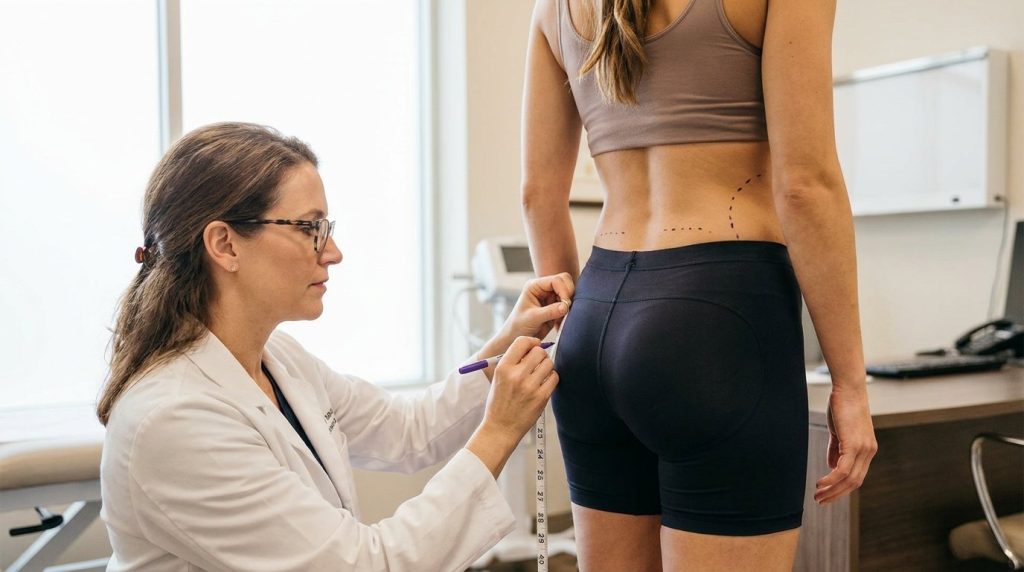
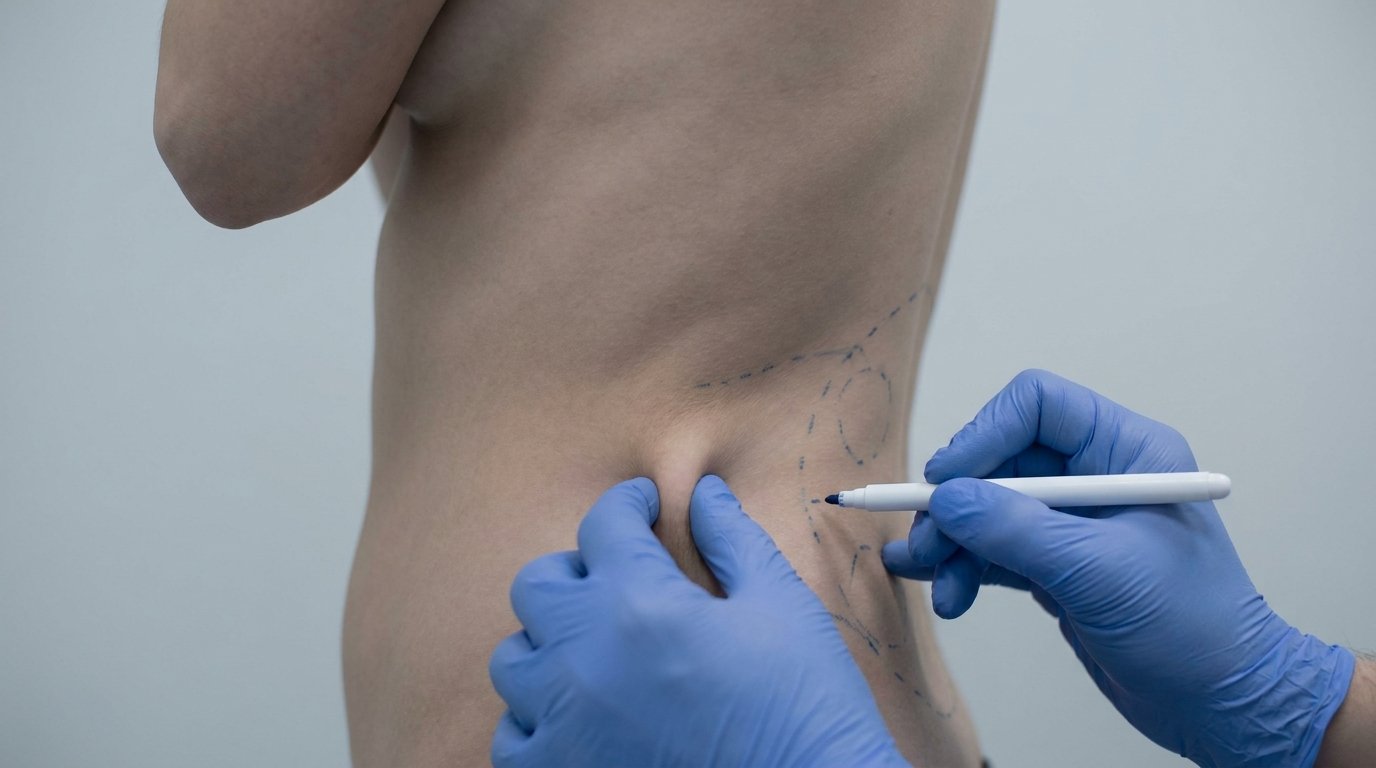
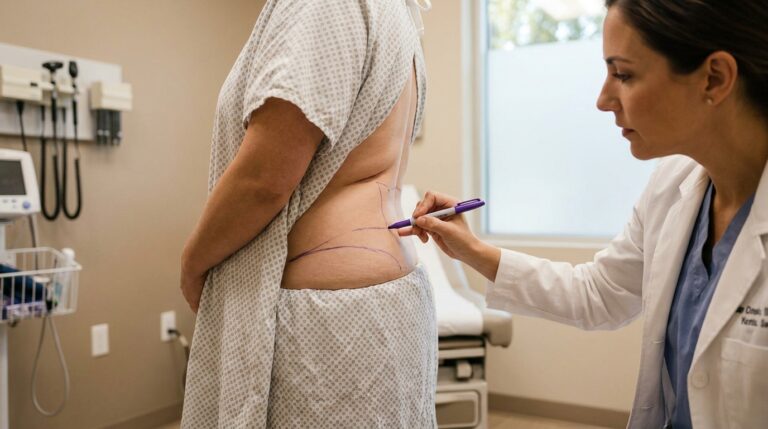
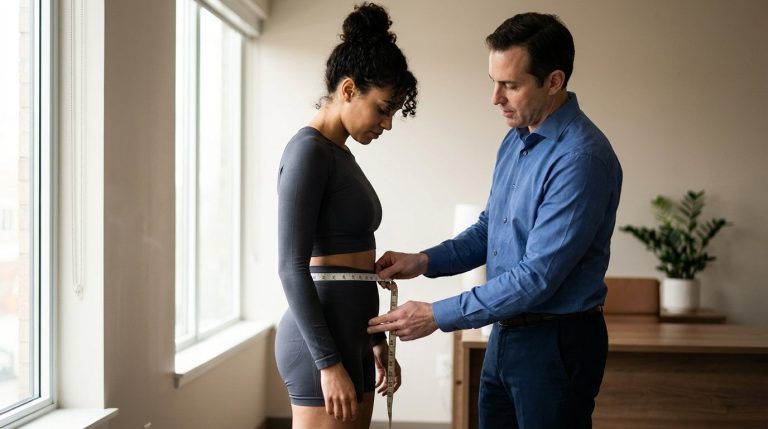
Surgeons assessing a slim patient will usually pinch and map several donor zones rather than relying on one. The abdomen alone is rarely enough in lean patients. Commonly combined donor areas include the lower back and flanks, the bra line and upper back, the inner and outer thighs, the area just above the knees, and the lower abdomen. Harvesting small amounts from many places is what makes the operation possible at all in a lean body, and it is also why the liposuction part of recovery is often the harder part.
There is a second, less comfortable fact: not all transferred fat survives. A meaningful share is reabsorbed in the first few months as the graft settles, so surgeons routinely over-inject slightly to account for it. If you start with a small harvest, the final retained volume is smaller still. This is the single most common cause of disappointment in slim patients, and it is a conversation to have before surgery rather than after.
Gaining a controlled amount of weight before surgery is sometimes suggested, and it can work, but it has limits. Weight gained shortly before surgery is not guaranteed to land in the donor areas the surgeon needs, and weight lost again afterwards can reduce the result. If this comes up in your consultation, ask how much the surgeon wants, over what timeframe, and what happens to the result if you return to your usual weight.
📋 A realistic expectation setter If you are very lean, plan for a refined, athletic shape rather than a dramatic increase in size. A second session once more donor fat is available is a normal part of the plan for some patients, not a sign something went wrong.
Options when donor fat is limited
If the assessment shows there is simply not enough fat, you still have choices. They differ in how long they last, how invasive they are and how they behave over time, so the right answer depends on what bothers you most about your current shape.
Some patients get most of what they wanted from contouring alone. Aggressive waist and flank liposuction, sometimes with light muscle definition work, can create the illusion of fuller hips without transferring much fat at all. Whether that is enough is a judgement call best made with photographs in front of you — this is the trade-off explored in our article on whether 360 liposuction with ab etching can give a skinny BBL look.
Others are better served by moving away from fat entirely, or by combining methods. Our guide to buttock augmentation with limited fat goes through how surgeons choose between these routes in practice, and if you are weighing energy-assisted harvesting specifically, see whether you are a candidate for Vaser BBL with little fat.
Narrowing the waist, flanks and back without meaningful fat transfer. Lower risk, shorter recovery, and it suits patients whose main complaint is a boxy waist rather than a flat buttock.
Silicone implants placed in the buttock add projection independently of body fat. They give predictable volume but carry their own risks, including implant-related complications and a longer, more restricted recovery.
An implant for central projection plus small fat grafts to smooth transitions and fill hip dips. Technically demanding and not offered by every surgeon, so ask directly how often they perform it.
Collagen-stimulating or hyaluronic-acid injections can add mild contour without surgery. The effect is subtle and temporary, repeat sessions are needed, and large-volume injections in the buttock carry their own cautions.
What drives the cost of a skinny BBL in Turkey
We do not publish prices for this operation, and the reason is not evasiveness. A skinny BBL is priced per plan, not per procedure name: the number of liposuction zones, the time under anaesthesia, whether an implant is involved and how many nights you need in hospital all move the figure substantially. Any quote you see advertised before an assessment is a placeholder, and placeholders tend to rise once the real plan is drawn up. A personalised price is confirmed after consultation, when photographs and your medical history have been reviewed.
This matters more for lean patients than for anyone else, because a skinny BBL is rarely the smallest version of the operation. Harvesting from five or six donor areas takes longer in theatre than harvesting from one, and theatre time is one of the biggest cost drivers in any surgical quote. A slim patient can easily receive a higher quote than a heavier patient who needed only abdominal liposuction.
It also helps to know that the quote you receive is often not for a single procedure. A little over half of the people who come to us for a BBL — around 54% — have at least one other operation in the same session, most often liposuction beyond the donor areas or a tummy tuck. If you are comparing clinics, make sure you are comparing the same plan, because a single-procedure price from one clinic and a combined plan from another are not the same number.
⚠️ Treat very low quotes as a question, not a bargain A price far below the market usually means something has been removed from the plan: theatre time, hospital grade, surgeon seniority or post-operative care. Ask what is missing before you ask why it is cheap.
- ✓Exactly which areas will be liposuctioned: Named zones, not "360 lipo" as a blanket phrase.
- ✓Surgeon’s fee, anaesthesia and hospital fees: Separated out, so you can see what you are actually paying for.
- ✓Nights in hospital and nights in the hotel: Including whether transfers and a translator are included.
- ✓Garments, medication and post-op sessions: Compression garments, drainage massage and any planned dressings.
- ✓Follow-up and revision policy: What happens if you need a review, and who pays for a second flight.
Safety: the part that deserves most of your attention
Gluteal fat grafting has historically carried a higher mortality risk than most cosmetic procedures, and the reason is specific. If fat is injected deep into or beneath the gluteal muscle, it can enter the large veins in that area and travel to the lungs — a fat embolism, which can be fatal. The American Society of Plastic Surgeons has issued safety advisories on gluteal fat grafting urging surgeons to place fat only in the subcutaneous layer above the muscle, to avoid deep intramuscular injection, and to use instruments and techniques that reduce the chance of entering a vein.
This is the single most important question to ask a surgeon, and the answer should be immediate and unambiguous: fat above the muscle only. Some surgeons also use ultrasound guidance to confirm the position of the cannula during injection. Being slim does not remove this risk, though smaller transferred volumes and fewer passes generally mean less exposure to it.
The other risks are the ordinary ones of a long operation with wide liposuction. Blood clots in the legs or lungs are a genuine concern after several hours of surgery followed by a flight, which is why clot prevention, early walking and a sensible delay before flying matter. Fluid collections, contour irregularities, skin laxity in the donor areas, infection, uneven fat survival and asymmetry are all possible. The NHS has general information on cosmetic procedures and the questions to ask before committing, and it is worth reading an independent source alongside any clinic’s own material.
Two practical safety filters are worth applying before anything else. First, the operation should take place in a licensed hospital or fully equipped surgical facility with an anaesthetist present, not a day clinic improvising. Second, the surgeon should be board-certified in plastic surgery and willing to say how many of these cases they do in lean patients specifically, because slim-patient fat grafting is a different planning problem from high-volume grafting.
🚨 Ask this before you book "Will any fat be injected into or under the gluteal muscle?" If the answer is anything other than a clear no — subcutaneous placement only — do not proceed with that surgeon.
Recovery and how long to stay in Turkey
Recovery after a skinny BBL is paced by the liposuction, not the buttocks. Harvesting from several areas leaves more bruised, swollen and tender surface area than a single-site liposuction, so the first week is usually dominated by soreness when standing up, turning over or getting out of bed. The buttocks themselves mostly feel tight and full rather than painful.
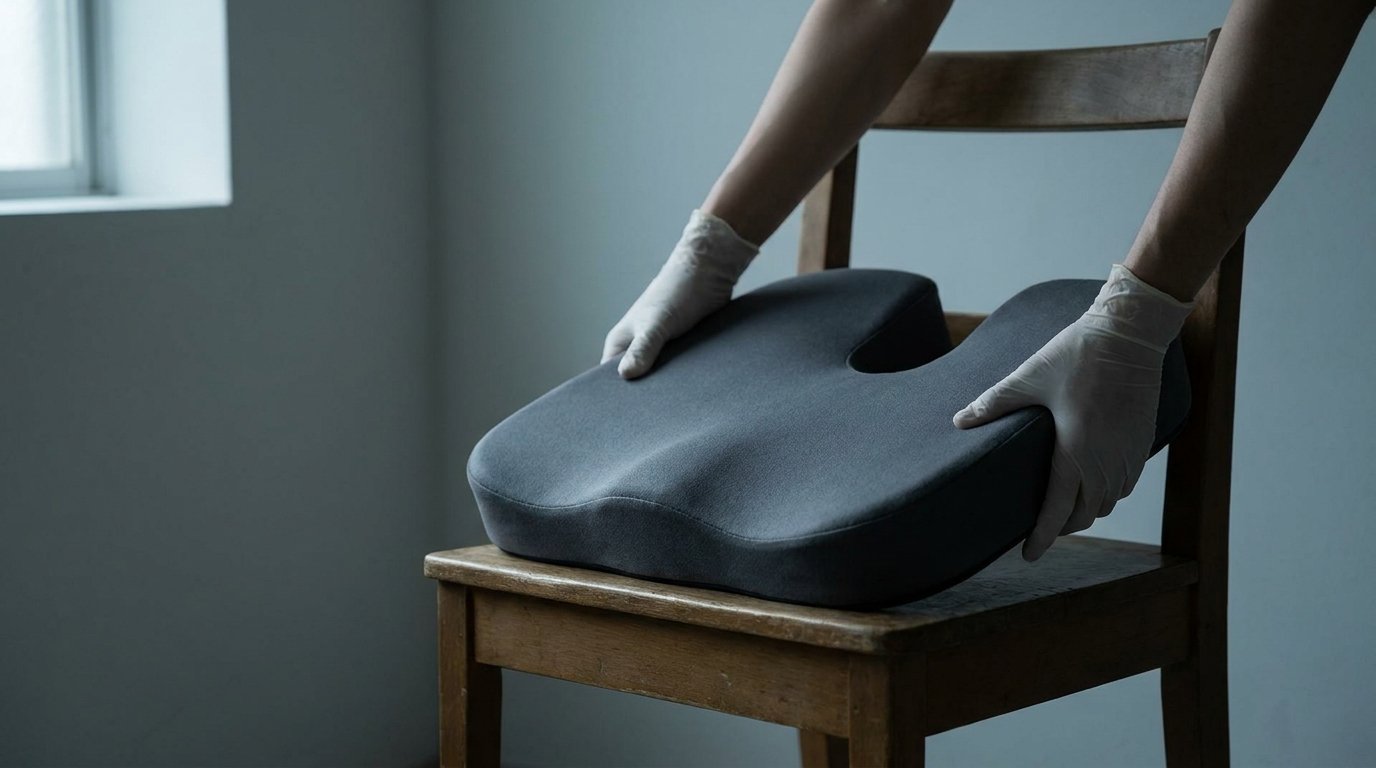
Sitting is the restriction that shapes everything else. Most surgeons ask patients to avoid direct, unsupported pressure on the buttocks for the first weeks, then to reintroduce sitting gradually with a cushion that shifts weight to the thighs. The exact protocol varies between surgeons, and our guide to how long to avoid sitting after a BBL explains how the rules usually evolve week by week. Flying home needs similar care, because a long flight combines sitting pressure with clot risk — see our notes on flying after a BBL for the reasoning behind the usual waiting period.
Compression garments are worn on the liposuctioned areas for several weeks, and lymphatic drainage massage is commonly recommended to help swelling settle and the skin retract. Shape keeps changing for months: early fullness drops as fluid clears and some grafted fat is reabsorbed, with the result generally considered settled somewhere around the six-month mark.
📋 Plan the stay around the bigger operation If your plan combines the BBL with wider liposuction or a tummy tuck, the stay and the recovery timeline are set by the larger procedure. Build your travel dates around that, not around the BBL alone.
Aftercare once you fly home
This is the part most patients plan last and regret planning last. In the UK and across much of Europe, publicly funded healthcare will treat you if something becomes urgent — an infection, a suspected clot, severe pain — but it is not set up to provide routine cosmetic follow-up, garment checks or revision surgery for an operation performed abroad. You may also find that local private surgeons are reluctant to take over the aftercare of someone else’s case.
So settle three things before you travel. Know who at the clinic you contact out of hours and how quickly they reply. Ask whether the clinic has an arrangement for remote review with photographs, and what the written policy is if a complication needs treating at home. And check whether your travel insurance covers anything at all after elective surgery abroad, since many policies exclude it outright.
It is also worth registering with a local GP or private clinic before you leave, so that if you need wound care or antibiotics there is already a relationship in place. Patients who do this tend to get problems dealt with early, which is almost always the difference between a minor issue and a significant one.
Choosing a clinic and surgeon for a skinny BBL
Because the operation depends so much on judgement rather than volume, the surgeon’s experience with lean patients matters more than the clinic’s marketing. Ask to see results from patients built like you, photographed from the same angles, at a stated time after surgery. A gallery full of high-volume results from heavier patients tells you very little about what your outcome would look like.
Verify credentials independently rather than trusting a website biography. Board certification in plastic surgery, membership of recognised bodies such as ISAPS or EBOPRAS, and a licensed hospital setting are the baseline. Then ask about the specifics: fat placement layer, number of donor areas planned, expected volume per side, what happens if less fat is harvested than hoped, and whether a second session might be needed.
One more thing worth knowing: the average age of our BBL patients at surgery is 28, which is younger than many people assume but also an age at which the result has to hold up for decades. That argues for conservative planning and a surgeon who will tell you no, rather than one who promises whatever you asked for in the enquiry form.
This article is for informational purposes only and does not constitute medical advice. Always consult a qualified surgeon for personalised guidance.
A video or in-person consultation with the operating surgeon; a clear written plan naming the donor areas; honest talk about fat reabsorption and possible second sessions; accredited hospital; a named contact for aftercare.
A fixed price quoted before any assessment; pressure to book with a deadline or discount; vague or evasive answers about fat placement; no overnight facility or anaesthetist named; results promised in guaranteed terms.
Frequently Asked Questions
References
- 📎American Society of Plastic Surgeons — Cosmetic Procedures
- 📎NHS — Cosmetic Procedures
- 📎ISAPS Global Statistics
Related Articles


You Might Also Like


Related articles

Our specialists
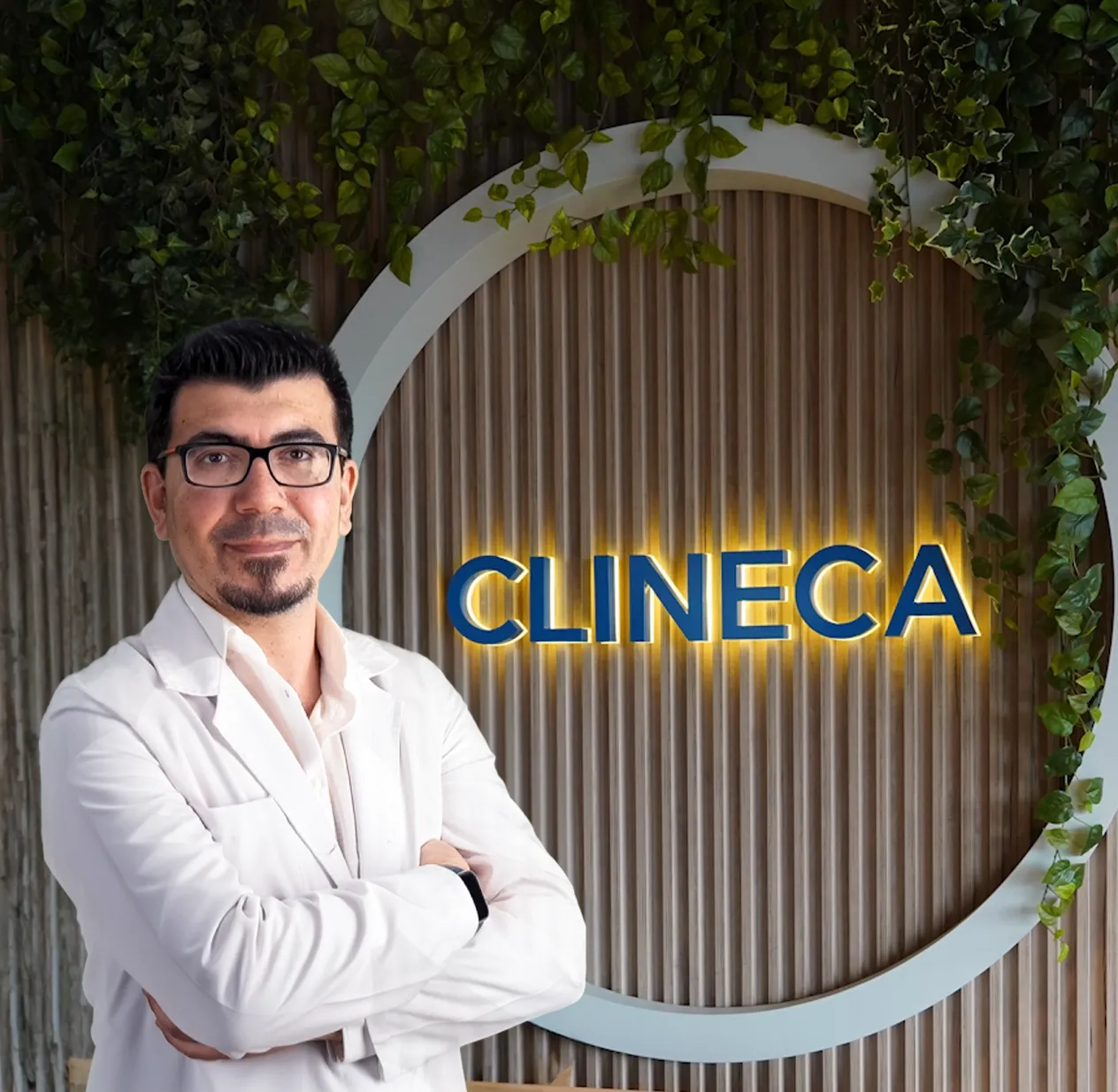 Clineca SpecialistErkan PinegözPlastic & Reconstructive Surgery
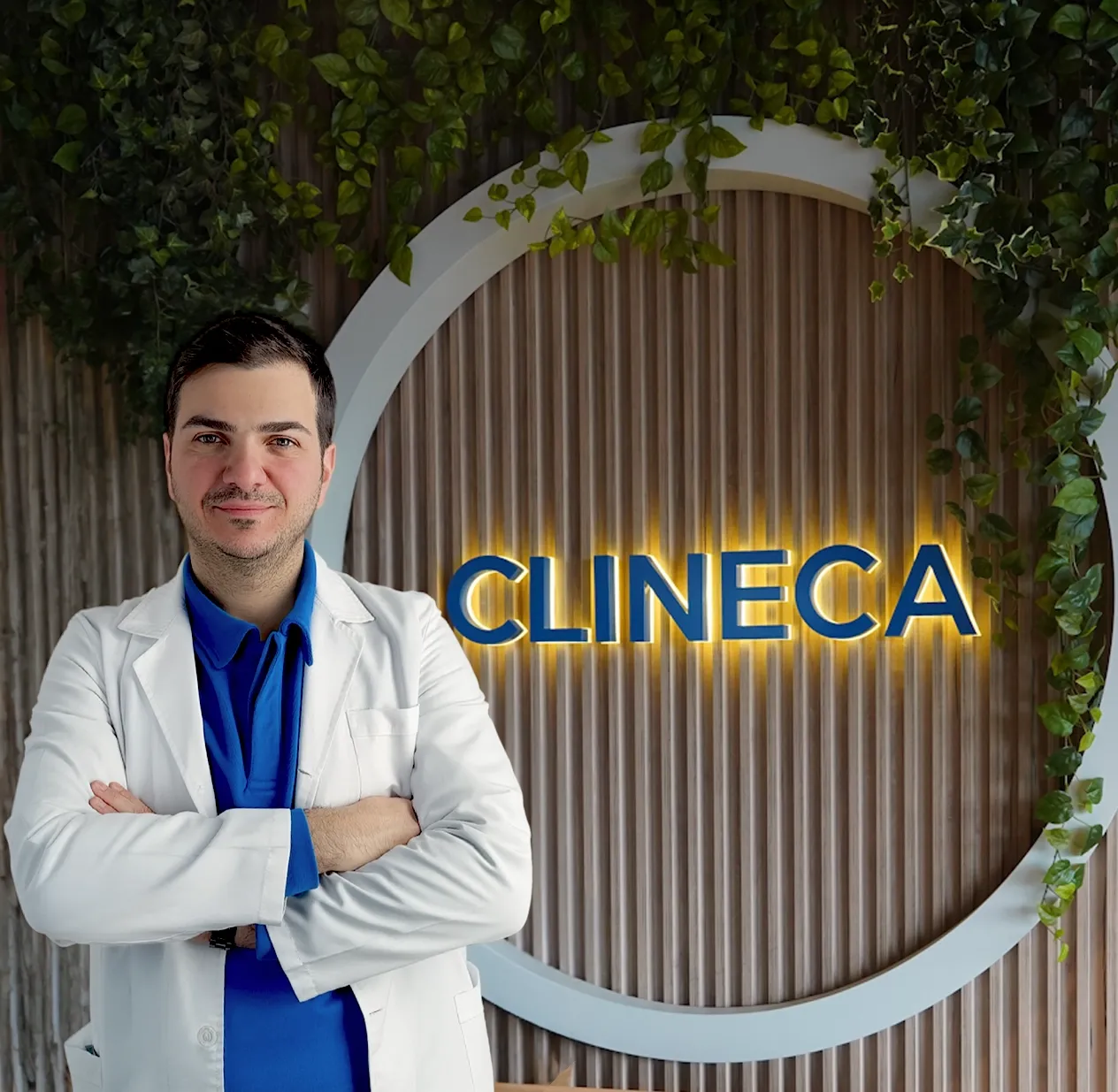 Clineca SpecialistHakan AktaşPlastic & Reconstructive Surgery
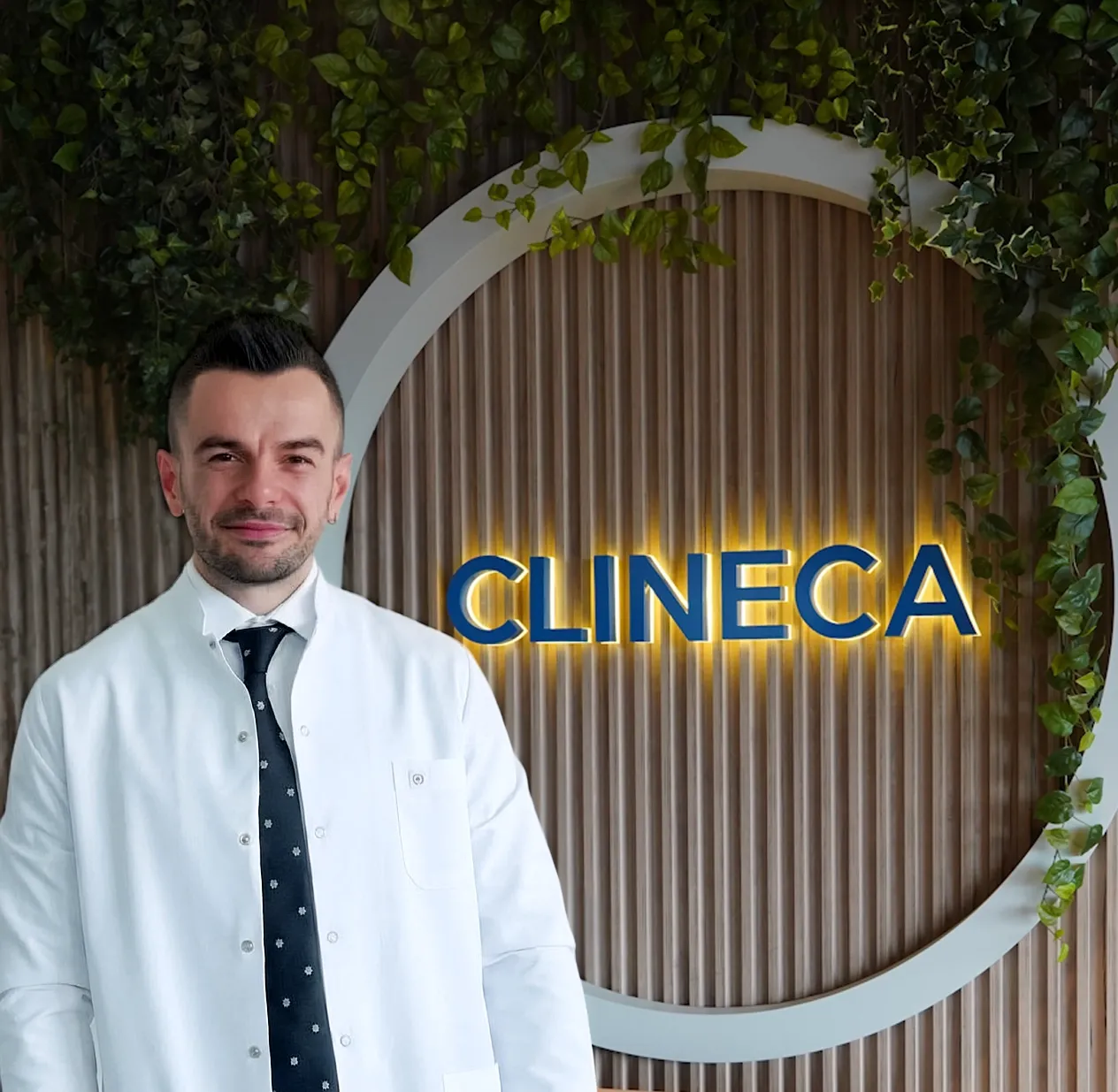 Clineca SpecialistOrkun UzuneyüpoğluPlastic & Reconstructive Surgery
 Clineca SpecialistSalim İskenderPlastic & Reconstructive Surgery
 Clineca SpecialistEngin SelamioğluPlastic & Reconstructive Surgery
 Clineca SpecialistCem AydınPlastic & Reconstructive Surgery
 Clineca SpecialistAlperen ÖnalEar, Nose & Throat (ENT)