
Have a question about BBL?
In this article
- What is the safest BBL sleeping position?
- How to set your bed up before you travel
- How long do you sleep on your stomach after a BBL?
- Sleeping when your BBL is combined with other surgery
- Staying comfortable through the first difficult nights
- Sleeping in a hotel and on the journey home
- Choosing a clinic that supports you after lights out
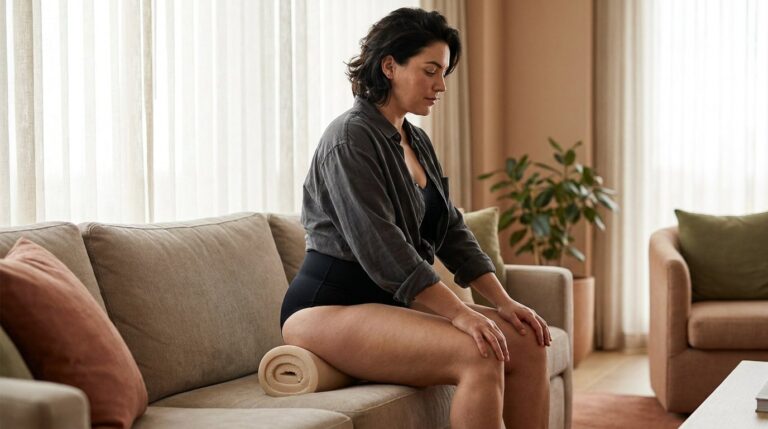
Most people preparing for a Brazilian butt lift think about the garment, the sitting rules and the flight home — and then discover that the first real test comes at bedtime. Working out how to sleep after a BBL is one of the questions patients ask us most often once the adrenaline of surgery day wears off, usually at two in the morning on night one. The good news is that this part of recovery is entirely manageable with some planning, a few pillows and a clear idea of what each stage of healing allows.
What is the safest BBL sleeping position?
For the first couple of weeks, you sleep on your stomach or on your side — never flat on your back. Most surgeons keep that rule in place for roughly two weeks, then allow short periods on your back as swelling settles, with normal back sleeping usually cleared somewhere around six to eight weeks. Your own surgeon’s timeline may be shorter or longer depending on how much fat was grafted and how your tissues are healing.
The reason is simple. In a BBL, fat is taken from one area by liposuction and injected into the buttocks, where it has to pick up a blood supply from the surrounding tissue to survive. Sustained pressure squeezes those newly placed fat cells and starves them, so the area you lie on is the area most at risk of losing volume. A single night of accidental back sleeping will not undo your result, but weeks of it genuinely can affect how much fat survives and whether the shape stays even.
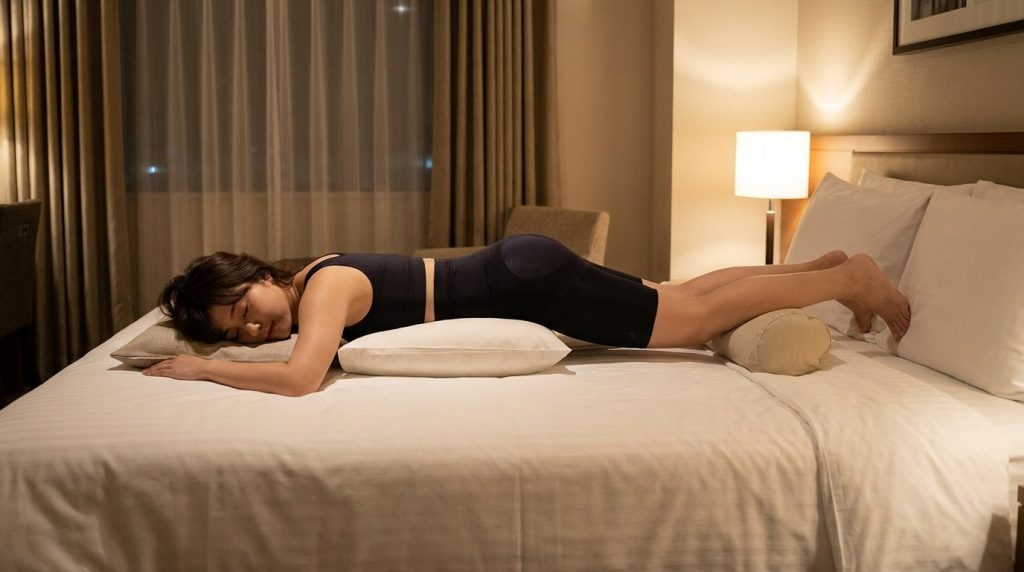
Stomach sleeping is the gold standard because it keeps all pressure off the graft. Side sleeping is the practical alternative if you cannot tolerate lying face down — it is allowed, with a caveat: the hip and outer buttock on the downward side still take some load, so you should alternate sides through the night rather than settling on your favourite one for eight hours.
📋 Ask for your own numbers Two weeks on your front and back sleeping from six to eight weeks is the common pattern, not a universal law. Volume grafted, technique and your healing all shift it, so take the dates your operating surgeon gives you over any general timeline, including this one.
How to set your bed up before you travel
The patients who sleep best are the ones who prepared the bed before surgery, not the ones improvising at midnight. Face-down sleeping only works if your body is supported in three places, otherwise your neck and lower back take the strain and you will be awake anyway.
Put one firm pillow under your chest and upper ribs, one under your shins so your feet are slightly raised, and a thinner one under your forehead or to one side for your head. That slight lift stops your lower back from arching and takes the twist out of your neck. A rolled towel under each ankle does the same job if you are short on pillows in a hotel room.
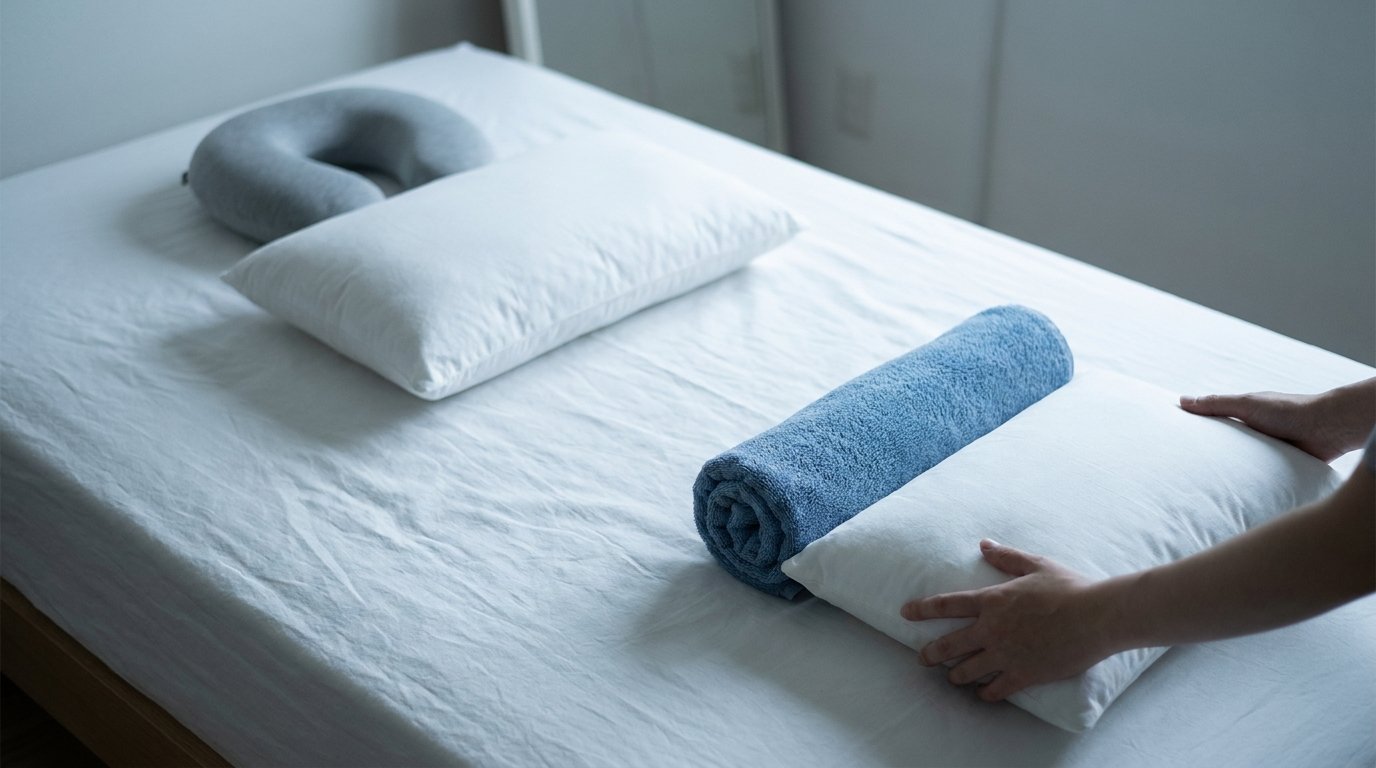
If you are recovering in Turkey, ask your coordinator in advance whether the hotel can supply extra pillows — most partner hotels used for surgical patients can, and it is a much easier conversation before you arrive than after.
What actually helps
- ✓Two or three firm pillows for chest, shins and head, plus a spare for side sleeping
- ✓A travel or horseshoe pillow to cradle your forehead so your face is not pressed into the mattress
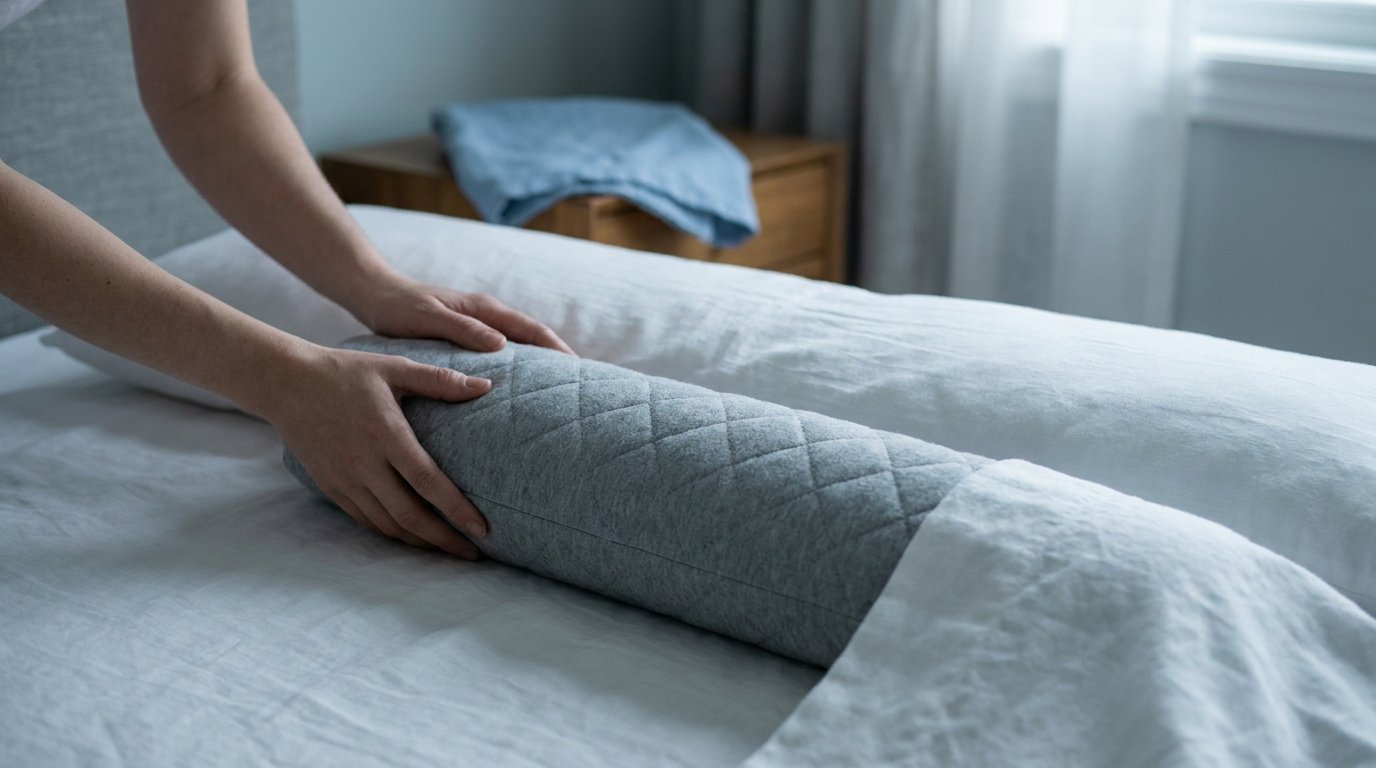
- ✓A body pillow to hug, which stops you rolling onto your back during deep sleep
- ✓A cheap non-slip sheet or towel layer, because sliding around face down is more annoying than it sounds
A firm mattress beats a soft one here. Soft foam lets your hips sink, which drags your pelvis into exactly the position you are trying to avoid. If the mattress is very soft, a folded blanket laid under the sheet firms it up enough.
- ✓Set the pillows up and try the position for ten minutes before your surgery date
- ✓Keep water, pain medication and your phone within reach so you are not twisting at night
- ✓Clear a path to the bathroom — you will be slow and stiff for the first few nights
- ✓Have a nightlight, so getting up does not mean fully waking up
How long do you sleep on your stomach after a BBL?
Around two weeks is the figure most surgeons quote for strict front or side sleeping, and the transition after that is gradual rather than a switch being flipped. Early on, the grafted fat is still establishing its blood supply and is at its most vulnerable; by the end of the first month a good proportion of it is settled, and by around the second month the fat that has survived is essentially yours to keep.
This is also why the sleeping rules and the sitting rules move at a similar pace. If you want the full picture of how the two fit together, our guide on how long to avoid sitting after a BBL covers the cushion stage, and the broader BBL recovery week by week article maps the swelling and activity timeline alongside it.
⚠️ Do not guess your way back onto your back Returning to back sleeping too early is one of the few recovery mistakes a patient can make alone, at night, with no symptoms to warn them. Get it confirmed at a follow-up or by message with your surgical team rather than deciding you feel ready.
Sleeping when your BBL is combined with other surgery
Here is the detail that catches people out: the sleeping plan you need may not be the BBL one at all. Just over half of our BBL patients — around 54% — have at least one other procedure in the same session, most often liposuction or a tummy tuck, and that changes the instructions. If you are having a tummy tuck as well, lying flat on your stomach is off the table, because the abdominal repair and incision will not tolerate it. For this reader it means asking one specific question at consultation: with my exact combination, which position am I actually sleeping in on night one?
With a tummy tuck in the mix, side sleeping usually becomes the main option, often with a slight bend at the hips to keep tension off the abdominal closure. With liposuction to the flanks or back, the treated areas are tender and bruised, so you may find yourself rotating between positions more than you expected for the first week. Our guide to tummy tuck and BBL together in Turkey goes into how surgeons sequence that combination.
The practical point is that your aftercare sheet needs to be written for the operation you are actually having, not for a textbook BBL. If your discharge instructions say “sleep on your stomach” and you have abdominal stitches, that is a question to raise before you leave the clinic, not something to interpret yourself.
Face down is the default, with alternating side sleeping as the fallback. Pillow support under chest and shins makes it sustainable.
Face down is usually not possible. Expect side sleeping with slight hip flexion, and confirm the exact position with your surgeon before discharge.
Staying comfortable through the first difficult nights
Expect the first two or three nights to be broken sleep. Between the compression garment, the unfamiliar position and the general ache of liposuction, almost nobody sleeps straight through. That is normal, and it improves quickly — most patients report a genuinely decent night somewhere in the second week.
Take your pain medication on the schedule your clinic gives you rather than waiting until it hurts; chasing pain is what keeps people awake. Keep the garment on overnight unless you have been told otherwise, as it manages swelling and helps the liposuctioned areas settle smoothly. If a seam digs in, a soft flat cloth between the garment and your skin is usually enough, but never loosen or remove it on your own initiative.
Rolling over in your sleep is the fear everyone has. In practice, hugging a body pillow or wedging a long pillow along your back makes an unplanned roll onto your back much less likely, and if you do wake up on your back, simply turn over and go back to sleep. One brief episode is not a disaster. A pattern of it is worth mentioning to your team.
Numbness, tingling and odd patches of reduced sensation over the treated areas are common in the early weeks and tend to fade gradually. Sharp, worsening or one-sided pain is a different matter and belongs in a message to your clinic rather than being slept off.
🚨 When to call the clinic at night, not in the morning Contact your surgical team or emergency services straight away if you develop a fever, sudden or rapidly increasing swelling, breathlessness or chest pain, calf pain or swelling in one leg, heavy bleeding, or foul-smelling discharge from an incision. These can signal infection, a blood clot or a clot that has travelled to the lungs, and none of them should wait until business hours.
Sleeping in a hotel and on the journey home
If you are travelling for surgery, your first week of sleeping happens somewhere other than your own bed, which is worth planning for rather than hoping it works out. Most BBL patients are asked to stay in the country for roughly seven to ten days so that dressings, drains and the first follow-up are handled in person before they fly. That is also the window in which positioned sleeping matters most.
Choose accommodation with a firm bed and a lift rather than stairs, and confirm that extra pillows are available. Many clinics in Turkey arrange hotels used to surgical patients and include airport and clinic transfers in the package — our overview of aftercare in Turkey, hotels and flying home explains what those arrangements usually look like. On the cost side, what you pay is shaped by the volume of fat grafted, whether liposuction of several areas or a second procedure is involved, the anaesthesia and hospital time, the garment, and how many nights of accommodation and follow-up are built in. A personalised figure is only meaningful after a consultation that reviews your photographs and medical history.
The flight itself is the other half of the problem, since you cannot sit normally yet and you certainly cannot lie face down in economy. Timing and seating both need thought, and our dedicated article on flying after a BBL covers how patients handle the journey, clot prevention and what to request from the airline.
📋 Movement matters as much as position Short, frequent walks from day one — and getting up regularly on long flights — are part of reducing clot risk. Sleeping correctly does not replace gentle mobility; the two work together.
Choosing a clinic that supports you after lights out
A BBL is one of the procedures where aftercare quality shows up most clearly, because so much of the result depends on what you do in the weeks after you leave the operating room. Fat transfer to the buttocks carries a recognised risk of fat entering the bloodstream if it is injected too deeply, which is why the technique your surgeon uses and the clarity of the instructions you are sent home with both matter.
When you are comparing clinics, look for a named, qualified plastic surgeon you can verify, written aftercare instructions tailored to your exact combination of procedures, and a contact route that works outside office hours. A clinic that cannot tell you who answers the phone at 3am in your own language is not set up for the recovery it is selling. Patients weighing this up may find our notes on BBL clinics in Turkey and the safety checks worth making a useful starting point.
One last reassurance on age, since it comes up constantly: our BBL patients average 28 at the time of surgery, so if you are in your twenties or thirties you are squarely in the usual range, and the sleeping rules are the same whichever end of it you sit at.
This article is for informational purposes only and does not constitute medical advice. Always consult a qualified surgeon for personalised guidance.
A verifiable surgeon, written position-by-position aftercare, a 24-hour contact number, in-person follow-up before you fly, and honest discussion of fat survival and possible touch-ups.
Pressure to book before any medical review, no named surgeon, guarantees about how much fat will survive, vague recovery instructions, and no plan for who you contact once you are home.
Frequently Asked Questions
References
Related Articles

You Might Also Like

Related articles

Our specialists
 Clineca SpecialistErkan PinegözPlastic & Reconstructive Surgery
 Clineca SpecialistHakan AktaşPlastic & Reconstructive Surgery
 Clineca SpecialistOrkun UzuneyüpoğluPlastic & Reconstructive Surgery
 Clineca SpecialistSalim İskenderPlastic & Reconstructive Surgery
 Clineca SpecialistEngin SelamioğluPlastic & Reconstructive Surgery
 Clineca SpecialistCem AydınPlastic & Reconstructive Surgery
 Clineca SpecialistAlperen ÖnalEar, Nose & Throat (ENT)