Have a question about Face Lift?
In this article
- Key takeaways before you book
- What affects the cost of a facelift in Turkey?
- Is a facelift in Turkey safe?
- How long do you need to stay in Turkey and what is recovery really like?
- How do you choose a safe surgeon and clinic?
- Facelift in Turkey versus having surgery at home
- Who is a good candidate, and when should you wait?
A facelift in Turkey can cost less than in some other countries, but the real answer depends on the operation plan, the surgeon’s experience, the hospital setting, and what your package includes. In this facelift in turkey cost safety and recovery guide, the safest approach is to judge value, not just the quote, and to plan for around one to two weeks in Turkey plus several weeks of visible recovery at home.
Key takeaways before you book
If you are comparing countries, Turkey is often considered for facelift surgery because quotes may be more competitive and travel can be straightforward. That said, the cheapest quote is not automatically the best value. A lower upfront fee can hide limits on aftercare, revision policy, hospital quality, or the surgeon’s level of facelift experience.
Safety depends less on the country itself and more on who performs the surgery, where it is done, whether you are a good candidate, and how well your recovery is planned. Most people need to stay in Turkey long enough for a proper pre-op review, surgery, early checks, and clearance before flying home.
Recovery is also more gradual than many people expect. You may be up and walking the same day or next day, but swelling, tightness, numbness, and bruising usually take longer to settle than the social-media version suggests.
Quotes vary widely. The main drivers are the extent of surgery, surgeon experience, hospital fees, anaesthesia, and whether extras like hotel, transfers, tests, and aftercare are included.
A facelift can be safe in the right hands, with proper patient selection, accredited facilities, and a clear plan for follow-up and complications.
Many international patients should expect to stay roughly one to two weeks, depending on the surgical plan and how recovery is going.
Most people need a few weeks before they look comfortably social again, and several months for swelling and scar maturation to settle further.
What affects the cost of a facelift in Turkey?
A facelift in Turkey starts from around €3,510, without a neck lift. That is a starting point, not a guaranteed quote — your own figure is confirmed after consultation, once the surgeon has assessed how much tissue work is involved, whether the neck is treated in the same operation, and whether this is a first or a revision facelift. A mini or mid-face lift, which is a smaller operation, starts at around €3,375.
The biggest mistake patients make is comparing one quote with another as if they describe the same operation. They often do not. A limited lower-face lift, a full facelift with neck lift, and a revision facelift are very different jobs. The more tissue work involved, the more operating time, planning, and aftercare are usually needed.
If you see a notably low quote, look closely at what is and is not included. Some offers cover only the surgery itself, while others may include hospital stay, anaesthesia, garments or dressings, medicines, interpreter support, local transfers, and hotel arrangements. It is reasonable to ask for this in writing before you travel.
Your own starting point also matters. Heavier jowling, loose neck skin, prior surgery, smoking history, weight changes, and skin quality can all make surgery more complex. Combining procedures can increase convenience, but it also changes the price and the recovery. For example, some patients looking at a facelift also compare a neck lift, eyelid surgery, or brow lift, because facial ageing rarely affects just one area.
A careful consultation should explain not just the quote but the reasoning behind it. If the discussion focuses only on price and not on incision plan, likely scars, anaesthesia, risks, and recovery, that is a sign to slow down.
⚠️ Important pricing point A personalised price should follow a proper consultation. Be cautious if you are given a firm final quote without clear photos, medical history, or an examination.
Facelift cost in Turkey is shaped by the type of facelift, whether a neck lift or eyelid surgery is added, the surgeon’s experience, the hospital or clinic setting, anaesthesia, and what is included in the package. A personalised quote should be confirmed only after consultation and photos or examination.
Is a facelift in Turkey safe?
The honest answer is that facelift safety varies from one provider to another. A well-run hospital, careful surgeon, and realistic patient can lead to a smooth experience. The reverse is also true. Cosmetic surgery is still surgery, and the NHS states that common risks of cosmetic procedures include bleeding, infection, scarring, blood clots, and anaesthetic complications.
For facelifts specifically, recognised risks also include haematoma, which is a collection of blood under the skin, delayed healing, nerve weakness, skin loss, asymmetry, numbness, and visible scarring. The American Society of Plastic Surgeons describes facelift recovery and risks in similar terms, and PubMed literature on rhytidectomy, the medical word for facelift surgery, discusses these same issues. This does not mean problems are likely for every patient, but it does mean you should choose with your eyes open.
A safe provider should ask detailed questions about smoking, blood thinners, high blood pressure, diabetes, past surgery, and any history of poor scarring or bleeding. They should also tell you if you are not a good candidate yet. Sometimes the safest decision is to stop smoking first, stabilise weight, control blood pressure, or postpone surgery.
You should also ask what happens if you need urgent review after you fly home. A serious provider will explain who you contact, how aftercare is handled across borders, and whether there is a local review before travel back.
🚨 Red flag If a provider brushes off risk, promises a perfect result, or pressures you to book quickly, treat that as a warning sign.
- ✓Ask who will operate: You should know the named surgeon, not just the agency or coordinator.
- ✓Ask where surgery takes place: A proper hospital or suitably equipped surgical facility matters, especially if general anaesthesia is planned.
- ✓Ask about emergency cover: You need a clear answer on who manages bleeding, infection, or wound issues after hours.
- ✓Ask about follow-up: Good aftercare includes in-person checks before you fly and remote follow-up once home.
A facelift in Turkey can be safe, but safety comes from the surgeon, the facility, your health, and the aftercare plan rather than the destination alone. The NHS notes that all surgery carries risks such as bleeding, infection, scarring, and problems linked to anaesthesia, so screening and follow-up matter.
How long do you need to stay in Turkey and what is recovery really like?
Travel timing matters more than many patients expect. A facelift is not usually a fly-in, fly-out procedure. You need time for consultation, blood tests if required, surgery, early checks, dressing changes, and enough recovery that your surgeon is comfortable clearing you for travel.
In practical terms, many people spend the first few days resting, walking gently, sleeping with the head raised, and managing swelling. You may feel less pain than expected, but more tightness, pressure, and fatigue. Drains are sometimes used and removed early, depending on the surgical technique.

Bruising and swelling usually peak in the first days, then slowly improve. By the time you fly home, you may look much better than right after surgery, but not fully presentable to everyone. If you are planning work, events, or family visits, be conservative. It is better to give yourself more healing time than less.
According to the ASPS, facelift recovery commonly involves swelling, bruising, and temporary numbness, and the final result takes time to settle. Mayo Clinic also emphasises that healing after cosmetic facial procedures is gradual rather than instant. That is why realistic planning is part of safety, not just comfort.
📋 Flying home Your surgeon should clear you for air travel based on your recovery, not a fixed calendar promise made before surgery.
Most international patients should plan for around one to two weeks in Turkey, though exact timing depends on the extent of surgery and early healing. Initial swelling and bruising are usually most noticeable in the first two weeks, while numbness, tightness, and scar settling can continue for months.
How do you choose a safe surgeon and clinic?
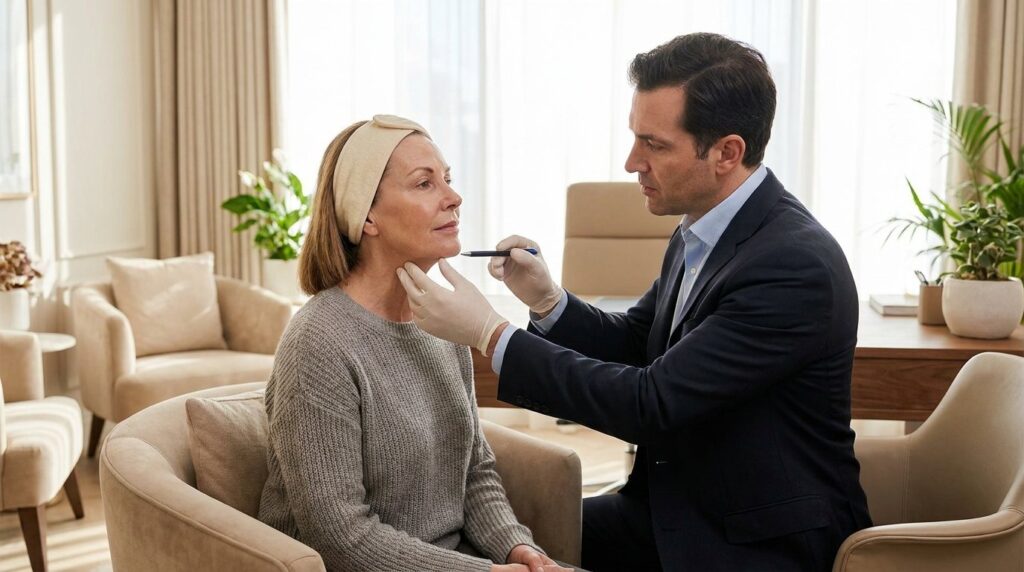
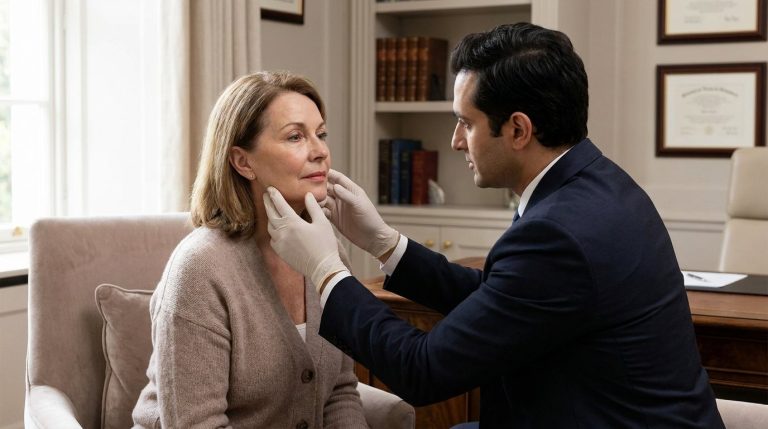
A good consultation should feel specific to your face, not copied from a template. The surgeon should explain where your ageing changes are coming from, what a facelift can improve, what it cannot fix, and whether another approach may suit you better. For some patients, the better answer is not a full facelift at all but a different operation or staged treatment.
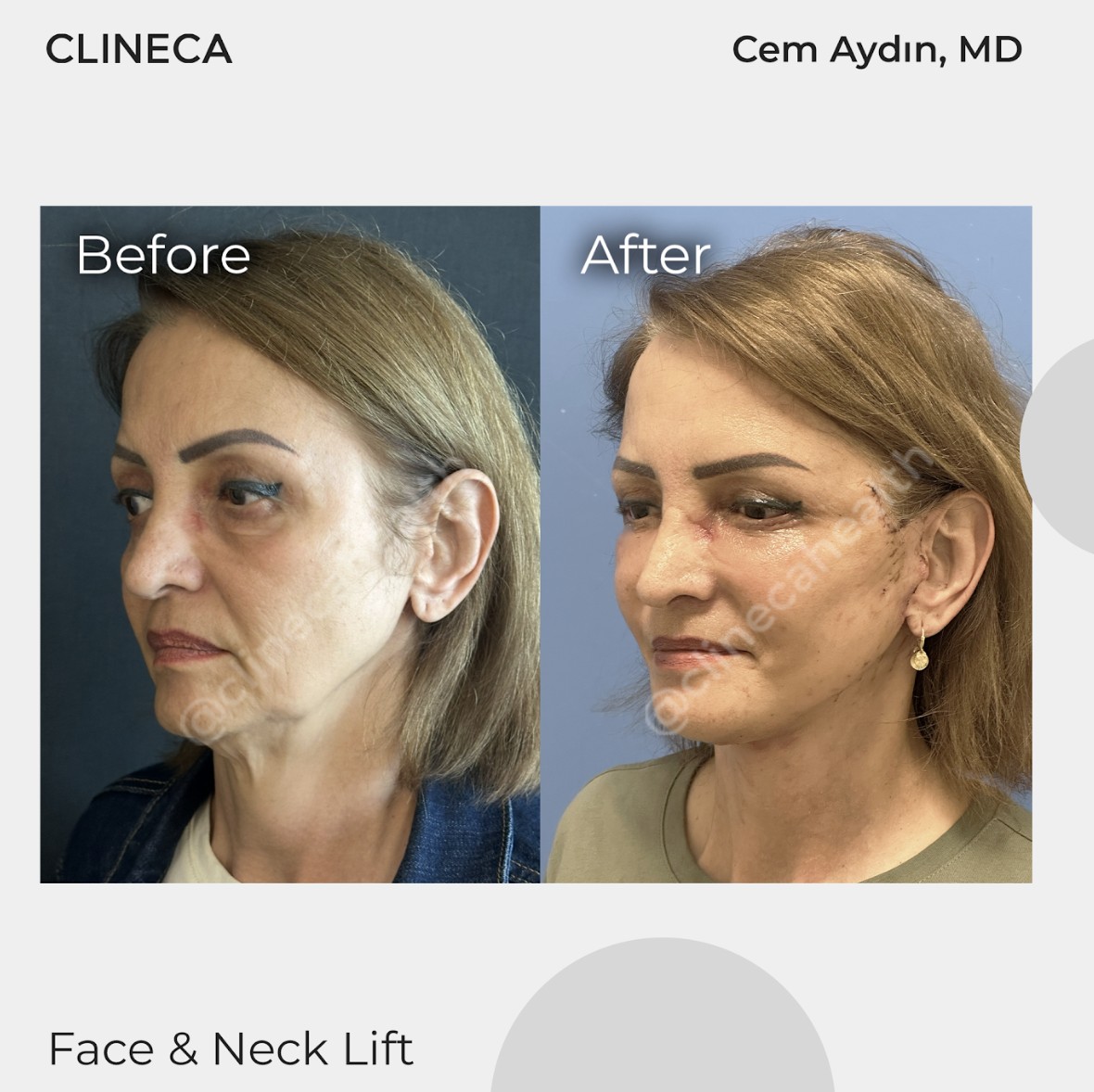
Photos matter, but they should be discussed carefully. Ask to see before-and-after cases with concerns similar to yours, in good lighting and from several angles. One dramatic result on social media tells you very little. What you want is consistency, not hype.
It also helps to understand the organisation behind your care. If you want background information on the provider, you can review the clinic’s about page, the doctors page, and how to arrange a formal consultation. Those checks should support your decision, not replace independent judgement.
Finally, ask what happens if your result needs more time, additional treatment, or simply reassurance. International surgery is smoother when expectations about communication, follow-up, and problem-solving are set from the start.
You get a clear explanation of technique, scars, risks, and recovery, plus time to ask questions without pressure.
The facility and anaesthesia arrangements are explained clearly, including who is responsible for each part of your care.
You are pushed toward a quick deposit before the surgeon has reviewed your case properly.
The provider avoids direct questions about complications, revision policy, or who you contact after you return home.
Choose a provider by checking the named surgeon’s qualifications, facelift experience, hospital standards, consultation quality, and aftercare plan. Good clinics answer detailed questions clearly. Poor ones focus on deposits, celebrity-style marketing, or one-size-fits-all promises instead of your anatomy, risks, and realistic results.
Facelift in Turkey versus having surgery at home
The best option is not the same for everyone. Some patients value an all-in-one travel process and accept the extra planning that comes with recovering abroad. Others prefer to pay more locally because they want easier in-person follow-up and less travel stress.
The key is to compare like with like. A local surgeon with a higher fee may include long-term follow-up and easy access if a wound issue appears. An overseas package may be efficient and well organised, but once you are home, aftercare changes. Neither model is automatically better; each has trade-offs.
If you are still deciding whether facial ageing is better addressed by a facelift alone or by combining procedures, it can help to compare the goals of a facelift procedure page with related options such as neck lift or eyelid surgery. Keep the focus on what your anatomy needs, not on buying the biggest package.
Turkey may offer easier access, package-style planning, and potentially lower overall treatment quotes, but surgery closer to home can make face-to-face follow-up simpler. The better choice depends on your budget priorities, support at home, tolerance for travel during recovery, and confidence in the named surgeon and aftercare plan.
Who is a good candidate, and when should you wait?
A facelift generally suits people with visible skin laxity, jowls, and loss of jawline or neck definition that non-surgical treatments are unlikely to correct well. Good candidates are medically fit, do not smoke or are willing to stop, and understand that surgery can refresh the face but not stop ageing.
It is sensible to wait if you smoke heavily, have uncontrolled high blood pressure, are still losing a lot of weight, or are hoping surgery will solve a wider emotional problem. A careful surgeon will also look at skin quality, scar tendency, facial asymmetry, and whether you need volume restoration as well as lifting.
If your main concern is the upper face or the eye area, a full facelift may not be the right first step. In some cases a brow lift, eyelid surgery, or neck-focused surgery is a better match. The safest and most satisfying plan is the one that is tailored, not the one that sounds most dramatic.
Frequently Asked Questions
References
- 📎NHS cosmetic procedures guidance
- 📎American Society of Plastic Surgeons cosmetic procedures
- 📎Mayo Clinic tests and procedures
- 📎PubMed search: facelift rhytidectomy complications recovery
Related Articles

You Might Also Like

Related articles
Our specialists
 Clineca SpecialistErkan PinegözPlastic & Reconstructive Surgery
 Clineca SpecialistHakan AktaşPlastic & Reconstructive Surgery
 Clineca SpecialistOrkun UzuneyüpoğluPlastic & Reconstructive Surgery
 Clineca SpecialistSalim İskenderPlastic & Reconstructive Surgery
 Clineca SpecialistEngin SelamioğluPlastic & Reconstructive Surgery
 Clineca SpecialistCem AydınPlastic & Reconstructive Surgery
 Clineca SpecialistAlperen ÖnalEar, Nose & Throat (ENT)