Have a question about Breast Lifting?
In this article
- Who is usually a good candidate for a breast lift without implants?
- What signs suggest a lift alone may not be enough?
- How do surgeons judge breast lift candidacy in consultation?
- What results can you realistically expect without implants?
- What is recovery like after a breast lift without implants?
- What complications and limits should you know before deciding?
- Breast lift alone vs lift with implants vs reduction
- How should you judge cost, clinic safety, and travel logistics?
Yes, many women are a candidate for a breast lift without implants if the main problem is droop rather than lost volume, and if they are happy to keep a similar breast size. The key caveat is that a lift can raise and reshape the breast, but it cannot create the upper-pole fullness that an implant adds, so your skin quality, natural tissue, and expectations matter a great deal.
Who is usually a good candidate for a breast lift without implants?
The shortest honest answer to am I a candidate for a breast lift without implants is this: you may be, if sagging is the main issue and not emptiness at the top of the breast. In surgical terms, a breast lift is called a mastopexy. It moves the nipple-areola complex higher and removes loose skin so the breast sits in a better position.
A surgeon usually looks at a few practical signs. One is nipple position. If the nipple is at or below the natural fold under the breast, or points downward, a lift is often more useful than an implant alone. Another is how much natural tissue you already have. If your breast has enough volume but has dropped after pregnancy, weight change, or ageing, a lift without implants can be a very reasonable option.
Skin quality matters too. Thin, stretched skin can still be lifted, but it may not hold a very round, full shape for as long as firmer skin. If your breast tissue is soft and the upper part of the breast looks quite empty, a lift alone can improve position, yet the final shape may be more natural and less “push-up” than some patients picture.
The American Society of Plastic Surgeons describes breast lift surgery as a way to raise and reshape sagging breasts, but not as a method to make them significantly larger. That distinction is important when deciding between a lift alone and a lift with implants.
📋 A lift changes position more than size Many patients feel their breasts look slightly smaller after a lift because the tissue is tighter and higher, even when very little breast volume is removed.
You like your current breast volume overall, but want the breasts higher, firmer, and better centred on the chest.
If your main concern is looking fuller in bras, swimwear, or the upper breast, a lift with implants may match your goal better than a lift alone.
You are usually a good candidate if your breasts sit low, the nipples point down or fall below the breast crease, and you still have enough natural breast tissue to reshape. The best candidates want a perkier shape, not a larger breast size, and understand that cleavage and upper fullness may stay modest without implants.
What signs suggest a lift alone may not be enough?
This is where candidacy becomes more specific. A lift can do a lot, but it has clear limits. It lifts skin and reshapes existing tissue. It does not add substantial volume. So if you feel your breasts look deflated, especially after breastfeeding or major weight loss, a lift on its own may leave you happier in profile and position but still underwhelmed by fullness.
A few patterns commonly point away from lift-only surgery. One is very limited natural breast tissue. Another is severe asymmetry, where one breast is much smaller or has a different shape. A lift can improve nipple level and general balance, but if the volume difference is large, it may not fully correct the mismatch.
Patients who want a clear increase in size are also often disappointed with lift-only surgery. In fact, because loose skin is tightened and the breast mound is reshaped, some women feel their breasts look a little smaller, not larger. That is not a complication; it is the visual effect of putting the tissue into a firmer, more compact form.
There are also body-planning issues. If you are likely to lose more weight soon, or you are planning pregnancy in the near future, your result may change sooner than you want. Future weight swings and pregnancy can stretch the breast again.
⚠️ Expectation mismatch is the most common problem If your goal is a fuller upper breast or a larger cup size, a lift without implants can still look good, but it may not look the way you imagined.
- ✓You want higher breasts, but not a larger size.
- ✓You have enough natural tissue to reshape.
- ✓Your main concern is droop, not emptiness.
- ✓You understand scars are part of the trade-off.
- ✓Your weight is stable and major body changes are not planned soon.
A lift alone may not be enough if you have marked loss of upper-breast fullness, very little natural tissue, major left-right size difference, or you want a noticeably larger cup size. In those cases, implants, fat transfer, reduction, or a staged plan may produce a result closer to your goals.
How do surgeons judge breast lift candidacy in consultation?
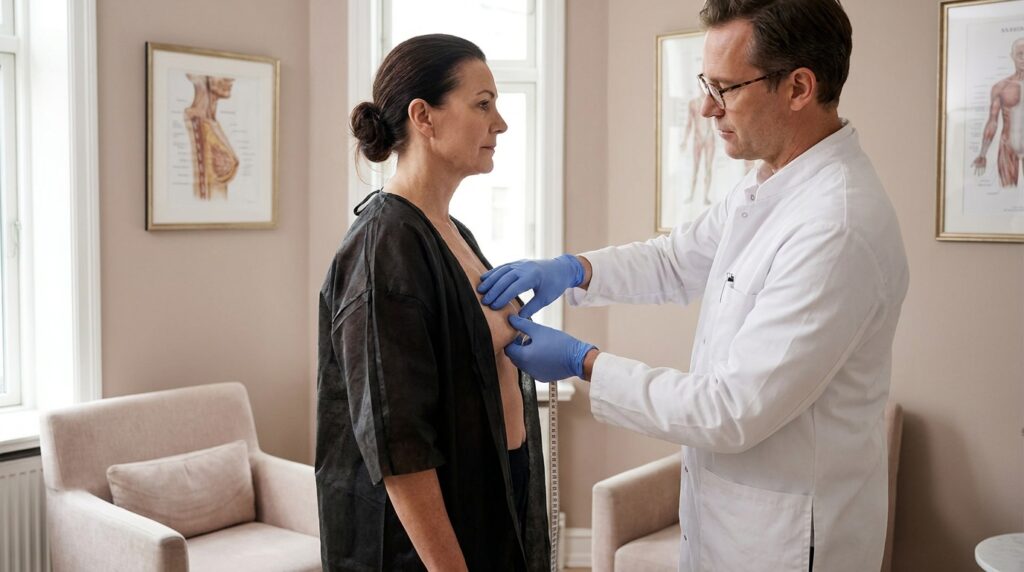
A proper consultation is more than a quick look at bra size. The surgeon will examine where the nipple sits in relation to the breast crease, how much loose skin there is, and how much natural tissue can be reshaped into a stable breast mound. They also assess the width of the chest and how the breast sits on it, because that affects what kind of projection is realistic.
Photos are often taken from several angles. This helps with surgical planning and also gives you a better idea of what change is realistic. If the areola has stretched, that can often be reduced during a lift. If one breast sits lower than the other, the plan may use slightly different lifting patterns on each side.
Your medical history matters as much as your shape. Smoking and nicotine increase the risk of poor wound healing and skin loss. The NHS advises that smoking raises surgical risk because it affects blood flow and healing. Diabetes, clotting problems, and a history of difficult scars also change the safety discussion. If you are old enough to need regular breast screening, the surgeon may ask about recent breast imaging before surgery.
If you want to understand the procedure itself in more detail, a general overview of breast lift surgery can help you prepare for the consultation, but your own measurements and goals are what decide candidacy.
Not whether they can perform a lift, but whether a lift alone can give a stable result that matches your goal closely enough.
Surgeons judge candidacy by examining nipple position, breast skin stretch, tissue volume, symmetry, chest shape, and your health history. They also ask about smoking, weight changes, pregnancy plans, and mammograms when relevant. Good candidacy is not just anatomy; it is whether the likely result matches what you actually want.
What results can you realistically expect without implants?
The best way to think about a lift-alone result is “higher and better shaped,” not “bigger.” Most patients see the breast move to a more youthful position on the chest, with less skin pooling in the lower pole and a more centred nipple.
What you may not get is a very rounded top half of the breast. Without an implant, the upper breast usually looks softer and more natural. For many women that is exactly the point. They want to restore shape after pregnancy or ageing without adding a foreign device or changing their clothing size much.
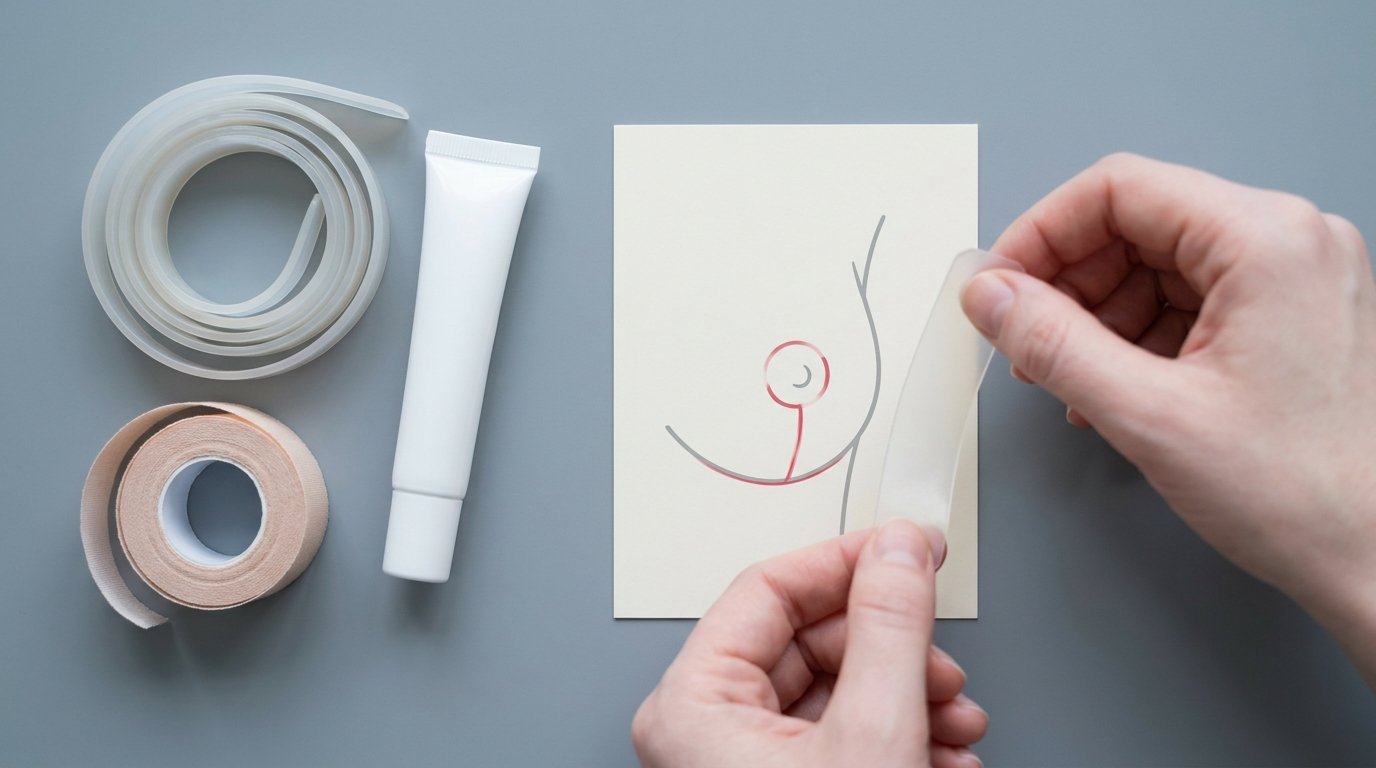
Scar pattern is part of the trade-off. Depending on how much lift is needed, scars may go around the areola, vertically down the breast, and sometimes along the fold. These scars usually fade over time, but they do not disappear. Mayo Clinic notes that breast lift surgery leaves scars, and their final appearance varies from person to person.
Results also change with time. Even a well-done lift will continue to age with your body. Gravity, pregnancy, weight change, and skin quality all play a role in how long the shape stays at its best.
A lift without implants usually gives a higher nipple position, tighter skin, and a firmer breast shape. What it does not reliably give is dramatic upper fullness or a larger breast. The result is often more natural-looking than augmented, which is ideal for some patients and disappointing for others.
What is recovery like after a breast lift without implants?
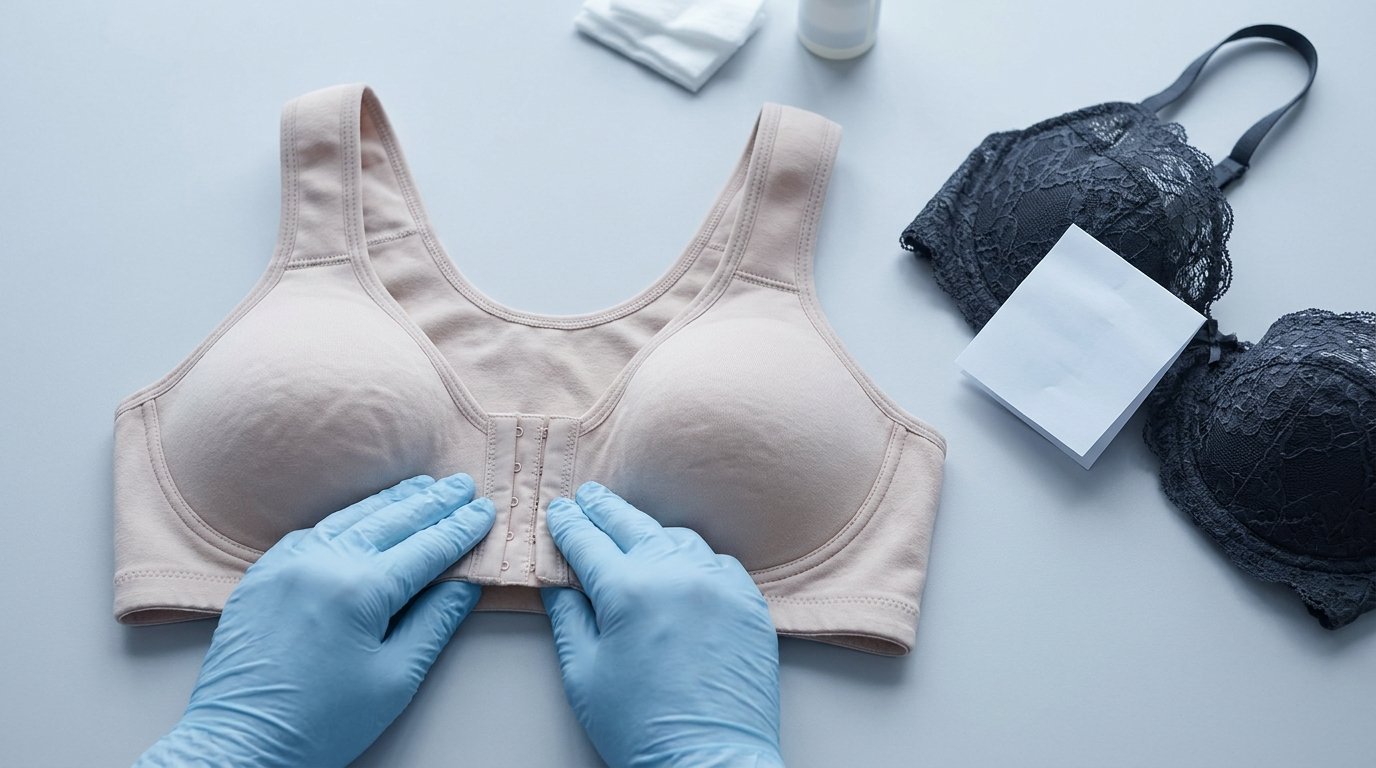
Recovery after a lift without implants is often a little simpler than recovery from combined lift-and-implant surgery, but it is still real surgery. Expect tightness, swelling, bruising, and tiredness in the first days. You will usually wear a supportive post-op bra and be asked to avoid underwire early on.
Many patients can walk around the same day and manage light daily tasks quickly, but that is not the same as being fully recovered. Reaching overhead, lifting children, gym workouts, and sleeping comfortably on your side can take longer. If your job is office-based, returning after about one to two weeks is common, but jobs with lifting or repetitive arm movement often need more time.
Swelling tends to improve in stages. The breasts may look high, firm, or oddly shaped at first. That is normal early on. The lower pole softens and the tissue settles over the following weeks and months. Scar care often begins once the incisions are closed enough, based on the surgeon’s instructions.
A common question for medical travellers is how long to stay. For a breast lift, staying long enough for the first checks, dressing changes if needed, and early wound review is sensible. Many international patients plan to remain locally for at least the immediate post-op period so the operating team can assess healing before travel home.
📋 Travel planning matters For surgery abroad, do not book a rushed return flight. Early follow-up and wound review are an important part of safe recovery.
Most patients are mobile within a day, need a lighter schedule for the first week or two, and can usually return to desk-type work in about one to two weeks depending on how they heal. Swelling improves gradually, while scar settling and final shape continue to develop over several months.
What complications and limits should you know before deciding?
The main complications to understand are not just the dramatic rare ones, but the more common practical issues that affect satisfaction. Wound healing problems can happen where incisions meet, especially in the lower part of the breast. Small openings are not unusual and may need dressings and patience rather than another operation, but they can slow recovery.
Changes in nipple feeling are another real issue. Sensation may be reduced, increased, or altered for some time, and it does not always return fully. Breastfeeding may still be possible for some women after a lift, but it cannot be promised. If future breastfeeding matters greatly to you, that should be part of the consultation.
Asymmetry can improve, but perfect symmetry is not realistic. Breasts naturally differ, and surgery can refine rather than erase that. Scar quality is also unpredictable. Some scars heal as fine pale lines, while others stay thicker or darker for longer, especially if you are prone to raised scars.
The medical literature on mastopexy discusses these issues repeatedly: recurrent droop, bottoming out, poor scarring, wound breakdown, and patient dissatisfaction are well-recognised reasons for revision. That does not mean these outcomes are inevitable. It means they should be discussed openly before you choose surgery.
🚨 Nicotine raises risk Smoking, vaping nicotine, and nicotine replacement can all affect blood flow and increase the risk of wound and skin-healing problems.
Breast lift risks include bleeding, infection, delayed wound healing, noticeable scars, asymmetry, changes in nipple sensation, and dissatisfaction with shape. Less commonly, blood supply problems can affect the nipple or skin, especially in smokers. The safest decision is based on a clear understanding of both benefits and trade-offs.
Breast lift alone vs lift with implants vs reduction
These three operations are often discussed together because they solve different versions of the same problem.
A lift alone reshapes what you already have. A lift with implants combines reshaping with added volume, especially in the upper breast. A reduction removes breast tissue and skin, which can also lift the breast while making it smaller and lighter.
If you already know that large, heavy breasts bother your back, neck, bra straps, or exercise, it may be worth reading about breast reduction surgery rather than assuming a lift alone is the answer. On the other hand, if your main issue is loss of fullness after pregnancy, a lift may need to be combined with implants, and some patients compare that option with breast augmentation during planning.
A lift alone is best for sagging with enough natural volume. A lift with implants suits patients who want more fullness as well as a higher shape. Breast reduction is usually better when heavy breasts cause discomfort and droop together. The right choice depends on whether your main issue is position, size, weight, or volume loss.
How should you judge cost, clinic safety, and travel logistics?
Because prices vary by anatomy, surgical plan, hospital setting, and aftercare, the most useful question is not “what is the cheapest option?” but “what exactly does the quote cover?” A breast lift quote often differs depending on the incision pattern, whether asymmetry correction is planned, whether overnight stay is needed, and what garments, medications, and follow-up are included.
For safety, ask where the operation takes place, whether the surgeon performing it is appropriately qualified in plastic surgery, and what happens if you have a wound problem after you return home. ASPS and the NHS both emphasise the importance of choosing a qualified surgeon and understanding the setting in which cosmetic surgery is carried out.
For international patients, recovery logistics are part of safety. You need clear advice on showering, dressings, scar care, signs of infection, and how to contact the team if something changes after travel. If you are comparing providers, focus on transparency, not sales language. A consultation request page such as book a consultation is useful only if it leads to a detailed surgeon-led assessment, not a generic package quote.
Clear discussion of scars, limitations, follow-up, and whether a lift alone can realistically meet your goal.
Pressure to book quickly, vague answers about complications, or no clear plan for aftercare once you travel home.
The right quote is not simply the lowest one. For a breast lift abroad, look at what is included, who performs the surgery, what follow-up is provided, and whether the clinic and hospital setting are properly accredited. You also need enough time in the country for review before flying home.
Frequently Asked Questions
References
- 📎PubMed search: mastopexy complications
- 📎PubMed search: mastopexy outcomes patient satisfaction
- 📎NHS: Cosmetic procedures
- 📎ASPS: Cosmetic procedures
Related Articles

You Might Also Like



Related articles

Our specialists
 Clineca SpecialistErkan PinegözPlastic & Reconstructive Surgery
 Clineca SpecialistHakan AktaşPlastic & Reconstructive Surgery
 Clineca SpecialistOrkun UzuneyüpoğluPlastic & Reconstructive Surgery
 Clineca SpecialistSalim İskenderPlastic & Reconstructive Surgery
 Clineca SpecialistEngin SelamioğluPlastic & Reconstructive Surgery
 Clineca SpecialistCem AydınPlastic & Reconstructive Surgery
 Clineca SpecialistAlperen ÖnalEar, Nose & Throat (ENT)