
Have a question about Tummy Tuck?
In this article
Most people picture a tummy tuck as a long low scar and a flatter area below the belly button. But some patients arrive with the opposite problem: the lower abdomen is reasonably tight, while the skin above the navel sags, crinkles or hangs over the waistband of a bra. That upper-abdomen pattern is the reason the reverse tummy tuck exists, and it is a very different operation from the one most quotes are written for.
What a reverse tummy tuck actually does
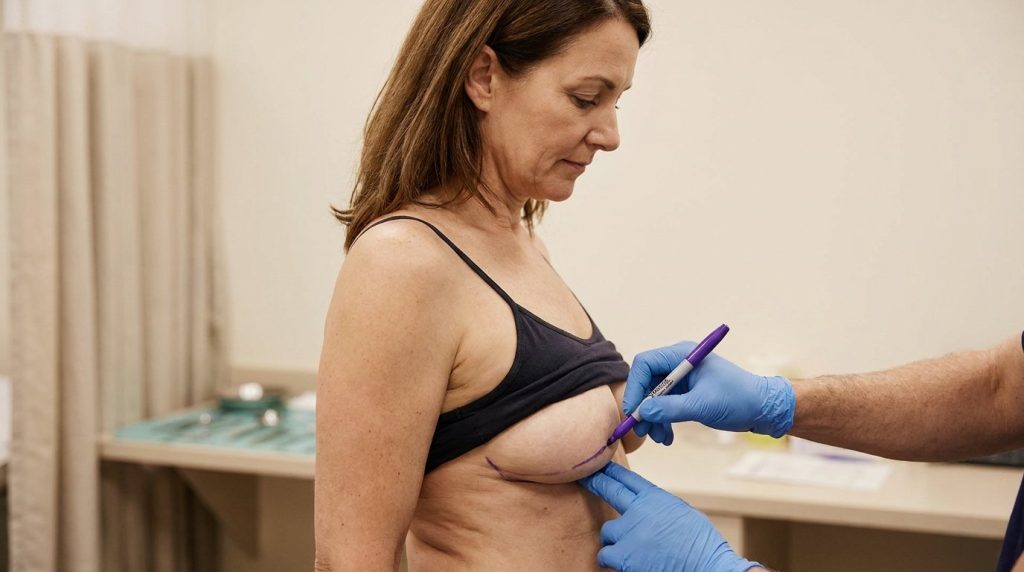
A reverse tummy tuck — your surgeon may call it reverse abdominoplasty — removes loose skin from the upper abdomen and pulls the remaining skin upwards, rather than downwards. The incision is placed in the crease under the breasts, running along the inframammary fold and often crossing the middle of the chest between them. Excess skin above the navel is trimmed, and the edges are brought up and closed into that crease.
A standard abdominoplasty works in the other direction. The surgeon makes a low horizontal incision near the pubic area, lifts the skin, usually tightens the separated abdominal muscles, repositions the belly button and pulls everything down. That is a bigger operation with a bigger effect, and for most patients it is still the right one.
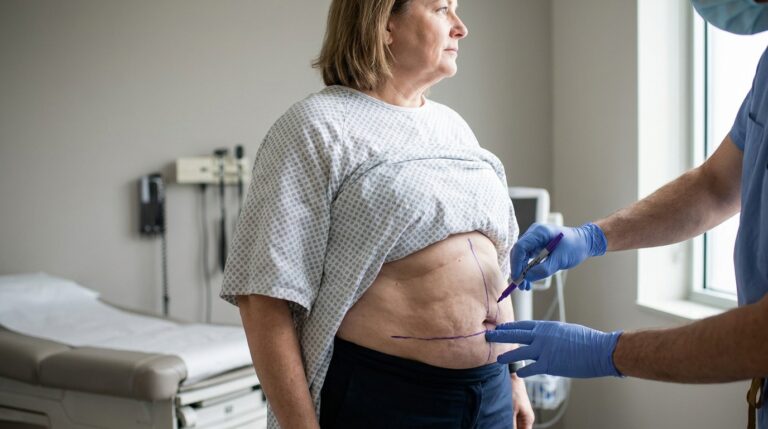
The reverse version is deliberately narrower in scope. It does not reposition the navel, it does not usually address muscle separation after pregnancy, and it does nothing for skin below the belly button. What it does well is remove the horizontal folds and loose roll that sit between the navel and the ribs — an area a downward-pulling tummy tuck can leave almost untouched.
A 2022 paper in Plastic and Reconstructive Surgery on decision-making for advanced body contouring makes a point worth repeating here: cutting out loose skin is the mainstay for genuine laxity, but choosing which excisional operation to use is the difficult part, and the shape and position of the navel matter a great deal in that choice. That is precisely the judgement call behind a reverse tummy tuck.
📋 Not a substitute for a standard tummy tuck If your loose skin is mainly below the navel, or your abdominal muscles separated during pregnancy, a reverse abdominoplasty will not fix it. In that situation a mini or full tummy tuck is the operation being discussed.
Reverse vs standard tummy tuck: how they compare
The two operations overlap in name only. Comparing them side by side usually makes the choice obvious within a single consultation, especially once your surgeon has seen where the skin actually folds when you stand up and when you bend forward.
If the comparison you are weighing is a smaller downward operation instead, our explainer on the difference between a mini and a full tummy tuck covers that ground, and there is a separate piece on the extended versus standard tummy tuck if your looseness wraps around to the flanks.
Who is a good candidate — and who is not
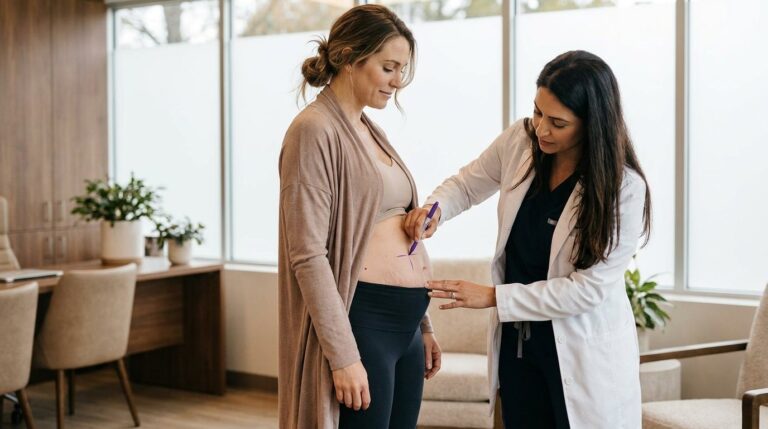
The clearest candidates share one thing: when they lift the skin above the navel with their own hand, the improvement they want appears. Three situations come up again and again in consultation.

The first is significant weight loss, where the upper abdomen deflates and leaves horizontal creases that no amount of training tightens. The second is a patient who has already had a standard abdominoplasty years ago and is happy below the navel but not above it — a reverse procedure finishes the job without redoing the original scar. The third is a patient whose looseness is genuinely limited to a band under the ribs, often alongside breast surgery they already want.
It suits you less well if you carry deep fat rather than loose skin, if you smoke, if your weight is still moving, or if you would be unhappy with a scar in the breast crease. People with very little breast tissue are also worth flagging, because the scar has less of a natural fold to hide in.
If your loose skin sits strictly below the belly button, read our piece on a mini tummy tuck for loose skin below the belly button instead — that is a different problem with a different answer.
Stable weight for six months or more, loose skin concentrated above the navel, non-smoker, realistic about a scar in the breast fold, and willing to wear compression for several weeks.
Lower-abdomen overhang, muscle separation after pregnancy, ongoing weight change, heavy smoking, or an expectation of a flat stomach from a procedure that only treats the upper half.
Liposuction alone where the issue is fat rather than skin, a standard or extended abdominoplasty where laxity is widespread, or a staged plan that treats the lower abdomen first.
Where the scar sits and how it behaves
Scar placement is the real trade-off of this operation, and it deserves an honest conversation rather than reassurance. The line sits in the inframammary crease, which hides well in a bra or bikini top on many patients but is visible when the breast is lifted. Where the two sides are joined across the middle of the chest, that central portion has no fold to hide in and tends to be the least forgiving part.
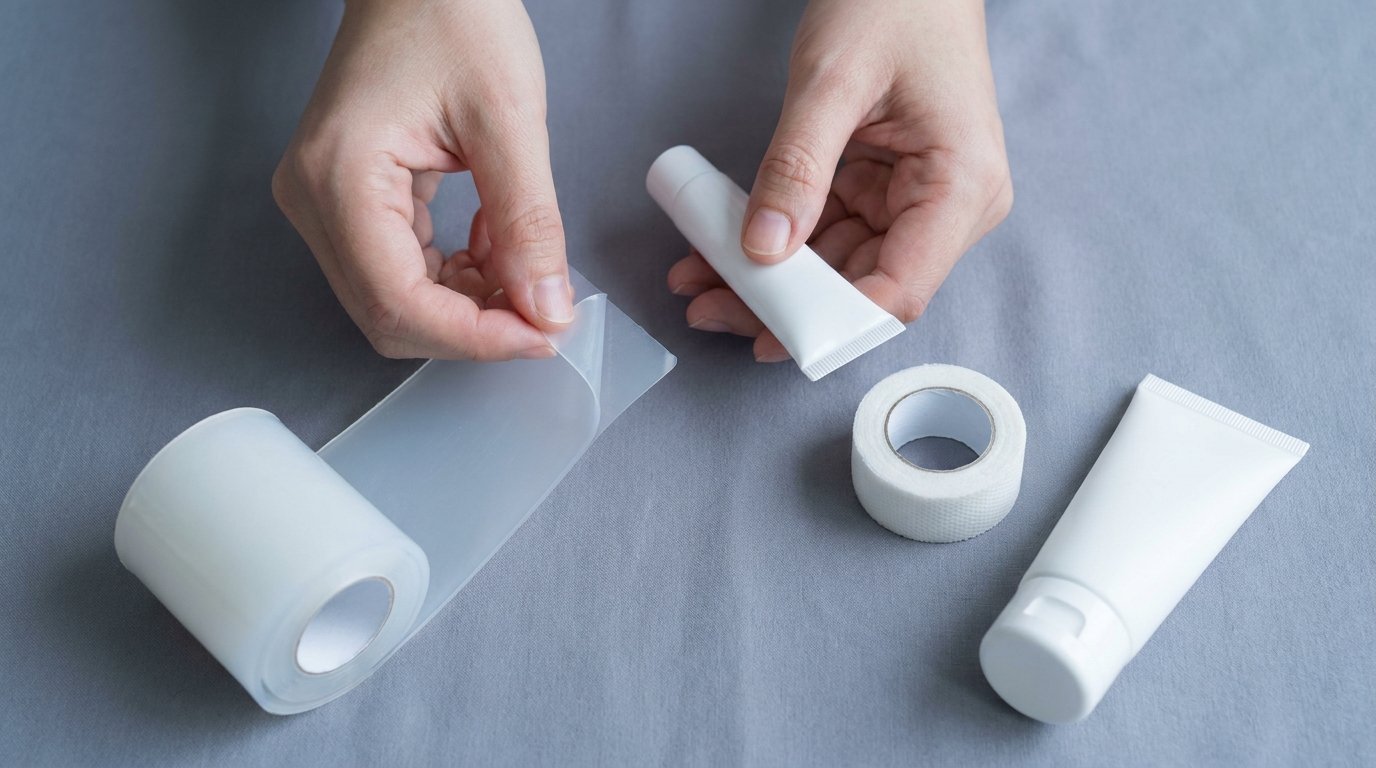
Early on the scar looks pink and slightly raised. Over the first few months it flattens and fades, and most of the maturing happens over roughly a year to eighteen months. Taping, silicone gel or sheets, sun protection and avoiding tension on the area all help; genetics and skin type still set the ceiling on how discreet it ends up.
Incision planning also changes when this is done at the same time as breast surgery, because the surgeon is already working in that crease. That overlap is one of the main reasons the two are planned together, and it is worth raising at consultation if breast surgery is anywhere on your list.
⚠️ Ask to see unretouched scar photos Before committing, ask the surgeon for their own healed results at six and twelve months, photographed with the arms down and with the breast lifted. A clinic unwilling to show the midline portion of the scar is telling you something.
What drives the cost of a reverse abdominoplasty
There is no single price for this operation, and a figure quoted without an examination is not a quote — it is marketing. Cost is built from operating time, the complexity of the skin removal, anaesthesia, hospital or facility fees, implants or devices if any, your surgeon’s experience, and the aftercare the clinic commits to. A personalised price is confirmed after consultation and photo review.
One thing skews almost every comparison people make online: a reverse tummy tuck is rarely the only item on the plan. That pattern is strong in our own practice — roughly 87% of the tummy tuck patients we treat have a second operation in the same session, most often a breast lift, a breast lift with implants, or liposuction. For you, that means the realistic budget to prepare for is a combined-procedure one, and a single-procedure price you found elsewhere will almost certainly undershoot the quote you actually receive.
For how quotes are structured more generally, our overview of abdominoplasty in Turkey: cost, safety and recovery walks through the same logic in more detail.
📋 What a complete quote should spell out Surgeon and anaesthetist fees, hospital time, garments, follow-up appointments, what happens if you need a minor revision, and which of your travel costs are and are not included.
Recovery week by week
Recovery from a reverse tummy tuck on its own is usually gentler than from a full abdominoplasty — you are not fighting the pull of a downward closure, and you can generally stand upright from the start. In exchange, the tightness sits across the chest and ribs, so deep breathing, coughing and reaching overhead are the uncomfortable movements for the first week or two.
Because most patients combine it with something else, the timeline that actually applies to you is set by the larger operation, not the smaller one. If a breast lift or liposuction is on the same list, plan around the slower of the two. Our week-by-week abdominoplasty recovery guide is a useful companion if a standard tummy tuck is part of your plan.
Drains are sometimes used and sometimes not, depending on the surgeon and the extent of the lift. Compression is near-universal, and wearing it as instructed does more for your final contour than almost anything else you control.
🚨 Contact your surgeon urgently if You develop one-sided calf pain or swelling, chest pain or breathlessness, a fever, spreading redness, foul-smelling discharge, or a sudden firm collection of fluid under the skin. These need assessment the same day, wherever you are.
Planning the trip, and choosing a surgeon you can trust
For international patients, the practical question is how long to stay. A reverse abdominoplasty alone needs a shorter window than a full tummy tuck, but if it is combined with breast surgery or liposuction, the stay is dictated by the bigger procedure. Build in time for the post-operative check, final dressing change and written flying clearance rather than booking a return flight on the earliest day that looks possible. Our guide on how long to stay in Turkey after plastic surgery sets out realistic windows.
When you assess a surgeon, two things matter more than the website. The first is credentials you can verify: specialist plastic surgery training, recognised board or association membership, and an accredited hospital rather than an unlicensed day clinic. The second is whether they are willing to tell you that a reverse tummy tuck is the wrong operation for you. Anyone who agrees to whatever you ask for, sight unseen, is not assessing you.
Ask how many upper-abdomen excisions they perform in a year, who manages your care overnight, who you call at 2am in week two, and what the written plan says if a seroma or wound-healing problem develops after you fly home. A clinic with clear answers to those four questions behaves very differently from one that only answers questions about price.
This article is for informational purposes only and does not constitute medical advice. Always consult a qualified surgeon for personalised guidance.
- ✓Verify the surgeon, not the brand: Confirm the individual operating on you holds specialist plastic surgery qualifications and is named in writing before you pay.
- ✓Insist on an accredited facility: General anaesthesia belongs in a licensed hospital with overnight medical cover and intensive care access.
- ✓Get the plan in writing: Procedures, combined operations, garments, follow-up schedule, complication policy and flying clearance date.
- ✓Judge the photos properly: Same lighting, same pose, arms down, taken at six months or later — not day-one photos with the swelling still hiding the scar.
Frequently Asked Questions
References
- 📎Decision-Making Algorithm for Advanced Excisional Body Contouring: Dynamic Definition Solutions for Skin Laxity — Plastic and Reconstructive Surgery, 2022
- 📎ASPS — Cosmetic Procedures
- 📎NHS — Cosmetic Procedures
Related Articles



You Might Also Like



Related articles

Our specialists
 Clineca SpecialistErkan PinegözPlastic & Reconstructive Surgery
 Clineca SpecialistHakan AktaşPlastic & Reconstructive Surgery
 Clineca SpecialistOrkun UzuneyüpoğluPlastic & Reconstructive Surgery
 Clineca SpecialistSalim İskenderPlastic & Reconstructive Surgery
 Clineca SpecialistEngin SelamioğluPlastic & Reconstructive Surgery
 Clineca SpecialistCem AydınPlastic & Reconstructive Surgery
 Clineca SpecialistAlperen ÖnalEar, Nose & Throat (ENT)