
In this article
- What Really Decides Your Stay Length
- Typical Stay Windows by Procedure
- How Long After Surgery Can I Fly Home?
- What Those Days in Turkey Actually Look Like
- Does a Longer Stay Cost More? What Quotes Usually Cover
- Safety and Choosing a Clinic You Can Trust With Aftercare
- Booking Flights and Planning for Delays
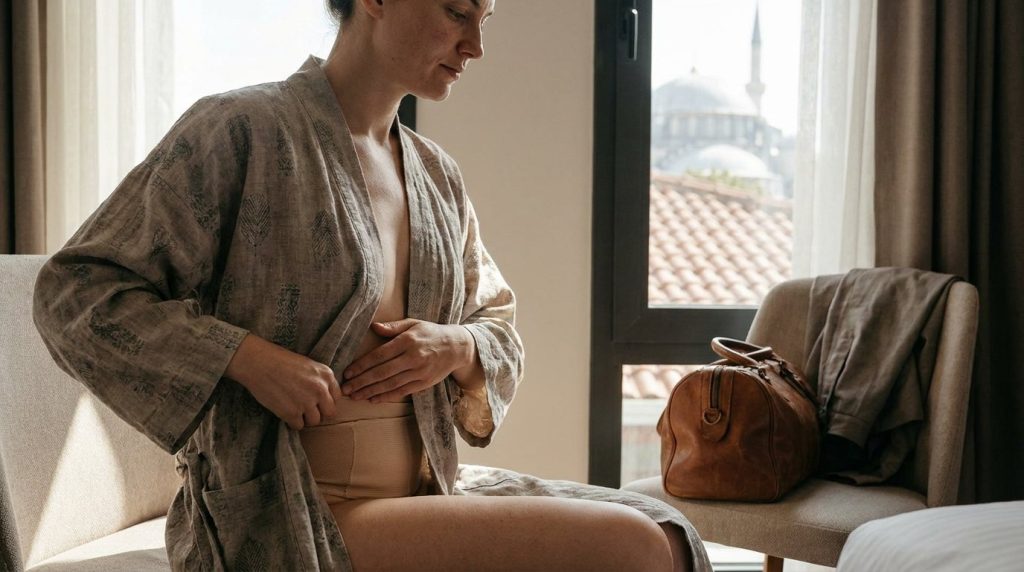
Almost every enquiry we receive includes some version of the same practical worry: how long to stay in Turkey after plastic surgery, and when it is actually safe to get on a plane home. It sounds like an admin question, but it shapes your time off work, your childcare, your insurance and the price of your flights. It is also the one detail patients most often guess at before anyone medical has looked at their plan.
What Really Decides Your Stay Length
Your stay is not set by the operation alone. It is set by the moments in early healing that need a surgeon’s hands and eyes, plus the point at which flying stops adding risk.
Three things usually hold patients in the country. The first is wound and dressing care: stitches, nasal splints, drains and tapes that have to come off or be checked. The second is the first proper follow-up, where the surgeon looks for bleeding, infection or fluid collecting under the skin — the problems that tend to show up in the first few days rather than later. The third is the flight itself, because sitting still in a pressurised cabin is not neutral after surgery.
There is also a quieter reason that matters more than people expect. If something small goes wrong, it is far easier to fix while you are twenty minutes from the clinic than three countries away. That is the real logic behind a stay window, and it is why a surgeon may extend yours after seeing how you are healing.
The length is always a clinical decision, not a package feature. Two people having the same procedure can be given different advice depending on their health, their weight, whether they smoke, and whether more than one area was treated in a single session.
📋 Ask for the stay window in writing Before you book flights, ask your coordinator for the expected number of nights, the date of your final check-up, and who decides if you need to stay longer. A clinic that cannot answer this clearly has not planned your aftercare.
Typical Stay Windows by Procedure
The table below shows the stay lengths most often planned for international patients. Treat them as planning guides for booking, not promises — your surgeon sets your own window, and combined operations usually push it toward the longer end.
Facial surgery tends to need a shorter stay than body contouring, simply because there is less tissue trauma and no drains. Body work that removes a lot of fat or skin sits at the other end. If you are having more than one procedure in one session, read our notes on how to plan combined plastic surgery in Turkey before you choose dates.
⚠️ Combined surgery is not two stays added together Having a tummy tuck alongside breast surgery does not double your stay, but it usually lengthens it. Ask for a single planned window for the whole plan rather than per-procedure estimates.
How Long After Surgery Can I Fly Home?
The flight question is really a blood clot question. Surgery makes the blood more likely to clot, and long periods of sitting still make it worse, so the two risks stack. That is why most surgeons want a clear gap between theatre and take-off rather than a quick turnaround.
As a broad pattern, patients having shorter facial or minor procedures are often cleared to fly around a week after surgery, while those having major body contouring are usually asked to wait closer to two weeks. The decision belongs to your surgeon and is based on your wounds, your mobility and your general health. NHS advice for patients recovering from an operation is to check with the medical team before flying, because timing depends on the surgery and on the individual.
There is a second layer: airlines can ask for medical clearance if you are flying soon after an operation, and some ask for a fit-to-fly letter. Your clinic should be able to issue one. Tell the airline at booking if you need extra legroom, an aisle seat or help with bags.
Making the flight home easier
The practical measures are simple and worth doing properly:
- ✓Walk the aisle every hour or so, and flex your ankles and calves while seated
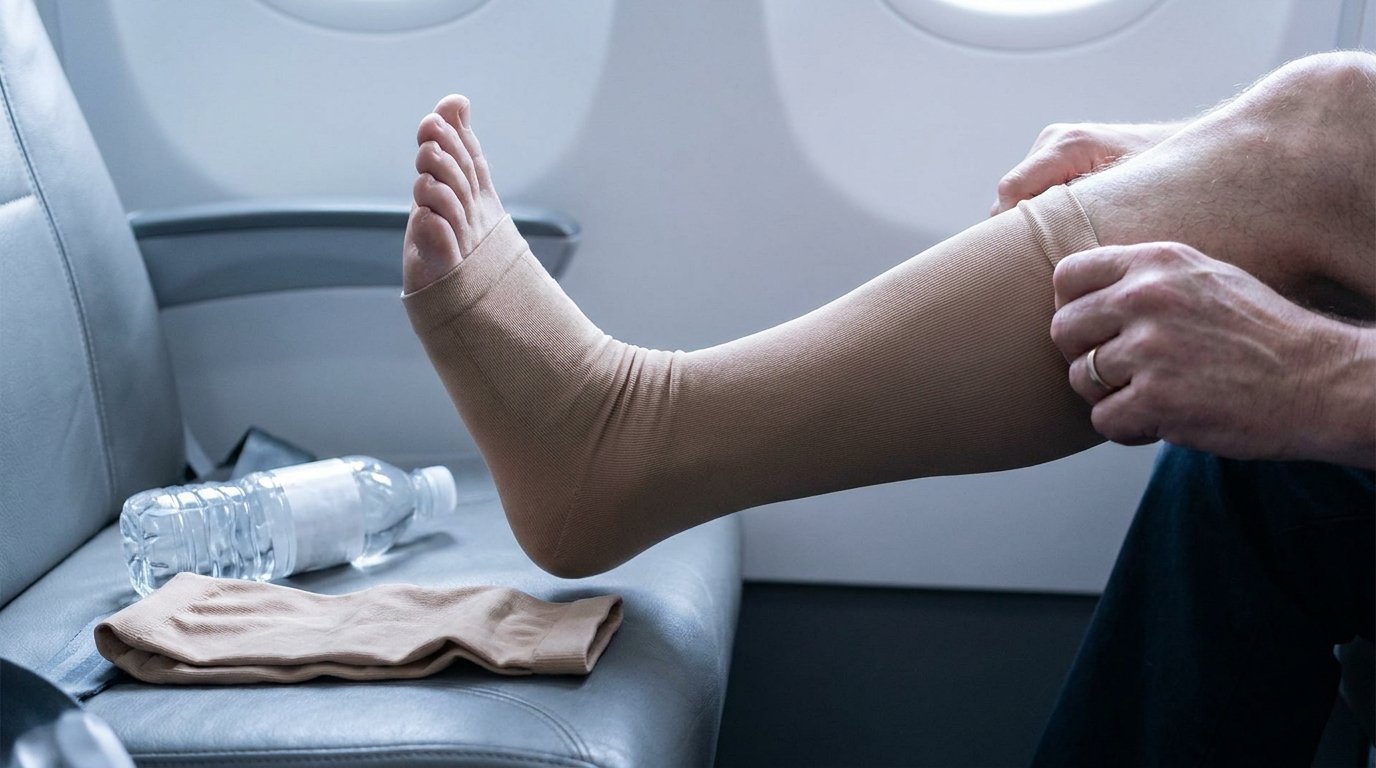
- ✓Wear the compression stockings your surgeon prescribes, not just your usual garment
- ✓Drink water steadily and skip alcohol and sleeping tablets on the flight
- ✓Book an aisle seat, and avoid a tight connection that forces you to rush between gates
- ✓Keep painkillers, dressings and your clinic’s emergency number in your hand luggage
Nose surgery brings its own quirk. Cabin pressure changes can make a freshly operated nose feel blocked and uncomfortable, and blowing your nose is off limits in early healing. Buttock surgery brings the opposite problem: you may still be under sitting restrictions, which makes a long-haul seat a real obstacle — our guide to flying after a BBL goes into how patients manage this.
🚨 Do not fly with these symptoms Calf pain or swelling in one leg, chest pain, breathlessness, fever, a wound that is opening, spreading redness or heavy or increasing bleeding all need to be seen before you travel. Contact your clinic the same day rather than boarding and hoping.
What Those Days in Turkey Actually Look Like
The stay is rarely all hospital. Most patients spend one to three nights in hospital depending on the procedure, then move to a hotel for the rest of the window with transfers arranged between the two.
The early hotel days are quiet and slightly dull, which is the point. You rest, walk short distances, manage swelling and keep appointments. From the middle of the stay most people feel well enough for gentle short outings, though heat, long walks, sun on fresh scars and swimming are usually off the list. Our piece on aftercare after surgery in Turkey covers the hotel-and-flying side in more detail, and there is a procedure-specific version for patients working out how long to stay in Turkey for breast surgery.
Bring a companion if you can, especially for body contouring. Someone who can carry a bag, fetch food and help you in and out of a chair makes the first week noticeably easier — and if you are travelling alone, say so early so the clinic can plan support and transfers around it.
- ✓A ground-floor or lift-served hotel: Stairs are harder than people imagine after abdominal or thigh surgery.
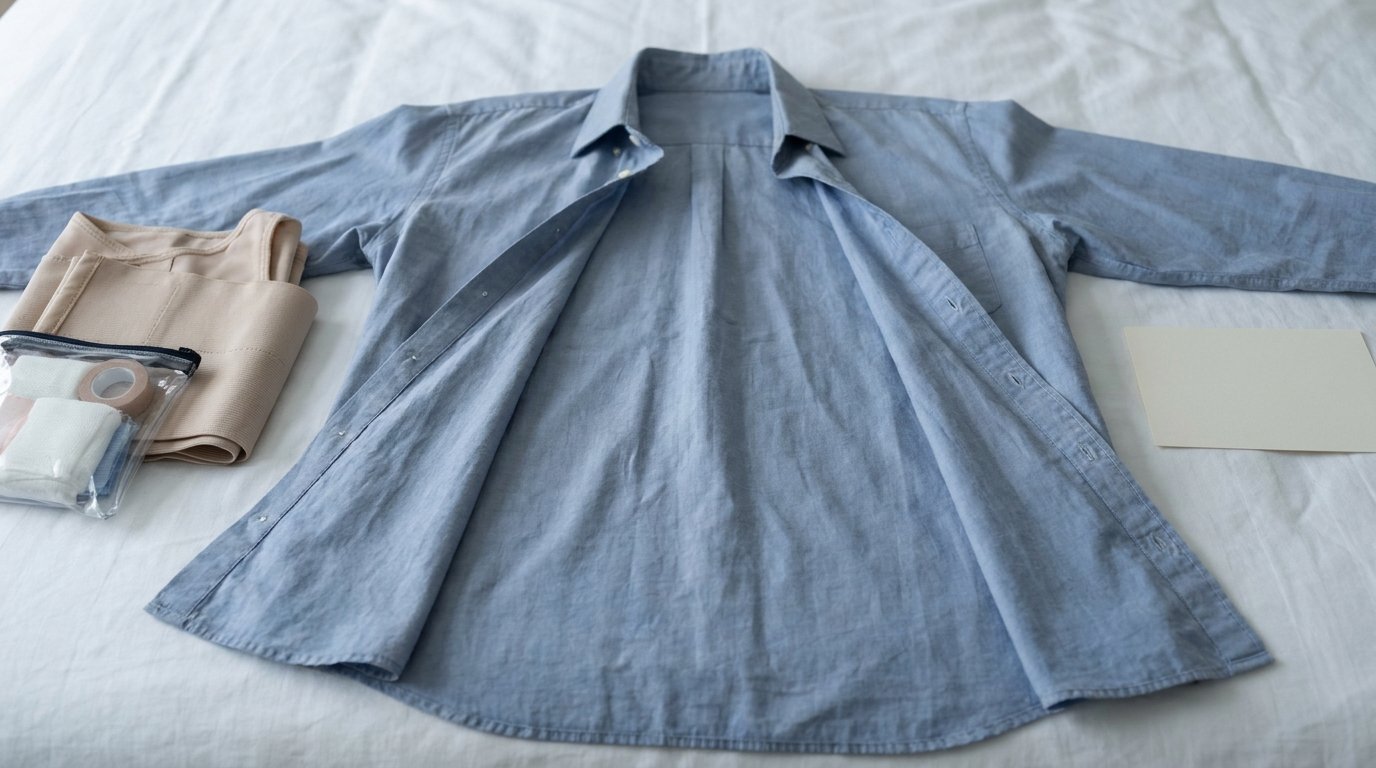
- ✓Loose front-opening clothes: Anything you pull over your head is awkward after breast or arm surgery.
- ✓A short transfer time: A hotel close to the hospital turns a follow-up visit into a minor errand.
- ✓Flexible food options: Room service or a kitchenette beats hunting for restaurants on day two.
Does a Longer Stay Cost More? What Quotes Usually Cover
Stay length and price are linked, so it is worth understanding what your quote includes before you compare clinics. Packages for international patients normally bundle the hospital stay, the surgeon and anaesthetist, standard post-operative garments or splints, airport and clinic transfers and a set number of hotel nights. Quotes are typically presented in euros, pounds or US dollars as well as Turkish lira.
What varies is the edges: extra hotel nights if your surgeon extends your stay, flight changes, a companion’s room, and any scans or tests added after assessment. Those are the items that quietly change the total, which is why a written inclusion list matters more than a headline figure.
Your own price is confirmed after a consultation and review of your medical history, because the plan — and therefore the stay — depends on what you actually need.
📋 The question worth asking "If my surgeon asks me to stay three extra nights, who pays for the hotel and who rebooks my flight?" The answer tells you a lot about how a clinic handles the unexpected.
Safety and Choosing a Clinic You Can Trust With Aftercare
Stay length is a safety feature, so judge a clinic partly on how it talks about it. A provider that pushes you toward the shortest possible trip is managing its own logistics, not your recovery.
Check that your surgery takes place in a hospital licensed by the Turkish Ministry of Health, rather than an unlicensed office setting. Some hospitals additionally hold Joint Commission International (JCI) accreditation, an international hospital quality standard. For the surgeon, look for Turkish specialist registration in plastic, reconstructive and aesthetic surgery, and ask about further credentials such as EBOPRAS board certification or membership of ISAPS. If you want a broader view of the risks and safeguards, we cover them in is plastic surgery in Turkey safe.
You should also know what happens after you fly. Ask who reviews your photos at week two and week six, how you reach the surgeon directly, and what the policy is if a revision is needed later.
A named, registered surgeon; a licensed hospital; a written stay window with follow-up dates; clear instructions on when you may fly; a fit-to-fly letter offered; a contactable aftercare team once you are home.
Pressure to fly out within a few days of major surgery; no named surgeon until arrival; a quote with no inclusion list; discounts that expire today; no plan for complications after you leave the country.
Sometimes the honest answer is to stage the plan — one procedure now, another on a later trip — rather than squeeze everything into one short visit. Discuss staging at consultation instead of shortening recovery.
Booking Flights and Planning for Delays
Build slack into the trip. Book a flexible or changeable return fare if your budget allows, and avoid non-refundable tickets pinned to the earliest possible date. Patients who lose money on travel are almost always the ones who booked a tight return before anyone medical confirmed the plan.
Take out travel insurance that is valid for a planned medical procedure abroad, and read what it says about complications and delayed return. Standard holiday policies often exclude elective surgery altogether. Arrive a day before your pre-operative tests rather than the same morning, so a delayed flight does not derail your surgery date.
Finally, plan the week after you land home. Most patients need more rest than they predicted, and sick leave of one to three weeks is common depending on the procedure and how physical your job is. Keep your clinic’s contact details, your operation note and your medication list somewhere you can find them quickly, and register with your own doctor for anything urgent.
This article is for informational purposes only and does not constitute medical advice. Always consult a qualified surgeon for personalised guidance.
Frequently Asked Questions
References
- 📎NHS — Cosmetic procedures
- 📎EBOPRAS — European Board of Plastic, Reconstructive and Aesthetic Surgery
- 📎ISAPS Global Statistics
Related Articles


You Might Also Like


Related articles

Our specialists
 Clineca SpecialistErkan PinegözPlastic & Reconstructive Surgery
 Clineca SpecialistHakan AktaşPlastic & Reconstructive Surgery
 Clineca SpecialistOrkun UzuneyüpoğluPlastic & Reconstructive Surgery
 Clineca SpecialistSalim İskenderPlastic & Reconstructive Surgery
 Clineca SpecialistEngin SelamioğluPlastic & Reconstructive Surgery
 Clineca SpecialistCem AydınPlastic & Reconstructive Surgery
 Clineca SpecialistAlperen ÖnalEar, Nose & Throat (ENT)