
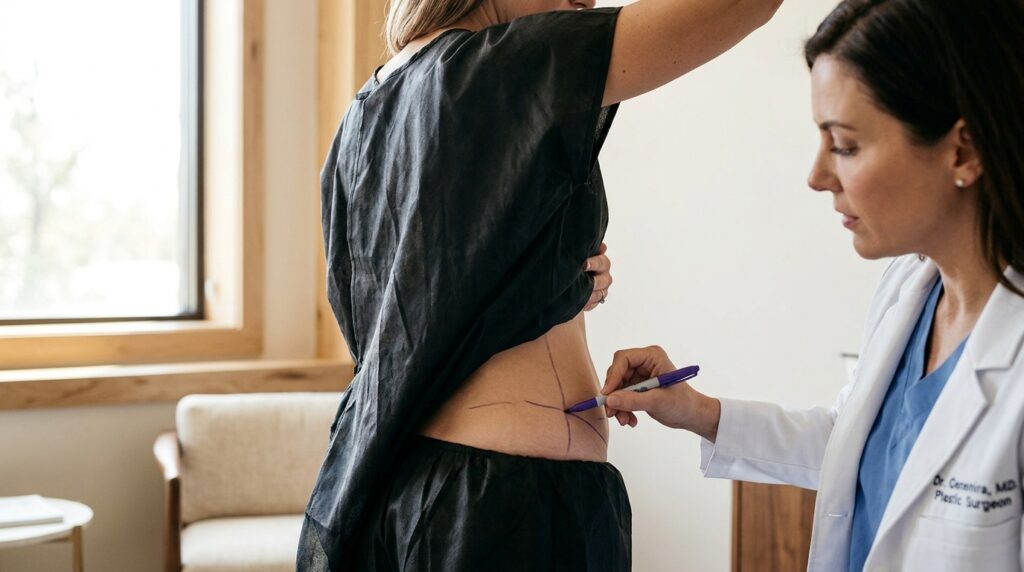
Have a question about Extended Tummy Tuck?
In this article
- What is the actual difference between an extended tummy tuck and a standard tummy tuck?
- How do the scar and the treatment area differ?
- Who is usually better suited to each option?
- Is recovery harder after an extended tummy tuck?
- Are the risks different?
- What affects the price if cost is not the same for everyone?
- How should you choose a clinic and surgeon for this surgery abroad?
The main difference between an extended tummy tuck and a standard tummy tuck is how much loose skin and tissue they remove, and how far the scar extends around the hips. If you are asking what is the difference between an extended tummy tuck and a standard tummy tuck, the short answer is that an extended procedure treats a wider area, but it usually means a longer scar, a bigger operation, and a recovery that can be a little more demanding. Suitability, recovery speed, and when it is safe to fly home vary from person to person, so final advice should always come from your own surgeon after assessment.
What is the actual difference between an extended tummy tuck and a standard tummy tuck?
A standard tummy tuck, also called a standard abdominoplasty, is designed to tighten the front of the abdomen. It usually removes excess skin and fat from the lower tummy, and it may also include tightening of stretched abdominal muscles if needed.
An extended tummy tuck goes further out toward the sides. It is often chosen when the looseness is not just in the middle of the abdomen but also continues across the waistline and around the flanks. This is common after major weight loss, pregnancy changes, or when there is significant skin overhang at the sides.
The American Society of Plastic Surgeons (ASPS) describes abdominoplasty as surgery that removes excess skin and fat and can restore weakened abdominal muscles. The wider your skin excess extends, the more likely it is that a wider operation may be discussed. That does not make it automatically the better choice. It simply means the procedure can match a broader problem.
If you look at the goal rather than the name, the distinction becomes clearer. A standard tummy tuck is mainly about the front of the lower abdomen. An extended tummy tuck is about the front plus more of the waist and side contour.
For readers comparing options, a detailed overview of abdominoplasty surgery can help put the terminology into context.
A standard tummy tuck focuses mainly on the lower abdomen. An extended tummy tuck also addresses loose skin and fullness that continue around the flanks or hips. In practical terms, the extended option treats a larger area, leaves a longer scar, and may involve a longer operation and recovery.
How do the scar and the treatment area differ?
This is often the biggest practical difference for patients. In a standard tummy tuck, the scar is usually placed low on the abdomen so it can often sit under underwear or swimwear, although exact placement varies. In an extended tummy tuck, the scar normally reaches farther out toward the hips because the surgeon is removing and tightening more tissue at the sides.
That longer scar is a trade-off. Many patients accept it because they want a smoother waistline and less overhang at the flanks. Others prefer a shorter scar, even if it means leaving some side looseness untreated. Neither choice is universally right.
The NHS notes that cosmetic surgery scars are permanent, even though they often fade over time. That is an important point when comparing these two operations. An extended tummy tuck may improve contour more broadly, but you should expect a larger scar in return.
A good consultation should include a clear discussion of where the scar is likely to sit on your body, not just a generic diagram. Body shape, prior scars, skin quality, and whether liposuction is added can all affect the final plan.
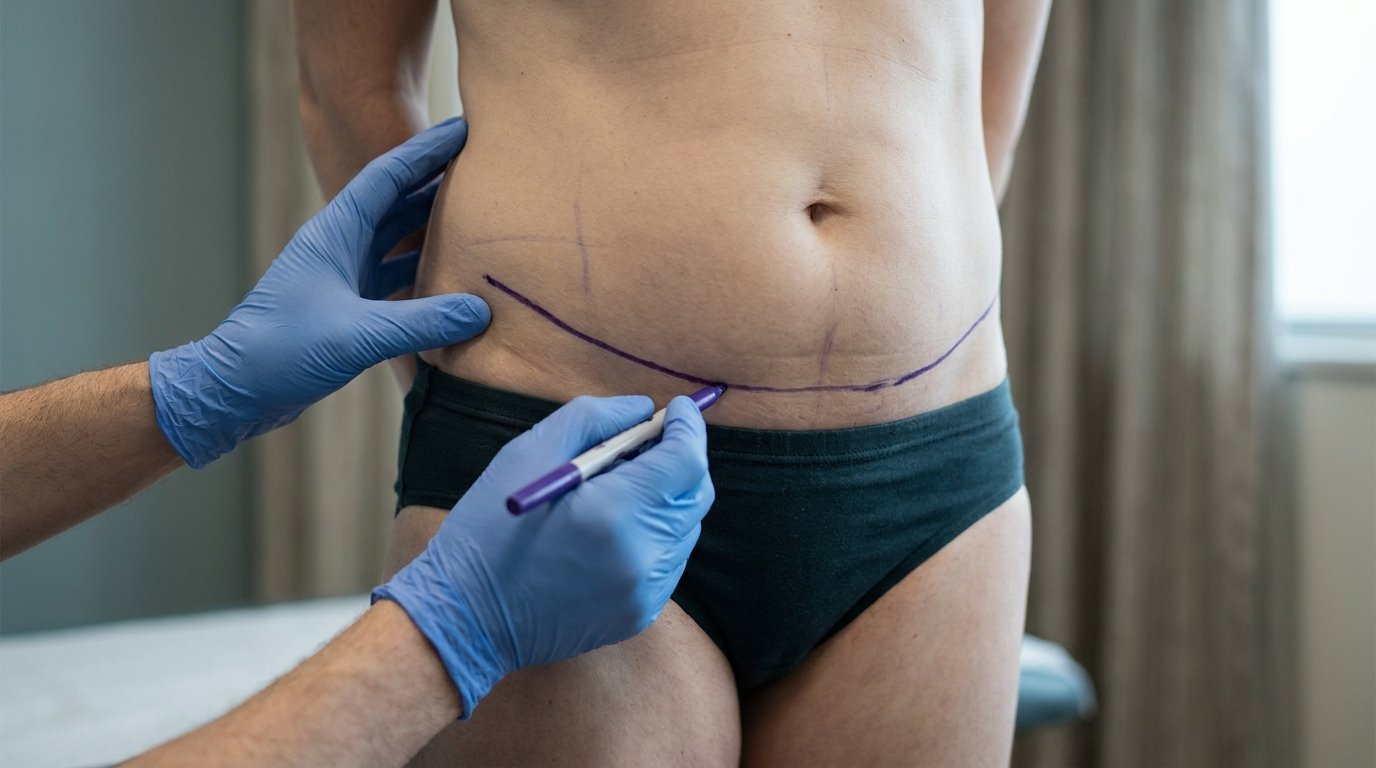
📋 Scar length is part of the decision A longer scar is not a complication by itself. It is often the natural result of removing more loose skin across a wider area.
The scar from a standard tummy tuck usually sits low across the bikini line. In an extended tummy tuck, that scar typically runs further toward the hips, and sometimes around part of the sides, because more skin is being removed. A bigger treatment area usually means a longer scar.
Who is usually better suited to each option?
A standard tummy tuck may suit someone whose main concern is a lower abdominal bulge, stretched skin below the navel, or muscle separation after pregnancy. If the waist sides still look fairly firm, a standard approach may be enough.
An extended tummy tuck is more often discussed when the excess skin reaches beyond the front of the abdomen. This can happen after losing a lot of weight, after multiple pregnancies, or when there is visible overhang at the flanks and side waist. In some patients, a surgeon may also discuss whether a body lift procedure is more appropriate if looseness continues further around the torso.
This is also where honesty matters. Some people ask for the smallest scar possible, but their skin excess clearly extends beyond the area a standard tummy tuck can treat well. In that situation, choosing the smaller procedure may mean accepting a less balanced result. On the other hand, if the side tissue is mild, an extended scar may be more surgery than you need.
The best consultations are usually the ones where the surgeon explains what each operation can and cannot fix on your body specifically, rather than pushing the biggest procedure.
A standard tummy tuck often suits people whose loose skin is mainly in the lower front abdomen. An extended tummy tuck is more often considered when loose skin and tissue continue around the waist or after significant weight loss. The right choice depends on anatomy, goals, scars, and how much surgery you are willing to accept.
Is recovery harder after an extended tummy tuck?
In broad terms, yes, recovery can be tougher after an extended tummy tuck, though not always dramatically so. Because the surgery covers a larger area, you may feel tighter across the abdomen and sides, and moving fully upright can take a bit longer.
ASPS guidance for tummy tuck recovery commonly emphasises early walking, compression garments where advised, and avoiding strenuous activity until cleared. The NHS also warns that cosmetic surgery recovery takes time, and that pain, swelling, bruising, and scarring are part of the normal process after major body contouring surgery.
Most patients think about recovery in stages rather than in one finish line. The first few days are about pain control, careful walking, drains if used, and rest. The next couple of weeks are about gradually becoming more mobile while protecting the repair. Swelling often improves in steps, not in a straight line.
For international patients, travel planning matters almost as much as the surgery itself. An extended tummy tuck may mean a slightly longer local stay before flying than a standard tummy tuck, especially if your mobility is slower or your surgeon wants to monitor drains, wound healing, or swelling. There is no safe one-size-fits-all flight date. Surgeon clearance before flying is essential.
The table below shows the usual pattern, but it is only a guide. Your own instructions always come first.
⚠️ Do not book flights too tightly Travel timing should be confirmed only after your surgeon reviews your progress. Drain use, wound healing, swelling, and your risk of blood clots can all change the plan.
Recovery after an extended tummy tuck can be a little more demanding because more tissue is treated and the scar is longer. Both operations need downtime, compression, walking, and follow-up. Swelling, tightness, and reduced mobility are normal early on, but exact recovery varies and flying home needs surgeon clearance.
Are the risks different?
The basic risk profile is similar because both operations are tummy tucks. The NHS advises that all cosmetic surgery carries risks including bleeding, infection, scarring, blood clots, and problems linked to anaesthetic. With tummy tuck surgery specifically, fluid collections, delayed wound healing, numbness, and uneven contour can also be discussed.
An extended tummy tuck is not automatically unsafe, but it is a bigger operation in scope. A longer incision means more healing surface. A wider area of tissue movement can mean more swelling and more need for careful aftercare.
Risk is not only about the procedure name. It is also shaped by smoking, weight stability, diabetes, previous scars, nutrition, and whether several procedures are combined at once. Combining surgery can be reasonable in selected cases, but it needs a careful discussion of added recovery and risk rather than a sales pitch.
If you are still comparing body procedures, it may help to review related options such as liposuction or a mommy makeover consultation, because some patients need contouring in more than one area and others need less surgery than they first assumed.
Your surgeon explains risks in plain language, including blood clots, wound healing issues, scar limits, and what happens if recovery is slower than expected.
You are told the operation is simple, risk-free, or that you can definitely fly home by a fixed date before any assessment.
The core risks are similar because both are forms of abdominoplasty: bleeding, infection, fluid build-up, wound healing problems, scarring, blood clots, and anaesthetic risks. An extended tummy tuck may carry more wound-care demands simply because the incision is longer and the treated area is larger.
What affects the price if cost is not the same for everyone?
Even without quoting numbers, it is fair to say that an extended tummy tuck is usually the more resource-heavy option. It often takes more operating time, creates a longer incision to care for, and may involve a longer stay for review before travel.
Other cost drivers include whether muscle repair is needed, whether liposuction is added, the hospital setting, the surgeon’s experience, anaesthesia, compression garments, medications, and the number of follow-up visits required. For patients travelling to Turkey, accommodation, transfers, and the length of local stay also matter.
A trustworthy provider should explain what is and is not included. That matters more than seeing a single headline figure. A lower initial quote can become less attractive if it excludes key aftercare or leaves little room for safe recovery before flying.
If you want a tailored plan, the sensible next step is a structured online consultation based on your photos, goals, medical history, and travel dates.
There is no single fixed price for either procedure. An extended tummy tuck often costs more than a standard tummy tuck because it usually takes longer, treats a larger area, and may need more aftercare. The final quote should be personalised and confirmed only after consultation.
How should you choose a clinic and surgeon for this surgery abroad?
This is where many patients make the right decision or the wrong one. A good provider does not just show before-and-after photos. They review your medical history, ask about smoking, weight changes, pregnancies, previous abdominal surgery, and explain what sort of scar and recovery you should realistically expect.
Ask who performs the operation, where it is performed, what support you have after discharge, and how complications would be handled if you are still in Turkey or once you return home. You should also feel able to ask about credentials and meet the surgeon, not just a coordinator. A useful starting point is learning more about the clinic team and surgeons on the doctors page and about the clinic page.
For medical facts, stronger sources matter. The NHS is clear that cosmetic surgery should be approached carefully, with proper checks on the practitioner and setting. ASPS patient guidance also reinforces that recovery instructions, follow-up, and individual suitability are central to safer outcomes.
Because this article is for general education, it is not a personal recommendation. A surgeon who has examined you is the only person who can say whether a standard tummy tuck, an extended tummy tuck, or another contouring plan is the better fit.
⚠️ Expert review and medical accuracy note This article is educational content written for international patients and medically reviewed against guidance from the NHS and ASPS. It does not replace an examination or personalised surgical advice.
- ✓A proper consultation reviews your health, weight stability, scars, and goals
- ✓The surgeon explains the likely scar length and where side looseness may remain
- ✓You receive realistic guidance on drains, compression, walking, and time before flying
- ✓The aftercare plan is clear, including who to contact if you have concerns after discharge
Choose a surgeon with specific experience in tummy tuck surgery, clear hospital arrangements, and a process that includes medical screening, informed consent, and follow-up. For travel patients, safe planning around recovery and flight timing matters as much as the operation itself.
Frequently Asked Questions
References
- 📎NHS – Cosmetic procedures
- 📎ASPS – Cosmetic procedures
- 📎Mayo Clinic – Tests and procedures
- 📎PubMed search – abdominoplasty recovery complications
You Might Also Like



Related articles


Our specialists
 Clineca SpecialistErkan PinegözPlastic & Reconstructive Surgery
 Clineca SpecialistHakan AktaşPlastic & Reconstructive Surgery
 Clineca SpecialistOrkun UzuneyüpoğluPlastic & Reconstructive Surgery
 Clineca SpecialistSalim İskenderPlastic & Reconstructive Surgery
 Clineca SpecialistEngin SelamioğluPlastic & Reconstructive Surgery
 Clineca SpecialistCem AydınPlastic & Reconstructive Surgery
 Clineca SpecialistAlperen ÖnalEar, Nose & Throat (ENT)