
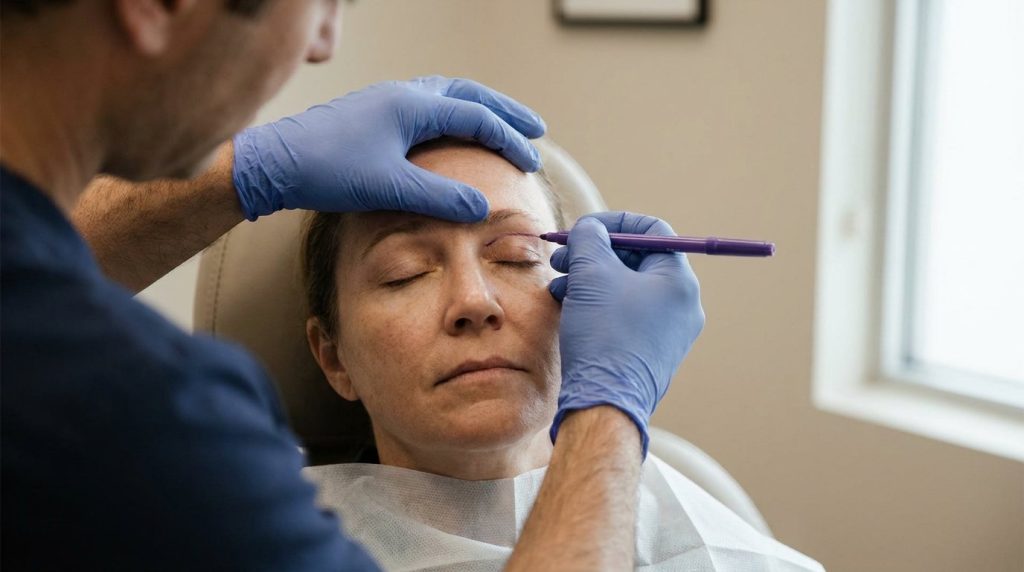
Have a question about Blepharoplasty?
In this article
- Why two eyelid surgery quotes can look nothing alike
- Upper, lower or both: how the operation itself shifts the price
- What a UK quote usually covers, and what gets billed on top
- Can you have eyelid surgery on the NHS instead?
- Comparing UK prices with having blepharoplasty abroad
- Recovery, time off work and the cost nobody quotes you
- Choosing the surgeon rather than the price
Few cosmetic enquiries produce as much confusion as eyelid surgery cost UK searches, because two people can sit in the same waiting room, have the same complaint about heavy lids, and leave with very different quotes. Blepharoplasty is a small operation by surgical standards, yet the pricing behind it is shaped by anatomy, anaesthesia, who holds the scalpel and where the operating list runs. Understanding those moving parts is the only way to read a quote properly rather than simply comparing headline figures.
Why two eyelid surgery quotes can look nothing alike
The first thing to understand is that “eyelid surgery” is not one operation. An upper lid procedure that removes a crescent of loose skin under local anaesthetic sits at one end of the scale. A combined upper and lower lid correction with fat repositioning, done under sedation in a fully staffed theatre, sits at the other. Both are called blepharoplasty, and both appear under the same search term.
The second thing is that a quote is a bundle, not a fee. You are paying for the surgeon’s time, the anaesthetist if one is involved, the theatre or treatment room, nursing staff, dressings, follow-up appointments and the clinic’s aftercare commitment. Clinics package these differently, which is why a cheaper total sometimes just means fewer things sit inside it.
Surgeon background also moves the number. Eyelids are operated on by both plastic surgeons and oculoplastic surgeons, who are ophthalmologists with extra training in surgery around the eye. Neither is automatically better, but sub-specialist experience and demand in a given city are reflected in private fees, and London lists usually sit above the rest of the UK.
There is one more factor that quietly reshapes almost every quote, and it is worth naming early. Roughly three in four of the people we treat for upper eyelid surgery have it alongside something else — most often rhinoplasty, lower eyelid surgery or a temporal lift. That matters when you are budgeting, because the figure you end up comparing is frequently a two-procedure figure, and a single-procedure price you found online is not the same product. If you only want your upper lids done, say so plainly at consultation and ask for that quote on its own.
📋 Skin alone or a droopy lid muscle? If the eyelid margin itself sits low (ptosis), tightening the lifting muscle is a different operation from removing excess skin. It takes longer, needs finer judgement and is usually priced accordingly. A quote given without that distinction being examined is not a reliable quote.
- →Which lids, and how many: Upper only, lower only, or all four lids in one session.
- →What is being treated: Loose skin alone, fat bulges, muscle laxity, or a drooping lid margin.
- →Anaesthesia: Local anaesthetic, local with sedation, or general anaesthetic with an anaesthetist present.
- →Where it is done: A clinic treatment room, a day-surgery unit, or a private hospital theatre.
- →Who operates: Experience level, sub-specialist training and regional demand.
- →Aftercare terms: Number of included reviews, suture removal, and the clinic’s revision policy.
Upper, lower or both: how the operation itself shifts the price
Lower eyelid work is generally the more demanding of the two. The upper lid has forgiving tissue and a natural crease to hide the scar in, while the lower lid involves fat that may need repositioning rather than removing, and support at the outer corner that sometimes needs tightening at the same time. More steps, longer theatre time, higher fee.
Combining upper and lower in one session usually costs less than two separate operations, because you pay once for anaesthesia, theatre and the recovery visit. The trade-off is a bigger single recovery and more swelling to sit through at once. If you want detail on how the lower lid heals, our guide to how long swelling lasts after lower eyelid surgery sets out a realistic week-by-week picture.
One more comparison catches people out. Heavy upper lids are sometimes caused by the brow sitting low rather than by the eyelid itself. Removing lid skin in that situation can deepen the problem instead of solving it, so the honest answer at consultation may be a brow procedure, or both. The difference between a brow lift and upper eyelid surgery is worth reading before you commit to a price for the wrong operation.
What a UK quote usually covers, and what gets billed on top
Ask for the quote in writing and ask specifically what happens if something does not heal as planned. A clinic that answers that question clearly is giving you more useful information than one that simply undercuts the others.
Two things are worth checking before you sign anything. The first is whether the consultation fee is credited against surgery. The second is the revision policy: who pays for theatre and anaesthesia if a small adjustment is needed later, and for how long that offer stands.
⚠️ A low total is not automatically a saving If a quote is noticeably cheaper, find out what has been removed from the bundle — anaesthetist cover, follow-up visits, or the revision terms. A personalised, itemised price should only be confirmed after a face-to-face assessment of your lids.
Can you have eyelid surgery on the NHS instead?
Blepharoplasty done purely to look more rested is treated as a cosmetic procedure and is not routinely funded. The NHS does operate on eyelids, but the threshold is functional: upper lid skin or a drooping lid that genuinely blocks part of your field of vision, lids turning inward or outward, lashes rubbing the eye, or a lid problem interfering with the health of the eye surface.
That pathway starts with your GP and usually involves an ophthalmology assessment, including visual field testing. Funding rules differ between local commissioning areas, so a case accepted in one region may be declined in another. Waiting times for non-urgent lid surgery can be long, which is why many people with a borderline functional problem end up pricing the private route anyway. If you are unsure whether your situation is functional or cosmetic, our piece on whether droopy lids affecting vision make you a candidate explains what surgeons actually look for.
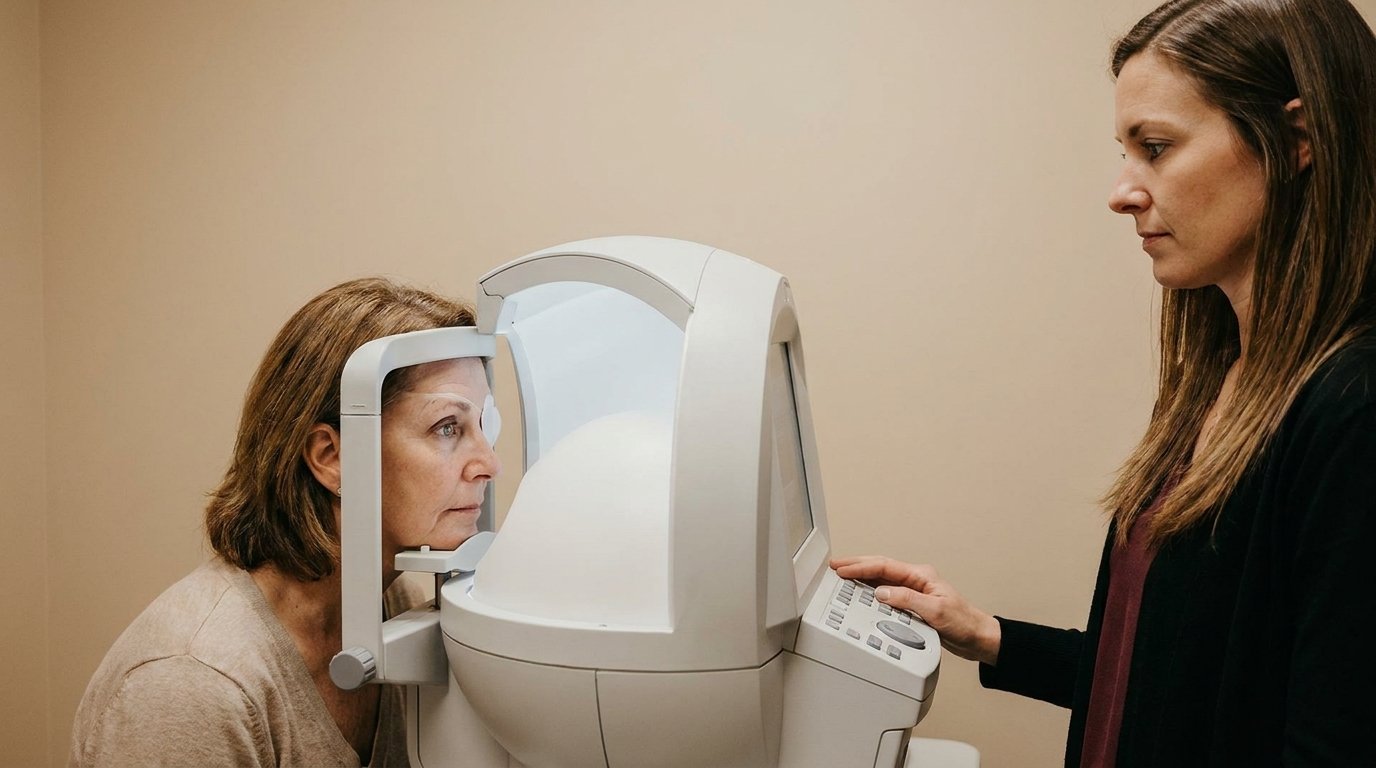
It is also fair to ask whether the operation is worth the money at all. A 2012 review in Eye discussed how benefit from oculoplastic surgery can be captured — clinical measures, how well patients function day to day, and broader quality-of-life scores — and argued that demonstrating that benefit matters both for patient-centred care and for showing cost effectiveness. In practice, that is the question to put to your surgeon: what specific change should you notice, and how will you both judge it afterwards?
Comparing UK prices with having blepharoplasty abroad
Lower surgical costs in countries such as Turkey are driven by staff costs, facility overheads and exchange rates rather than by cutting corners, and eyelid surgery is one of the procedures people most often travel for because the recovery is manageable. The genuine saving sits in the surgical bundle; the genuine cost sits in logistics and follow-up.
When you compare, compare like with like. A UK quote covers follow-up around the corner from your house. An overseas package typically covers surgery, hotel nights, airport and clinic transfers and a translator, but your late-stage reviews happen by video or with a local doctor you arrange yourself. That is workable for eyelid surgery, and less workable if you dislike uncertainty.
Stay length is the practical planning point. Upper lid surgery alone needs only a short trip, but because most eyelid plans end up combined with another facial procedure, the stay is usually set by the larger operation rather than the lids. Our overview of blepharoplasty in Turkey covers how that works in practice, and if you are weighing regions broadly, this comparison of plastic surgery prices across Turkey, the UK, Germany and the Netherlands gives useful context on why the gap exists.
Easy in-person follow-up, familiar complaints routes, no flying soon after surgery. Higher surgical cost, and private waiting times vary by surgeon.
Lower surgical cost and a bundled package, often combined with another procedure in one trip. You accept remote late follow-up and the cost of returning if a revision is needed.
Recovery, time off work and the cost nobody quotes you
The invoice is only part of the spend. Bruised, swollen lids are visible, so most people want a buffer before they are back in front of colleagues or clients. Plan the diary first and the budget second.
Stitches in the upper lid are typically removed within the first week. Bruising fades over one to two weeks for upper lids and tends to run longer for lower lids. Fine swelling and a slightly firm scar line can take a couple of months to settle fully, which is normal rather than a problem. A detailed account of that arc is in our guide to healing after upper eyelid blepharoplasty.
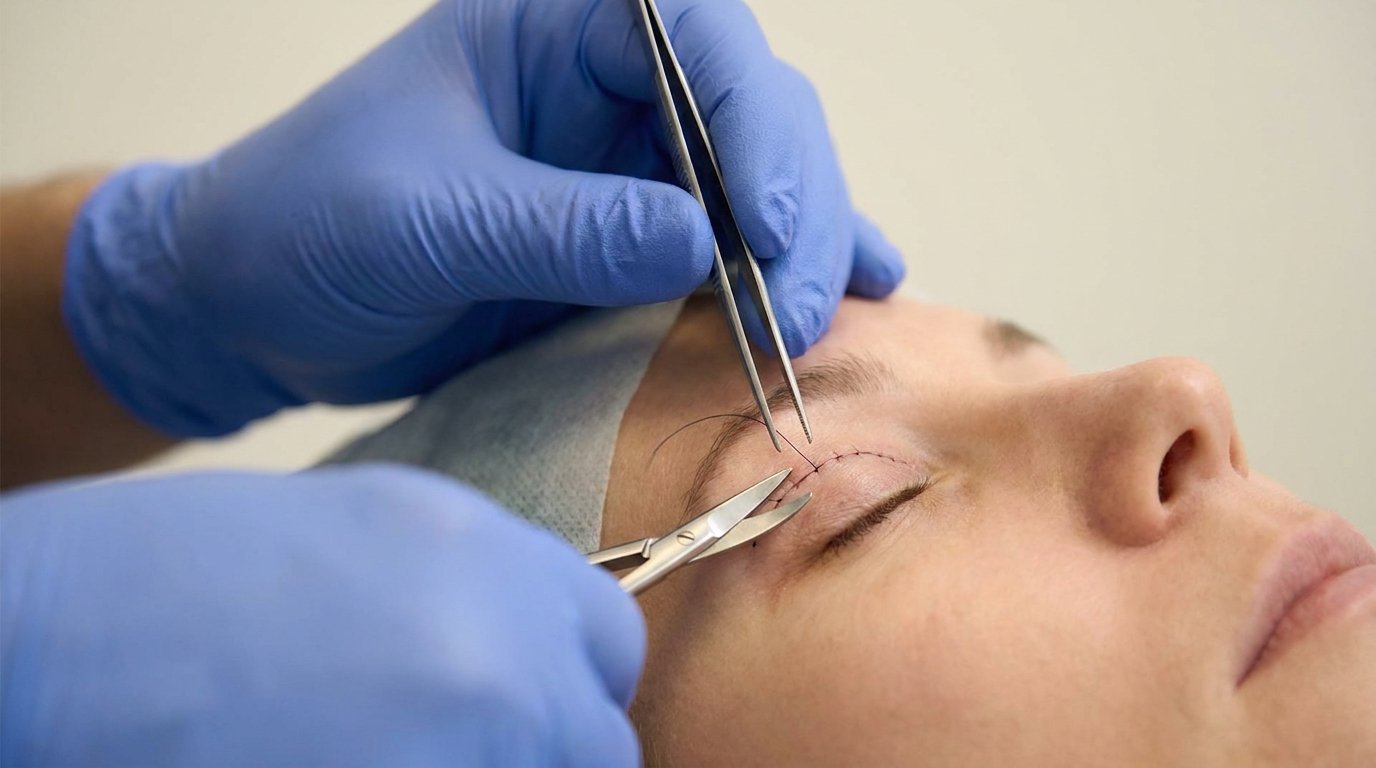
Because most eyelid patients add a second procedure, the realistic recovery to plan around is the combined one. If lower lids, a temporal lift or a nose are part of the plan, pace your time off against the bigger operation, not the eyelids.
This article is for informational purposes only and does not constitute medical advice. Always consult a qualified surgeon for personalised guidance.
🚨 Seek urgent advice Sudden pain behind the eye, rapidly increasing swelling, or any loss or blurring of vision needs immediate medical attention rather than a wait-and-see approach. These are rare, but they are time-sensitive.
Choosing the surgeon rather than the price
Eyelid surgery is measured in millimetres, and the aesthetic difference between a good result and an over-done one is small in surgical terms but obvious in the mirror. That makes the surgeon the single most important variable in what you are buying.
Check the GMC register and look for a specialist registration in plastic surgery or ophthalmology, with eyelid work as a genuine part of the practice rather than an occasional add-on. Ask how many blepharoplasty cases the surgeon does in a typical month, who will see you if there is a problem at week two, and what the revision policy says in writing. Professional bodies such as BAAPS are a reasonable starting point for checking credentials in the UK.
Before-and-after photos help only if they show faces like yours — similar age, similar brow position, similar skin quality — and ideally the same lighting and camera angle in both shots. Beware galleries that only show the most dramatic transformations.
Face-to-face assessment of your brow, lid margin and tear film; a written itemised quote; a clear revision policy; the surgeon telling you what they would not do.
Pressure to decide by a deadline, a price quoted before anyone examined your lids, no named surgeon, and consultations handled entirely by a salesperson.
Frequently Asked Questions
References
- 📎Patient-reported benefit from oculoplastic surgery — Eye (Lond), 2012
- 📎NHS — Cosmetic procedures
- 📎ASPS — Cosmetic procedures
Related Articles
You Might Also Like


Related articles
Our specialists
 Clineca SpecialistErkan PinegözPlastic & Reconstructive Surgery
 Clineca SpecialistHakan AktaşPlastic & Reconstructive Surgery
 Clineca SpecialistOrkun UzuneyüpoğluPlastic & Reconstructive Surgery
 Clineca SpecialistSalim İskenderPlastic & Reconstructive Surgery
 Clineca SpecialistEngin SelamioğluPlastic & Reconstructive Surgery
 Clineca SpecialistCem AydınPlastic & Reconstructive Surgery
 Clineca SpecialistAlperen ÖnalEar, Nose & Throat (ENT)