
Have a question about Chin Implant?
In this article
- What a chin implant actually changes about your profile
- Chin implant, sliding genioplasty or filler: which route fits you?
- What drives the cost of chin augmentation in Turkey
- How long should you stay in Turkey, and what does the trip look like?
- Recovery week by week: swelling, eating, speaking and sport
- Is chin implant surgery safe, and what are the real risks?
- Choosing a surgeon and clinic for genioplasty in Turkey
- Combining chin augmentation with other facial procedures
A weak or short chin changes how the whole face reads in profile — the nose looks bigger, the neck looks fuller, the jawline loses its edge. That is why a chin implant in Turkey is one of the quieter but steadily requested facial procedures among international patients, often booked alongside nose or neck work. Before you commit to a flight, though, it helps to understand exactly what this operation can and cannot do, how the price is built, and what the days after surgery really feel like.
What a chin implant actually changes about your profile
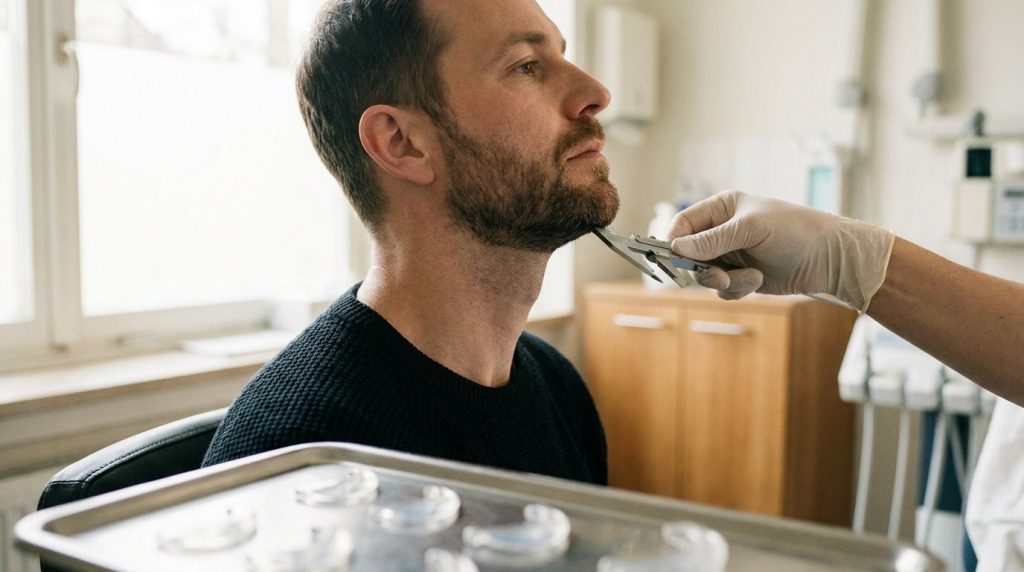
A chin implant is a shaped piece of solid material placed over the front of your chin bone, under the muscle and soft tissue, to project the chin forward and sometimes widen or lengthen it. The implant sits on bone, not under the skin like a filler, which is why it reads as a change in bone structure rather than as added volume.
Surgeons usually work through one of two small incisions: inside the lower lip, or in the crease under the chin. The implant is then centred and fixed so it cannot drift, and the pocket is closed in layers. Most isolated chin implant operations take well under an hour, and many are done under sedation with local anaesthesia, though general anaesthesia is common when the chin is part of a larger facial plan.
What it changes is mostly the lower third of the face in side view. A better-projected chin tightens the visual line from lip to chin to neck, and can make a submental area that looks heavy appear cleaner even before any fat is removed. It does not lift sagging skin, it does not reshape the jaw angles near the ears, and it will not fix a double chin on its own.
It is also worth separating two different complaints that sound similar. Some patients want more chin; others feel their chin is too long or too prominent and need the opposite operation. If you are not sure which group you fall into, the comparison in our piece on chin implant versus chin reduction for facial balance is a sensible starting point before any consultation.
📋 Bite and jaw position matter If your teeth do not meet properly, or your lower jaw is genuinely set back rather than just short at the tip, an implant may camouflage the problem rather than correct it. In that situation a surgeon may discuss orthodontic treatment or jaw surgery instead, and an honest consultation should raise this with you.
Chin implant, sliding genioplasty or filler: which route fits you?
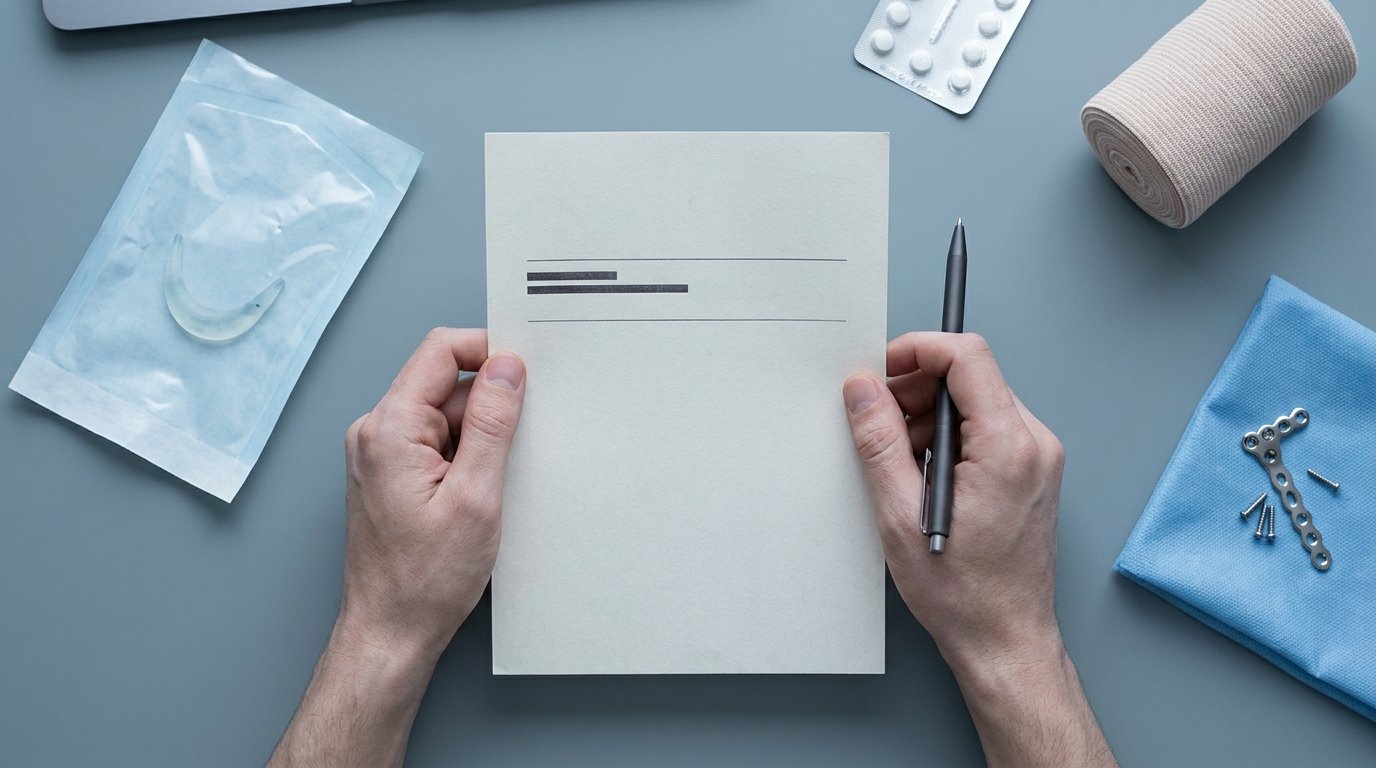
Chin augmentation is not one operation. The three realistic routes differ in how much they can change, how long they last and how easily they can be undone. Fillers are temporary and fade. An implant is designed to be long-lasting, yet it remains a separate object that can be removed or exchanged in a later operation if you dislike the result or run into a problem. Sliding genioplasty — cutting and repositioning the chin bone itself, then fixing it with small plates and screws — gives a surgeon the most control over height, width and projection, and is the hardest of the three to reverse.
Genioplasty is the term for surgically reshaping the chin, whether with an implant or by moving the bone. In Turkey both are offered, usually by plastic surgeons or by maxillofacial surgeons (specialists in the bones of the face and jaw). The bone route tends to come up when the chin needs to be shortened or lengthened vertically, when asymmetry is marked, or when the distance to be advanced is large.
Engineering detail matters more than patients expect here. A 2025 study in Medicina Oral, Patología Oral y Cirugía Bucal used computer modelling to look at how the shape and thickness of patient-specific chin implants affect fixation stability in T-shaped genioplasty — a reminder that the design of the hardware, not only the surgeon’s hand, influences how securely a reshaped chin holds its new position.
A temporary filler can preview roughly what more projection would look like on your face. It is a useful rehearsal, not a substitute, and it is worth reading our comparison of [a weak chin treated with an implant or with fillers](https://www.clineca.com/blog/weak-chin-chin-implant-or-fillers/) before deciding.
Transferred fat softens contour and can blend a chin into the jawline, but it cannot create a crisp bony projection and some of the volume is reabsorbed.
When a full-looking neck is part of the complaint, combining augmentation with submental liposuction often does more for the profile than either step alone.
What drives the cost of chin augmentation in Turkey
Clinics in Turkey quote chin augmentation as a package, and the figure you are given depends far more on surgical complexity and the care around the operation than on the implant itself. We do not publish prices here, because a number taken out of context tells you nothing about what it buys — your personalised quote is confirmed after a consultation and photo assessment.
The main variables are the technique, the anaesthetic and the operating setting. A short implant placement under sedation in a day-surgery unit sits at one end; a bone genioplasty with a custom implant, general anaesthesia and an overnight stay sits at the other. Surgeon seniority, hospital accreditation and whether a maxillofacial specialist is involved all move the figure.
Combination also matters, usually in your favour. Adding a chin implant to a planned rhinoplasty costs less than booking the two separately, because you pay once for anaesthesia, theatre time and hospital admission. If you are weighing that, our guide to combined surgery in Turkey explains how the economics and the recovery interact.
What a serious quote should spell out
Ask for the inclusions in writing, and check whether revision policy is mentioned at all. A quote that lists only “chin surgery” is not a quote.
- ✓Surgeon’s fee, anaesthetist’s fee and theatre or hospital charges
- ✓The implant or fixation hardware, named by material and brand where relevant
- ✓Pre-operative tests, imaging or 3D planning if the plan involves a custom implant
- ✓Medication, dressings and the post-operative review before you fly
- ✓Airport and clinic transfers, hotel nights where these form part of the package
- ✓What happens, and who pays, if a complication or a revision arises later
⚠️ Treat an unusually low quote as a question, not a bargain If one price is far below everything else you have been sent, ask what has been left out — the anaesthetist, the hospital grade, the implant brand or the follow-up. Cheap quotes are often incomplete quotes rather than better value.
How long should you stay in Turkey, and what does the trip look like?
For an isolated chin implant, most clinics ask international patients to plan around five to seven nights in the country. That covers your consultation and pre-operative bloods, the surgery itself, a quiet couple of days, and a review appointment where dressings or stitches are checked before you are cleared to fly.
The day of surgery is usually short. You arrive fasted, meet the surgeon and anaesthetist, and are marked up while standing and sitting so that projection is judged in a natural posture. Many implant patients go home or back to the hotel the same evening; general anaesthesia or a bone genioplasty more often means one night in hospital.
If the chin is part of a bigger plan — a nose, a neck lift, eyelids — the stay stretches to roughly seven to ten nights, because those procedures have their own review points. Patients combining chin augmentation with a nose job may find the discussion in our article on rhinoplasty with chin augmentation for profile balance useful when planning the trip length.
A practical note on flying: short-haul flights are usually comfortable from around the end of the first week once your surgeon has seen the wound, but swelling can briefly worsen in the cabin and after a long flight. Book a flexible return if you can, keep your medication in hand luggage, and avoid booking a wedding or a conference into the fortnight after surgery.
- →Before you fly: Send clear photos from the front, side and three-quarter view, declare all medication and any bleeding tendency, and stop smoking as early as you can.
- →Days 1–2 after surgery: Head elevated, cold compresses as instructed, soft diet, and antiseptic mouth rinses if the incision is inside the lip.
- →Days 5–7: Review appointment, wound or suture check, photographs, and written clearance to travel.
- →After you get home: A named contact at the clinic, a plan for remote follow-up photos, and a local doctor or dentist you can see quickly if something changes.
Recovery week by week: swelling, eating, speaking and sport
Chin surgery is not especially painful, but it is oddly uncomfortable in the first days. The chin feels stiff and heavy, smiling is limited, and if the incision is inside the mouth, chewing and speaking feel clumsy for a while. Most patients describe pressure and tightness rather than sharp pain, and simple painkillers are usually enough.
Numbness of the chin and lower lip is common early on, because the nerve supplying that area runs close to the surgical field. It typically fades over several weeks as the swelling settles. Numbness that is still complete and unchanged after a few months should be reported to your surgeon rather than waited out.
Swelling follows a predictable curve: worst on about the second or third day, visibly better by the end of week two, and subtle enough after a month that most people around you stop noticing. The final contour takes longer, which is where patients lose patience — our detailed chin implant swelling timeline walks through when the result starts to look genuinely natural.
Tape or a supportive dressing is often worn for the first days to limit swelling and help the tissues settle against the implant. Sleeping with your head raised for the first week makes a real difference. Avoid any pressure or impact on the chin: no contact sport, no heavy lifting and no face-down massage for about four to six weeks, and be cautious with dental appointments in the first weeks if the incision was inside the lip.

🚨 Call the clinic, do not wait Increasing pain after day three, a spreading redness or hot swelling, pus or a bad taste from an intraoral incision, fever, or an implant that feels like it has shifted all need same-day advice. Early infection around an implant is far easier to manage when it is reported immediately.
Is chin implant surgery safe, and what are the real risks?
As operations go, chin augmentation is relatively contained: small incision, short theatre time, no body-cavity work. That does not make it risk-free, and the honest conversation is about the specific complications of placing an implant on bone.
Infection is the one surgeons watch most closely, because an infected implant often has to be removed and replaced later rather than treated with antibiotics alone. Incisions inside the mouth sit in a bacteria-rich environment, which is why rinses and hygiene instructions are taken seriously. The other recognised issues are implant malposition or shifting, asymmetry, persistent numbness from irritation of the nerve to the lower lip, visible implant edges in thin patients, and changes in the bone surface under the implant over the long term, which your surgeon should explain and monitor at follow-up.
Dissatisfaction is a risk in its own right. An implant that is too small disappoints; one that is too large looks pointed or masculinises a soft face, and makes the lower lip feel stretched. Good planning means being shown the specific size and shape your surgeon intends to use and why, rather than being promised “a natural result”.
The wider safety question for international patients is less about the operation and more about the system around it: accreditation, anaesthetic standards, who is on call at night and what happens if you need to be seen again. We cover that in detail in our overview of whether plastic surgery in Turkey is safe.
Active gum or dental infection, uncontrolled diabetes, heavy smoking, previous facial implant infection or a plan that ignores a significant bite problem.
A healthy non-smoker with good oral hygiene, a stable bite, realistic expectations and a chin that is short mainly in projection.
Choosing a surgeon and clinic for genioplasty in Turkey
Chin work is small-field surgery where millimetres show, so the person doing it matters more than the brochure. Ask directly which specialty the surgeon holds — plastic and reconstructive surgery, or oral and maxillofacial surgery — and confirm their registration. European board certification through EBOPRAS is one recognisable marker among internationally trained surgeons, though it is not the only valid credential.
Then ask about volume and evidence. You want to see before-and-after photographs of chins specifically, taken in consistent lighting and from the same angles, including profile views at six months or later. Request examples of faces built like yours, and ask what the surgeon does when an implant turns out to be the wrong size.
Finally, test the aftercare, not the sales pitch. A clinic that answers “what happens if I get an infection in week three back home?” with a concrete plan is telling you something useful. If you are comparing packaged offers, our breakdown of what an all-inclusive surgery package in Turkey includes is a practical checklist to hold each quote against.
A video consultation with the operating surgeon; clear discussion of implant versus bone surgery; named implant material and size; written quote with inclusions; a defined complication and revision policy; accredited hospital.
Price quoted before any assessment; no direct contact with the surgeon until you land; refusal to name the implant or facility; guaranteed results; pressure to book within hours; a consent form you first see on the day of surgery.
Combining chin augmentation with other facial procedures
The chin is rarely assessed alone, because profile balance is a relationship between nose, lips, chin and neck. A chin that is set back makes a nasal hump look larger, so correcting one without reviewing the other can leave the face looking only half-finished.
That logic is well established in rhinoplasty practice. A 2024 paper in Aesthetic Plastic Surgery described a hybrid technique using fat and sliced cartilage grafts to advance a receding chin during rhinoplasty, arguing that patients with chin retrusion often benefit from addressing the chin in the same operation to harmonise the middle and lower thirds of the face. It is one option among several, and whether grafts, an implant or bone surgery suits you is a judgement made face to face.
The other common pairing is chin augmentation with double chin liposuction, which sharpens the line under the jaw while the implant gives that line something to end on. Neck lifts, cheek augmentation and lower facelifts are combined in the same spirit.
Combining does lengthen your stay and concentrates swelling, so the trade-off is a longer single recovery against two separate trips and two anaesthetics. Discuss total theatre time openly: long multi-procedure sessions carry more anaesthetic and clotting risk, and a responsible surgeon will cap what they do in one sitting.
This article is for informational purposes only and does not constitute medical advice. Always consult a qualified surgeon for personalised guidance.
Frequently Asked Questions
References
- 📎Hybrid Chin Advancement: Combining Fat and Sliced Cartilage Grafts for Chin Augmentation During Rhinoplasty — Aesthetic Plastic Surgery, 2024
- 📎Finite element analysis of shape and thickness variations in patient-specific implants for T-shaped genioplasty — Medicina Oral Patología Oral y Cirugía Bucal, 2025
- 📎NHS — Cosmetic procedures
- 📎EBOPRAS — European Board of Plastic, Reconstructive and Aesthetic Surgery
Related Articles



You Might Also Like



Related articles



Our specialists
 Clineca SpecialistErkan PinegözPlastic & Reconstructive Surgery
 Clineca SpecialistHakan AktaşPlastic & Reconstructive Surgery
 Clineca SpecialistOrkun UzuneyüpoğluPlastic & Reconstructive Surgery
 Clineca SpecialistSalim İskenderPlastic & Reconstructive Surgery
 Clineca SpecialistEngin SelamioğluPlastic & Reconstructive Surgery
 Clineca SpecialistCem AydınPlastic & Reconstructive Surgery
 Clineca SpecialistAlperen ÖnalEar, Nose & Throat (ENT)