Have a question about How Long Does Bruising Last After Rhinoplasty??
In this article
- Why bruising spreads to your eyes when the surgery was on your nose
- The rhinoplasty bruising timeline, day by day
- Why some patients bruise far more than others
- What actually helps bruising fade faster
- Hiding bruises: makeup, glasses, work and photos
- Normal bruising versus a sign you should call your surgeon
- Planning your trip around the bruising: stay, flights and what a quote covers
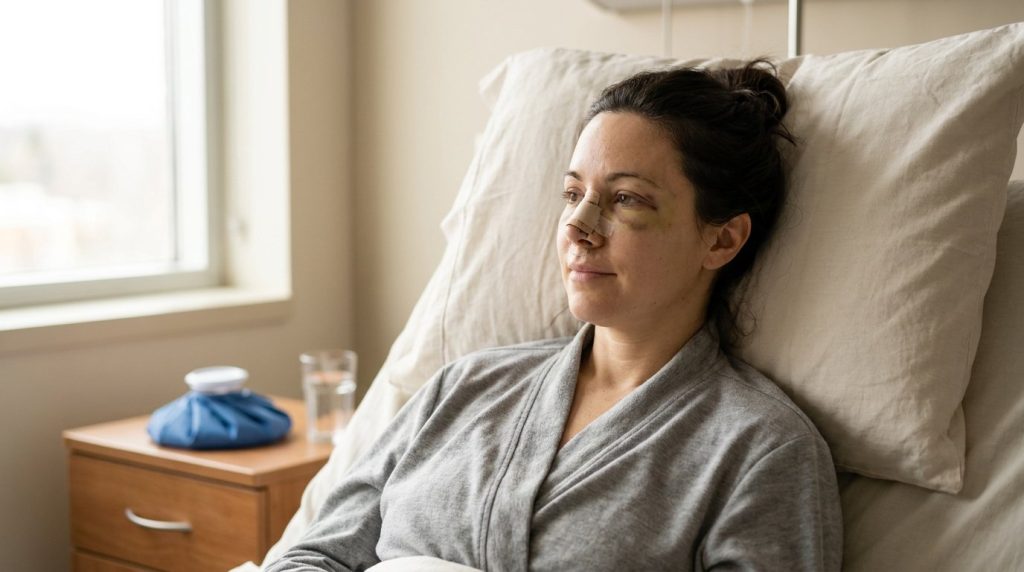
Most people preparing for nose surgery picture the splint and the swollen tip, but the thing that actually shocks them in the mirror is the colour. Bruising after rhinoplasty spreads into places the surgeon never touched — under the eyes, along the cheeks, sometimes down toward the jawline — and it follows its own schedule, quite separate from the swelling. Knowing how that schedule normally runs makes the first two weeks far less unnerving.
Why bruising spreads to your eyes when the surgery was on your nose
A bruise is simply blood that has escaped from small vessels and settled in the tissue around them. During rhinoplasty the surgeon works through a very vascular area, lifts the skin off the underlying framework and, in many cases, reshapes the nasal bones. Blood released during that work does not stay politely inside the nose. It drains with gravity through the loose tissue planes that connect the nose to the eyelids and cheeks, which is why the eyelids — thin, soft and almost unsupported — show the colour first and most dramatically.
The technical drivers are reasonably well described. A 2024 paper in Aesthetic Plastic Surgery on cooling during rhinoplasty points to bone work (osteotomy), dissection of the tissue under the skin and handling of the skin itself as the main sources of bruising and swelling after the operation, and notes that eyelid swelling can even blur vision a little in the first twenty-four hours. That matches what patients describe: the worst-looking day is rarely the day of surgery.
It also explains why two people having “a nose job” can look completely different a week later. Work confined to the tip, as in a tipplasty, usually produces modest bruising or none that is visible. Reducing a dorsal hump and narrowing the bony base means cutting and repositioning bone, and that reliably produces more colour around the eyes.
📋 Bruising and swelling are not the same clock Bruising is blood in the tissue and it clears in days to a few weeks. Swelling is fluid and tissue reaction, and the final refinements of nasal shape can take a year or more to appear. You can be completely bruise-free and still visibly swollen.
The rhinoplasty bruising timeline, day by day
Bruising follows a fairly predictable colour sequence as the body breaks down the trapped blood: red, then purple-blue, then green, then a yellow-brown that fades out from the edges inward. The timeline below reflects what most patients see after a rhinoplasty that included bone work. If your surgery was tip-only, or done without osteotomies, you can usually shift everything earlier and expect less intensity.
The single most common surprise is that things look worse on day two or three than on day one. That is normal. The blood is still tracking downward and the eyelids are at their most swollen in the first forty-eight to seventy-two hours.
- →Two weeks is the realistic planning figure: Plan social events, photographs and client-facing work from around day 14, not day 7.
- →Asymmetry is normal: One side almost always bruises more, often the side you sleep toward.
- →Colour can migrate: Bruising appearing on the cheek or upper lip in week two is gravity, not a new problem.
- →Tip-only surgery is a different experience: Without bone work, many patients have little visible bruising at all.
Why some patients bruise far more than others
Technique matters most. Where osteotomies are needed, how they are performed, how gently tissue is handled and how carefully bleeding is controlled during the operation all influence the result. A review in Facial Plastic Surgery in 2018 looking specifically at bruising and swelling around the eyes after rhinoplasty concluded that these are among the things that bother patients most, and that many different measures have been proposed to limit them — which is a polite way of saying no single trick solves it and surgical care during the procedure carries most of the weight.
Then there is you. Thin, fair skin shows colour more. Some people are simply easy bruisers. Blood pressure that runs high, alcohol in the days before surgery, and above all medicines and supplements that thin the blood will all push bruising toward the heavy end. Aspirin, ibuprofen-type anti-inflammatories, fish oil, high-dose vitamin E, ginkgo and ginseng are the usual culprits, and your surgeon will tell you when to stop each one — there is more detail in our guide on what to avoid before rhinoplasty.
Age plays a smaller role than people assume. Our rhinoplasty patients average around thirty, and roughly one in eight is over forty; older skin can show bruising slightly longer because the tissue is less elastic, but the difference is measured in days, not weeks. Being in your forties or fifties is not a reason to expect a dramatically worse recovery.
Here is something worth noticing before you book: fewer than two in a hundred of the people who write to us about their nose ask anything about swelling or bruising beforehand, even though it is overwhelmingly the thing they look up once they are home with a mirror. The practical lesson is to put the question on the table at your consultation — ask your surgeon how much bruising your specific plan tends to cause, so the timeline you are working with is yours and not a stranger’s.
Blood-thinning medicines and supplements taken too close to surgery, alcohol in the final days, smoking, uncontrolled blood pressure, extensive bone work, sleeping flat, and bending or lifting in the first week.
Stopping the agreed medicines on schedule, arriving well hydrated and rested, head elevated day and night, gentle cooling of the cheeks rather than the nose, and genuinely resting through the first 72 hours.
What actually helps bruising fade faster
The honest answer is that most of the outcome is decided in the operating room and in the first three days afterwards. Nothing you apply to your face will clear a bruise overnight. What you can do is avoid making it worse and support the body’s own clearance.
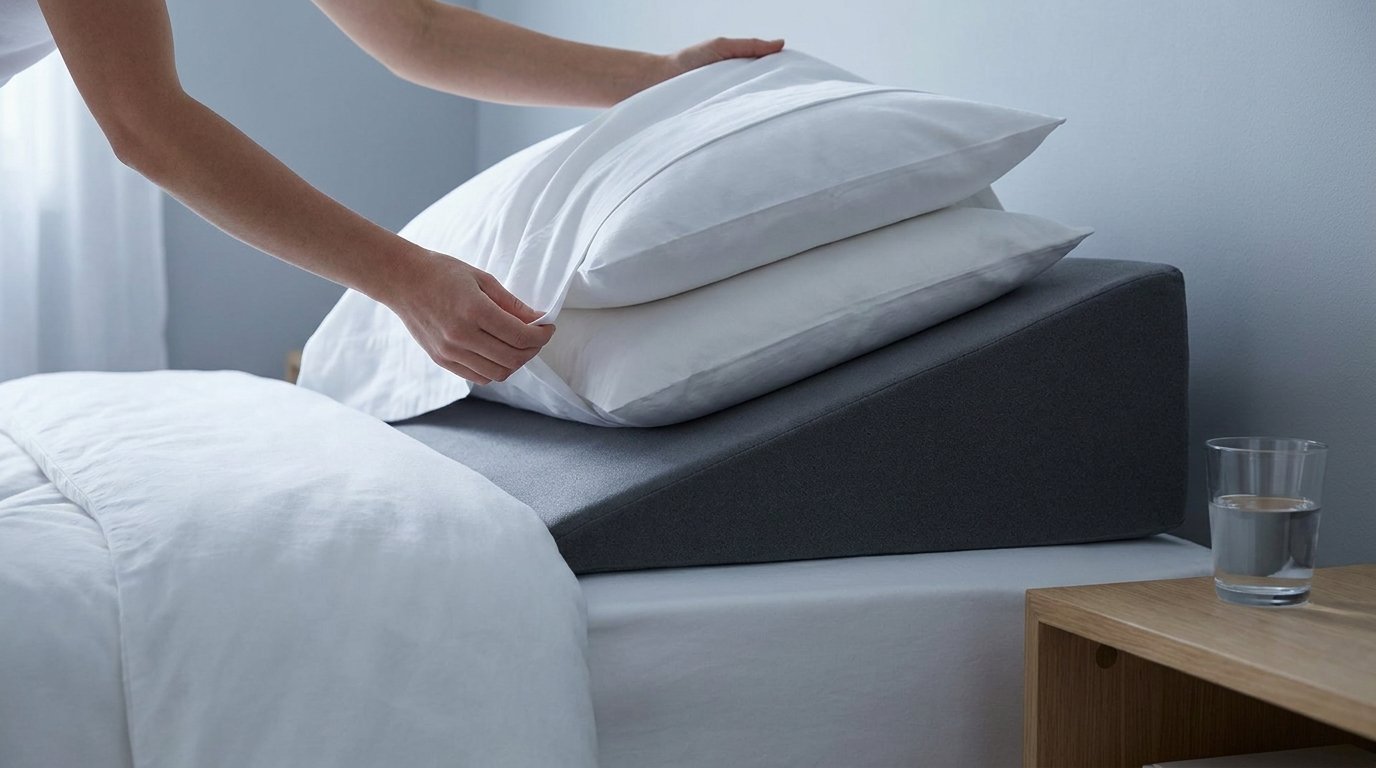
Keeping your head elevated is the most reliable thing in your control. Sleeping propped up at roughly 30 to 45 degrees — a wedge pillow or a stack of firm pillows — reduces the pressure in the facial veins, which limits how much more blood seeps out and how much fluid pools in the eyelids. This matters for a full two weeks, not two nights; our piece on sleeping elevated after rhinoplasty explains how to make it tolerable.
Cold helps in the first forty-eight hours, applied to the cheeks and around the eye sockets, never pressed onto the nose or the splint. Ten to fifteen minutes on, a similar break, with a cloth between the cold pack and your skin. After about two days, cooling stops making much difference and comfort becomes the only reason to continue.
What the evidence says about medicines and devices
Steroids given around the time of surgery are widely used to limit swelling and bruising, usually as a single dose by the anaesthetist. A 2014 Cochrane review of corticosteroids given around facial plastic surgery framed the problem clearly: the inflammation that follows surgery causes the swelling and bruising patients dislike, and severe cases delay recovery and reduce satisfaction. Whether you receive steroids is your surgeon’s and anaesthetist’s call, based on your health history — it is not something to arrange yourself.
Low-level light therapy has been tested specifically for this. A 2020 randomised single-blind trial in Aesthetic Plastic Surgery applied photobiomodulation — red and infrared light — on the first day after rhinoplasty and assessed its effect on bruising around the eyes. It is a reasonable example of the kind of adjunct some clinics offer, though it is an addition to good surgical technique rather than a substitute for it.
Arnica and bromelain are extremely popular and essentially harmless, and many surgeons are happy for patients to use them. The evidence behind them is weaker than their reputation suggests, so treat them as optional rather than essential, and clear any supplement with your surgeon first — some interact with the medicines you are already on.
⚠️ Do not take ibuprofen-type painkillers for bruising Anti-inflammatories such as ibuprofen, naproxen and aspirin thin the blood and can increase bruising and bleeding early in recovery. Use only the painkillers your surgeon has prescribed or approved, and ask before adding anything.
Hiding bruises: makeup, glasses, work and photos
Camouflage makeup is usually possible once the splint is off and the skin is intact, commonly in the second week — but confirm the exact day with your surgeon, because applying anything over incisions or dressings too early risks irritation and infection. When you start, work gently with your fingertips rather than rubbing, keep well away from the nose itself and the columella stitches if you had open surgery, and remove it with a soft, non-dragging cleanser.
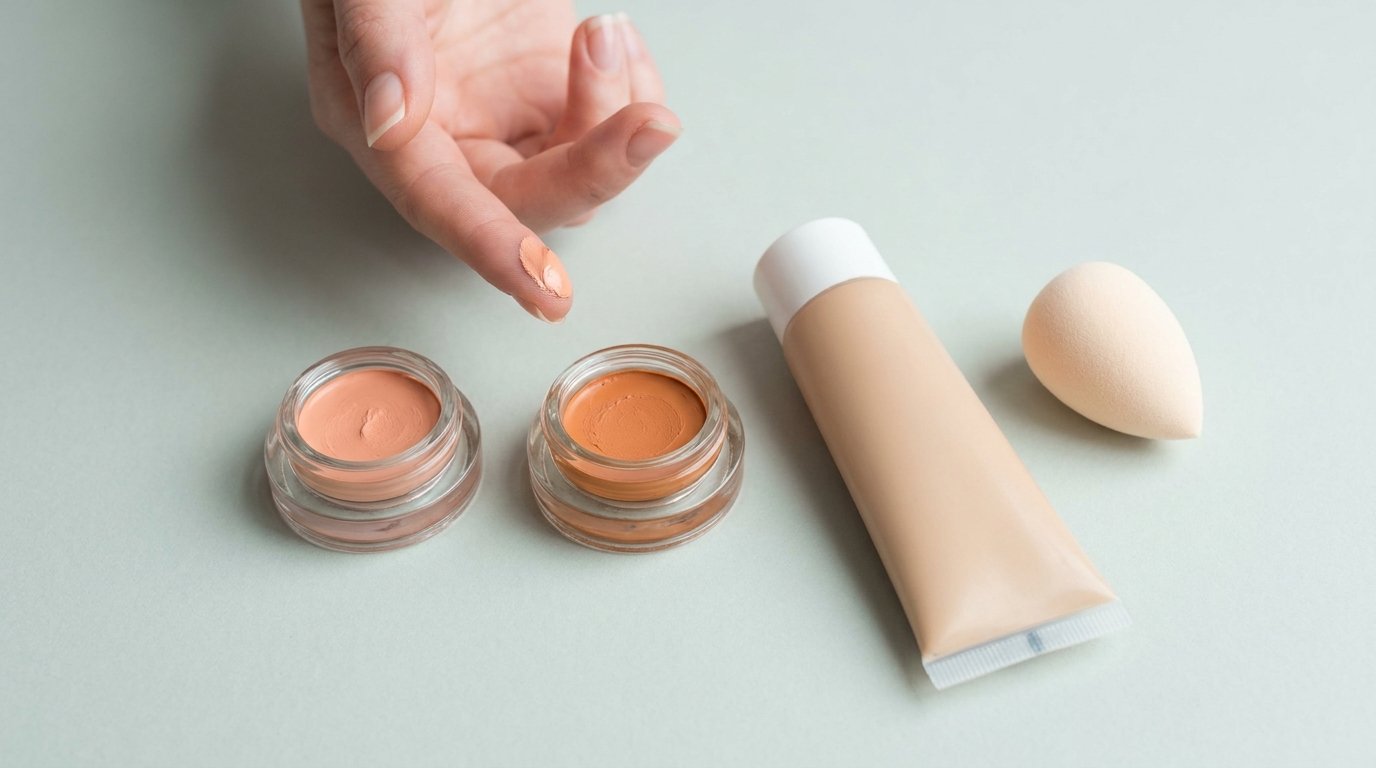
For colour correction, a peach or salmon-toned concealer neutralises blue-purple bruising on lighter skin and an orange-based one works better on deeper skin tones, with your normal foundation over the top. Yellow-brown bruising in the second week is far easier to cover than the purple of day three, which is one more reason to protect your calendar early rather than late.
Sunglasses are the other obvious tool, and here there is a genuine restriction: anything resting on the bridge of the nose can press on healing bone and cartilage. Most surgeons ask patients to keep weight off the bridge for several weeks, which affects both prescription glasses and heavy sunglasses — see our guidance on wearing glasses again after rhinoplasty for the usual timings and workarounds. Lightweight frames, or taping the nose pads clear, are often the compromise.
About photographs: one of the questions we hear most often is when the face will look normal enough for a wedding, a graduation or a return to camera-facing work. Bruising is gone or coverable for most people by two weeks. Shape is a different matter — the nose stays swollen well beyond that, and the final result unfolds over many months. If an important event is close, plan around the shape timeline, not the bruise timeline.
Normal bruising versus a sign you should call your surgeon
Almost all bruising after rhinoplasty is uncomplicated and simply needs patience. Still, a bruise that behaves unusually is one of the few early warning signs you can actually see, so it is worth knowing the difference rather than guessing at three in the morning.
Use the comparison below as a rough guide, and remember the simplest rule: anything that is getting worse instead of better after the third or fourth day deserves a message to your clinic. A good surgical team expects these questions and would far rather hear from you early. If you are travelling for surgery, make sure you leave with a direct contact — a named coordinator and a route to the surgeon — not just a general clinic inbox.
🚨 Seek urgent assessment, not reassurance Vision changes, severe one-sided eye pain, heavy bleeding that will not stop, or fever with spreading facial redness are reasons to contact your surgeon or local emergency services immediately rather than waiting for a scheduled review.
Planning your trip around the bruising: stay, flights and what a quote covers
If you are travelling to Turkey for surgery, bruising affects your itinerary more than your medical recovery does. Clinics usually ask rhinoplasty patients to stay around seven to ten days so the splint can be removed and a review can be done before you fly, and that window happens to land exactly where bruising turns from purple to yellow. You will be cleared to fly home while still visibly marked — uncomfortable socially, but not medically unsafe. Our overview of rhinoplasty travel plans, stay length and transfers sets out how the days are typically arranged.
Two small logistics points genuinely help. Book an aisle seat so you are not climbing over people, and keep your head supported and upright rather than slumped against the window, since hours spent with your head low do swelling no favours. Also budget a few quiet days at home before returning to work if your job is customer-facing; most people feel presentable at around two weeks, not at the moment they land.
On cost, bruising itself is not a line item. What drives a rhinoplasty quote is the complexity of the plan — primary versus revision surgery, whether cartilage grafting is needed, whether functional work on the septum or turbinates is included, the surgeon’s experience, the hospital or surgical facility, and the anaesthesia team. A package quote from a Turkey-based clinic normally bundles the surgical fee, the facility and anaesthesia, the standard dressings and splint, follow-up during your stay, and often airport transfers and accommodation. Cold packs, prescribed painkillers and the post-operative review that checks your healing are ordinarily part of the care you have already paid for, so you should not be charged extra because you bruised more than average. A personalised price is confirmed only after a consultation and a review of your photographs and medical history.
One more planning note: a meaningful minority of people combine their nose surgery with something else. Among our rhinoplasty patients, roughly one in seven books a second procedure in the same session — most often breast augmentation, a breast lift with implants or upper eyelid surgery. If that is your plan, the bruising calendar above still applies to your face, but your overall recovery and stay are paced by the bigger operation, so take the combined timeline as your guide rather than the rhinoplasty one.
Finally, when choosing where to have the surgery, look for a surgeon with recognised specialist training in plastic or facial plastic surgery, operating in a licensed hospital or accredited surgical facility, who shows you unretouched early-recovery photographs rather than only polished final results. A clinic that tells you plainly how bruised you will look on day three is giving you better information than one that promises you will barely notice.
This article is for informational purposes only and does not constitute medical advice. Always consult a qualified surgeon for personalised guidance.
Clear written aftercare, a named coordinator reachable while you are in the country, honest day-by-day recovery photos, and a surgeon who volunteers the bruising and swelling timeline before you ask.
Pressure to decide quickly, no named surgeon until you arrive, promises of a bruise-free recovery, or no plan for who you contact if something looks wrong after you fly home.
Frequently Asked Questions
References
- 📎Perioperative corticosteroids for preventing complications following facial plastic surgery — Cochrane Database of Systematic Reviews, 2014
- 📎Peroperative Cooling in Rhinoplasty: Does it Differ? — Aesthetic Plastic Surgery, 2024
- 📎Reducing Periorbital Edema and Ecchymosis after Rhinoplasty: Literature Review and Personal Approach — Facial Plastic Surgery, 2018
- 📎Effect of Photobiomodulation on Ecchymosis after Rhinoplasty: A Randomized Single-Blind Controlled Trial — Aesthetic Plastic Surgery, 2020
- 📎NHS — Cosmetic procedures
Related Articles


You Might Also Like


Related articles

Our specialists
 Clineca SpecialistErkan PinegözPlastic & Reconstructive Surgery
 Clineca SpecialistHakan AktaşPlastic & Reconstructive Surgery
 Clineca SpecialistOrkun UzuneyüpoğluPlastic & Reconstructive Surgery
 Clineca SpecialistSalim İskenderPlastic & Reconstructive Surgery
 Clineca SpecialistEngin SelamioğluPlastic & Reconstructive Surgery
 Clineca SpecialistCem AydınPlastic & Reconstructive Surgery
 Clineca SpecialistAlperen ÖnalEar, Nose & Throat (ENT)