Have a question about Rhinoplasty?
In this article
- The Surgical Plan Is the Single Biggest Price Driver
- Cartilage Grafts, Materials and Theatre Time
- Surgeon Experience, Facility and Location
- What a Rhinoplasty Quote Usually Includes — and What It Does Not
- Adding a Second Procedure to the Same Trip
- Length of Stay and the Costs Around the Surgery
- Why the Lowest Quote Often Turns Out to Be the Most Expensive
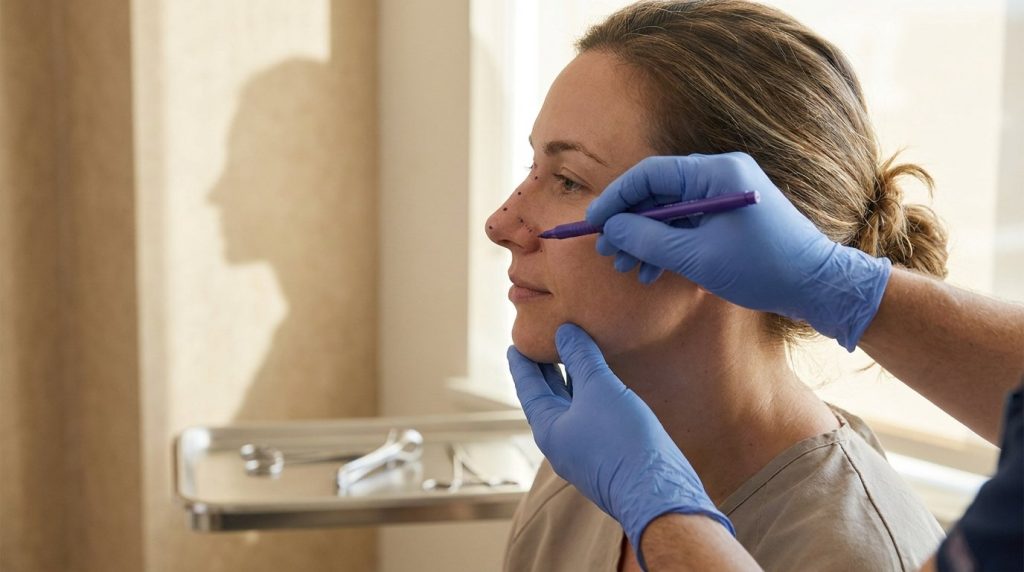
Two patients can sit in the same consultation room, ask for the same thing — a smaller, straighter nose — and leave with quotes that look nothing alike. That is not a trick of pricing; it is what happens when the surgical plan is built around one specific nose. Understanding what affects the cost of rhinoplasty is really about understanding what the surgeon has to do inside your nose, and how many hours, materials and people that takes.
The Surgical Plan Is the Single Biggest Price Driver
Nose surgery is not one operation. Refining only the tip is a shorter, more contained procedure than reshaping the bridge, narrowing the bones and rebuilding support at the same time. If you want to understand your own quote, start by asking which of those your plan actually involves — the difference between tip surgery and a full rhinoplasty is a difference in operating time, and operating time is the currency the whole quote is built on.
Several things reliably push a plan into the more complex bracket. Lowering a bony hump usually means controlled cuts to the nasal bones, which adds steps and bruising. A crooked nose has to be straightened rather than simply reduced, and that takes structural work. Skin thickness matters too, because a thick-skinned nose needs added definition through internal support rather than simple reduction, and building support takes longer than removing tissue.
Breathing work sits in the same conversation. When the wall between the nostrils is bent, or the internal ridges inside the nose are swollen, correcting them is often done in the same session. It is very common to combine septum correction with rhinoplasty, and while that is more efficient than two separate operations, it is still more surgery than a purely cosmetic reshaping — so the quote reflects it.
📋 Revision cases are priced differently A nose that has already been operated on has scar tissue, altered blood supply and often missing cartilage. Revision surgery usually takes longer, frequently needs grafting, and is planned more conservatively. Expect any second operation to be quoted as a more complex case than a first-time rhinoplasty, not as a small touch-up.
Cartilage Grafts, Materials and Theatre Time
Modern rhinoplasty often adds support rather than only removing tissue, and where that support comes from changes both the surgery and the price. Cartilage from inside the septum is the first choice because it is right there in the operating field. Ear cartilage means a second small incision. Rib cartilage means harvesting from the chest, which adds operating time, a second healing site and a longer anaesthetic.
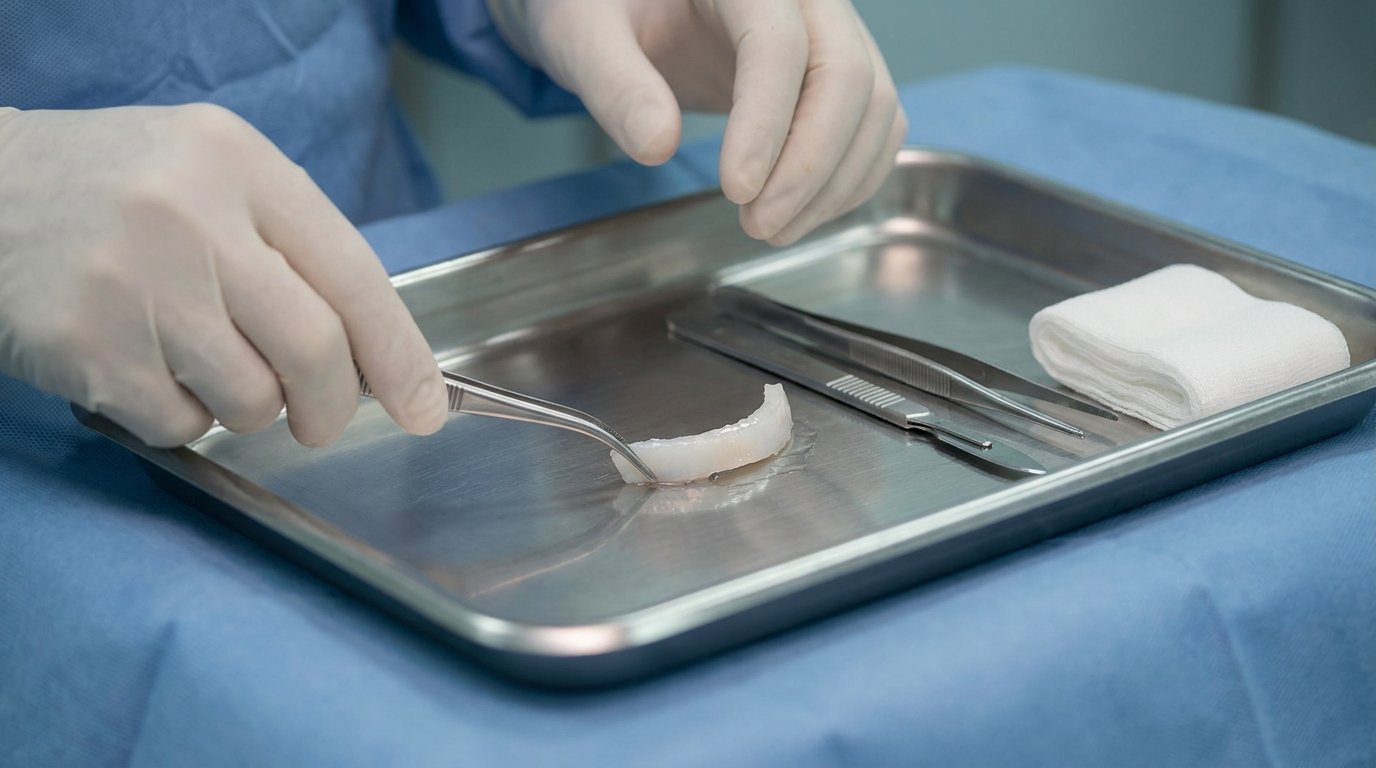
Donor cartilage is the other route. A 2024 systematic review in Aesthetic Plastic Surgery examined fresh frozen cadaveric rib as an alternative to using a patient’s own cartilage, and a 2022 cost analysis in the Annals of Otology, Rhinology & Laryngology compared donor cartilage with the patient’s own rib graft, noting that neither has been shown to be clearly superior overall. For you, the practical point is simpler: the graft decision affects surgical time, materials and sometimes an extra incision, so it belongs in the conversation before a price is confirmed rather than after.
Anaesthesia is billed by duration as well. A two-hour closed procedure and a four-hour structural rebuild with rib grafting are not equivalent uses of an operating theatre, an anaesthetist and a nursing team. This is also why open versus closed technique sometimes shows up in pricing discussions — not because one approach is inherently premium, but because the two are chosen for different levels of complexity.
Surgeon Experience, Facility and Location
A surgeon’s fee reflects training, case volume and the kind of work they take on. Someone who regularly handles revision and structural noses carries a different fee from a generalist doing occasional cosmetic cases, and that gap is usually the most honest part of any quote.
Where the operation happens matters just as much. A fully licensed hospital with an intensive care unit, a dedicated anaesthetist and overnight nursing costs more to run than a small day clinic, and that difference appears in your price. It is also the part you should least want to economise on.
Geography sets the baseline. Costs for the same facial procedure have long varied between regions and over time — a survey of facial plastic surgeons published in Archives of Facial Plastic Surgery in 2001 documented exactly that kind of regional and temporal variation. It is the same mechanism that makes rhinoplasty in Turkey cost less than in the UK or Germany: staff salaries, facility overheads and currency, not a lesser operation. A personalised figure is only confirmed after a surgeon has assessed your photographs or examined you in person.
What a Rhinoplasty Quote Usually Includes — and What It Does Not
Comparing two quotes is only meaningful once you know what each one contains. A package price in Turkey typically bundles the clinical side and some of the logistics; a surgery-only price leaves the logistics to you. Neither is dishonest, but they are not comparable side by side.
When you ask for a written breakdown, ask specifically about the second operation nobody plans for. Minor refinements are sometimes needed once swelling has fully settled, and clinics differ in how they handle surgeon and facility fees in that situation. Get the policy in writing rather than assuming, and treat any promise of a guaranteed result as a warning sign rather than reassurance.
⚠️ Ask for the breakdown in writing A single lump-sum number tells you very little. A line-by-line quote lets you see whether the difference between two clinics is the surgeon’s time, the hospital standard, or simply four hotel nights.
Adding a Second Procedure to the Same Trip
Combination surgery changes the arithmetic, because anaesthesia, theatre setup, hospital stay and the trip itself are shared instead of paid for twice. Roughly one in seven of the people who come to us for nose surgery choose to have something else in the same session, most often breast augmentation, a breast lift with implants, or upper eyelid surgery. That figure is worth knowing for one reason only: if you are weighing a second procedure, you are not an unusual case, and if you are not, there is no expectation that you add one.
If you are considering it, the deciding factor should be total anaesthesia time and your own health, not the saving. A longer combined operation carries more risk than either procedure alone, and a responsible surgeon will decline a pairing that pushes the session too long. Our guide on combining rhinoplasty with another surgery sets out where that line usually falls.
One practical note on recovery: when procedures are combined, the timeline is set by whichever one heals slowest, not by the nose. Plan your time off around the bigger operation.
Length of Stay and the Costs Around the Surgery
Most international rhinoplasty patients plan for about a week in Turkey — enough time for pre-operative tests, the operation itself, and a review appointment with splint or tape removal before flying home. That week is not a formality; leaving before the first check-up is one of the few genuine ways to compromise your result.
The costs that surprise people are rarely clinical. Flights bought late, an extra hotel night because the surgeon wants one more look, a companion’s travel, airport transfers in a surgery-only arrangement, and travel insurance that actually covers elective surgery abroad all sit outside the quoted surgical price. Working through the travel, stay and transfer side of a rhinoplasty trip before you commit makes the total budget realistic rather than optimistic.
Build in a little slack. Swelling and bruising vary, and a small number of patients prefer to stay an extra day or two rather than fly with a very fresh nose. Booking a flexible return ticket costs less than changing a fixed one.
Why the Lowest Quote Often Turns Out to Be the Most Expensive
The real financial risk in rhinoplasty is not paying too much once — it is paying twice. Revision surgery is harder, longer and usually needs grafting, and it comes with a second trip, second recovery and second round of time off work. A quote that looks unbeatable because it shaves time, skips the hospital, or is agreed without any surgeon ever seeing your face is not a saving.
What you are looking for is verifiable: a named surgeon you can research, a licensed hospital, a written plan that matches what you asked for, and photographs of previous cases with noses that resemble yours in skin thickness and structure. Clinics can legitimately show before-and-after images only with patient consent, so a smaller gallery is not a red flag — refusing to discuss your specific case is.
This article is for informational purposes only and does not constitute medical advice. Always consult a qualified surgeon for personalised guidance.
🚨 Never let price set the surgical plan If a quote is cheaper because the plan avoids grafting, osteotomy or the breathing correction your nose actually needs, you are not buying the same operation. Ask what has been left out and why.
A named, traceable surgeon; surgery in a licensed hospital with an anaesthetist; an itemised written quote; an assessment based on your photos or an in-person exam; a clear written policy on follow-up and revision; honest talk about what your skin and cartilage will allow.
A firm price given before any clinical assessment; pressure to book with a time-limited discount; guarantees of a specific result; no named surgeon until you arrive; vague answers about which hospital is used; heavily edited or reused before-and-after images.
Frequently Asked Questions
References
- 📎Cost Utility Analysis of Costal Cartilage Autografts and Human Cadaveric Allografts in Rhinoplasty — Ann Otol Rhinol Laryngol, 2022
- 📎Fresh Frozen Cartilage in Rhinoplasty Surgery: A Systematic Review of Outcomes — Aesthetic Plast Surg, 2024
- 📎Cost outcomes of facial plastic surgery: regional and temporal trends — Arch Facial Plast Surg, 2001
- 📎NHS: Cosmetic procedures
Related Articles



You Might Also Like



Related articles



Our specialists
 Clineca SpecialistErkan PinegözPlastic & Reconstructive Surgery
 Clineca SpecialistHakan AktaşPlastic & Reconstructive Surgery
 Clineca SpecialistOrkun UzuneyüpoğluPlastic & Reconstructive Surgery
 Clineca SpecialistSalim İskenderPlastic & Reconstructive Surgery
 Clineca SpecialistEngin SelamioğluPlastic & Reconstructive Surgery
 Clineca SpecialistCem AydınPlastic & Reconstructive Surgery
 Clineca SpecialistAlperen ÖnalEar, Nose & Throat (ENT)