
Have a question about Liposuction?
In this article
- Why swelling after liposuction lasts longer than you expect
- Liposuction swelling week by week: what to expect and when
- Why some areas stay swollen far longer than others
- Does combining liposuction with a tummy tuck or BBL change the swelling?
- What actually helps swelling settle faster
- Lumps, hard patches, fluid pockets and when to contact your team urgently
- Flying home swollen, how long to stay, and what your quote should cover
Most people plan their liposuction recovery around pain and time off work, then get quietly blindsided by the mirror in week two. Swelling is the part of healing patients keep asking about long after the soreness has faded, and how long swelling lasts after liposuction is one of the first things they want pinned down before booking a flight. It is a question with more than one answer, because the puffiness of day three and the stubborn firmness that still blurs your outline at week six are not the same problem.
Why swelling after liposuction lasts longer than you expect
Liposuction does not simply remove fat. A thin cannula passes back and forth through the fat layer, creating hundreds of small tunnels, and most surgeons first inject a fluid solution to numb the area and limit bleeding. Your body responds to all of that exactly as it would to any other injury: it sends fluid and inflammatory cells into the treated layer.
Some of the injected fluid also drains out through the small incisions in the first day or two, which is why dressings are often soaked early on. What stays behind takes much longer to clear, because the tiny lymphatic channels that normally carry fluid away have been disturbed as well. Until they recover, fluid sits in the space where fat used to be.
This is also why swollen tissue feels firm rather than soft, and why it tends to migrate downwards with gravity. After abdominal or flank work, fluid can settle over the pubic area or the upper thighs for a couple of weeks. After thigh or knee liposuction, ankles can look puffy. It looks alarming and it is usually completely ordinary.
📋 You may look bigger before you look smaller In the first two weeks it is normal to measure the same as before surgery, or even slightly more. Fluid weighs something, and it occupies the space the fat has left. This phase is not a sign the surgery did not work.
Liposuction swelling week by week: what to expect and when
Swelling does not fade in a straight line. It builds for a few days, plateaus, drops noticeably somewhere in the first month, and then trails off slowly over months. The final few percent is the part nobody warns you about, and it is why surgeons ask you to wait before judging your result.
The pattern below reflects an average, moderate case in one or two areas. Larger volumes, more areas and combined surgery all push the dates later.
- →Most visible swelling: gone by around six to eight weeks
- →Shape you would happily photograph: usually three months
- →Genuine final result: six to twelve months, longer after large-volume or 360 work
Why some areas stay swollen far longer than others
Where you had treatment matters as much as how much was removed. Areas with dense, fibrous fat and poorer natural drainage hold fluid stubbornly, while thin-skinned areas with good circulation clear faster. Volume matters too: a single flank treated conservatively behaves nothing like full 360 circumferential work.
Skin quality, age, how physically active you are, whether you smoke and how consistently you wear your garment all shift the timeline by weeks rather than days. If you want a realistic sense of which zones respond predictably and which ones fight back, our guide to the body areas liposuction treats best is a useful companion to this timeline.
One group deserves a separate note. When liposuction is performed for lipedema — a condition where painful, symmetrical fat build-up and chronic swelling are the main symptoms — the swelling pattern before and after surgery is different from cosmetic contouring, and follow-up is closer. A 2023 paper in Healthcare reported patient-reported outcomes after liposuction for lipedema, where relief of pain and swelling is the goal rather than contour alone. If you have lipedema or any lymphatic condition, say so at your consultation; it changes both the plan and the expected recovery.
Does combining liposuction with a tummy tuck or BBL change the swelling?
It does, and this is where a lot of patients plan the wrong recovery. Liposuction is very often not a standalone operation: roughly three in four of our liposuction patients have it as part of a combined plan, most commonly with a Brazilian butt lift or a tummy tuck. If that is likely to be your plan too, the timeline you should budget for is the combined one, not liposuction on its own.
With a tummy tuck, swelling is paced by the tuck. Skin has been lifted, muscles may have been tightened, and firm abdominal swelling commonly lasts several months, as set out in our week-by-week tummy tuck recovery guide. With a BBL, the extra layer is that swelling in the buttocks partly masks how much transferred fat survives, so the final volume is not clear for months — our BBL recovery timeline covers the sitting restrictions that come with it.
Practically, that means a longer stay abroad, a later return to the gym and a later date for judging results. Nobody should be adding a second procedure to shorten recovery; the honest reason to combine is one anaesthetic, one trip and one recovery period instead of two.
Swelling is driven by the treated areas. Most patients feel presentable within two to three weeks and see a convincing shape around three months.
The larger procedure sets the pace. Expect firmer, longer-lasting swelling, more restrictions and a final assessment closer to the six to twelve month mark.
What actually helps swelling settle faster
There is no way to switch swelling off, but a few habits do make the phase more comfortable and more predictable. Compression is one of the more useful things under your control: wearing the garment consistently, for the hours your surgeon prescribes, usually makes the swelling phase easier to live with and helps the skin settle evenly against the new contour. Wearing it loosely, or abandoning it in week two because it is hot, tends to prolong the puffy stage.
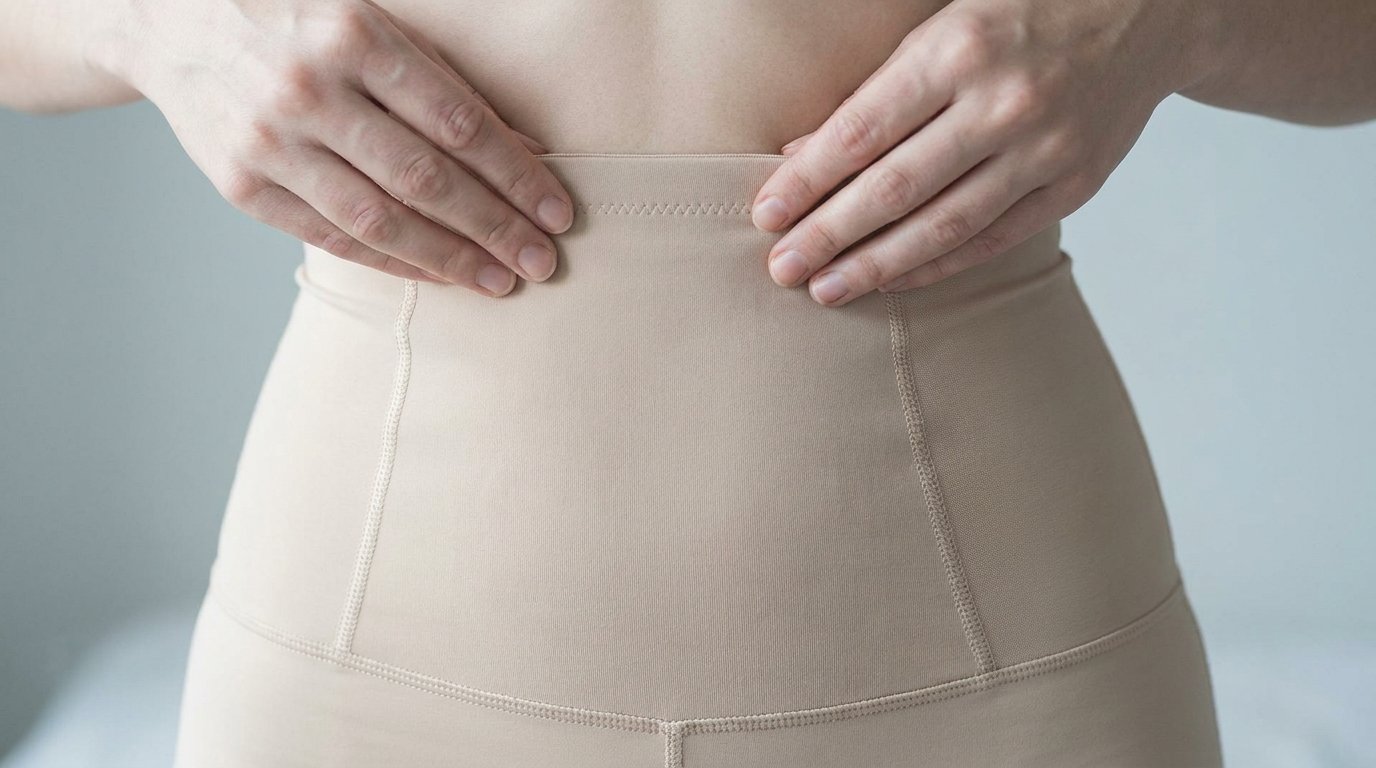
Movement is the other half. Gentle walking from day one encourages circulation and lymph flow, and it reduces the risk of blood clots that comes with lying still. Intense exercise too early does the opposite and can flare swelling for days.
- ✓Wear your compression garment exactly as instructed, including the hours you are told to keep it on overnight
- ✓Walk little and often from the first day, building up gradually rather than in one long effort
- ✓Keep salt intake modest and drink normally; dehydration does not reduce fluid retention
- ✓Sleep in the position your surgeon recommends, elevating treated areas where practical
- ✓Start manual lymphatic drainage massage only when your surgeon clears it, and only with a trained therapist
Lymphatic massage is popular and many patients find it comfortable and reassuring, but it is an adjunct rather than a shortcut — treat anyone promising it will halve your recovery with caution.
⚠️ Do not squeeze into a smaller garment Over-tight or badly fitted compression can dig in, restrict drainage and leave contour dents. If the garment leaves deep grooves or cuts off feeling, contact your team for a proper fitting rather than pushing through.
Lumps, hard patches, fluid pockets and when to contact your team urgently
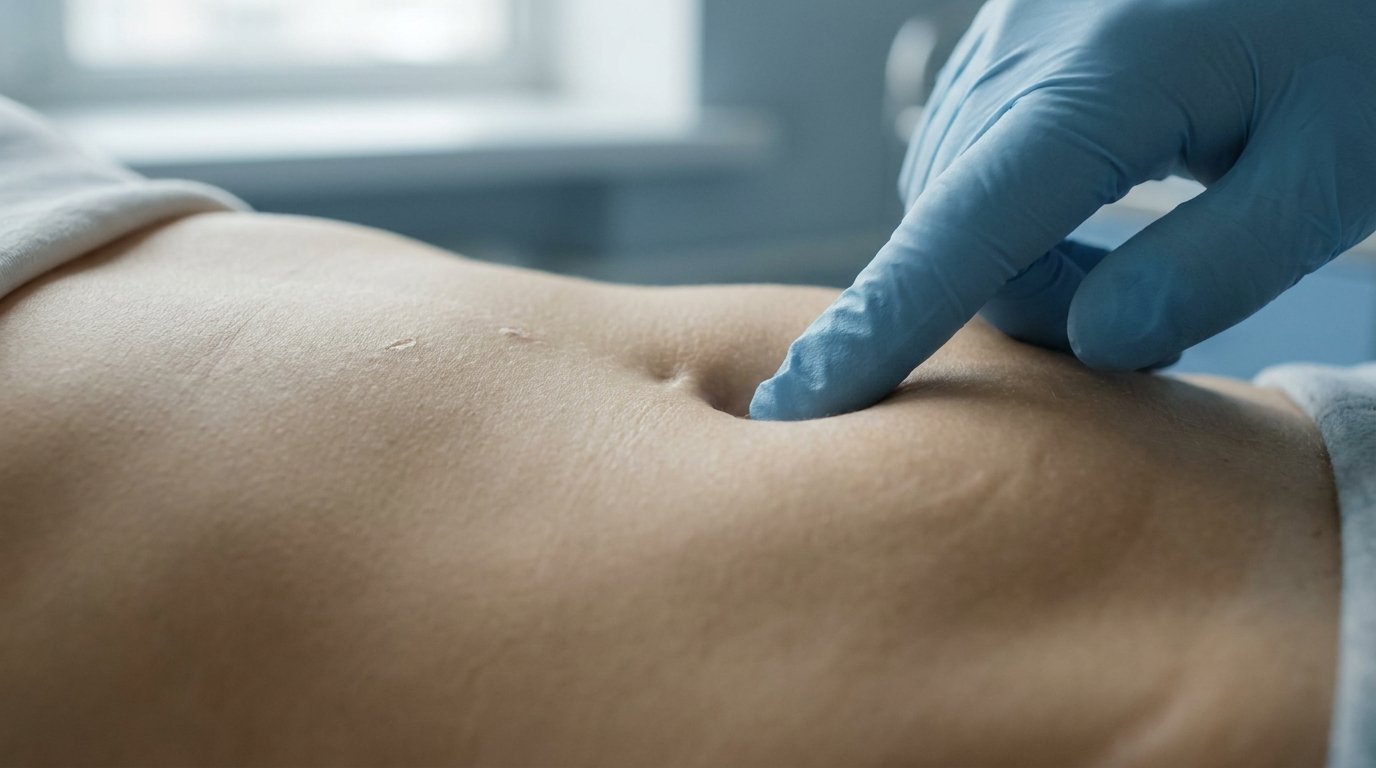
Firm, lumpy areas at four to eight weeks worry patients more than anything else. In most cases this is normal healing tissue: the tunnels made by the cannula fill with scar tissue that feels hard before it softens. It typically improves steadily over two to four months, and massage or your surgeon’s chosen treatments can help it along.
A seroma is different. This is a pocket of fluid that collects under the skin, often feels like a soft water balloon, and may wobble when you move. Small ones can settle on their own; larger ones are usually drained with a needle in clinic, which is quick and not something to fear. What matters is that it is looked at rather than watched for weeks from another country.
When to seek medical help immediately
If you are travelling home while still swollen, you need to know which changes cannot wait for a remote follow-up message. Go to an emergency department or urgent care locally — and inform your clinic afterwards — if you notice any of the following:
- ✓A fever, chills, or feeling systemically unwell
- ✓Redness or heat around an incision that is spreading, or increasing pain after day three or four
- ✓Pus or foul-smelling discharge from an incision
- ✓Pain, tenderness, warmth or swelling in one calf or leg, especially one-sided
- ✓Breathlessness, chest pain, coughing up blood, or a racing heart
- ✓A fluid pocket that is enlarging quickly, skin that is turning dusky or dark, or sudden confusion
These are the signs of infection, blood clots in the leg or lungs, and rarer complications such as fat entering the bloodstream. They are uncommon, but they are time-critical. Swelling that is slowly improving is reassuring; swelling that is getting worse day by day after the first week is not, and should be reported straight away.
🚨 Do not wait for your next scheduled check-in Breathlessness, chest pain, one-sided calf pain, a spreading red area or a fever all need to be assessed in person the same day, wherever you are. Message your clinic as well, but do not delay local emergency care while waiting for a reply.
Flying home swollen, how long to stay, and what your quote should cover
Swelling peaks in the first week, which is exactly when most travelling patients are thinking about their flight. For liposuction alone, surgeons commonly ask patients to stay around five to seven nights so that dressings, garment fit and early healing can be checked before you leave. Combined procedures such as a tummy tuck usually mean a longer stay, often closer to ten nights.
Flying itself does not damage your result, but sitting still for hours increases clot risk and cabin conditions can make ankles and feet puffier for a day or two. Keep the garment on, get up and walk the aisle regularly, flex your ankles while seated, and drink water rather than alcohol. Expect to look more swollen the day after a long flight, then improve again. Your surgeon will confirm the safe date for your specific case, and that date should never be squeezed to fit a cheaper ticket.
On cost, swelling management is part of what you are buying, so read the quote rather than the headline figure. Price is shaped by how many areas are treated, the volume involved, the technique used, whether another procedure is combined, the anaesthetic and the hospital, and the surgeon’s experience. A complete quote usually names the compression garment (and ideally a second one), post-operative checks, any planned lymphatic drainage sessions, medication and accommodation or transfers where these are bundled. Our overview of liposuction in Turkey explains how these packages are normally structured, and a personalised price is only meaningful after a proper consultation and assessment.
Safety and swelling are linked, so choose on credentials rather than turnaround time. Procedures are carried out by qualified surgeons at accredited partner hospitals, and you are entitled to know which surgeon will operate, their specialist plastic surgery qualifications and board registration, where the operation takes place, and how follow-up works once you are home. If you are considering facial contouring, the pattern differs again — our guide to double chin liposuction swelling covers that smaller, faster timeline. A clinic that answers your questions before booking is usually the one that answers them at week six, when the swelling has you worried.
This article is for informational purposes only and does not constitute medical advice. Always consult a qualified surgeon for personalised guidance.
Named, registered surgeon; written post-operative instructions; garment included and properly fitted; a clear plan for what happens if a seroma or infection appears after you fly home.
Pressure to fly out two or three days after surgery, no named surgeon, prices quoted before any assessment, and promises that swelling will be gone in a fortnight.
Frequently Asked Questions
References
- 📎Patient-Reported Outcomes of Liposuction for Lipedema Treatment — Healthcare (Basel), 2023
- 📎ASPS: Cosmetic Procedures
Related Articles
You Might Also Like



Related articles

Our specialists
 Clineca SpecialistErkan PinegözPlastic & Reconstructive Surgery
 Clineca SpecialistHakan AktaşPlastic & Reconstructive Surgery
 Clineca SpecialistOrkun UzuneyüpoğluPlastic & Reconstructive Surgery
 Clineca SpecialistSalim İskenderPlastic & Reconstructive Surgery
 Clineca SpecialistEngin SelamioğluPlastic & Reconstructive Surgery
 Clineca SpecialistCem AydınPlastic & Reconstructive Surgery
 Clineca SpecialistAlperen ÖnalEar, Nose & Throat (ENT)