
Have a question about Breast Lifting?
In this article
- Why breasts change shape after pregnancy and breastfeeding
- Self-checks that suggest a lift rather than a padded bra
- How long after breastfeeding should you wait before deciding?
- Lift, implants, fat transfer or both — what each one fixes
- Combining a breast lift with a tummy tuck or liposuction
- What drives the cost, and what a quote should include
- Recovery, travel and scars: what to plan for
- How to choose a surgeon and clinic you can trust
Breasts rarely go back to exactly how they looked before a pregnancy, and that is one of the least-discussed parts of new motherhood. If you are wondering how do I know if I need a breast lift after pregnancy, the question usually starts in front of a mirror, out of a bra, with a feeling that the shape has dropped rather than simply shrunk. What follows is how surgeons actually assess that difference, what you can check yourself, and when your shape is settled enough to judge fairly.
Why breasts change shape after pregnancy and breastfeeding
During pregnancy, milk-producing tissue expands and the breast can grow by several cup sizes over a few months. The skin and the internal support structures stretch to hold that new volume. When feeding ends and the glandular tissue shrinks back, the skin does not always shrink with it, so you are left with a larger envelope holding less content.
That mismatch is what most women describe as sagging. The breast often feels softer and emptier at the top, fuller and heavier at the bottom, and the nipple sits lower on the chest than it used to. Stretch marks on the skin surface are a clue that the elastic fibres in the skin were pushed past their limit.
It is worth separating two different complaints, because they lead to different operations. Losing fullness is a volume problem. Having your breast tissue and nipple sit lower than you want is a position problem. A lift, known medically as mastopexy, is designed for the second one — it removes excess skin, reshapes the tissue and moves the nipple higher, without adding size.
Self-checks that suggest a lift rather than a padded bra
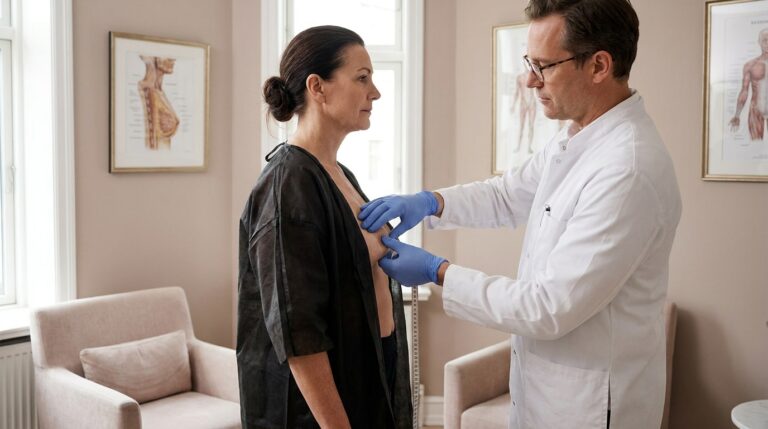
No home test replaces an examination, but a few observations tell you a great deal about which category you fall into. Stand in front of a mirror without a bra, relaxed, and look at where things sit rather than how large they are.
Surgeons grade sagging by comparing the nipple to the inframammary fold — the crease underneath the breast. The American Society of Plastic Surgeons describes this relationship as the key measure of breast ptosis: the further the nipple has dropped below that crease, the more advanced the sagging. If your nipple is level with or below the crease, a lift is usually part of any realistic plan.
Other signs point the same way:
- ✓The nipple points downward rather than forward when you stand.
- ✓Most of your breast tissue sits in the lower half, and the upper slope feels hollow or flat.
- ✓Skin folds or a soft, crepey texture appear along the lower breast.
- ✓Your bra fills only at the bottom of the cup, and unlined bras look empty at the top.
- ✓The areola looks wider and flatter than it did before pregnancy.
- ✓One side has dropped noticeably more than the other.
If your breasts sit high and firm but simply look smaller than before, skin removal is probably not what you need. Volume-only concerns are better served by other routes, and it is worth reading about whether a lift alone can suit you without implants before assuming you need both.
📋 About the ‘pencil test’ Tucking a pencil under the breast to see if it stays put is a rough screening habit, not a clinical measurement. It says nothing about skin quality, tissue distribution or nipple position relative to the crease — all of which change the operation your surgeon would plan.
How long after breastfeeding should you wait before deciding?
Judging your shape too early is one of the most common mistakes. The breast keeps changing for months after feeding stops: glandular tissue continues to involute, hormone levels settle, and skin retracts a little on its own. Most surgeons ask for a gap of roughly three to six months after you have fully stopped breastfeeding before planning surgery, and they want your weight to be reasonably stable, since further weight loss will change the result. Our overview of timing breast surgery after breastfeeding month by month walks through that window in more detail.
The other timing question is whether you plan to have more children. Pregnancy or breastfeeding comes up in around a quarter of the conversations we have with women weighing breast surgery, so if you are unsure about the future, you are firmly in normal company — and it is worth saying out loud at the first consultation, because a possible pregnancy can change what your surgeon recommends and when. A pregnancy after a lift can stretch the skin again; that does not undo the operation, but it can soften the result.
There is no medical requirement to be finished having children, and waiting years for a shape you dislike has its own cost. It is a personal trade-off, and an honest surgeon will lay it out rather than push you either way.
⚠️ Have any new lump or nipple change checked first A new lump, skin dimpling, one-sided nipple discharge or a persistent change in the nipple needs assessment by a doctor before you plan cosmetic surgery. Cosmetic planning should never be the reason a symptom goes unexamined.
Lift, implants, fat transfer or both — what each one fixes
Once you know whether your issue is position, volume or both, the choice narrows quickly. A lift repositions; implants and fat add. Combining them is common but asks more of the tissue and the scar plan, so the decision belongs in a consultation with photographs and measurements in front of you. If you are torn between the two paths, our comparison of what a breast lift and implants each actually fix is the clearest starting point.
Your nipple sits at or below the breast crease, the tissue feels adequate but has slipped downward, and you would be happy with your current size in a better position.
Breasts sit high but look deflated. Implants or fat transfer address this; skin removal would add scars for little gain.
Low nipple position plus a genuinely empty upper pole. Expect a discussion about doing both in one session versus staging them, and about how much lift the skin can safely support.
Combining a breast lift with a tummy tuck or liposuction
Post-pregnancy changes rarely stop at the chest, and one of the questions we hear most often is whether the abdomen can be addressed in the same trip. It usually can. Combining a lift with abdominal surgery or liposuction under one anaesthetic is a well-established approach, and it is the core of what most clinics call a mommy makeover.
The honest trade-off is recovery. A combined plan means one anaesthetic, one recovery period and one set of travel costs, but the recovery you should plan for is the one belonging to the bigger operation, not the lift. A tummy tuck restricts how you stand, lift and sleep for longer than a lift does, and childcare help becomes essential rather than nice to have.
There are also limits. Surgeons weigh total operating time, blood loss and your general health before agreeing to combine, and a responsible one will refuse or split the plan if the combination pushes past what is safe for you. If you have young children and no help at home for the first two weeks, staging is often the wiser choice even when combining is technically possible.
What drives the cost, and what a quote should include
Cost is usually the first thing patients ask about and the hardest thing to answer honestly before an assessment, because a breast lift is not one fixed operation. How much skin must be removed, how far the nipple has to move, whether an implant or fat transfer is added, and whether another procedure joins the same session all change the surgical time — and time is the main cost driver.
What matters more than the headline figure is what sits inside it. A quote worth comparing should spell out the surgeon’s fee, the anaesthetist, the hospital or clinic facility, your implants or materials if any, the surgical bra, medication, follow-up appointments and, for international patients, hotel nights and airport transfers where these are bundled. Ask specifically what happens financially if you need an extra night in hospital or a revision later, because that answer varies widely between clinics.
A personalised price can only be confirmed after a consultation, with photographs or an in-person examination. Be cautious with any figure quoted before anyone has looked at your breasts — it is a marketing number, not a plan.
🚨 Treat a very low price as a question, not a bargain If one quote sits far below the others, ask what has been left out: the anaesthetist’s qualification, the accreditation of the facility, overnight nursing, or the cost of managing a complication. Cheaper is sometimes just less.
Recovery, travel and scars: what to plan for
A lift alone is usually a day-case or single-overnight procedure. Most patients are up and walking the same day, off strong painkillers within a few days, and back to desk work in around one to two weeks. Heavy lifting, gym work and anything that pulls on the chest waits several weeks, and swelling settles gradually over two to three months, with the final shape becoming clear later than that.
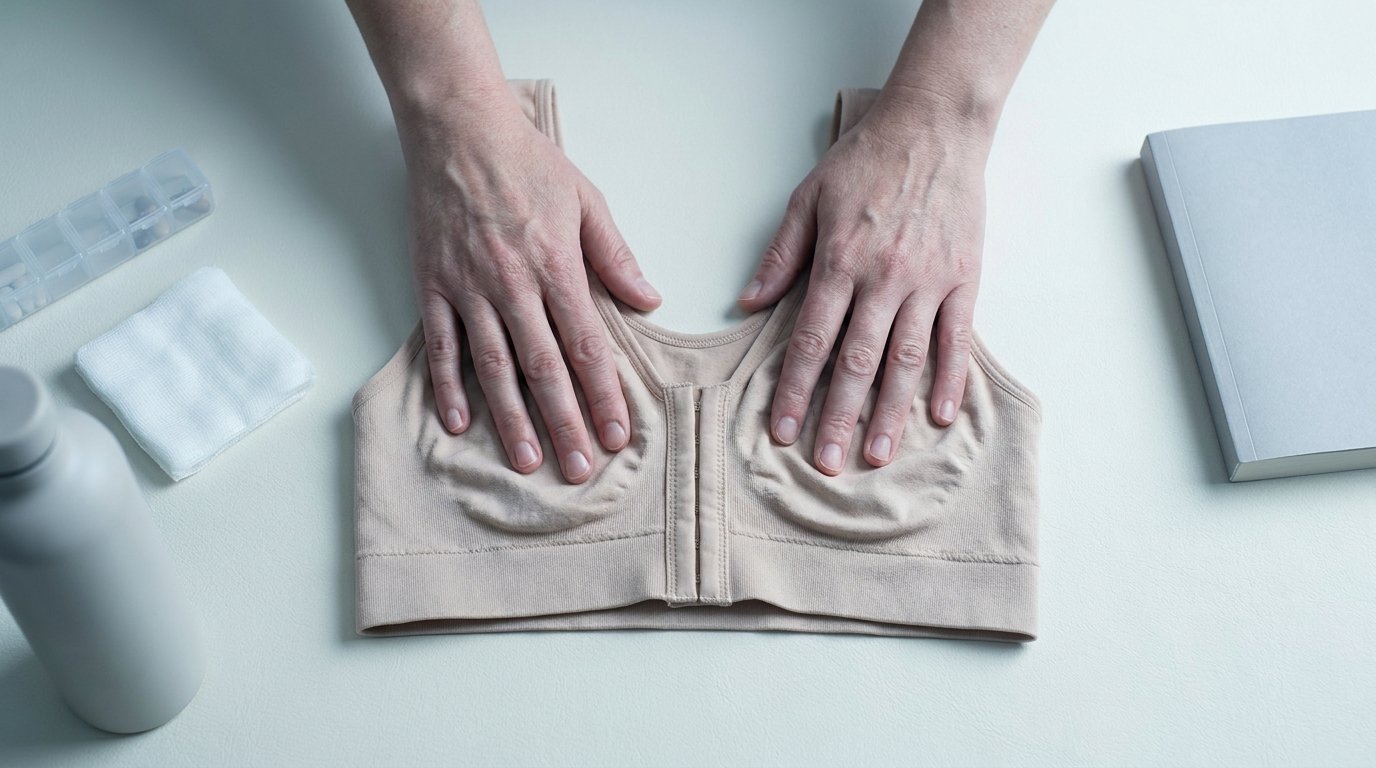
For an international trip, plan on staying long enough for your surgeon to see you at least once after surgery and to clear you for flying — commonly around seven to ten days for breast surgery, and longer if abdominal work is combined. Book the flight home with flexibility rather than to the minimum possible day.
Scars are the real trade-off of a lift, and no honest surgeon will promise otherwise. They typically run around the areola and often vertically down to the crease. Fresh scars look red or pink and firm for the first few months, then flatten and fade over roughly a year to eighteen months, though final appearance depends on your skin and healing. Asking to see photographs of healed scars in patients with a similar starting point and skin tone is one of the most useful things you can do in a consultation.
How to choose a surgeon and clinic you can trust
Trust is built on verifiable things, not on a fast reply to a message. Check that your surgeon holds a recognised plastic surgery qualification and that you can find their registration; in Europe, board certification through EBOPRAS is one credential worth asking about, as is national society membership such as BAAPS in the UK. Ask which hospital or surgical facility your operation will take place in, and whether it is accredited.
Expect a proper conversation. A surgeon who examines your nipple position, discusses whether you might have another child, explains why they recommend a lift alone or with volume, and tells you plainly what the scars will look like is doing the job. One who agrees to everything you suggest is not.
Named, verifiable surgeon; written quote listing inclusions; healed before-and-after photos of patients with a similar starting shape; a clear plan for follow-up and for who manages problems once you are home.
A price quoted with no photos or examination; the surgeon’s identity withheld until you pay a deposit; pressure to book this week; only flawless, freshly-photographed results shown; no answer on what happens if a revision is needed.
- ✓Ask who operates: Get the surgeon’s full name and credentials in writing before any deposit.
- ✓Ask where you sleep after surgery: Hospital, clinic with overnight nursing, or hotel — and who is on call.
- ✓Ask about your specific scar plan: Which incisions your degree of sagging requires, and why.
- ✓Ask about follow-up at home: How wound checks, garment guidance and complications are handled once you fly back.
Frequently Asked Questions
References
- 📎American Society of Plastic Surgeons — Cosmetic Procedures (breast lift/mastopexy)
- 📎NHS — Cosmetic procedures: what to consider
- 📎PubMed — research on mastopexy, breast ptosis and pregnancy-related breast changes
- 📎ISAPS — Global Survey of aesthetic procedures
Related Articles



You Might Also Like



Related articles
Our specialists
 Clineca SpecialistErkan PinegözPlastic & Reconstructive Surgery
 Clineca SpecialistHakan AktaşPlastic & Reconstructive Surgery
 Clineca SpecialistOrkun UzuneyüpoğluPlastic & Reconstructive Surgery
 Clineca SpecialistSalim İskenderPlastic & Reconstructive Surgery
 Clineca SpecialistEngin SelamioğluPlastic & Reconstructive Surgery
 Clineca SpecialistCem AydınPlastic & Reconstructive Surgery
 Clineca SpecialistAlperen ÖnalEar, Nose & Throat (ENT)