

Have a question about Breast Reduction?
In this article
- What usually lasts after breast reduction, and for how long?
- Why do some breast reduction results last longer than others?
- What changes over the years are normal, and what is not?
- When do people consider a second procedure later on?
- Does travel for surgery change how durable the result is?
- What affects the quote, and what should be included?
How long do breast reduction results last is one of the most common long-term questions after the early recovery worries settle down. The short version is that the improvement is usually durable, but breasts do keep changing with age, weight shifts, hormones and gravity, so the more useful question is what tends to stay better and what may slowly change again.
What usually lasts after breast reduction, and for how long?
A breast reduction removes breast tissue, fat and skin, then reshapes the breast and lifts the nipple to a higher position. Because actual tissue is removed, the result is not temporary in the way fillers or some non-surgical treatments are temporary. In real life, many women still feel clearly smaller, lighter and more comfortable well beyond 10 years after surgery, even though the breasts are not frozen in time.
That said, longevity is not one single number. Size reduction tends to last longest. Shape and upper fullness usually change sooner. A breast can remain meaningfully reduced for many years, while still developing some settling, softer lower-pole fullness, or mild droop as time passes.
This is broadly in line with how major surgical bodies describe cosmetic breast surgery: the NHS notes that breast shape can change again with ageing and weight change, and the American Society of Plastic Surgeons describes breast reduction as a procedure that makes breasts smaller and reshapes them, but does not stop future body changes. Long-term follow-up studies published in journals such as Aesthetic Surgery Journal and Plastic and Reconstructive Surgery also support the same practical message: patient satisfaction is often durable, but breast position and contour continue to evolve over time.
For someone deciding now, the useful expectation is this: breast reduction results are usually long-lasting, often for a decade or much longer, but they are best thought of as a durable improvement rather than a once-and-for-all permanent shape.
Why do some breast reduction results last longer than others?
The biggest factors are your starting breast size, skin quality, surgical technique, age, weight stability and hormone-related changes after surgery. Larger, heavier breasts place more pull on the skin envelope over time, so they are simply working against gravity more than smaller reductions are.
Skin quality matters more than many patients expect. If your skin has been stretched by larger breasts for years, or by major weight change, pregnancy or breastfeeding, it may not hold a lifted shape as firmly in the long term. That does not mean the operation failed. It means the tissues age from a different starting point.
Technique also matters. Different reduction patterns and pedicles — meaning the way the nipple stays attached to its blood supply — can influence shape, lower-pole support and scar pattern. A well-planned reduction can improve longevity, but no technique can fully cancel out heavy tissue, weak skin support or future life changes.
One detail that matters in this article more than it first seems: the average age at surgery among our breast reduction patients is 33. That means the result often needs to hold up through decades of normal body change, so long-term planning matters more than chasing the most dramatic early shape.
Pregnancy and breastfeeding belong in this conversation too. They do not erase every reduction result, but they can stretch the breast again and change volume unpredictably. Future breastfeeding after a reduction is also not guaranteed. Some women can breastfeed, some cannot, and the chance depends partly on surgical technique and how much glandular tissue and duct connection are preserved. The NHS and Mayo Clinic both advise discussing future breastfeeding plans before surgery for exactly this reason.
What changes over the years are normal, and what is not?
Normal long-term change is usually gradual. Breasts may soften, sit a little lower, lose some upper fullness and become less “perky” than they looked in the first year. Mild asymmetry can also become more noticeable with time, especially if one side is naturally heavier or the chest wall is uneven.
Weight gain can increase breast volume again because breasts contain fat as well as gland tissue. Weight loss can make them smaller but may also leave looser skin. Menopause can also shift breast texture and fullness. None of that automatically means revision surgery is needed.
What is less normal is a clear return to very heavy, uncomfortable breasts without a major reason such as substantial weight change, pregnancy or hormonal treatment. Persistent hard lumps, new breast distortion, skin changes, nipple problems or focal pain should be assessed as a breast health issue, not assumed to be a cosmetic relapse.
If you are also comparing shape concerns, it helps to understand where a reduction overlaps with a lift. Our article on breast reduction and lift explains why the two are often planned together from the start.
When do people consider a second procedure later on?
Most women do not need another breast reduction soon after a well-planned first operation. When a second procedure is discussed, it is more often for shape change than for a true full return of breast size. A later breast lift may be enough if the main issue is droop rather than renewed heaviness.
Revision becomes more likely after big life events that change the breast again: major weight gain or loss, pregnancy, breastfeeding, or simple tissue ageing over many years. In our patients, about 37% of breast reduction cases are booked together with another procedure, most often a lift. For a reader worried that a lift somehow means the reduction will not last, the more accurate way to read that is that long-term shape often needs to be planned at the first surgery, not patched in later.
If your concern is mainly sagging after weight change rather than breast weight itself, a lift-focused discussion may be more relevant than another reduction. Our related article on breast lift after weight loss is useful for that distinction.
A second procedure is more likely if
- ✓Your breasts were very large and heavy to begin with
- ✓Your skin had poor elasticity before surgery
- ✓You later go through pregnancy, breastfeeding or major weight change
- ✓Your main goal was a very lifted upper-breast shape rather than simply smaller breasts
A careful surgeon should explain this before the first operation, because long-term satisfaction often comes from matching the plan to the tissue you actually have, not to idealised before-and-after photos.
Does travel for surgery change how durable the result is?
The country itself does not determine longevity. Planning and follow-up do. If you travel for breast reduction, the important question is whether the surgeon has appropriate specialist training, whether the clinic or hospital is properly accredited, and whether your aftercare plan is clear once you fly home.
Look for a surgeon whose background is easy to verify and, where relevant, whose training aligns with recognised standards such as EBOPRAS board certification. Ask who does the operation, where it takes place, what support garment is used, when drains are removed if used, and how scar and shape follow-up works after you leave Turkey.
Your stay is usually built around early checks, wound review and fitness to fly, not the final result. If you are planning surgery abroad, our article on how long to stay in Turkey for breast surgery helps with the practical side, and what is included in an all-inclusive surgery package explains what should be clarified before you book.
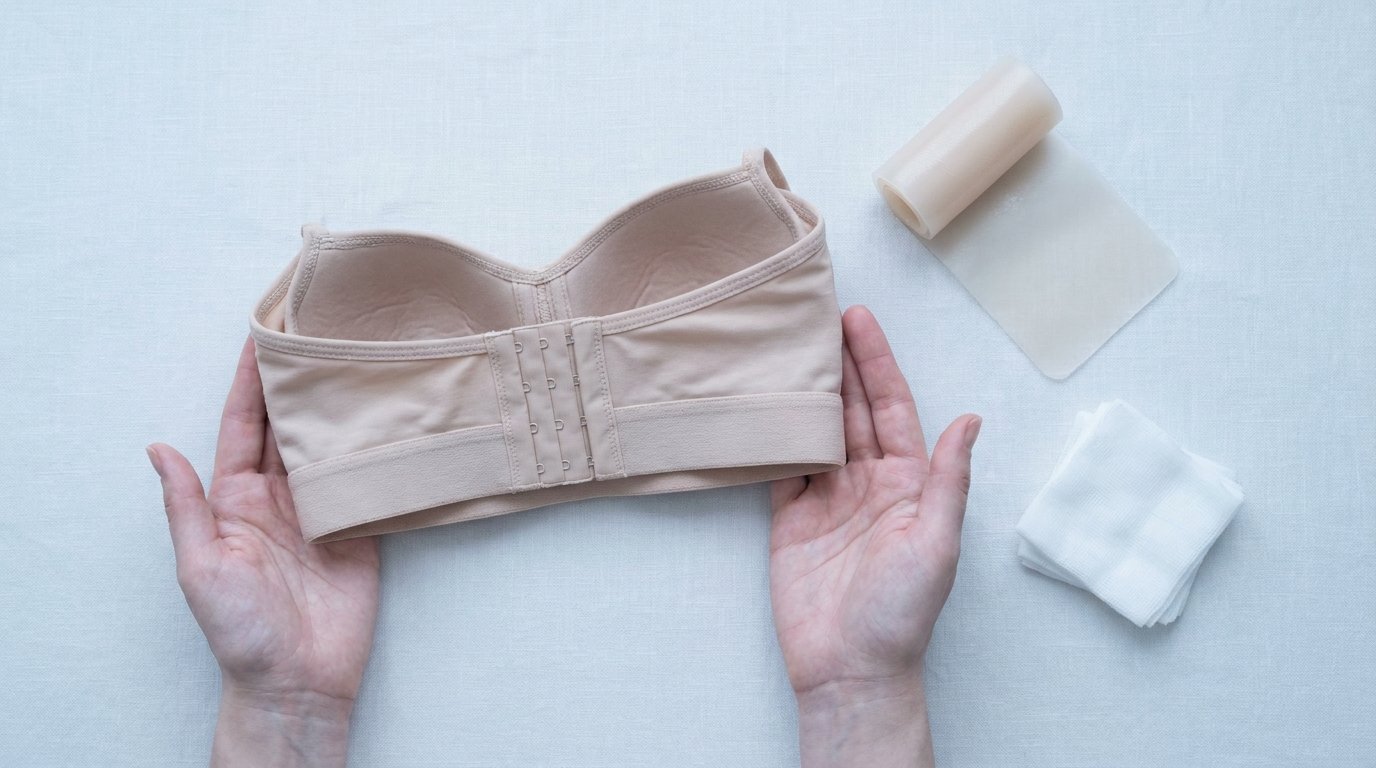
A durable result also depends on good early healing. That means realistic activity limits, wearing the recommended bra, protecting incisions, and keeping follow-up communication easy if swelling, delayed healing or asymmetry needs review.
⚠️ Choose follow-up, not just the operation A lower quote is less useful if there is no clear plan for wound checks, scar advice and remote review once you return home.
What affects the quote, and what should be included?
The price of breast reduction is shaped by surgical complexity more than by a simple menu rate. Larger reductions, combined lift work, operating time, hospital setting, surgeon experience, anaesthesia, compression garments, medication and aftercare can all change the quote.
When comparing clinics, ask whether the quote covers the surgeon, anaesthetist, hospital or theatre fees, one-night stay if needed, routine tests, post-op bra, transfers, hotel, medications and follow-up. If a revision policy is mentioned, ask what that actually means in practice and what is not included.
Because this procedure is often tailored around breast size, skin quality and whether a lift is needed at the same time, a personalised quote after consultation is more meaningful than any generic comparison.
Frequently Asked Questions
References
- 📎NHS – Cosmetic procedures
- 📎American Society of Plastic Surgeons – Cosmetic procedures
- 📎PubMed – Breast reduction long-term satisfaction Aesthetic Surgery Journal
- 📎PubMed – Reduction mammaplasty breastfeeding outcomes Plastic and Reconstructive Surgery
Related Articles



You Might Also Like



Related articles



Our specialists
 Clineca SpecialistErkan PinegözPlastic & Reconstructive Surgery
 Clineca SpecialistHakan AktaşPlastic & Reconstructive Surgery
 Clineca SpecialistOrkun UzuneyüpoğluPlastic & Reconstructive Surgery
 Clineca SpecialistSalim İskenderPlastic & Reconstructive Surgery
 Clineca SpecialistEngin SelamioğluPlastic & Reconstructive Surgery
 Clineca SpecialistCem AydınPlastic & Reconstructive Surgery
 Clineca SpecialistAlperen ÖnalEar, Nose & Throat (ENT)