Have a question about Rhinoplasty?
In this article
- What is rhinoplasty actually for?
- How is rhinoplasty performed step by step?
- Is it open or closed rhinoplasty, and which one is better?
- What does recovery really look like after rhinoplasty?
- What are the main risks and limits you should know before deciding?
- How long should you stay in Turkey, and what should a quote include?
- How do you choose a safe surgeon and clinic setup?
If you are asking what is rhinoplasty and how is it performed, you are usually trying to picture the real operation, not just the before-and-after photos. That matters, because the decision is not only about nose shape. It is also about breathing, healing time, surgeon choice and whether the plan fits your travel and recovery window.
What is rhinoplasty actually for?
Rhinoplasty is surgery that changes the shape of the nose, the function of the nose, or both. Some people want a cosmetic change such as smoothing a hump, refining a tip or narrowing the bridge. Others need structural work to improve airflow, often because of a deviated septum, weak support inside the nose or old trauma. Listen to how people describe the nose they want and the word that keeps surfacing is not “natural” but “slimmer”. Roughly one in six of those who write to us about their nose want it slimmer or thinner — far more than mention a smaller nose, a straighter bridge or a neater tip. Pin down which of those you actually mean before the consultation; each is a different operation.
In practice, these goals often overlap. A nose can look crooked because the underlying structure is crooked, and a person who wants a smaller or straighter nose may also want better breathing. The NHS notes that cosmetic nose surgery can alter the size, shape and angle of the nose, while functional nasal surgery may also be done to help breathing. That is why a proper assessment is more than a style discussion.
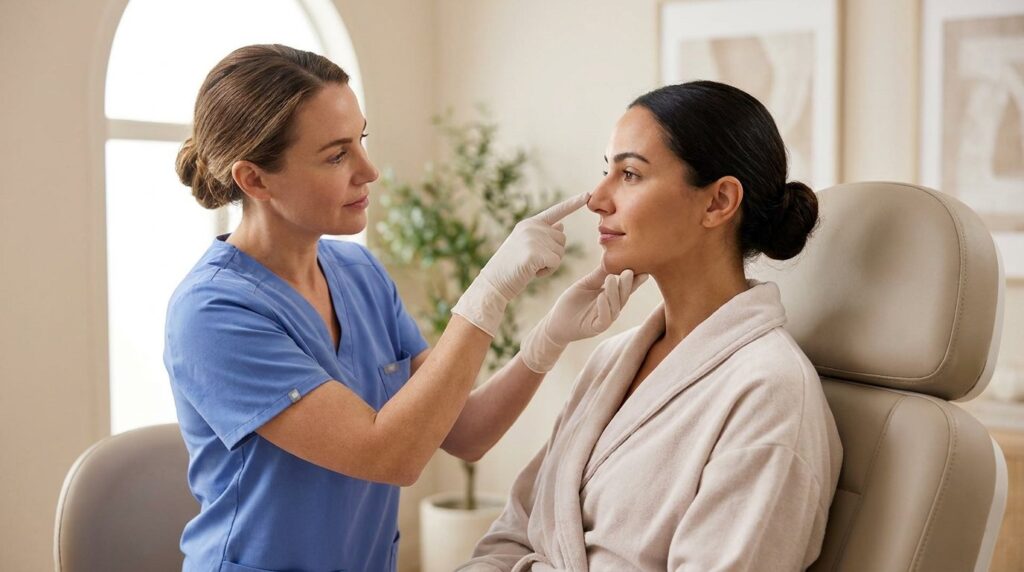
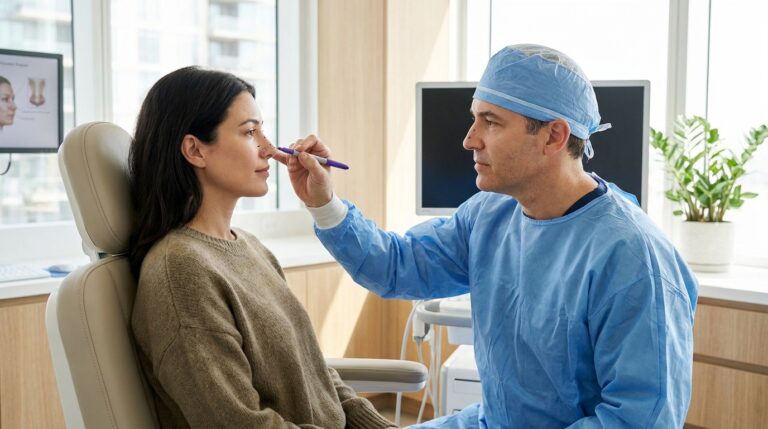
A good consultation should cover your breathing, past injury, allergies, previous nasal surgery, skin thickness and what changes are realistically possible. Thick skin, for example, can limit how sharply the tip shows after surgery, while very thin skin may reveal small irregularities more easily. This is one of the main reasons two people asking for the “same nose” do not get the same plan.
📋 Cosmetic and functional goals often meet A rhinoplasty plan may include both appearance changes and internal structural work if breathing is part of the problem.
How is rhinoplasty performed step by step?
The surgery is usually done under general anaesthetic in a hospital setting. Broadly, the surgeon lifts or works through the nasal skin and soft tissue, reshapes the bone and cartilage underneath, then supports the new structure before the nose is dressed and splinted.
There are two main surgical approaches. In a closed rhinoplasty, the cuts are placed inside the nostrils. In an open rhinoplasty, there is also a small cut across the strip of skin between the nostrils, called the columella. If you want a clearer explanation of how those approaches differ, this article on open or closed rhinoplasty is useful before a consultation.
What happens during the reshaping depends on the problem being treated. A hump may be reduced by adjusting bone and cartilage on the bridge. A wide nose may need controlled bone cuts so the nasal bones can be moved inward. A drooping or bulbous tip may be refined by reshaping tip cartilage, adding support grafts, or both. If the septum is bent, septoplasty can be done at the same time; if that is part of your question, this guide on septoplasty with rhinoplasty explains the combined plan in plain language.
Cartilage grafts are common in modern rhinoplasty, especially when the nose needs more support rather than simply more reduction. These grafts often come from the septum inside the nose, and sometimes from the ear or rib in more complex cases. That does not always mean a bigger-looking nose. Often it means a stronger nose that heals more predictably and breathes better.
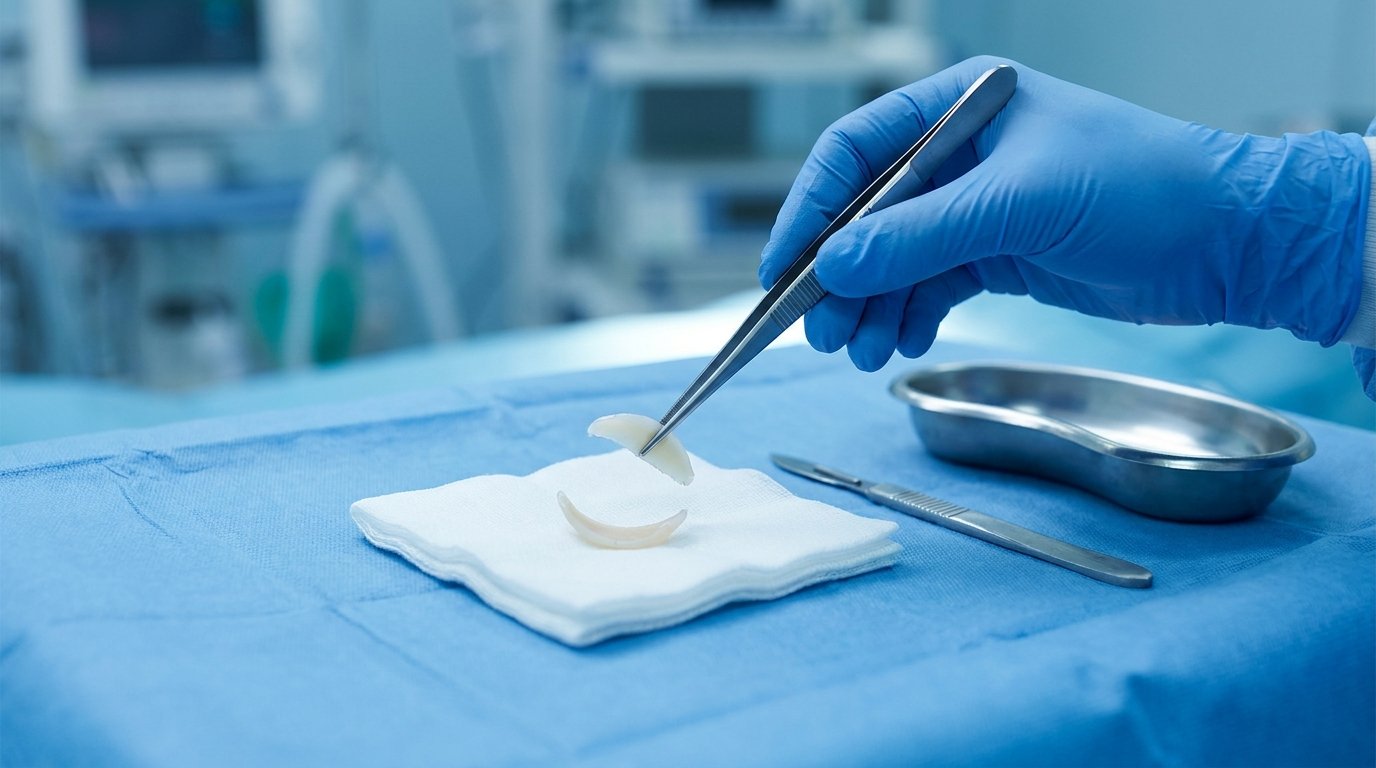
At the end of surgery, the skin is redraped over the new framework. Many surgeons place a splint on the outside of the nose for the first week, and some use soft internal supports depending on the work done. The exact steps vary, so asking the independent surgeon to explain your own operative plan is more useful than memorising a standard sequence.
Is it open or closed rhinoplasty, and which one is better?
Neither approach is automatically better. The right one depends on how much access the surgeon needs, how complex the tip work is, whether you are having a revision, and how comfortable the surgeon is with each method.
Closed rhinoplasty avoids the small external columella scar and may suit more limited changes. Open rhinoplasty gives wider visibility, which can help in complex tip reshaping, structural grafting and revision cases. The trade-off is usually a bit more swelling at the tip and a tiny external scar, though that scar is often hard to notice once healed.
This is a good place to be practical. If a surgeon recommends one approach, ask what problem it solves in your case. A thoughtful answer should sound specific to your anatomy, not like a fixed house preference applied to everyone.
The surgeon explains why your anatomy and goals suit an open or closed approach, with trade-offs for scarring, access and swelling.
You are told one technique is always superior without any discussion of your tip shape, septum, skin thickness or revision history.
What does recovery really look like after rhinoplasty?
Most people are surprised less by pain and more by swelling, blockage and patience. The first week is the most awkward because of the splint, congestion and bruising around the eyes. Many patients feel presentable enough for light social contact after the splint comes off, but the nose still looks swollen, especially at the tip.

In the first two weeks, the main job is protecting the nose from pressure, bumps and overactivity. Sleeping with your head elevated helps with swelling, and this guide on sleeping elevated after rhinoplasty explains the practical side of that. Exercise, glasses, travel timing and breathing changes all need separate planning rather than guesswork.
Healing then becomes slower and less visible. Much of the bruising fades early, but subtle swelling settles over months, not days. The Mayo Clinic and ASPS both emphasise that final contour takes time, and many surgeons advise patients that tip definition is one of the last things to settle. If you want a focused timeline for a common symptom, this article on how long numbness lasts after rhinoplasty is a useful companion read.
A realistic timeline looks like this: the first week is downtime, the next few weeks are social recovery, and the following months are refinement. That slower final phase is normal, not a sign that surgery “didn’t work.”
⚠️ Do not judge the result too early A nose that looks broad, uneven or stiff in the early months may still be within normal healing, especially at the tip.
What are the main risks and limits you should know before deciding?
Rhinoplasty is common, but it is still real surgery. Risks include bleeding, infection, asymmetry, ongoing blockage, visible irregularities, scarring, numbness and dissatisfaction with the cosmetic result. Revision surgery is sometimes needed, which is one reason careful planning matters so much. The NHS lists general cosmetic surgery risks such as bleeding, infection and unsatisfactory results, and those principles apply here too.
There are also limits that are not always obvious from online photos. Skin thickness, healing behaviour, previous injury and ethnicity all affect what is achievable. A very dramatic change may not suit the face or may weaken support. Good rhinoplasty is often a balance between shape, function and long-term stability, not simply “smaller is better.”
This is especially important if you want a highly edited photo matched exactly. Responsible surgeons usually use imaging, if they use it at all, as a discussion tool rather than a promise. That is a safer way to think about the procedure.
- ✓Ask what changes are realistic for your skin and structure
- ✓Ask whether breathing could improve, worsen or stay the same
- ✓Ask how often revision is discussed in similar cases
- ✓Ask what the surgeon would avoid doing, and why
How long should you stay in Turkey, and what should a quote include?
For medical travel, the operation itself is only one part of the plan. You need time for the pre-op assessment, the surgery day, early checks and splint removal or review before flying home. The exact stay depends on how the independent surgeon schedules follow-up, whether septoplasty or additional nasal work is being done, and how you are recovering in the first days.
A clear quote should explain what is included around the surgery rather than showing only the procedure line. Patients often focus on the operation fee first, but the real comparison includes airport transfers, hotel arrangements, hospital costs, interpreter support if needed, medicines, follow-up visits and whether revision-related policies are explained in writing. This article on rhinoplasty travel plans, stay length, hotel and transfers goes deeper into the logistics, and this piece on what an all-inclusive surgery package usually includes helps you compare offers more fairly.
Price differences are usually driven by surgeon experience, hospital standards, case complexity, whether breathing problems are also treated, and what level of aftercare is built into the package. A personalised price is normally confirmed after the surgeon reviews your photos or examines you in person.
Communication matters here more than many people expect. A slow or vague coordinator before booking often stays slow or vague when you need medication answers, transfer changes or follow-up help after surgery.
For a full breakdown of prices, packages and safety checks, see our rhinoplasty in Turkey cost and safety guide.
How do you choose a safe surgeon and clinic setup?
Start with credentials and setting. For surgery in Europe or the UK context, readers often recognise bodies such as EBOPRAS and BAAPS when checking specialist standards, while the hospital itself should be appropriately licensed and equipped for surgery under anaesthetic. Credentials alone are not enough, but they are a sensible first filter.
Then look at case fit. A surgeon who does a high volume of nasal work, including functional and revision cases, is often better placed to explain trade-offs in a nuanced way. Ask to see before-and-after photos of noses with a similar starting point to yours, not only the best or smallest results.
Finally, test the process. You should know who you will speak to after surgery, how urgent concerns are escalated, and whether the person giving you logistical information is careful about what they can and cannot promise. If you are working with a medical-travel facilitator, it should also be clear which parts are arranged by the facilitator and which are carried out by the independent surgeon and hospital.
Clear credential checks, specific answers about your anatomy, realistic discussion of limits, and written details of aftercare.
Guaranteed results, pressure to book quickly, unclear surgeon identity, or no written explanation of what happens if healing is slower than expected.
Frequently Asked Questions
References
- 📎NHS: Cosmetic procedures
- 📎ASPS: Cosmetic procedures
- 📎Mayo Clinic: Tests and procedures
- 📎PubMed: rhinoplasty outcomes breathing function review
Related Articles



You Might Also Like



Related articles


Our specialists
 Clineca SpecialistErkan PinegözPlastic & Reconstructive Surgery
 Clineca SpecialistHakan AktaşPlastic & Reconstructive Surgery
 Clineca SpecialistOrkun UzuneyüpoğluPlastic & Reconstructive Surgery
 Clineca SpecialistSalim İskenderPlastic & Reconstructive Surgery
 Clineca SpecialistEngin SelamioğluPlastic & Reconstructive Surgery
 Clineca SpecialistCem AydınPlastic & Reconstructive Surgery
 Clineca SpecialistAlperen ÖnalEar, Nose & Throat (ENT)