Have a question about Arm Lift?
In this article
- What is the usual recovery timeline after an arm lift?
- What are the first 7 days like after surgery?
- When can you go back to work, exercise, and normal life?
- How long do you need to stay in Turkey after an arm lift?
- What affects how fast or slowly you recover?
- What are normal healing signs, and what should worry you?
- How do you choose a surgeon and clinic with recovery in mind?
If you are asking how long does arm lift recovery take, you are usually trying to plan real life around surgery, not just understand the procedure. Recovery after an arm lift has a fairly clear pattern, but the details matter: how much skin is removed, whether liposuction is added, how your scars behave, and how soon you need to fly, work, drive, or lift your arms normally again.
What is the usual recovery timeline after an arm lift?
Most people feel noticeably better within the first two weeks, but full recovery from an arm lift takes longer than that. In practical terms, the hardest part is often the first several days, the “back to normal routine” stage usually starts over the next few weeks, and scar settling continues for months.
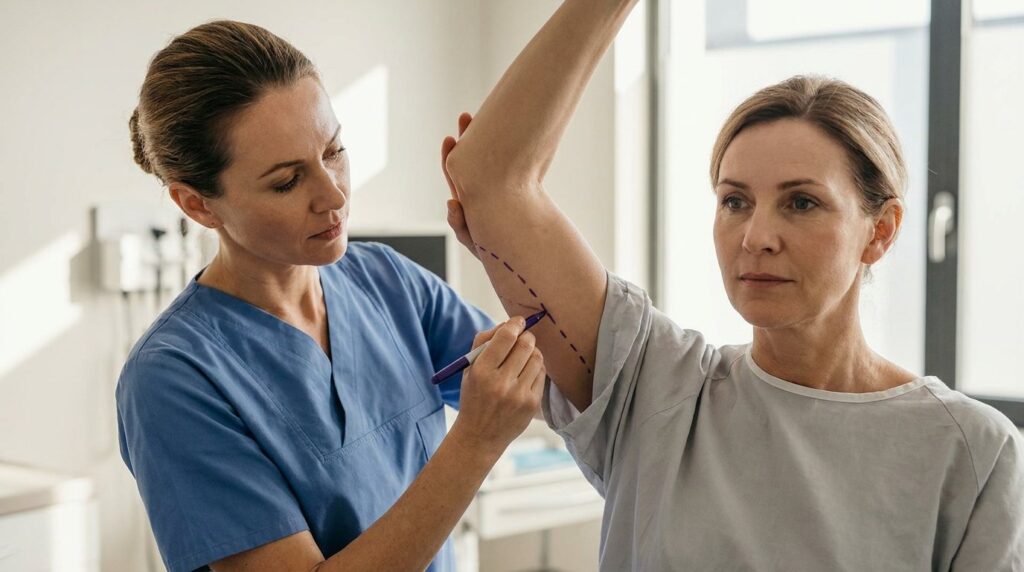
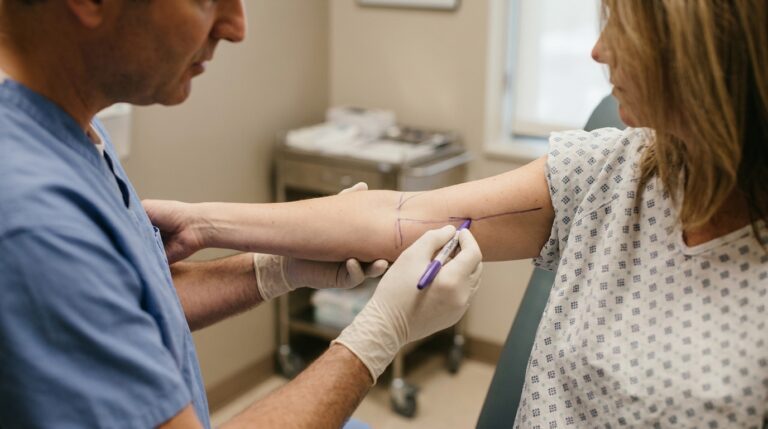
An arm lift, also called brachioplasty, removes loose skin and often some fat from the upper arm. Because the incision is usually long and sits in an area that moves every time you reach, dress, wash, or sleep on your side, healing is not only about pain. It is also about swelling, tightness, drainage, scar care, and protecting the result while the tissues seal down.
According to the NHS, cosmetic surgery recovery varies by the person and by the exact operation performed. That is especially true with arm lift surgery. A smaller lift with limited skin removal may settle faster than a more extensive arm lift after major weight loss. If liposuction is added, bruising and swelling may be more noticeable early on.
The timeline below is a useful guide, but your own surgeon’s instructions always come first.
📋 A useful way to think about recovery There is a difference between feeling functional again and being fully healed. Many patients confuse the two, especially around the second or third week.
What are the first 7 days like after surgery?
The first week is the most restrictive part of recovery. Your upper arms will usually feel swollen, sore, and tight. Some patients describe a pulling feeling rather than sharp pain, especially when trying to straighten the arms fully or reach away from the body.
You may wake up in compression garments or supportive dressings. Some surgeons also use drains for a short time, particularly if a larger amount of tissue was removed. During this stage, you will usually be told to walk gently, keep your arms supported, and avoid stretching, lifting, pushing, or sudden reaching.
Sleeping can be awkward for the first several nights. Many patients are more comfortable on their back with the upper body slightly raised and pillows supporting the arms. Small daily tasks can feel surprisingly difficult. Pulling clothes over your head, washing your hair, carrying a bag, or opening heavy doors may all need help at first.

If you travel for surgery, plan this week carefully. You should not expect to explore the city or manage luggage independently. A proper recovery setting matters more than people think.
For readers considering the procedure itself, the clinic’s arm lift surgery page can help explain the operation, but recovery planning is what usually makes the trip smoother.
The symptoms below are common in the first week, but they should still be monitored closely:
- ✓Swelling and bruising
- ✓Tightness when moving the arms
- ✓Light fluid leakage from incisions or drains if used
- ✓Numb patches or altered skin sensation
- ✓Tiredness after anaesthesia and reduced activity
What should make you contact your surgeon promptly is different. Increasing redness, worsening one-sided swelling, fever, severe pain not helped by medication, bad-smelling drainage, chest pain, or shortness of breath need urgent medical advice.
⚠️ Do not judge your result in week one Early swelling can make the arms look uneven, boxy, or larger than expected. That does not reflect the final contour.
When can you go back to work, exercise, and normal life?
This depends less on the calendar and more on what your normal life actually involves. A person who works at a laptop and can keep their elbows close to the body may return much sooner than someone who lifts, reaches, drives for long hours, or works in care, retail, cleaning, or the gym.
Many patients can return to light desk-based work after roughly two weeks, sometimes a little earlier and sometimes later. The key questions are whether you can sit comfortably, manage basic tasks without strain, and avoid sudden arm movement. If your job involves carrying, pulling, or lifting, you may need a longer break.
Exercise takes more patience. Gentle walking is usually encouraged early because it helps circulation. But upper-body workouts, weight training, swimming, yoga poses that load the arms, and any activity that stretches the incision line usually have to wait until your surgeon confirms the tissues are secure enough. That clearance often comes weeks after you start feeling better.
Driving is another area people underestimate. You need to be able to control the wheel without pain, react quickly, and perform an emergency stop safely. If you are still taking strong pain relief or your arm movement is restricted, you are not ready yet.
A realistic rule of thumb
If an activity makes you stretch the upper arm skin, raise the elbows repeatedly, carry weight, or brace through the hands, it can stress healing more than you expect. Arm lift incisions are long, and tension is one of the things that can worsen scar quality.
The American Society of Plastic Surgeons, in its patient guidance on body contouring procedures, emphasises following the operating surgeon’s restrictions closely because healing timelines and safe return to activity vary with the procedure and the person. That is sensible advice here. Pushing too early may not only increase swelling. It can also affect wound healing and scar appearance.
How long do you need to stay in Turkey after an arm lift?
If you are travelling to Turkey for surgery, do not plan the trip around the operation day alone. You need time for the first checks, dressing changes, and early monitoring before flying home. Even when the surgery itself is straightforward, the first days are when swelling, wound care questions, and mobility issues are most likely to need support.
Many international patients plan to stay at least around the early recovery period rather than leaving immediately. The exact length depends on whether your surgery is isolated or combined with another body procedure, whether drains are used, and how your surgeon wants follow-up arranged. If you are having an arm lift after major weight loss, healing can be more demanding than patients expect.
Flying home too soon can turn small issues into stressful ones. You may still be moving stiffly, wearing compression, and needing help with bags. Cabin travel itself is not the only issue. It is the whole airport process: check-in, security, lifting items, reaching overhead, and sitting with swelling.
If you are still researching providers, it is worth using a proper surgical consultation to ask exactly how long the surgeon expects you to remain in Turkey, how many in-person checks are included, and what happens if you need support after you return home.
A clear follow-up schedule, help with transfers, and realistic advice about flights usually means the clinic understands recovery logistics well.
A very short stay with little discussion of wound checks, garment use, or travel limitations can be a warning sign.
What affects how fast or slowly you recover?
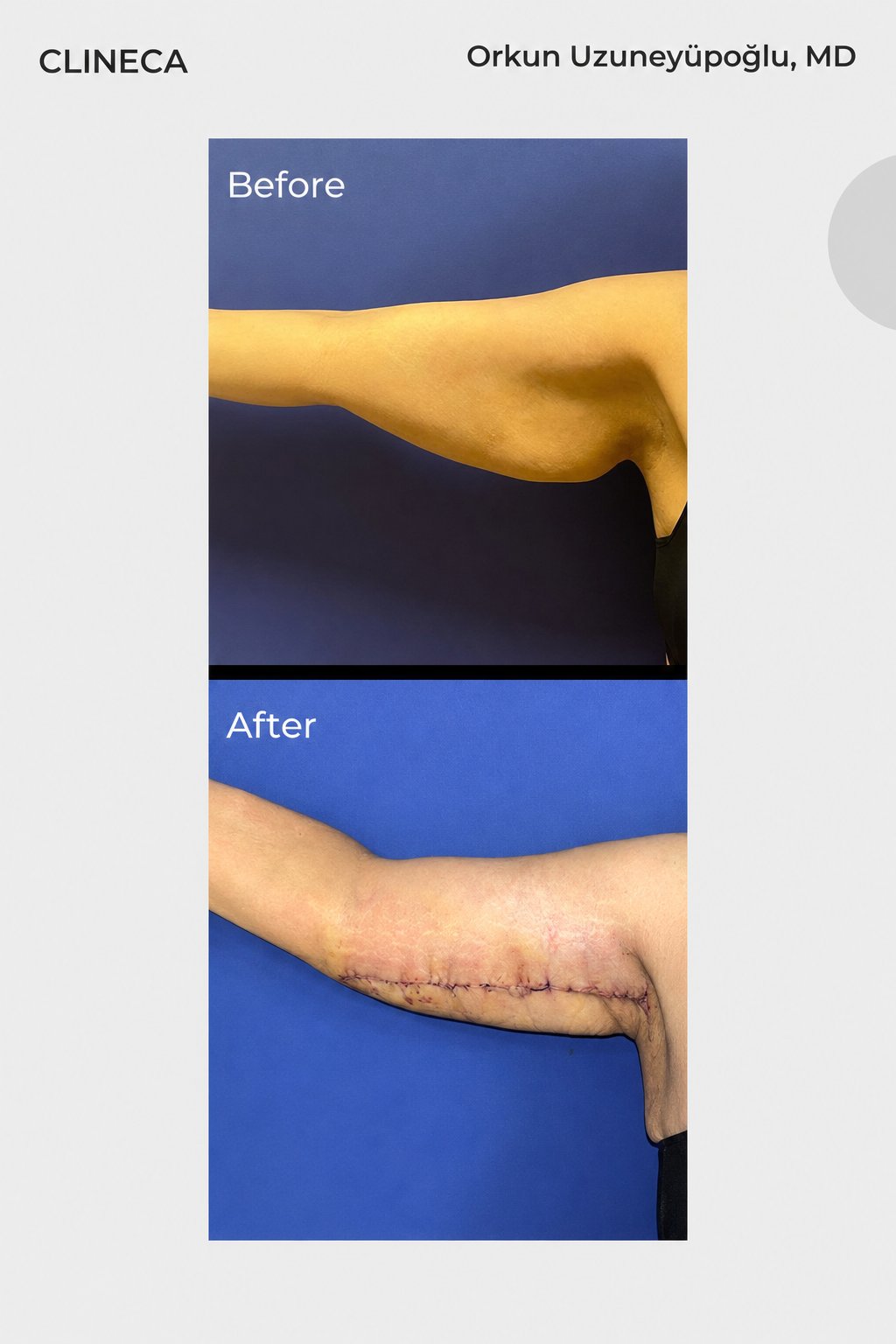
Recovery speed is not only about age or pain tolerance. The biggest factor is often the extent of surgery. A limited arm lift with modest skin removal is different from a long-scar brachioplasty after major weight loss, where the skin quality may be thinner and the area treated is larger.
Your general health matters as well. Smoking and nicotine use can impair blood supply and slow wound healing. Conditions that affect circulation, blood sugar control, or nutrition can also affect recovery. This is one reason good surgeons ask detailed pre-operative questions instead of offering a one-size-fits-all timeline.
Scar biology is another issue. Two patients can have the same operation and the same aftercare, yet one develops a flatter, calmer scar while the other stays red, raised, or firm for longer. That is why scar care advice should be taken seriously even after you feel physically well.
The practical factors are often overlooked. If you have young children, a physical job, a long flight home, or no help with dressing and washing your hair, recovery may feel slower even when healing is medically normal.
The quote you receive is also shaped by these details. Cost discussions should not focus only on the operation itself. A proper personalised quote usually reflects the complexity of the arm lift, whether liposuction or combined procedures are involved, surgeon and hospital fees, garments, hotel and transfer arrangements, follow-up visits, and the level of aftercare support provided after you return home.
- ✓Extent of skin removal and whether liposuction is added
- ✓Your skin quality, weight history, and scar tendency
- ✓Smoking or nicotine exposure
- ✓General health, nutrition, and any conditions that affect healing
- ✓Whether you are having arm lift alone or with another body procedure
- ✓How closely you follow movement, compression, and wound-care advice
What are normal healing signs, and what should worry you?
Normal healing after an arm lift is not always neat and comfortable. Mild asymmetry, firmness, temporary numbness, itching, and swelling that seems to come and go are all common. Incisions can look quite noticeable early on, and the scars often become more visible before they start to fade.
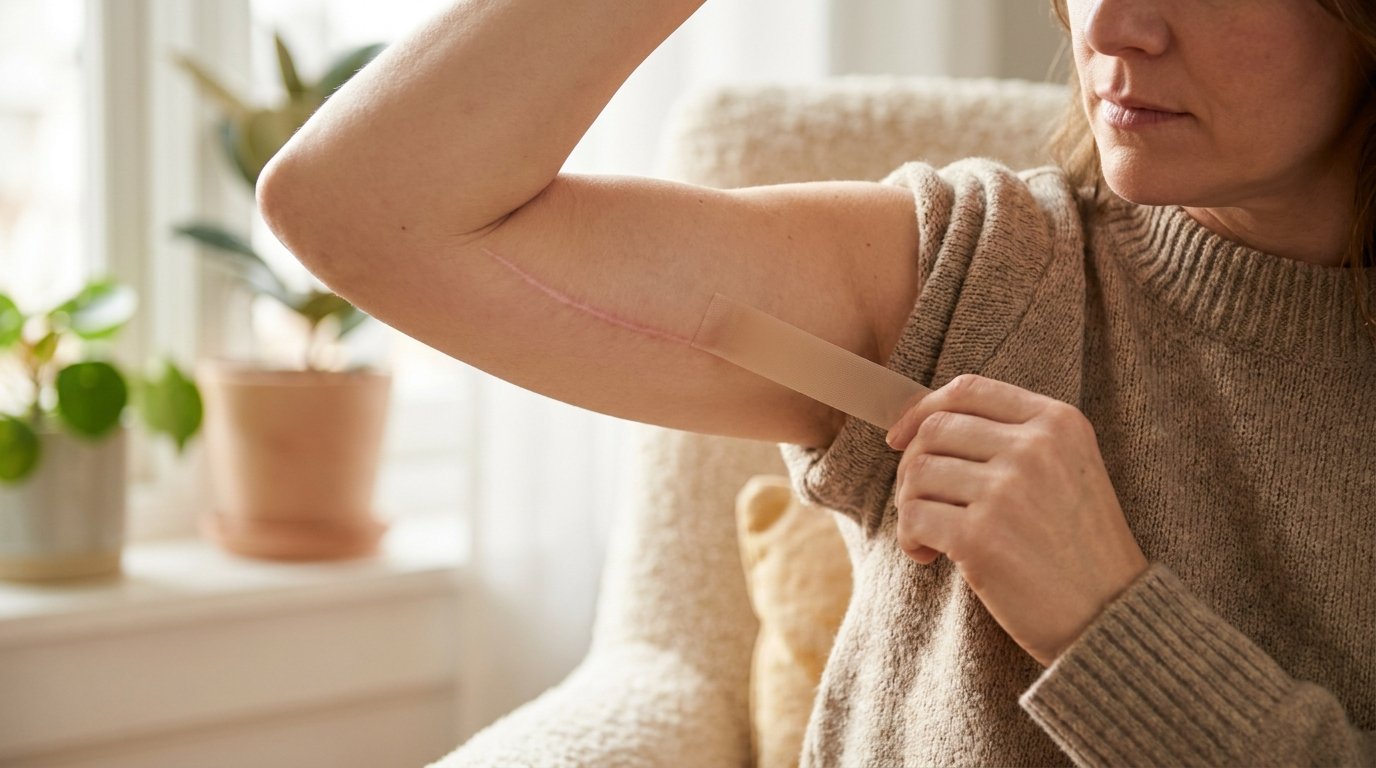
What matters is the overall direction. You should gradually feel more mobile, more comfortable, and less swollen as the weeks pass, even if progress is uneven from day to day.
Concerning signs are those that suggest infection, a fluid collection, wound separation, or a circulation problem. The NHS advises seeking medical help after cosmetic surgery if there are signs such as increasing pain, redness, heat, swelling, discharge, or feeling generally unwell. After an arm lift, widening wounds, a rapidly growing pocket of swelling, one side becoming suddenly much firmer, or skin that looks dusky rather than pink should also be reviewed promptly.
If you are travelling abroad for surgery, ask before booking how urgent concerns are handled outside clinic hours and once you are back home. Good aftercare is not just the operation and the hotel. It is the speed and clarity of support when something feels wrong.
🚨 Urgent symptoms Chest pain, shortness of breath, fainting, or sudden calf swelling are urgent medical symptoms and need immediate emergency assessment.
How do you choose a surgeon and clinic with recovery in mind?
Patients often compare photos first, but recovery systems matter just as much. A well-run clinic should be able to explain who performs the surgery, where it takes place, what accreditation the hospital has, how follow-up works, and who you contact if you are worried after discharge.
For plastic surgery, qualifications and training matter. In Europe, EBOPRAS is one of the recognised standards patients may see referenced in relation to plastic surgery training and examination. BAAPS and ASPS also provide public-facing information on choosing qualified plastic surgeons and understanding cosmetic procedures. These organisations do not replace your own checks, but they are useful markers when you assess training and standards.
Ask direct questions. Will your procedure be done by a specialist plastic surgeon? Is there in-person review before you fly home? Who removes drains or checks wounds? What scar care is advised? What is the plan if the healing is slower than expected?
A clinic that is open about recovery usually gives better information before you book. If you want to review the team and background first, the surgeon information page and the clinic’s about page are sensible places to start.
The best choice is rarely the one that sounds easiest. It is the one that prepares you honestly for the parts of recovery that are inconvenient, slow, or a little emotionally testing.
Frequently Asked Questions
References
- 📎NHS: Cosmetic procedures
- 📎ASPS: Cosmetic procedures
- 📎EBOPRAS
- 📎PubMed search: brachioplasty complications recovery scar
Related Articles

You Might Also Like
Related articles

Our specialists
 Clineca SpecialistErkan PinegözPlastic & Reconstructive Surgery
 Clineca SpecialistHakan AktaşPlastic & Reconstructive Surgery
 Clineca SpecialistOrkun UzuneyüpoğluPlastic & Reconstructive Surgery
 Clineca SpecialistSalim İskenderPlastic & Reconstructive Surgery
 Clineca SpecialistEngin SelamioğluPlastic & Reconstructive Surgery
 Clineca SpecialistCem AydınPlastic & Reconstructive Surgery
 Clineca SpecialistAlperen ÖnalEar, Nose & Throat (ENT)