
Have a question about Arm Lift?
In this article
- What is the typical arm lift recovery timeline?
- How much time off work, driving and exercise will I need?
- When do swelling, bruising and scars improve?
- How long should I stay in Turkey after an arm lift?
- What affects how long arm lift recovery takes?
- Is arm lift recovery painful and is it safe?
- What does the price usually include and why do quotes vary?
Recovery after an arm lift usually takes a few weeks for day-to-day function, but full settling takes longer. If you are asking how long does arm lift recovery take, most people need around one to two weeks before light routine activities feel manageable again, several weeks before exercise, and a few months for swelling and scars to mature. The exact timeline depends on how extensive the surgery was, whether liposuction was added, and how closely you follow your surgeon’s aftercare plan.
What is the typical arm lift recovery timeline?
An arm lift, also called brachioplasty, removes loose skin and sometimes extra fat from the upper arm. Recovery is usually very manageable, but it is not instant. The first few days are the hardest because your arms can feel tight, sore and swollen, and everyday tasks like reaching up, washing your hair or lifting a kettle may be awkward.
In broad terms, the recovery pattern often looks like this. During the first week, bruising and swelling are usually most noticeable. By the second week, many people feel much more comfortable and can do light daily activities, though they still need to avoid lifting, pushing and pulling. Around the third to sixth week, movement improves steadily and structured exercise may be reintroduced if the surgeon says healing is on track. Final scar and swelling changes continue well beyond that.
The American Society of Plastic Surgeons notes that recovery after brachioplasty involves temporary swelling, bruising and limited arm movement, and that compression garments and activity limits are part of standard aftercare. That matches real-world recovery closely: you may feel significantly better within days, but your tissues are still healing underneath.
For patients combining procedures, recovery can take longer. For example, if an arm lift is done with liposuction or as part of a larger body contouring plan after weight loss, you should expect a slower return to full activity than with an isolated arm lift alone.
If you want a procedure-specific overview, the clinic’s arm lift treatment page explains what the surgery is designed to address, but the recovery timeline still needs to be personalised during consultation.
📋 Recovery is not one date Feeling better and being fully healed are different things. Many patients are socially presentable quite early, but tissue healing and scar maturation continue for months.
Most arm lift patients move through recovery in stages rather than one single finish line. The first week is mainly about rest, swelling and wound care. Many return to desk-based work in one to two weeks, driving in roughly the same window if safe, and fuller exercise after several weeks, while scars continue to soften for months.
How much time off work, driving and exercise will I need?
This is usually the most practical part of the decision. The answer depends less on the calendar alone and more on what your day actually involves.
If you work at a computer, many patients can return in about one to two weeks. You may still be swollen and need to keep your arms supported, but the main barrier is comfort rather than stamina. If your job involves lifting, carrying, cleaning, childcare, fitness instruction or repeated reaching above shoulder level, expect longer. In those roles, several weeks away from full duties is common.
Driving needs a bit more caution than patients sometimes expect. You should not drive simply because the operation was a week ago. You need to be off sedating pain medication, able to grip the wheel, turn safely, check mirrors, and make an emergency manoeuvre without sharp pain or restriction. For many patients that means roughly one to two weeks, but some need longer.
Exercise is also phased. Walking usually starts early and is encouraged because it supports circulation. More strenuous activity is different. Light lower-body movement may restart first, while upper-body workouts, swimming, yoga positions that load the arms, and weight training are usually delayed until the surgeon is satisfied with wound healing and tension across the incisions. A cautious return often begins after several weeks, with heavy arm work later.
The NHS guidance on cosmetic procedures stresses following the treating clinician’s aftercare and recovery advice, because timing varies by procedure and by patient. With brachioplasty, that matters especially because too much arm movement too soon can stress the incision line.
- ✓Desk work: Often possible in around one to two weeks if you can keep activity light.
- ✓Physical work: Usually needs longer because lifting and repetitive arm use can strain healing tissues.
- ✓Driving: Only when you are off strong pain medicine and can move both arms freely enough to control the car safely.
- ✓Gym and sport: Walking starts early, but upper-body training and heavy exercise usually wait several weeks.
Most people need about one to two weeks off desk work after an arm lift, and longer for physical jobs. Driving is usually delayed until you can move your arms comfortably, react normally and are off strong pain medicine. Exercise often resumes gradually after several weeks, with heavy upper-body training taking longer.
When do swelling, bruising and scars improve?
This is where expectations make a big difference. Many people judge recovery by how their arms look, not just how they feel. That is understandable, but appearance changes more slowly than comfort.
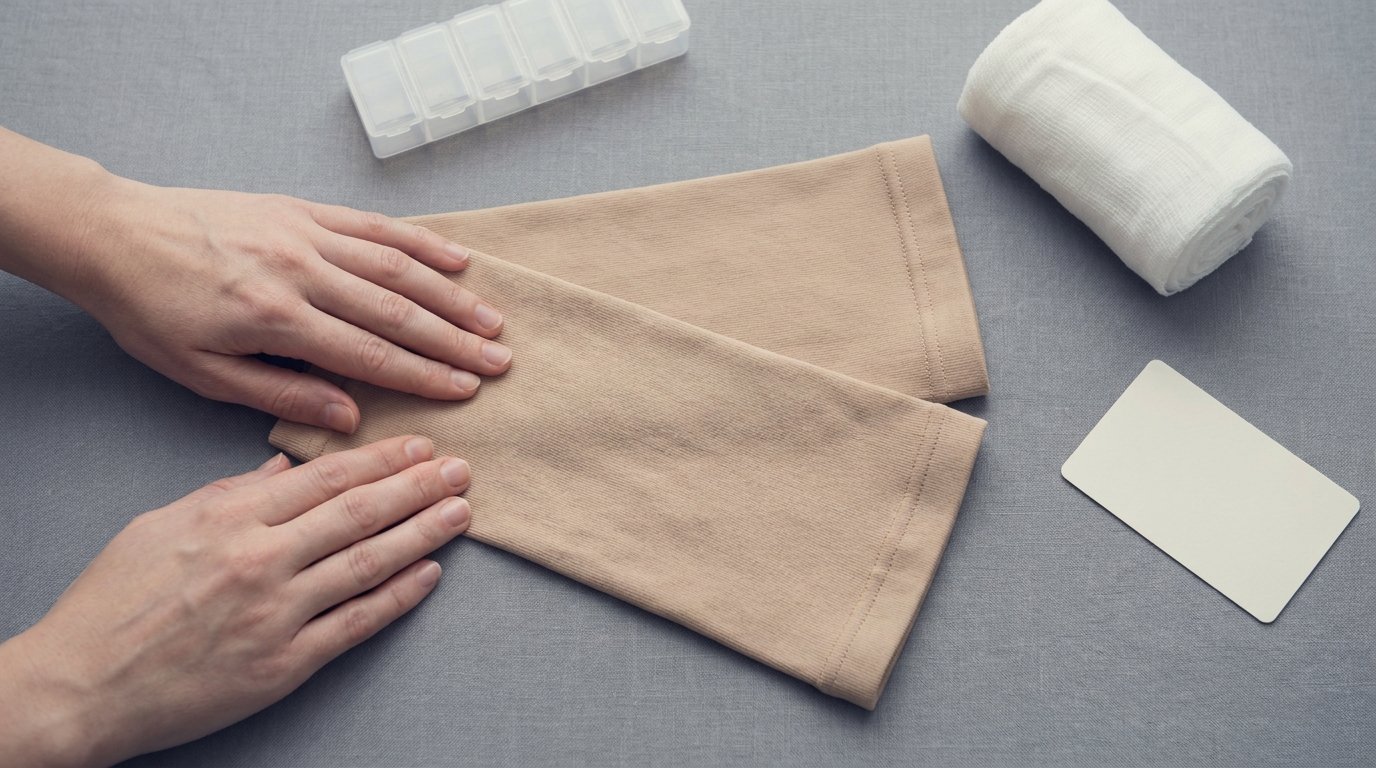
Bruising is usually at its worst in the early days and fades over the first one to two weeks. Swelling often peaks early as well, then starts to improve, but some puffiness can persist for weeks. If your surgeon uses compression sleeves, they are usually intended to help control swelling and support the tissues as they settle.
Scars need the longest patience. In an arm lift, the scar often runs along the inner arm, so even when healing is going well, it can look pink, firm or raised for a period before it softens. The ASPS explains that brachioplasty leaves a permanent scar, although it usually fades over time. That is the trade-off of the operation: more shape improvement, but with a longer scar than non-surgical treatments.
What is normal and what is not
Mild asymmetry in swelling, numb patches, tightness and a pulling feeling when you stretch are common early on. These sensations usually improve gradually. Small changes from one day to the next are not unusual.
What should raise concern is swelling that suddenly worsens, one arm becoming much more painful than the other, wound separation, increasing redness, fever, or drainage with an unpleasant smell. Those are not things to watch for casually at home for days. They deserve a prompt call to your surgical team.
Published brachioplasty literature indexed on PubMed describes common issues such as delayed wound healing, fluid build-up and visible scarring, especially in patients who have major skin excess after weight loss. That does not mean complications are likely for everyone, but it does explain why careful aftercare and realistic timelines matter.
⚠️ Do not judge the final result too early An arm lift can look tight, swollen or uneven in the early phase. Final contour and scar appearance take much longer than the first visible improvement.
Bruising often improves over the first couple of weeks, while swelling settles in stages and can linger longer than patients expect. The arms usually look better fairly early, but not fully settled. Scars are present from the start and typically mature over many months, gradually becoming flatter and less noticeable.
How long should I stay in Turkey after an arm lift?
If you are travelling for surgery, recovery is not only about healing. It is also about timing your flights, hotel stay, follow-up visits and practical support.
For an arm lift, most patients should expect to remain locally for the immediate aftercare period rather than flying home straight away. Surgeons usually want to review the wounds, monitor early swelling and make sure there are no signs of bleeding, fluid collection or infection before travel. If drains are used, that can also affect timing.
Flying itself is not automatically unsafe after every cosmetic procedure, but the right timing depends on your mobility, wound status, pain control and the surgeon’s instructions. Many patients are told to wait at least several days, and sometimes longer, before taking a flight. If your journey is long-haul, that makes early mobilisation and hydration even more important.
Keep your itinerary simple. Build in enough time for one or more post-op reviews, avoid carrying heavy luggage, and arrange help at the airport if needed. If you are planning treatment abroad, a good starting point is to ask these travel-specific questions during your surgical consultation, rather than trying to work it out after booking flights.
A clinic should also be clear about who to contact once you return home, what photos they may need for remote follow-up, and which symptoms mean you should seek urgent local care.
A realistic stay, scheduled follow-up, written aftercare and clear advice on when flying is appropriate.
A rushed return flight, no support with dressings or compression, and no clear route for post-op concerns once you are back home.
For medical travel, it is sensible to stay long enough for early checks, dressing care and the period when swelling and discomfort are most noticeable. Many international patients plan for at least several days to around two weeks, depending on the extent of surgery, how they are healing and when the surgeon is happy for them to fly.
What affects how long arm lift recovery takes?
Two patients can have the same operation name and very different recoveries. That is why broad timelines are useful, but not perfect.
A more limited arm lift may heal faster than a more extensive one that treats heavy skin excess from major weight loss. Adding liposuction can increase bruising and swelling, even when it improves the final contour. If the incision is longer, there is simply more tissue that needs to settle.
Your own health matters as much as the surgical plan. Smoking can slow healing and raise complication risk. Conditions that affect circulation or blood sugar can also make recovery more complex. Stable weight helps too, because large weight changes after surgery can affect both the result and how the skin settles.
There is also the question of how carefully aftercare is followed. Patients who wear compression as advised, avoid lifting too early, keep follow-up appointments and report problems promptly usually give themselves the best chance of a smoother recovery. That does not guarantee a perfect course, but it reduces avoidable setbacks.
If your arm concerns are part of broader body contouring after weight loss, it may help to compare recovery demands with related procedures such as body lift surgery or liposuction, because combined surgery changes the overall healing plan.
Recovery speed depends on the amount of skin removed, whether liposuction is added, your general health, smoking status, past weight changes and how well you follow aftercare instructions. Bigger reshaping usually means more swelling, tighter movement early on and a slower return to lifting, exercise and travel comfort.
Is arm lift recovery painful and is it safe?
Most patients do have discomfort after brachioplasty, but many describe tightness and pulling more than severe pain. The feeling is often strongest when standing up, moving the arms away from the body or trying to reach overhead. Pain control usually improves steadily over the first several days.
In safety terms, arm lift surgery is established, but it is still real surgery. The NHS states that cosmetic surgery carries risks such as bleeding, infection, blood clots and scarring. Brachioplasty also has some procedure-specific issues, including wound healing problems where the incision is under tension, fluid collections and numbness.
A widely cited review of brachioplasty studies, available through PubMed, found that scar-related concerns and minor wound-healing issues are among the more frequent problems. That is one reason experienced surgeons are careful about who is a suitable candidate and how much correction is realistic in one operation.
You can lower risk by choosing a surgeon with relevant training in body contouring, making sure the procedure is done in an appropriate accredited facility, disclosing your full medical history, and following the no-smoking and medication instructions you are given before surgery.
If you are comparing providers, keep the focus on safety and aftercare rather than marketing language. The useful questions are practical ones: who performs the surgery, where it takes place, how follow-up is handled, and what happens if a complication appears after you travel home.
🚨 Get urgent advice if symptoms suddenly worsen Rapid swelling, chest pain, shortness of breath, fever, heavy bleeding, or increasing redness and drainage need prompt medical assessment.
- →Ask who will perform the operation and what their body contouring experience is.
- →Check whether the operating facility is appropriately licensed or accredited.
- →Ask what is included in aftercare, garments, wound checks and remote follow-up.
- →Make sure you receive written advice on warning signs, flying and activity limits.
Arm lift recovery is usually described as sore, tight and restrictive rather than sharply painful for long periods, though the first days can be uncomfortable. Safety depends on proper patient selection, an appropriate surgical setting and close follow-up. The main risks include bleeding, infection, fluid build-up, delayed wound healing and noticeable scarring.
What does the price usually include and why do quotes vary?
Recovery and cost are closely linked because more complex surgery often means more resources, more follow-up and sometimes a longer stay. That is why comparing quotes without checking what is actually included can be misleading.
A lower quote may not include the same level of aftercare, compression garments, airport transfers, hotel planning or follow-up support. A more extensive arm lift after major weight loss may also cost differently from a smaller reshaping procedure because the operating time and surgical planning are different.
For international patients, ask for a written breakdown of what is and is not included. That matters more than the headline figure. It is also sensible to ask how revision issues, extra dressings or longer local stay would be handled if recovery is slower than expected.
If you are still at the planning stage, the most useful next step is usually to request a personalised assessment through the clinic’s contact page or consultation process, because recovery needs and quote details are individual.
Arm lift pricing varies because the operation is tailored. The quote usually reflects the surgeon’s fee, hospital or theatre costs, anaesthesia, garments, medication, follow-up and whether extra contouring such as liposuction is included. A personalised price is normally confirmed only after consultation and assessment of your anatomy and goals.
Frequently Asked Questions
References
- 📎NHS – Cosmetic procedures
- 📎ASPS – Cosmetic procedures
- 📎PubMed search – brachioplasty complications review
- 📎PubMed search – brachioplasty recovery wound healing scar
Related Articles
You Might Also Like


Related articles
Our specialists
 Clineca SpecialistErkan PinegözPlastic & Reconstructive Surgery
 Clineca SpecialistHakan AktaşPlastic & Reconstructive Surgery
 Clineca SpecialistOrkun UzuneyüpoğluPlastic & Reconstructive Surgery
 Clineca SpecialistSalim İskenderPlastic & Reconstructive Surgery
 Clineca SpecialistEngin SelamioğluPlastic & Reconstructive Surgery
 Clineca SpecialistCem AydınPlastic & Reconstructive Surgery
 Clineca SpecialistAlperen ÖnalEar, Nose & Throat (ENT)