Have a question about Rhinoplasty?
In this article
Few things in cosmetic surgery frustrate people more than trying to pin down rhinoplasty cost in the UK before they have seen a surgeon. Two clinics can look identical from the outside and still produce very different figures for the same nose, and the paperwork rarely explains why. Understanding how a nose surgery quote is built — and what sits outside it — is what turns a confusing set of numbers into a decision you can actually make.
What a UK rhinoplasty quote is actually paying for
A nose reshaping quote is never a single fee. It is a bundle: the surgeon’s time, the anaesthetist, the operating theatre, your pre-operative tests, the dressings and splints, and the follow-up appointments that come after. When one clinic looks cheaper than another, the difference is very often in which of those items are inside the price and which are billed later.
This matters because rhinoplasty is one of the most technically demanding procedures in facial surgery. The operating time varies enormously between a straightforward tip refinement and a full reconstruction with cartilage grafting, and theatre time is one of the biggest single costs in any surgical quote. Anaesthesia type, hospital grade and length of stay all push in the same direction.
We cannot publish a figure here, and any clinic that gives you one before an examination is guessing. What you can do is insist that every quote you receive is itemised the same way, so you are comparing like with like rather than comparing a complete package against a bare surgical fee. Our longer breakdown of what affects a rhinoplasty quote, stay and care goes through the same components in more detail.
📋 Ask for the quote in writing A written, itemised quote after a face-to-face or video consultation is the only version worth comparing. Verbal estimates based on a photograph change once a surgeon examines your breathing, skin thickness and cartilage.
Why two people get very different prices for the same operation
The honest answer is that “rhinoplasty” covers a huge range of operations. A tip-only procedure on a nose with no breathing problems and no previous surgery sits at one end. A revision case on a nose that has already been operated on, where the surgeon has to rebuild support with rib or ear cartilage, sits at the other — and the gap between them is large.
Revision work is consistently the most expensive version. Scar tissue makes the anatomy unpredictable, the operation takes longer, and grafts are usually needed because the original cartilage has already been reduced. If you are weighing up a second operation, our guide to revision rhinoplasty cost, safety and recovery explains why these cases are priced differently.
The factors that genuinely change the figure
Skin thickness is one of the quietest cost drivers. Thicker skin hides fine definition, so surgeons often use structural grafting techniques to create shape that will show through — more work, more time. A deviated septum or blocked airway can add a functional stage to the operation, and whether that is combined with your cosmetic plan affects both the price and the paperwork; we cover the combined approach in septoplasty and rhinoplasty together.
Technique matters too. According to a 2023 systematic review in Aesthetic Plastic Surgery, piezoelectric instruments — which use ultrasound energy to cut bone — have become more common in nasal bone work, with some studies reporting less post-operative swelling and bruising than conventional osteotomies. Equipment like that costs the clinic money, and that shows up somewhere in the price.
One more thing worth knowing before you compare numbers: around one in seven of our rhinoplasty patients books a second procedure in the same session, most often breast augmentation, a breast lift with implants or upper eyelid surgery. So the vast majority of nose quotes we issue are for the nose alone — if you are thinking about adding something else, ask for the combined figure up front rather than assuming it will simply double.
⚠️ Beware the single-number comparison A price that is dramatically lower than everything else you have been quoted usually means a shorter operation, a less experienced surgeon, a lower-grade facility, or aftercare billed separately. It rarely means the same operation for less.
Can you get rhinoplasty on the NHS?
Purely cosmetic nose surgery is not funded by the NHS. Treatment may be considered when there is a functional or medical reason — a significantly obstructed airway, damage after an injury, or a deformity affecting health — and even then it is assessed case by case against local criteria, with referral through your GP.
It is also worth being realistic about timing. A 2024 study in the Journal of Laryngology and Otology looking at patients waiting for septoplasty at a tertiary ENT centre noted that waiting lists have grown since the COVID-19 pandemic and are now long. Functional nasal surgery is a high-volume procedure under real pressure, so an NHS route may be available in principle and still mean a substantial wait.
The practical consequence for budgeting is simple. If your main concern is appearance, assume you are paying privately. If breathing is part of the picture, it is still worth a GP conversation, because a functional assessment is useful information even if you ultimately go private for the cosmetic element.
Breathing obstruction from a badly deviated septum, nasal injury with structural damage, or deformity with a documented health impact — assessed against local NHS criteria.
Changing the size or shape of the nose for appearance alone, including dorsal hump reduction and tip refinement, is treated as cosmetic.
What the quote usually leaves out
Most people budget for the operation and forget the surrounding costs, which is where plans quietly go over. The surgical quote is the biggest line, but it is not the whole spend, and the extras are reasonably predictable once you know to look for them.
Time away from work is the one most often underestimated. Rhinoplasty is not especially painful, but you will look bruised and swollen, and the external splint usually stays on for about a week. Desk work is often manageable in the second week; anything physical needs longer, as our week-by-week rhinoplasty recovery timeline sets out.
- ✓Unpaid or annual leave for the first week or two after surgery
- ✓Medication and pharmacy items such as painkillers, antibiotics, saline sprays and ointment
- ✓Travel and parking for the consultation, surgery day, splint removal and review visits
- ✓A support person’s time, since you should not travel home alone after a general anaesthetic
- ✓Longer-term reviews, as swelling settles over many months and the final shape takes a year or more
- ✓The cost of a possible revision, which is not a prediction but a risk worth knowing the policy on
None of these are hidden in a sinister way — they simply sit outside the surgical fee. Ask each clinic directly which of them are included, especially follow-up visits and splint removal.
🚨 Insurance and finance Cosmetic rhinoplasty is not covered by private medical insurance. If you are considering a finance plan, read the total repayable rather than the monthly figure, and never let an interest-free window push you into surgery sooner than you are ready for.
UK versus treatment abroad: what changes and what does not
Going abroad lowers the surgical and facility cost, because staff salaries, insurance and overheads are lower — not because the operation itself is different. What it adds is travel, a longer stay away from home, and the need to plan follow-up carefully once you are back. Whether that trade is worth it depends far more on your case than on the headline saving.
The straightforward cases travel best. A first-time rhinoplasty on a healthy patient with no previous nasal surgery is a planned, predictable operation with a clear recovery path. Complex revision work, where you may need several in-person reviews and possibly further surgery, is harder to manage at distance — not impossible, but it demands a clinic with a genuine long-term follow-up process and a surgeon you can still reach in six months.
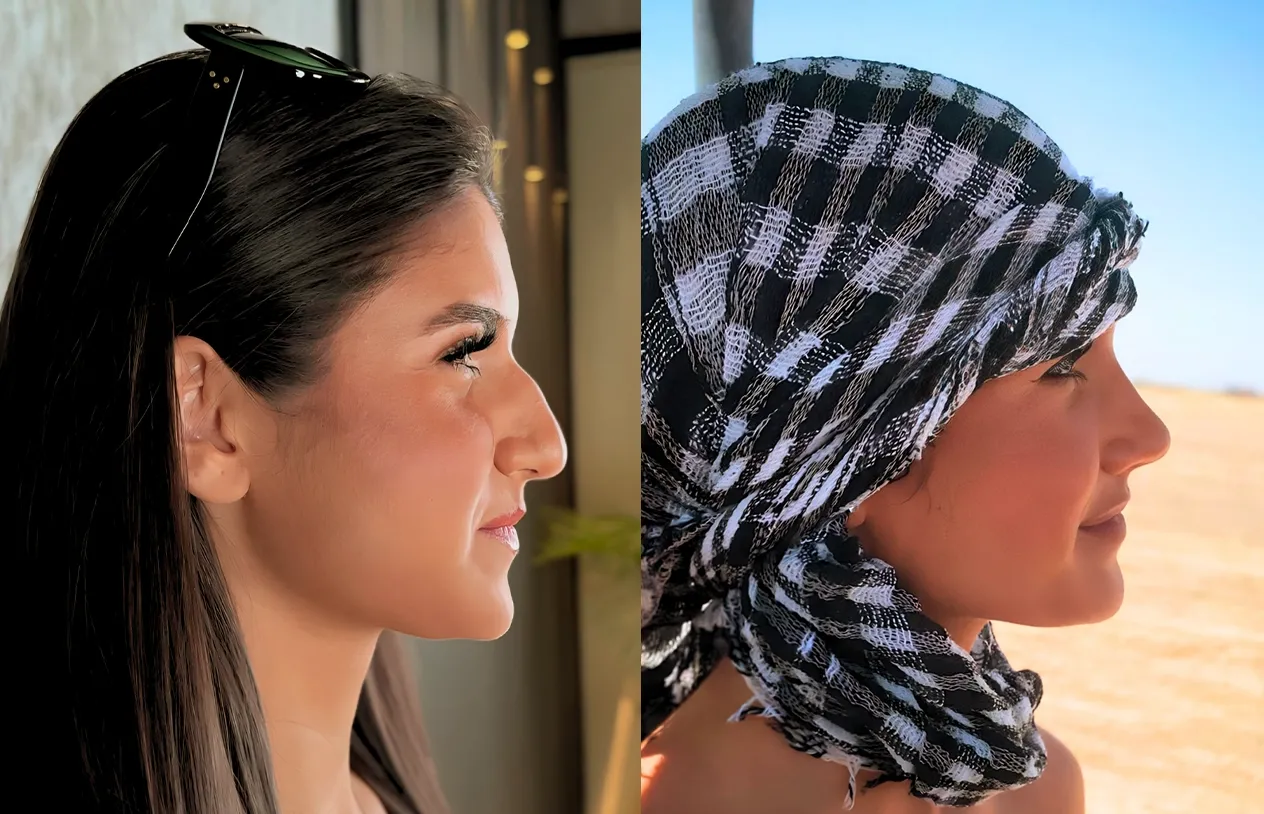
The parts that do not change are the ones that matter most: the surgeon’s training and nose-specific experience, the standard of the hospital, the anaesthetic care, and the quality of aftercare. If you are comparing regions, our breakdown of plastic surgery prices in Turkey versus the UK, Germany and the Netherlands explains why the gap exists, and how to choose a rhinoplasty surgeon in Turkey covers the checks that actually protect you.
- ✓Count the whole trip: Flights, stay, transfers and a companion’s costs all belong in the comparison, not just the surgical fee.
How to compare quotes without being caught out
Judge the surgeon before you judge the number. Check that they are properly qualified and registered in the country where they operate, that nose surgery is a core part of their practice rather than an occasional add-on, and that they can show you results on noses that resemble yours — including thick-skinned noses or revision cases if that is what you have.
The consultation itself tells you a lot. A surgeon who examines your breathing, discusses what is realistically achievable for your skin and cartilage, and is willing to say no to a request is giving you better value than one who agrees with everything. Research supports that caution about promises, too: a 2025 systematic review in Plastic and Reconstructive Surgery found that there is still no single standardised, validated patient-reported outcome measure designed specifically for rhinoplasty, which is part of why outcome claims in this field should be treated carefully.
Finally, make sure the written plan covers what happens if something goes wrong. Who reviews you, how quickly, what is covered, and what a revision would cost. A clinic comfortable answering that in writing is usually the one worth paying for.
This article is for informational purposes only and does not constitute medical advice. Always consult a qualified surgeon for personalised guidance.
Itemised written quote; named, registered surgeon who performs noses regularly; before-and-after photos of comparable cases at comparable time points; a clear aftercare and revision policy; no pressure to book on the day.
A firm price from a photo alone; a discount that expires this week; no named surgeon until you have paid a deposit; promises of a specific "look"; vague answers about who sees you if there is a complication.
Small contour irregularities can sometimes be camouflaged with a non-surgical filler approach, which is temporary, carries its own risks and cannot reduce a nose or improve breathing. It is a different procedure, not a cheaper rhinoplasty.
Frequently Asked Questions
References
- 📎A Comparison Between Piezosurgery and Conventional Osteotomies in Rhinoplasty on Post-Operative Oedema and Ecchymosis: A Systematic Review — Aesthetic Plastic Surgery, 2023
- 📎Nasal obstruction symptom evaluation score outcomes in patients awaiting septoplasty at a tertiary ENT centre — Journal of Laryngology and Otology, 2024
- 📎A Systematic Review of Randomized Control Trials on Patient-Reported Outcome Measures in Rhinoplasty — Plastic and Reconstructive Surgery, 2025
- 📎NHS: Cosmetic procedures
Related Articles



You Might Also Like


Related articles



Our specialists
 Clineca SpecialistErkan PinegözPlastic & Reconstructive Surgery
 Clineca SpecialistHakan AktaşPlastic & Reconstructive Surgery
 Clineca SpecialistOrkun UzuneyüpoğluPlastic & Reconstructive Surgery
 Clineca SpecialistSalim İskenderPlastic & Reconstructive Surgery
 Clineca SpecialistEngin SelamioğluPlastic & Reconstructive Surgery
 Clineca SpecialistCem AydınPlastic & Reconstructive Surgery
 Clineca SpecialistAlperen ÖnalEar, Nose & Throat (ENT)