
Have a question about Rhinoplasty?
In this article
- What is the difference between open and closed rhinoplasty?
- Which patients usually suit open rhinoplasty better?
- Which patients usually suit closed rhinoplasty better?
- How do surgeons decide between open and closed rhinoplasty?
- How long does it take to recover from open or closed rhinoplasty?
- Is open or closed rhinoplasty safer?
- How much does rhinoplasty cost, and what affects the price?
- How long should you stay in Turkey for rhinoplasty?
If you are asking should i choose open or closed rhinoplasty, the short answer is that neither is automatically better. Open rhinoplasty gives the surgeon more visibility and is often chosen for more complex reshaping, while closed rhinoplasty avoids an external incision and may suit smaller or more straightforward changes; recovery is usually measured in weeks, but final nose shape takes many months to settle. The right choice depends more on your anatomy and goals than on which label sounds less invasive.
What is the difference between open and closed rhinoplasty?
A rhinoplasty, often called a nose job or nose surgery, reshapes the nose for appearance, breathing, or both. In both open and closed techniques, the surgeon works on the same nasal structures. The big difference is how those structures are reached.
In open rhinoplasty, the surgeon makes a small cut on the skin between the nostrils and lifts the skin gently to see the underlying framework more directly. That extra view can help when the tip needs detailed work, when the nose has strong asymmetry, or when someone is having revision surgery after an earlier rhinoplasty.
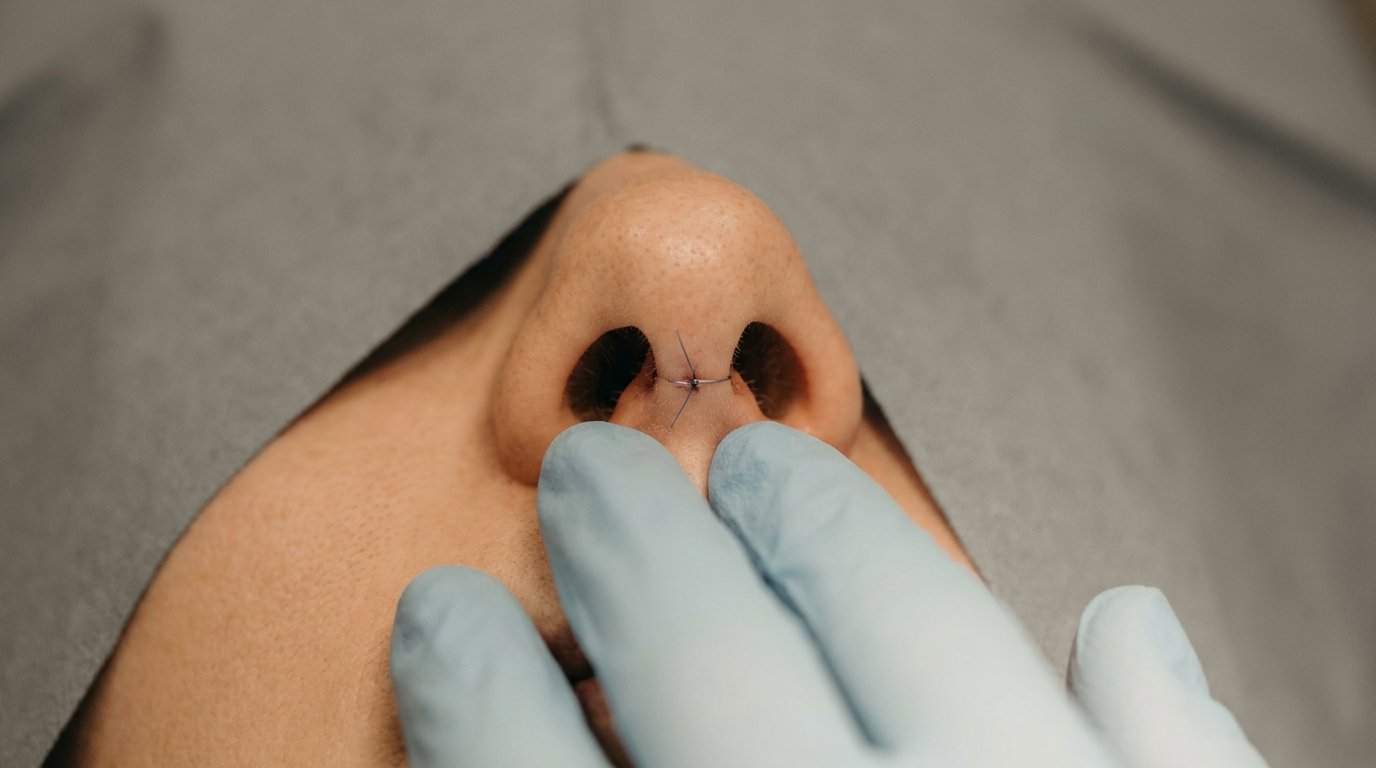
In closed rhinoplasty, all cuts are made inside the nostrils. There is no external scar on the columella. This can mean less skin dissection, and in some cases swelling in the tip may settle a little faster, but it also gives the surgeon a narrower working view.
A useful way to think about it is this: open versus closed is an approach, not the result itself. A skilled surgeon may create an excellent result with either method, but the best approach depends on what has to change inside your nose.
According to a 2022 systematic review in Archives of Plastic Surgery, published studies did not show a clear overall winner between open and closed rhinoplasty for appearance, complications, or patient satisfaction. That matters because it shifts the question away from “Which is best in general?” and toward “Which is best for my nose and my goals?”
📋 A small scar does not mean a poor result The external incision in open rhinoplasty usually sits in a discreet area between the nostrils. For many patients it heals very subtly, but scar quality still varies from person to person.
Open and closed rhinoplasty are two ways a surgeon reaches the bone and cartilage of the nose. Open rhinoplasty uses a small incision across the columella, the strip between the nostrils, while closed rhinoplasty keeps incisions inside the nose. The main difference is surgical access, not whether one is always better.
Which patients usually suit open rhinoplasty better?
Open rhinoplasty tends to be chosen when the surgeon expects detailed framework changes. If your main issue is a drooping tip, a twisted nose, a thick-skinned tip that needs support, or a nose that has been operated on before, an open approach may give better access for careful reshaping.
It is also common in revision cases. Scar tissue from earlier surgery can make anatomy harder to read. Direct visibility may help the surgeon assess what support remains and where grafts are needed.
If breathing is part of the problem as well as shape, the surgeon may prefer open access when the internal structures need broader correction. Mayo Clinic notes that rhinoplasty can change the nose’s appearance, improve breathing, or both, and that the surgical plan depends on the anatomy being treated.
This does not mean open rhinoplasty is the “advanced” option and closed is the “simple” option. Some noses do need only limited changes, and for those patients an open approach may add exposure that is not necessary.
You need major tip reshaping, have a crooked or post-trauma nose, are having revision surgery, or need structural grafting for support.
Choosing open rhinoplasty does not automatically mean a better or more refined result. It simply means the surgeon believes wider access is useful for your case.
Open rhinoplasty is often preferred when the nose needs more complex structural work. That can include major tip reshaping, strong asymmetry, revision rhinoplasty, trauma-related changes, or combined cosmetic and functional correction. The extra exposure can make precise graft and suture work easier, but it does not mean everyone needs it.
Which patients usually suit closed rhinoplasty better?
Closed rhinoplasty is often a good fit when the planned changes are more contained. For example, a small dorsal hump, modest bridge refinement, or selected adjustments to nasal shape may be possible without lifting the nasal skin through an open approach.
Many patients are drawn to the idea of surgery inside the nose because there is no external columellar incision. That can be a real advantage if you want to avoid a visible cut, even a small one. Still, the more important question is whether the surgeon can safely and predictably achieve your goals that way.
Some surgeons do a great deal of high-level work through a closed approach. Others prefer open rhinoplasty for most cases because it matches how they plan and execute tip shaping. The technique should fit both your anatomy and the surgeon’s proven method.
If you are considering your options, it helps to review real rhinoplasty treatment information and then ask very direct questions in consultation: what exactly needs changing, why is one approach being recommended, and what trade-offs come with that choice?
⚠️ Less invasive does not always mean better A closed approach may sound easier, but if your nose needs complex structural correction, limiting access can make surgery less efficient or less precise.
Closed rhinoplasty may suit people who need more limited changes, especially when the bridge, profile, or small contour issues can be treated through incisions inside the nose. It avoids an external incision and can reduce tissue disruption, but it is not ideal for every nose or every surgeon.
How do surgeons decide between open and closed rhinoplasty?
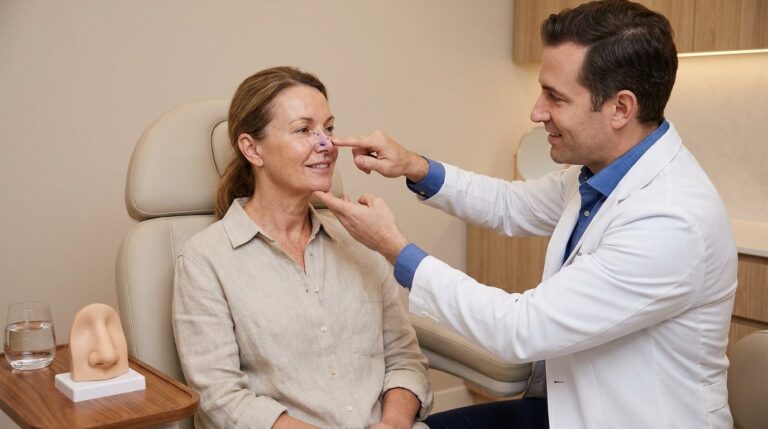
The decision should start with examination, not marketing. A surgeon looks at the bridge, tip support, septum, symmetry, skin thickness, and whether you have functional problems such as obstruction. They also look at what you want to keep. That matters as much as what you want to change.
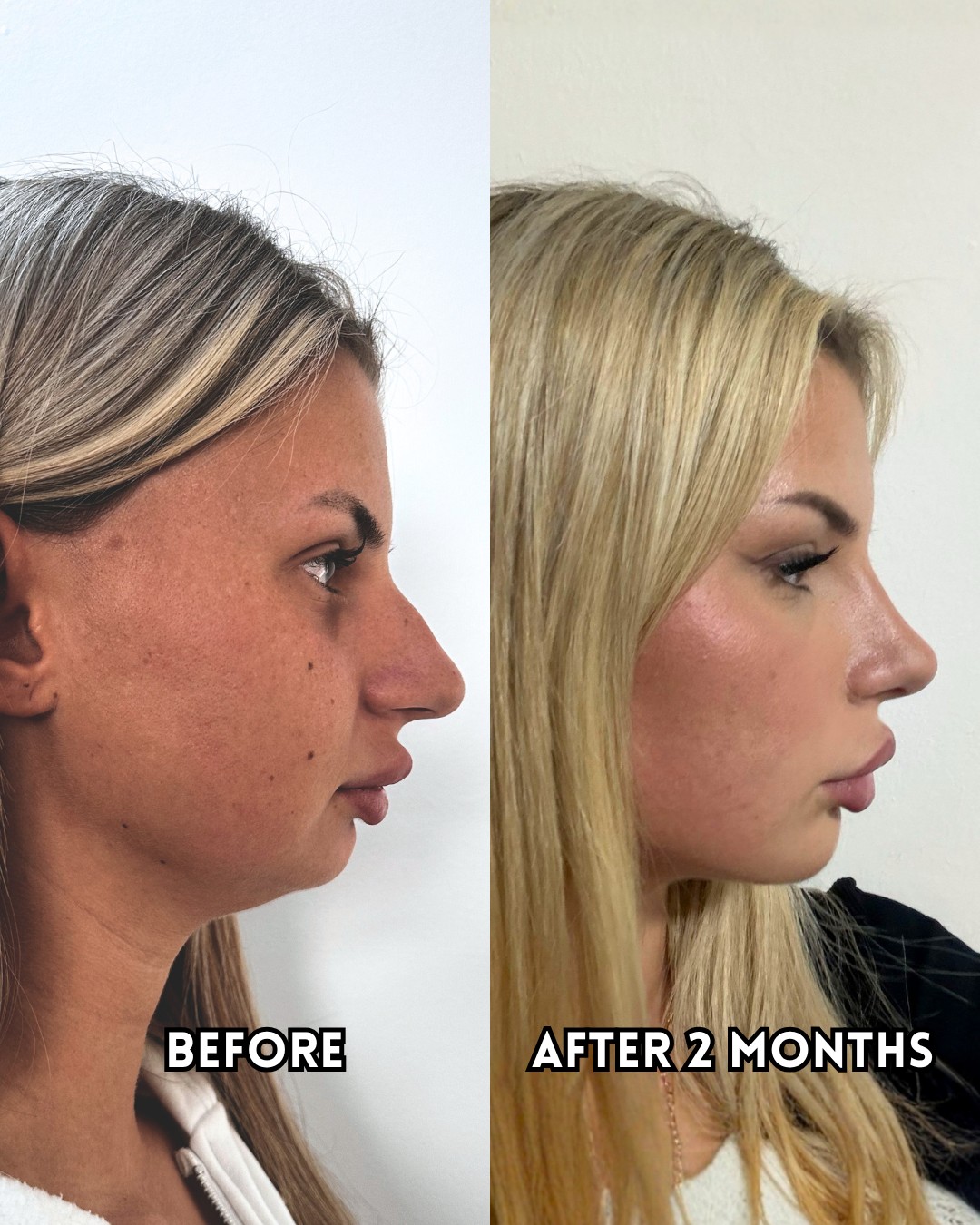
Your goals influence the plan. If you bring heavily edited nose job before and after images that do not match your facial structure, the consultation should reset expectations rather than promise an unrealistic result. The American Society of Plastic Surgeons explains that rhinoplasty is highly individual and that planning depends on facial anatomy, skin, and goals.
A good consultation often includes profile and front-view assessment, breathing history, and a discussion of scar placement, swelling, and whether grafts may be needed. If the surgeon recommends one approach, ask them to explain it in ordinary language. You should understand the reason, not just the label.
Questions worth asking in consultation
A short list can help you compare opinions without getting lost in sales language.
- ✓What specific parts of my nose need to change: bridge, tip, width, symmetry, septum, or breathing passages?
- ✓Why are you recommending open or closed rhinoplasty for my case?
- ✓What trade-offs should I expect in scar, swelling, tip definition, and revision risk?
- ✓How often do you perform this approach, and can you show comparable before-and-after cases?
- ✓If I travel for surgery, how long do I need to stay before I am safe to fly home?
If you are still at the research stage, requesting a formal consultation for rhinoplasty planning is usually more useful than trying to decide from social media alone.
- ✓Ask for the reason behind the approach, not just the name of the technique.
- ✓Compare surgeons on case suitability and communication, not on who promises the smallest change or fastest recovery.
- ✓Bring photos as preference guides, not as a guarantee of what your nose can become.
- ✓Make sure breathing concerns are discussed alongside cosmetic goals.
Surgeons usually decide by looking at your nasal anatomy, skin thickness, breathing issues, previous surgery, and the amount of tip or bridge change needed. The best decision is individual. A good consultation should explain what needs correction, why that approach helps, and what the likely recovery trade-offs are.
How long does it take to recover from open or closed rhinoplasty?
Most people think recovery ends when the splint comes off. It does not. That is simply the point when the nose starts to look more presentable. Swelling then reduces in stages, and the tip is often the last area to settle.
In everyday terms, many patients feel ready for light routine activities after about a week, and more socially comfortable after bruising fades. Exercise, glasses pressure, travel timing, and sleep position still need care. Open versus closed may influence the pattern of swelling, especially at the tip, but there is a lot of overlap.
The NHS notes that swelling after cosmetic nose surgery can take months to fully settle. That is true whether the nose job was done for cosmetic changes alone or as part of broader structural work.
📋 Travel planning matters If you are coming to Turkey for surgery, plan to stay long enough for early checks and splint removal if your surgeon advises it. Exact timing varies by case and should be confirmed before booking flights.
Initial recovery from either approach is usually around one to two weeks for swelling, bruising, and splint time, but the nose keeps refining for many months. Open rhinoplasty can bring more prolonged tip swelling in some patients, while closed rhinoplasty may settle a little faster in selected cases. Final definition always takes patience.
Is open or closed rhinoplasty safer?
Neither approach is risk-free, and neither is automatically safer in every case. The main safety issue is whether the chosen method gives the surgeon the access and control needed for your anatomy.
According to the NHS, cosmetic surgery can lead to complications such as bleeding, infection, scarring, and dissatisfaction with the result. In rhinoplasty specifically, there can also be persistent swelling, asymmetry, numbness, or breathing changes. Some patients later need revision surgery.
A 2022 systematic review comparing open and closed rhinoplasty found no clear consensus in the literature that one approach consistently produces better outcomes or fewer complications. That is important because it supports a case-by-case decision rather than a one-size-fits-all answer.
If you are travelling abroad, safety also includes logistics. You want a surgeon with relevant rhinoplasty experience, clear aftercare instructions, and a realistic travel plan in case swelling, bleeding, or follow-up issues arise after you return home. Checking the surgeon profile and clinic background on pages such as our doctors and about the clinic can help you ask better questions, but your final decision should always be based on direct medical consultation and verified credentials.
“Closed is always better because there is no scar,” or “Open is always best because the surgeon can see more.” Both statements are too simplistic.
A careful exam, honest limits, clear recovery instructions, and discussion of breathing as well as appearance are all better signs than sales-heavy language.
Safety depends more on patient selection, surgical planning, and surgeon experience than on the open-versus-closed label alone. Both are established techniques with risks such as bleeding, infection, asymmetry, breathing changes, and revision surgery. A careful assessment and realistic plan matter more than choosing the approach that sounds easier.
How much does rhinoplasty cost, and what affects the price?
Price is usually one of the first questions, and that is normal — but for this surgery it only makes sense once the surgical plan is clear.
Open and closed rhinoplasty do not have a universal price gap. In real practice, the bigger cost drivers are complexity, whether breathing correction is involved, whether grafting is needed, and whether the surgery is a first-time or revision case. Thick skin, asymmetry, trauma history, and healing risk can also affect planning.
If you are comparing Turkey with your home country, remember to look beyond the headline quote. Ask what is included, how many follow-ups are planned, whether airport-hotel-clinic transfers are arranged, and what happens if you need extra review before flying home. A low headline price can become less attractive if aftercare is unclear.
⚠️ Treat all pricing as indicative No responsible clinic should guarantee a fixed rhinoplasty price before reviewing your nose, goals, and medical history. The final fee is usually confirmed after consultation.
Rhinoplasty cost is personal and should be treated as variable, not fixed. The final quote depends on how complex the surgery is, whether it is primary or revision rhinoplasty, the surgeon’s experience, the facility, anaesthesia, and follow-up needs. A personalised price is normally confirmed after consultation.
How long should you stay in Turkey for rhinoplasty?
For international patients, the practical question is not only open or closed rhinoplasty, but how long you need to stay nearby after surgery. In many cases, patients are advised to remain in Turkey for around a week or a little longer so the early healing period can be checked and the splint can be removed if planned that way. The exact stay depends on how extensive the surgery was and how your recovery is progressing.
Do not book a very early return flight just because you feel well on day two or three. Swelling, congestion, and the need for review appointments still matter. You also want a clear line of contact for aftercare once you are home.
When choosing a clinic, look for straightforward communication, a named surgeon, and realistic planning rather than big promises. Before committing, use the main clinic contact page to confirm who will assess you, what follow-up is included, and what support is available after you travel back.
This article is for informational purposes only and does not constitute medical advice. Always consult a qualified surgeon for personalised guidance.
Frequently Asked Questions
References
- 📎Outcomes of Closed versus Open Rhinoplasty: A Systematic Review — Archives of Plastic Surgery, 2022
- 📎Closed Piezo Preservation Rhinoplasty — Aesthetic Plastic Surgery, 2022
- 📎NHS Cosmetic Procedures
- 📎American Society of Plastic Surgeons Cosmetic Procedures
- 📎Mayo Clinic Tests and Procedures
Related Articles



You Might Also Like



Related articles


Our specialists
 Clineca SpecialistErkan PinegözPlastic & Reconstructive Surgery
 Clineca SpecialistHakan AktaşPlastic & Reconstructive Surgery
 Clineca SpecialistOrkun UzuneyüpoğluPlastic & Reconstructive Surgery
 Clineca SpecialistSalim İskenderPlastic & Reconstructive Surgery
 Clineca SpecialistEngin SelamioğluPlastic & Reconstructive Surgery
 Clineca SpecialistCem AydınPlastic & Reconstructive Surgery
 Clineca SpecialistAlperen ÖnalEar, Nose & Throat (ENT)