
Have a question about Turbinate Reduction?
In this article
- Why your nose feels more blocked before it feels better
- Week-by-week swelling timeline after turbinate reduction
- What makes swelling last longer than it should
- What actually helps swelling settle faster
- When swelling is a warning sign, not normal healing
- Flying home, follow-up and what shapes the cost in Turkey
Almost everyone who asks how long does swelling last after turbinate reduction is asking it for the same reason: the nose feels more blocked after surgery than it did before. Here is the short version — internal swelling usually peaks in the first one to two weeks, settles substantially by four to six weeks, and the lining finishes fine-tuning itself over roughly two to six months. The rest of this article explains what is happening at each of those stages, what slows it down, and when a blocked nose stops being normal healing.
Why your nose feels more blocked before it feels better
Turbinate reduction shrinks the turbinates — the soft, shelf-like structures on the side walls inside your nose that warm and humidify air. When they are chronically enlarged, they narrow the airway. Surgery reduces their bulk, but it also irritates the mucosa, the delicate lining covering them.
That irritated lining responds the only way it knows how: it swells. So in the first days you have a wider airway on paper and a narrower one in practice. Add crusting, dried blood and thick secretions, and the nose can feel almost completely shut for a while.
This stage is the single biggest source of anxiety we hear about after nasal surgery, and it is usually the least worrying part of the recovery. Swelling that is symmetrical, gradually improving and not accompanied by fever or pain that keeps worsening is behaving exactly as expected. If you want a day-by-day picture of that first stretch, our guide to turbinate reduction recovery in week one covers it in more detail.
Week-by-week swelling timeline after turbinate reduction
Timelines vary with technique. Radiofrequency and laser reduction tend to swell less dramatically but can take several weeks to show their full effect, because the tissue shrinks gradually. Microdebrider-assisted or partial surgical reduction often gives a faster sense of openness once the crusting clears, but the early swollen phase can be more noticeable.
If turbinate reduction was combined with straightening a crooked septum, expect the swollen phase to feel heavier and last a little longer — there is simply more tissue involved. We explain how the two procedures work together in turbinate reduction with deviated septum surgery.
📋 One side clears before the other Uneven progress between nostrils is normal for weeks. Nasal airflow naturally alternates from side to side throughout the day, so a temporarily blocked side is not proof that surgery failed on that side.
What makes swelling last longer than it should
The most common reason swelling drags on is reaching for over-the-counter decongestant sprays. They shrink the lining beautifully for a few hours and then it rebounds, swollen again — and with repeated use the rebound gets worse. A 2025 study in Laryngoscope looking at functional nasal surgery outcomes describes exactly this pattern of rebound swelling and obstruction from frequent topical decongestant use, with management centred on stopping the spray, sometimes alongside steroid nasal sprays. Use only what your surgeon prescribes, and for only as long as they tell you.
Allergies are the second big factor. If dust or pollen already inflamed your lining before surgery, they will keep inflaming it afterwards, and a prescribed steroid spray or antihistamine plan matters as much as the operation itself. Smoking, vaping, very dry air-conditioned rooms and long flights all slow things down too, mostly by drying the healing lining and encouraging crusting.
Heavy lifting, bending and straining in the first two weeks can also make the nose feel puffier and more congested at the end of the day. The swelling that follows is temporary, but it is an avoidable setback.
- →Decongestant sprays used off-plan: Cause rebound swelling and a nose that seems to get worse after week two.
- →Untreated allergy or rhinitis: Keeps the lining inflamed, so the airway never feels fully open.
- →Dry air and smoke exposure: Thickens crusts, prolongs dryness and makes swelling feel worse than it is.
- →Forceful nose blowing early on: Can restart bleeding and re-irritate healing tissue.
What actually helps swelling settle faster
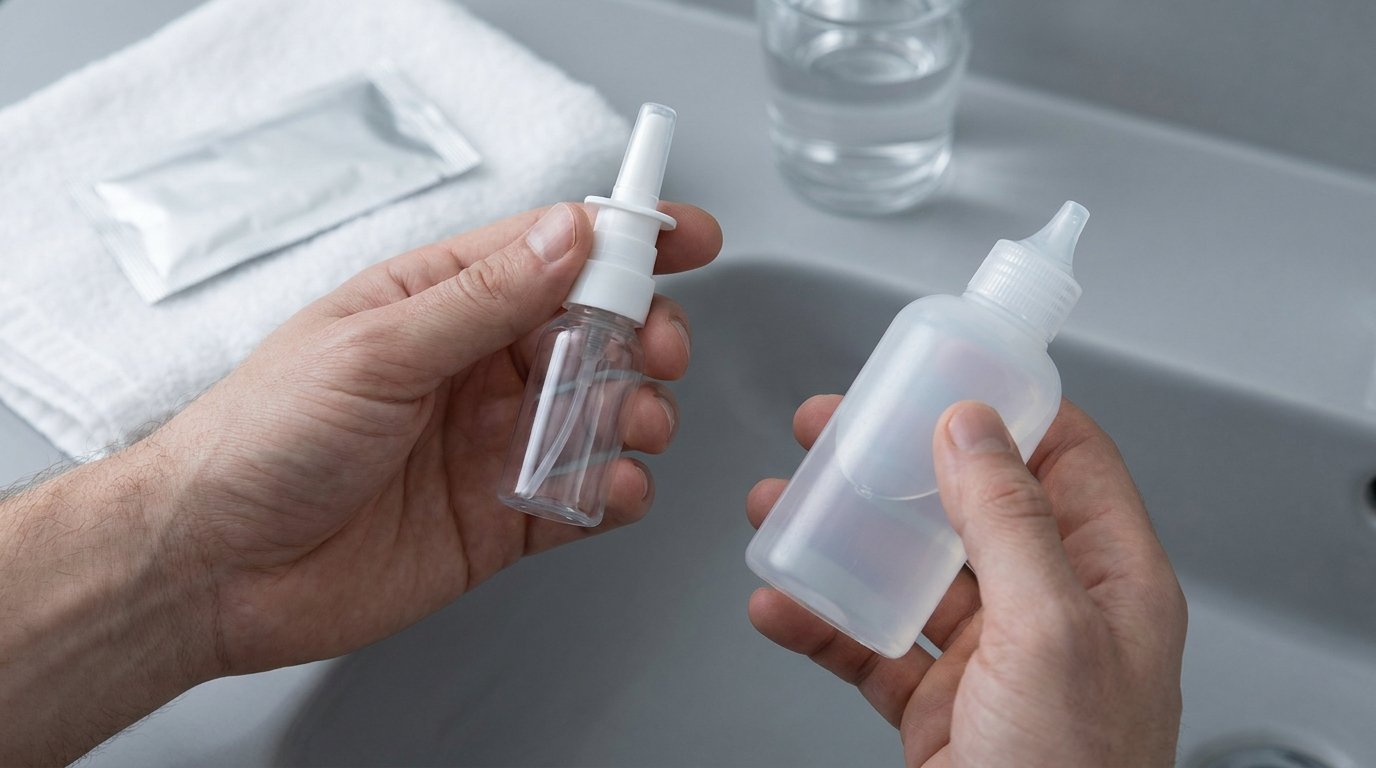
Saline is the workhorse of nasal recovery. Regular saline sprays or gentle rinses keep crusts soft so they shed instead of sitting there trapping swelling, and they moisturise a lining that has temporarily lost some of its humidifying power. Most surgeons ask patients to use saline several times a day for the first few weeks, then taper. Follow the frequency you were given rather than a number from the internet.
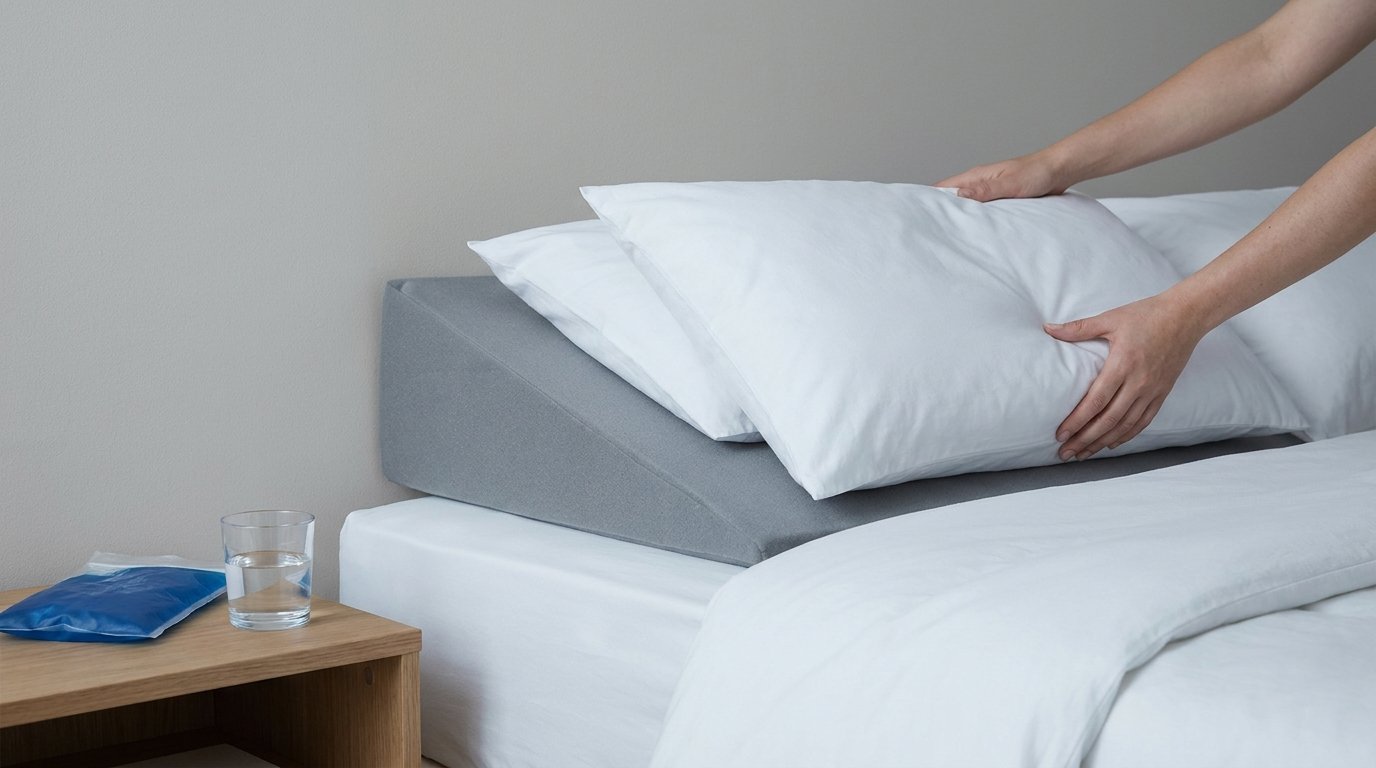
Sleeping with your head and shoulders raised for the first week or two genuinely reduces morning congestion, because it stops fluid pooling in the tissues overnight — the same principle we describe in our guide to sleeping elevated after nasal surgery. Cool compresses on the cheeks and bridge help external puffiness, cold drinks and soft food make the first days easier, and staying well hydrated thins secretions.
Avoid blowing your nose hard until you are cleared to do so; sniff gently and let saline do the work. Crusting and dryness often outlast the swelling itself, and our article on how long scabs and dryness last after turbinate reduction explains how to manage that phase without picking at the lining.
- ✓Saline spray or rinse as prescribed, consistently rather than occasionally
- ✓Head elevated for sleep in the first one to two weeks
- ✓No heavy lifting, straining or hot saunas until cleared
- ✓Humidified air if you are in a dry hotel or office
- ✓Prescribed allergy or steroid spray taken exactly as directed
When swelling is a warning sign, not normal healing
Normal post-operative swelling trends downwards. The pattern that deserves a phone call is swelling that reverses direction — improving for a week, then becoming markedly worse, especially with fever, thick foul-smelling discharge, spreading facial pain or increasing tenderness. Those can point to infection and need assessment, not another day of waiting.
Sudden puffiness of the face, around the eyes or in the neck, particularly if the skin crackles under your fingers, is rare but should be treated as urgent. A 2025 case report in the Ear, Nose & Throat Journal described extensive subcutaneous emphysema — air trapped under the skin spreading to the face, neck and chest — after otherwise uneventful turbinate surgery, which is exactly why surgeons ask you to avoid forceful nose blowing and pressure in the early days.
There is also a long-term concern worth naming honestly: taking away too much turbinate tissue can leave a nose that feels paradoxically empty and dry despite a wide airway, a condition known as empty nose syndrome. Research published in Rhinology in 2025 examined structural airway changes on CT scans in these patients and how they relate to symptoms. It is uncommon, and it is one of the main reasons experienced surgeons favour conservative, tissue-preserving reduction over aggressive removal — something worth asking about before you book.
🚨 Contact your surgeon or seek urgent care if You have fever, worsening one-sided facial pain, foul-smelling discharge, heavy bleeding that does not stop with pinching and rest, vision changes, or sudden swelling of the face and neck with crackling under the skin.
⚠️ Do not self-treat persistent blockage with pharmacy sprays If you still feel blocked at six weeks, that needs an examination — the cause could be allergy, residual swelling, adhesions or something unrelated, and each has a different fix.
Flying home, follow-up and what shapes the cost in Turkey
For patients travelling to Turkey, most surgeons ask for around five to seven nights in the country for turbinate reduction alone, a little longer if a septoplasty or rhinoplasty is combined. That window covers your pre-operative assessment, the procedure itself, at least one review visit and the first cleaning of the nose, which is the point at which many people start to feel a difference.
Flying with a freshly operated nose is usually permitted once your surgeon confirms there is no active bleeding, but cabin air is dry and pressure changes make the nose feel more blocked. Take saline spray in your hand luggage, use it before descent, sip water and do not attempt to forcefully clear your ears. Expect one or two days of extra congestion after the flight — it settles.
On price, the honest answer is that a turbinate reduction quote depends on the technique used, whether it is combined with septal or nasal surgery, the type of anaesthesia, whether a hospital night is needed, and what the package includes in terms of hotel nights, transfers, medication and follow-up. Because those variables change the figure significantly, a personalised price is only confirmed after a consultation and review of your scans or photographs. Ask for the inclusions in writing, and ask specifically who reviews you if swelling behaves unexpectedly after you fly home — clear aftercare communication matters more than any single line on a quote.
If you want the wider picture of what the whole healing process involves beyond swelling alone, our overview of what to expect during turbinate reduction recovery covers the practical side week by week.
This article is for informational purposes only and does not constitute medical advice. Always consult a qualified surgeon for personalised guidance.
Frequently Asked Questions
References
- 📎Outcomes after Functional Nasal Surgery in Patients with Versus without Rhinitis Medicamentosa — Laryngoscope, 2025
- 📎Extensive Subcutaneous Emphysema Post-Turbinate Surgery: Case Report on Mechanisms and Management — Ear, Nose & Throat Journal, 2025
- 📎Serpentine Sign: evidence of airway compensation in patients with empty nose syndrome — Rhinology, 2025
- 📎Mayo Clinic — Tests & Procedures
Related Articles



You Might Also Like



Related articles



Our specialists
 Clineca SpecialistErkan PinegözPlastic & Reconstructive Surgery
 Clineca SpecialistHakan AktaşPlastic & Reconstructive Surgery
 Clineca SpecialistOrkun UzuneyüpoğluPlastic & Reconstructive Surgery
 Clineca SpecialistSalim İskenderPlastic & Reconstructive Surgery
 Clineca SpecialistEngin SelamioğluPlastic & Reconstructive Surgery
 Clineca SpecialistCem AydınPlastic & Reconstructive Surgery
 Clineca SpecialistAlperen ÖnalEar, Nose & Throat (ENT)