

Have a question about Rhinoplasty?
In this article
- Can nasal bone and cartilage really grow back?
- Why the bridge looks bumpy again weeks after surgery
- Residual hump, swelling or true recurrence — how to tell them apart
- What lowers the risk before you ever book
- If it does come back: waiting, touch-ups and revision surgery
- What a revision or touch-up quote covers, and how long to stay
The splint comes off, the bridge looks clean and straight, and then somewhere around week three a faint shadow appears exactly where the bump used to be. That moment sends a lot of people back to their surgeon’s inbox asking the same thing: will my dorsal hump come back after rhinoplasty, or is this simply what healing looks like? It is a fair question, and the answer depends on what the bump on your bridge is actually made of — bone, cartilage, scar or fluid.
Can nasal bone and cartilage really grow back?
Adult nasal bone does not regenerate into its old shape once it has been filed down or cut. So the version of this fear where the hump slowly rebuilds itself over the years is not how the tissue behaves.
What bone does do is heal. When a surgeon rasps or divides the bony bridge, the body repairs those edges by laying down new bone, in the same way it would repair any small fracture. That repair tissue is called callus, and on a nose it can leave a firm, narrow ridge you feel with a fingertip more than you see in the mirror. It usually settles as the healing matures, and it is not the old hump returning.
Cartilage is the part that genuinely has some spring to it. The upper third of a typical hump is bone, but the lower part is cartilage, and cartilage carries a memory of its original shape. If the hump was lowered rather than removed — the approach known as dorsal preservation, where the whole bridge is set down instead of shaved off the top — the pushed-down segment can rise slightly as the tissues relax. Series published in journals including Plastic and Reconstructive Surgery and Aesthetic Plastic Surgery describe partial hump recurrence in a minority of dorsal preservation patients, usually small in size and often manageable with a minor touch-up rather than a full second operation. That is a trade-off worth discussing at consultation, not a reason to avoid the technique.
📋 Three different things get called "the hump coming back" Swelling and scar over the bridge, a small amount of hump left behind at surgery, and true partial rise of preserved cartilage are separate problems with separate solutions. Telling them apart is mostly a matter of time and an in-person examination.
Why the bridge looks bumpy again weeks after surgery
For the first few weeks the bridge is flattened by swelling, which is why so many people love their profile the day the splint comes off. As that fluid drains, the underlying shape shows through — and so does everything the swelling was hiding.
Scar tissue is the usual culprit. Where bone and cartilage were reduced, the body fills the space with fibrous tissue, and over the mid-bridge that tissue can sit slightly proud for months. Just below it, fullness above the tip (surgeons call it a supratip or polly beak deformity) can create the illusion of a hump even when the bridge itself is straight, because the eye reads the contour as a whole rather than measuring millimetres.
Skin thickness changes the picture enormously. Thicker, more sebaceous skin holds fluid longer and drapes over a reduced bridge less crisply, so definition arrives late and irregularities show differently — a point covered in more depth in our guide on thick skin and how surgeons create definition. None of this is a verdict on the surgery at three months. It is a stage.
Residual hump, swelling or true recurrence — how to tell them apart
The distinction matters because it decides whether you wait, treat or plan a touch-up. A hump that was never fully lowered is visible early, stays the same size and is firm and unchanging on examination. Swelling and scar are softer, fluctuate through the day and shrink steadily month after month. A truly recurring preserved bridge tends to appear gradually over the first several months and then stops.
Photographs help more than mirrors. Profile shots in the same light and the same head position, taken monthly, show trends that daily mirror-checking never will. If the shadow is smaller in month five than it was in month three, you are watching swelling resolve, which is also the pattern described in our rhinoplasty recovery timeline.

What lowers the risk before you ever book
Most humps that persist were technical decisions made in the operating room, not accidents of healing. That makes surgeon selection and a precise conversation about goals the two levers you genuinely control.
Be specific about what you want, because different wishes map to different operations. Among the people who write to us about their nose, the single most common request is a slimmer or thinner nose — roughly one in six — ahead of a smaller nose, a straighter bridge or a refined tip. If your real goal is a straight profile line rather than a narrower nose, say exactly that, since a surgeon planning narrowing will make different choices about the bridge than one planning profile correction.
Ask to see profile before-and-after photos of patients with skin like yours, at least a year out, and ask which technique the surgeon plans and why. The American Society of Plastic Surgeons and BAAPS both stress verifying that your surgeon is board-certified in plastic surgery or ENT with recognised aesthetic training; in Europe, EBOPRAS board certification is another checkable credential.
⚠️ No one can guarantee a profile Healing varies between people, and any clinic promising a specific millimetre result or a permanently guaranteed bridge is overselling. Judge a clinic by how honestly it discusses limits.
The surgeon examines and palpates your bridge, explains whether your hump is mostly bone or cartilage, names the technique planned, shows one-year profile photos of similar skin, and tells you plainly that final judgement comes at 12 months.
A price and a surgery date before any examination, heavy reliance on simulated images as a promise of outcome, no named surgeon, and no written answer about what happens if a refinement is needed later.
If it does come back: waiting, touch-ups and revision surgery
The standard advice is to wait a full year before deciding, and in thicker skin closer to eighteen months. Operating into tissue that is still remodelling makes the surgery harder and the result less predictable, and a surprising number of bumps that looked permanent at month four are no longer an issue at month ten.
When something real remains, the correction is often smaller than people fear. A modest bony ridge can sometimes be refined through a limited approach with a short recovery, while a bridge that needs rebuilding — cartilage grafts, breathing correction, or both — is a full revision with its own swelling timeline. Filler over the bridge can camouflage a small residual dip or irregularity, but it adds volume rather than removing it, so it suits selected cases only and needs an experienced injector because of the vascular risk in this area.
It also helps to know that needing a second operation is not a rare failure. About one in eight of the nose operations we plan is a revision, and those patients are on average four years older than first-time patients — in other words, plenty of people reach a good result on a second step, taken calmly and unhurried. For you, that means a bump at month four is a reason to book a review, not a reason to panic-book surgery.
- ✓Take standardised profile photos monthly in the same light rather than checking the mirror daily
- ✓Report firm ridges, breathing changes and asymmetry to your surgeon as they appear, even if you plan to wait
- ✓Keep your operation note and any imaging — a revision surgeon needs to know what was done
- ✓Set the decision point at 12 months (18 in thick skin) and stop re-litigating it before then
What a revision or touch-up quote covers, and how long to stay
Cost for hump correction or revision is never a single figure, because the operations behind the word “revision” differ hugely. A limited refinement of a small bony ridge and a full rebuild with rib cartilage sit at opposite ends of the same list. A personalised price is only meaningful after an examination and photo review, and any figure quoted before that is a placeholder.
Ask what the quote includes and get it in writing: surgeon and anaesthesia fees, hospital time, implants or graft harvesting, post-operative reviews, and where transfers and accommodation sit. Ask about the clinic’s revision policy too — whether minor refinements within a defined period are handled differently — and treat vague verbal reassurance as no policy at all. Our overview of what shapes a rhinoplasty quote goes through the same variables in more detail.

For travel planning, most surgeons want international patients in the country for about a week to ten days around nose surgery so that packing or splints can be removed and the nose reviewed before flying. A small in-clinic refinement may need less. Our guide to stay length, hotels and transfers covers how to build that trip.
📋 Combining procedures affects the plan, not the bridge Around 14% of the nose operations we schedule are booked alongside something else, most often breast augmentation, a breast lift with implants or upper eyelid surgery. If that is your plan, the recovery and stay you should budget for are set by the larger procedure, while the timeline for judging your bridge stays the same twelve months.
Frequently Asked Questions
References
- 📎Dorsal preservation rhinoplasty: hump recurrence and outcomes (PubMed search)
- 📎Revision rhinoplasty: indications and dorsal irregularity (PubMed search)
- 📎American Society of Plastic Surgeons — cosmetic procedures
- 📎NHS — cosmetic procedures guidance
Related Articles


You Might Also Like


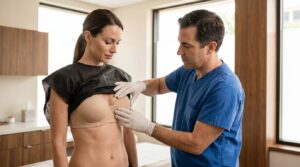
Related articles



Our specialists
 Clineca SpecialistErkan PinegözPlastic & Reconstructive Surgery
 Clineca SpecialistHakan AktaşPlastic & Reconstructive Surgery
 Clineca SpecialistOrkun UzuneyüpoğluPlastic & Reconstructive Surgery
 Clineca SpecialistSalim İskenderPlastic & Reconstructive Surgery
 Clineca SpecialistEngin SelamioğluPlastic & Reconstructive Surgery
 Clineca SpecialistCem AydınPlastic & Reconstructive Surgery
 Clineca SpecialistAlperen ÖnalEar, Nose & Throat (ENT)