

Have a question about Rhinoplasty?
In this article
One of the questions patients ask most often before nose surgery is whether they will wake up with packing or internal splints in place. If you are planning rhinoplasty abroad, that detail matters more than it sounds at first, because it changes how you breathe, sleep, travel and get through the first few days.
Will you always have packing or internal splints after rhinoplasty?
No. After rhinoplasty, some patients have internal splints, some have soft packing or absorbable material, and some have neither. The choice depends on what was done inside the nose, how much support the surgeon wants during early healing, and whether there is a reason to control bleeding or protect the septum, which is the wall between the two nasal passages.
This is one of those areas where practice really does vary between surgeons. A straightforward cosmetic rhinoplasty that changes the bridge or tip may not need packing at all. A rhinoplasty combined with septoplasty, which straightens a deviated septum, is more likely to involve internal support inside the nose. Revision surgery can also increase the chance of splints because the tissues are less predictable and the inside of the nose may need more protection while it settles.
The NHS notes that after cosmetic nose surgery you may have dressings or splints, and nasal blockage in the early period is common. That fits real recovery quite well: the first days often feel stuffy whether or not you have true packing. Many patients expect the outside cast to be the main issue, but the inside of the nose usually affects comfort more.
A practical point for travel patients is that your surgeon should tell you before surgery what they are likely to use and in what situation they might change that plan. If they only decide during the operation, that is not necessarily a problem; it often reflects what they found inside the nose and how much support is needed.
For readers comparing plans, it also helps to know that rhinoplasty is not always done alone. About 14% of our rhinoplasty patients book it with another procedure, most often breast augmentation, a breast lift with implants or upper eyelid surgery. That matters here because the first week is then shaped by the combined recovery, not only by whether your nose has splints.
📋 Practices differ Packing and splint use is not one fixed rule in rhinoplasty. The decision often depends on bleeding risk, septal work, revision complexity and the surgeon’s technique.
Usually thin supports placed inside the nose to protect the septum or keep internal tissues stable for a few days.
Usually soft material used to absorb blood or apply pressure inside the nose. Some types dissolve on their own, others are removed.
What makes a surgeon use internal splints or packing?
The biggest factor is what was actually corrected inside the nose. If your operation includes septoplasty or work close to the septum, internal splints are more common because they help keep the septum straight and reduce the chance that the inner lining sticks down in the wrong place while healing. They can also protect sutures or cartilage grafts placed inside the nose.
Packing is less routine than many patients fear, but it still has a role. A surgeon may use it if there is more bleeding than expected, if the inside lining of the nose needs gentle pressure, or if they want extra support for a short time. Some surgeons prefer absorbable materials rather than traditional packing, which can mean less discomfort because there is nothing substantial to pull out later.
Whether your rhinoplasty is open or closed does not by itself decide the answer. What matters more is the extent of internal work. If you are comparing techniques, our article on open or closed rhinoplasty explains why the inside steps often matter more than the skin incision when it comes to recovery details.
Revision rhinoplasty deserves special mention. If this is a second or third nose operation, surgeons are often more cautious because scar tissue, altered anatomy and graft work can make the septum and inner lining harder to stabilize. That does not guarantee packing or splints, but it makes them more likely.
Good pre-op communication here is simple. Ask three direct questions: whether splints are planned, whether packing is routine in that surgeon’s practice, and when anything placed inside the nose is usually removed. Clear answers tell you a lot about how organised the aftercare will be.
- ✓Septoplasty or other septal work makes internal splints more likely.
- ✓Bleeding risk can make short-term packing more likely.
- ✓Revision rhinoplasty may need more internal support.
- ✓Absorbable material may be used instead of traditional removable packing.
How do internal splints or packing feel in the first week?
Most patients describe the feeling less as pain and more as blocked breathing, pressure and dryness. If both nasal passages feel packed shut, you will probably breathe through your mouth for a few days, especially at night. That can leave your lips and throat dry, and it often makes sleep feel patchy even when pain is controlled.

Internal splints can create a firm, crowded feeling high inside the nose. Packing tends to feel more like complete stuffiness. You may also notice a small amount of bloody drainage, which is usually expected in the early days. The Mayo Clinic advises patients to expect some drainage and congestion after nasal surgery, and that matches the usual first-week course.
What surprises people is how much better they feel once removable splints or packing come out. Relief is often quick, although swelling inside the nose means breathing still may not feel fully normal right away. If you want a broader recovery picture beyond this one issue, our pieces on when breathing feels normal again after rhinoplasty and sleeping elevated after rhinoplasty are the most useful next reads.
You should also expect simple care instructions. These often include saline spray, not blowing your nose, sleeping with your head raised, and keeping follow-up appointments so the surgeon can check the inside of the nose. If anything inside your nose is removable, do not try to adjust or pull it out yourself.
⚠️ Do not remove anything yourself If you can see a splint, stitch or soft packing at the nostril edge, leave it alone unless your surgical team has clearly told you otherwise.
When are packing and internal splints removed?
That depends on what was used. Traditional removable packing is usually taken out quite early, often within the first days. Internal silicone splints are commonly removed around the first follow-up visit, often within about a week, though the exact timing varies. Absorbable materials may soften and dissolve rather than being pulled out.
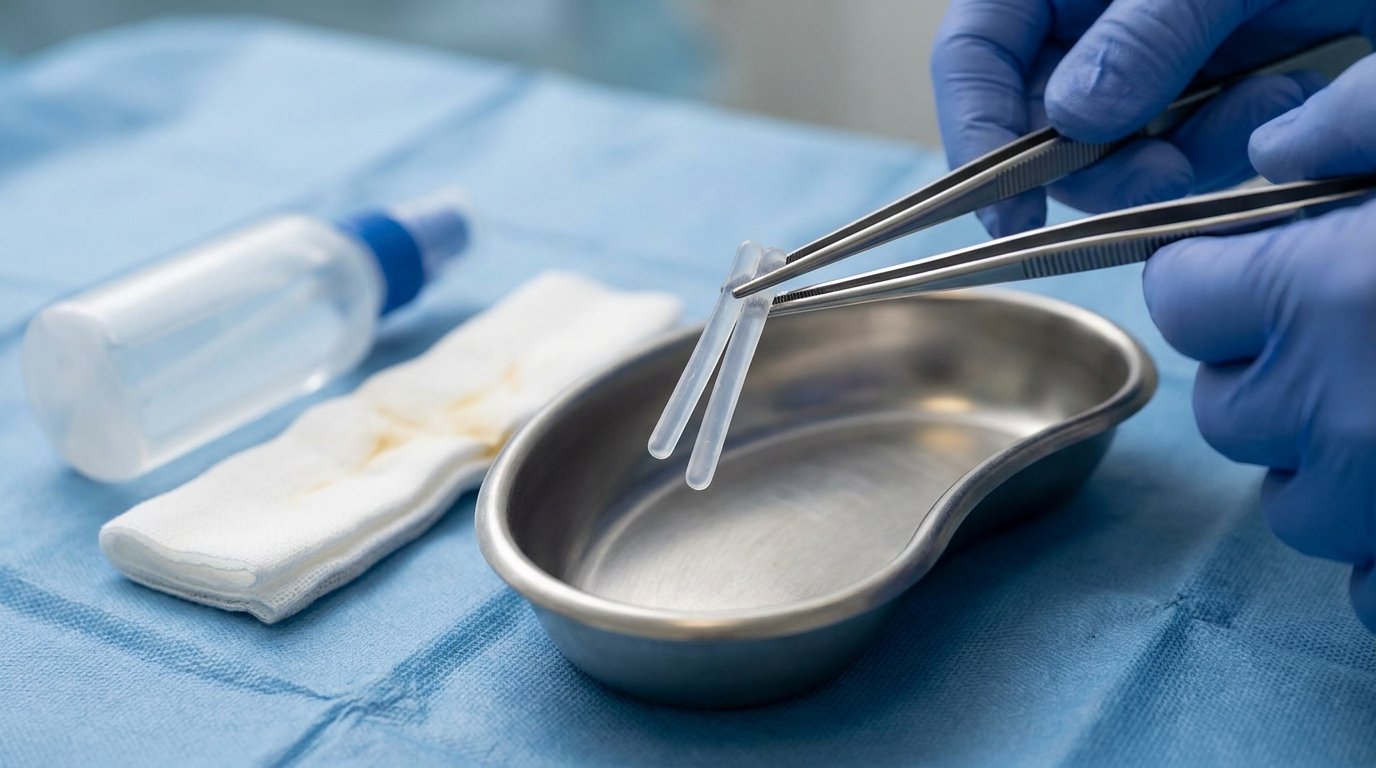
The reason timing varies is that the goal varies. If the main purpose is bleeding control, packing often stays in only briefly. If the main purpose is supporting the septum after internal work, splints may stay a little longer. A surgeon balancing comfort against stability may change the timing based on what the nose looks like at review, not just on a standard day number.
Removal is uncomfortable for some patients, but it is usually quick. Most describe it as strange or unpleasant rather than sharply painful. If the inside of the nose feels sore or crusted, removal can sting for a moment and then breathing often improves almost at once.
For international patients, this timing matters for trip planning. If your surgeon expects to remove internal splints before you fly home, your stay needs to cover that review. If they are happy for them to come out later at home, you need a clear written handover. Our article on rhinoplasty stay length, hotel and transfers explains how these follow-up decisions affect the practical side of travel.
What should worry you, and how do you choose a safe clinic?
Some blockage, dried blood and discomfort are expected. What deserves prompt attention is heavy fresh bleeding, fever, worsening pain that is not settling, a bad smell from the nose, or one-sided swelling that suddenly gets much worse. If your breathing becomes severely difficult rather than just stuffy, contact your surgeon urgently.
Safe care starts well before surgery. For a rhinoplasty patient, the clinic should be able to tell you who is operating, whether the surgeon performs septal work themselves or with an ENT colleague when needed, what the follow-up plan is, and exactly who removes splints or packing. If those answers are vague, that is a red flag.
When checking credentials, look for a properly trained plastic surgeon or facial plastic surgeon and a hospital or clinic with recognised standards. Bodies such as EBOPRAS set board standards in plastic surgery, while BAAPS offers patient-facing guidance on choosing qualified surgeons. Neither replaces a consultation, but both are useful reference points when you are assessing safety.
Quotes also need scrutiny, even though the price itself is personalised. Ask whether the quote covers the operation, anaesthesia, facility fees, medicines, the outside cast, internal splints if used, follow-up cleaning or removal, hotel and transfers, and what happens if you need an extra review before flying. A cheaper quote can stop looking cheaper once those pieces are separated out.
🚨 Get urgent advice if You have heavy ongoing bleeding, fever, rapidly worsening swelling, severe breathing difficulty, or pain that becomes stronger instead of easing.
The team explains in advance whether they usually use packing, when splints come out, and who handles your follow-up before you travel home.
You are told the aftercare details are decided later, but nobody can explain the likely plan or how a blocked nose will be managed during your stay.
If you are still choosing where to have surgery, our rhinoplasty in Turkey cost and safety guide covers prices, stay length and the safety checks that matter.
Frequently Asked Questions
References
- 📎NHS: Cosmetic procedures
- 📎ASPS: Cosmetic procedures
- 📎Mayo Clinic procedures
- 📎PubMed search: rhinoplasty nasal packing internal splints septoplasty review
Related Articles



You Might Also Like


Related articles


Our specialists
 Clineca SpecialistErkan PinegözPlastic & Reconstructive Surgery
 Clineca SpecialistHakan AktaşPlastic & Reconstructive Surgery
 Clineca SpecialistOrkun UzuneyüpoğluPlastic & Reconstructive Surgery
 Clineca SpecialistSalim İskenderPlastic & Reconstructive Surgery
 Clineca SpecialistEngin SelamioğluPlastic & Reconstructive Surgery
 Clineca SpecialistCem AydınPlastic & Reconstructive Surgery
 Clineca SpecialistAlperen ÖnalEar, Nose & Throat (ENT)