
Have a question about upper eyelid blepharoplasty?
In this article
- What does healing usually look like after upper eyelid blepharoplasty?
- What is the week-by-week healing timeline?
- When do you look normal again, and when are you fully healed?
- What can make healing slower after upper eyelid surgery?
- When is it safe to fly home after surgery in Turkey?
- Which symptoms are normal, and which need urgent medical review?
- How should you choose a clinic and surgeon if recovery planning is your main concern?
One of the questions patients ask most often before eyelid surgery is how long does it take to heal after upper eyelid blepharoplasty, and the honest answer is that healing happens in stages. You may look socially presentable fairly early, but the eyelids usually settle more gradually than many people expect, which matters if you are planning work, travel, family events, or surgery abroad.
What does healing usually look like after upper eyelid blepharoplasty?
For most people, the first part of recovery is the most visible rather than the most painful. Upper eyelid blepharoplasty usually causes swelling, tightness, mild oozing, and bruising around the eyes in the first several days. The NHS notes that eyelid surgery commonly leads to swollen, numb and bruised eyelids at first, and that the final appearance is not immediate because the tissues need time to settle.
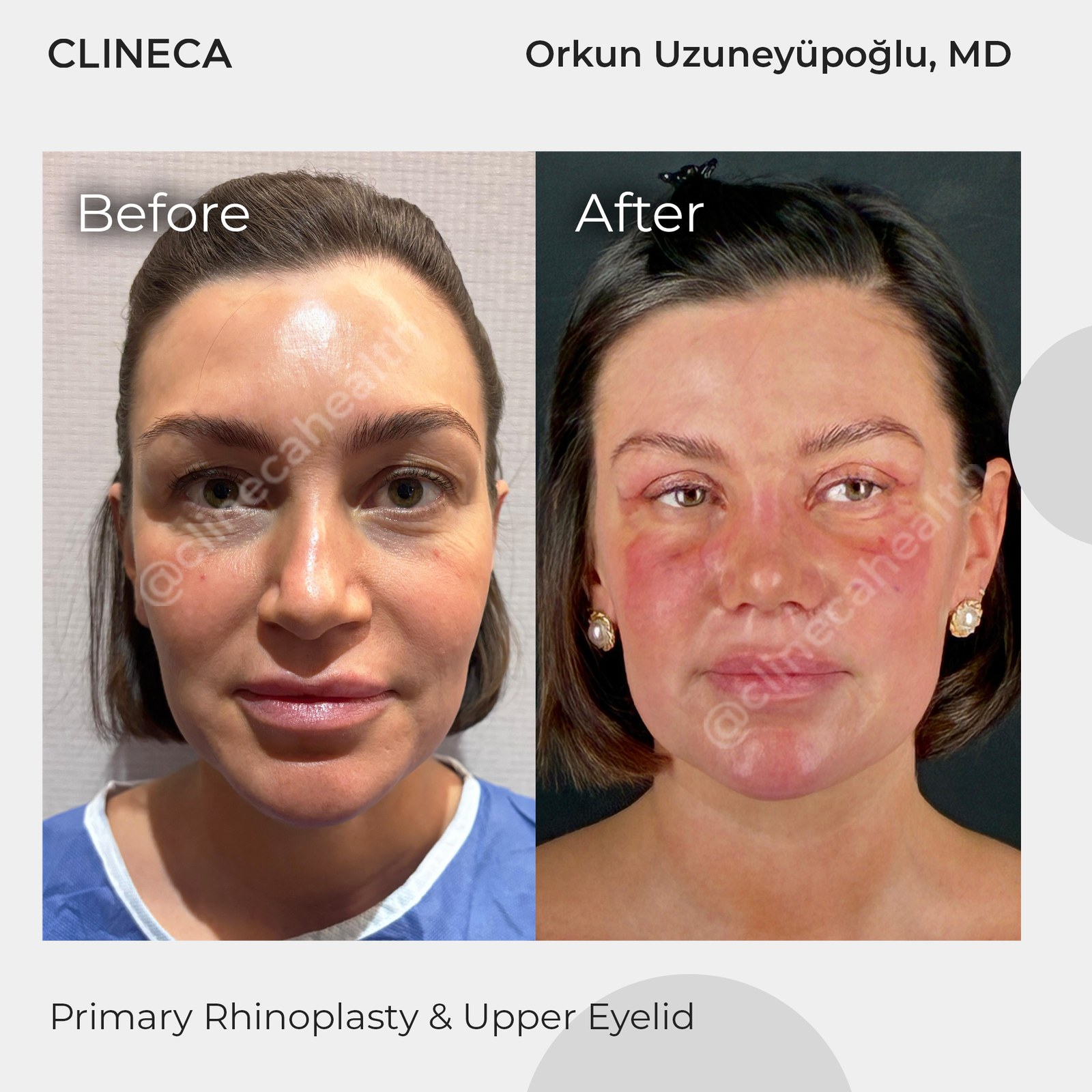
A realistic way to think about healing is in layers. The skin incision can close early, stitches may come out within about a week if non-dissolving sutures are used, and you may feel ready for normal social contact after that. But swelling can keep changing for weeks, and the scar continues to soften for months. The American Society of Plastic Surgeons (ASPS) describes blepharoplasty recovery in a similar staged way: early bruising and swelling improve first, while the finer healing process continues beyond the first couple of weeks.
If you are travelling for surgery, this difference matters. Looking “recovered enough to fly home” is not the same as being fully healed. If you are also comparing procedures, our article on blepharoplasty in Turkey: cost, safety and recovery explains the wider planning side, while the difference between brow lift and upper eyelid surgery can help if you are unsure whether heavy lids are really coming from the eyelids alone.
📋 Healing and final results are not the same thing Many patients are presentable before the eyelids are fully settled. Early improvement is common, but scar maturation and the last part of swelling reduction usually take longer.
What is the week-by-week healing timeline?
The first week is usually the most awkward. Swelling and bruising are often at their worst in the first few days, then start to ease. The eyelids can feel tight, dry, watery, or slightly uneven from side to side. That does not automatically mean anything is wrong. Sleeping with the head raised, using cold compresses if your surgeon advises them, and taking care not to rub the eyes usually help during this stage.

By the end of the first week, many patients feel much better than they did on day two or three. If non-dissolving stitches are used, removal is commonly done around this time, although exact timing depends on the surgeon and the incision. The NHS advises patients to follow their surgical team’s instructions closely, especially around cleaning the area, using drops or ointment, and attending follow-up checks.
In the second week, bruising usually fades from dark purple or blue into yellow or light brown. Swelling often improves enough that you can go out comfortably with sunglasses or light makeup if your surgeon says the incision is ready. Even then, the lids may still look puffy in the morning and more settled later in the day.
From weeks three to six, most people feel they look much more normal. The incision line is still healing, though, and the eyelid crease may look firmer, pinker, or slightly raised before it softens. Small asymmetries often improve during this period rather than on the first day the bruising disappears.
After six weeks, most of the obvious healing is usually behind you. That said, subtle swelling and scar changes can continue for several months. If your skin is thin, if a larger amount of tissue was removed, or if the procedure was combined with another facial operation, the settling phase can be slower.
When do you look normal again, and when are you fully healed?
These are not the same milestone. Many patients look noticeably better to other people within two to three weeks, especially if bruising was mild and they do not scar very pink. If your job is office-based and does not involve heavy lifting, you may feel ready to return sooner than someone whose work is public-facing or physically demanding.
Full healing takes longer because eyelid skin is delicate and every small change is easy to see. A crease that looks slightly firm, a scar that stays pink for a while, or puffiness that is worse in the morning can all be part of normal healing. The NHS warns that scars may remain visible for a while before fading, even when the operation is healing as expected.
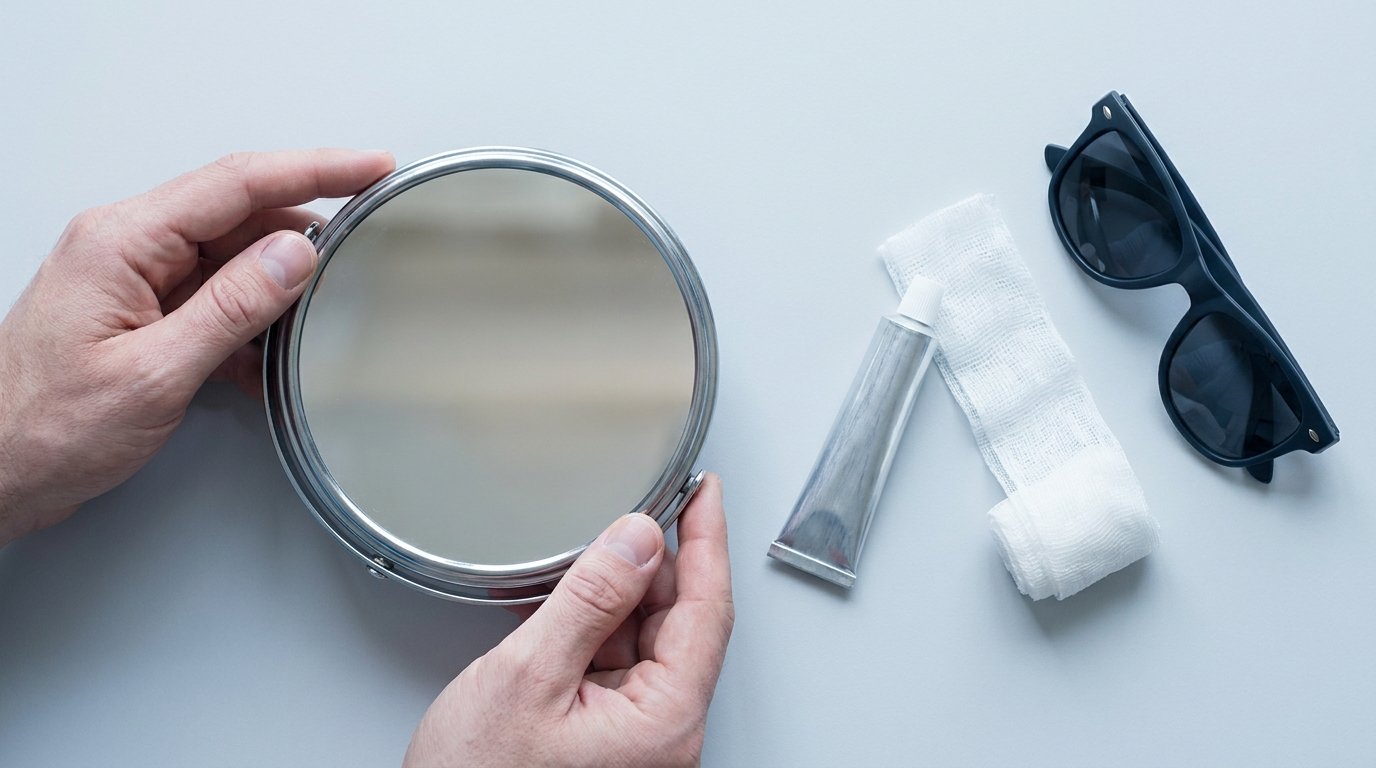
This is also why before-and-after expectations need to be realistic. Good clinic communication matters here. Ask for clear photo timing, not just polished final images. Photos taken at one week, one month and three months are much more useful than a single final result image.
Looking socially presentable often comes before complete settling of the eyelid crease and scar.
Expecting the eyelids to look final once bruising has faded usually leads to unnecessary worry.
What can make healing slower after upper eyelid surgery?
Healing is not identical for everyone. A longer recovery does not always mean a complication, but some factors do make the process slower or more noticeable.
- ✓Smoking or nicotine exposure, which can reduce blood flow and affect wound healing
- ✓Dry-eye symptoms or sensitive eyes before surgery, which can make the early days feel more uncomfortable
- ✓Thinner or mature skin, where redness and scar texture can stay visible longer
- ✓A combined procedure such as brow lift, facelift or rhinoplasty, which adds swelling from more than one surgical area
- ✓Blood-thinning medicines or supplements if they were not managed correctly before surgery, which can worsen bruising
- ✓Returning to exercise, bending, lifting or frequent screen use too quickly, which can increase swelling or irritation
If you are considering combined surgery, it is worth discussing whether one recovery period is practical for you. Some people combine upper blepharoplasty with facial surgery sensibly, but others do better spacing procedures out. That is a planning question as much as a medical one.
⚠️ Do not judge the result too early Early asymmetry, morning puffiness and pink scars can improve for weeks or months. A very early judgement can be misleading.
When is it safe to fly home after surgery in Turkey?
For medical tourists, this is one of the most practical parts of the recovery question. You need enough time not only for the first healing phase, but also for at least one post-op review and a plan for stitch removal if this is not done before you leave. For upper eyelid blepharoplasty on its own, many patients stay around the first week so the surgeon can assess swelling, incision healing and eye comfort before travel. The exact stay depends on your surgeon’s protocol and whether stitches dissolve on their own.
Flying too soon is not just about comfort. If you develop increasing swelling, bleeding, or eye irritation after you leave, getting help becomes harder. Organised aftercare matters more than hotel luxury. Ask who you contact out of hours, whether written aftercare instructions are provided, and how photos are reviewed once you are home.
If you are planning your trip, our article on what an all-inclusive surgery package in Turkey usually includes can help you ask better logistical questions. For readers also comparing heavier facial combinations, combined surgery in Turkey: safety, cost and recovery explains why recovery planning becomes more complex when more than one area is operated on.
Which symptoms are normal, and which need urgent medical review?
Some discomfort is expected. Mild pain, tightness, bruising, swelling, temporary blurred vision from ointment, watery eyes and numbness around the incision can all happen early on. Those symptoms should gradually improve, not suddenly worsen.
The warning signs are more important than the bruising colour or how dramatic the swelling looks in a photo. The NHS advises seeking urgent medical help after cosmetic surgery if you have increasing pain, increasing swelling, wound discharge, a high temperature, or problems that suggest infection or bleeding. With eyelid surgery in particular, worsening vision, severe one-sided swelling, significant bleeding, or pain that feels out of proportion should be taken seriously and assessed promptly.
ASPS patient guidance also emphasises careful follow-up and immediate contact with your surgical team if you develop symptoms that are getting worse rather than better. If a clinic seems casual about warning signs, or gives you only generic aftercare messages, treat that as a concern about safety and organisation.
🚨 Get urgent review for vision changes or rapidly worsening pain Do not wait for a routine reply if you develop reduced vision, marked one-sided swelling, heavy bleeding, fever, or discharge from the wound.
- ✓Expected early symptoms usually improve day by day, even if slowly.
- ✓Urgent symptoms are those that are increasing, one-sided, severe, or affecting vision.
- ✓You should know before surgery exactly who to contact during evenings and weekends.
How should you choose a clinic and surgeon if recovery planning is your main concern?
When patients worry about healing time, they are often really worried about communication, safety and being left alone with questions. Those concerns are reasonable. A good blepharoplasty consultation should cover where the heaviness is coming from, whether an upper lid procedure alone is enough, what the scar usually looks like at different stages, when stitches come out, and how long you should stay locally.
For surgeon credentials, look for specialist plastic surgery training and recognised professional standards. In Europe, EBOPRAS is one of the bodies patients may see referenced in relation to board-level plastic surgery standards. Ask who will do the operation, who will see you after surgery, and who answers if you message with a concern. Clear answers matter.
Quotes should also be easy to understand. Even though the final price is personalised and should only be confirmed after consultation, you can still ask what the quote includes: hospital or day-case facility fees, anaesthesia, post-op medication, follow-up visits, transfers and hotel if applicable, and whether revision policy is explained in writing. Many disappointments in medical tourism come from poor organisation rather than the eyelid procedure itself.
Clear follow-up plan, written aftercare, honest scar and swelling timelines, named surgeon credentials, and no pressure to book quickly.
Vague answers about who operates, no plan for stitch removal, unrealistic promises about looking perfect in days, or slow replies once you ask detailed questions.
Frequently Asked Questions
References
- 📎NHS: Cosmetic procedures – eyelid surgery
- 📎ASPS: Cosmetic procedures
- 📎EBOPRAS
- 📎PubMed search: upper eyelid blepharoplasty recovery complications wound healing
Related Articles
You Might Also Like

Related articles
Our specialists
 Clineca SpecialistErkan PinegözPlastic & Reconstructive Surgery
 Clineca SpecialistHakan AktaşPlastic & Reconstructive Surgery
 Clineca SpecialistOrkun UzuneyüpoğluPlastic & Reconstructive Surgery
 Clineca SpecialistSalim İskenderPlastic & Reconstructive Surgery
 Clineca SpecialistEngin SelamioğluPlastic & Reconstructive Surgery
 Clineca SpecialistCem AydınPlastic & Reconstructive Surgery
 Clineca SpecialistAlperen ÖnalEar, Nose & Throat (ENT)