
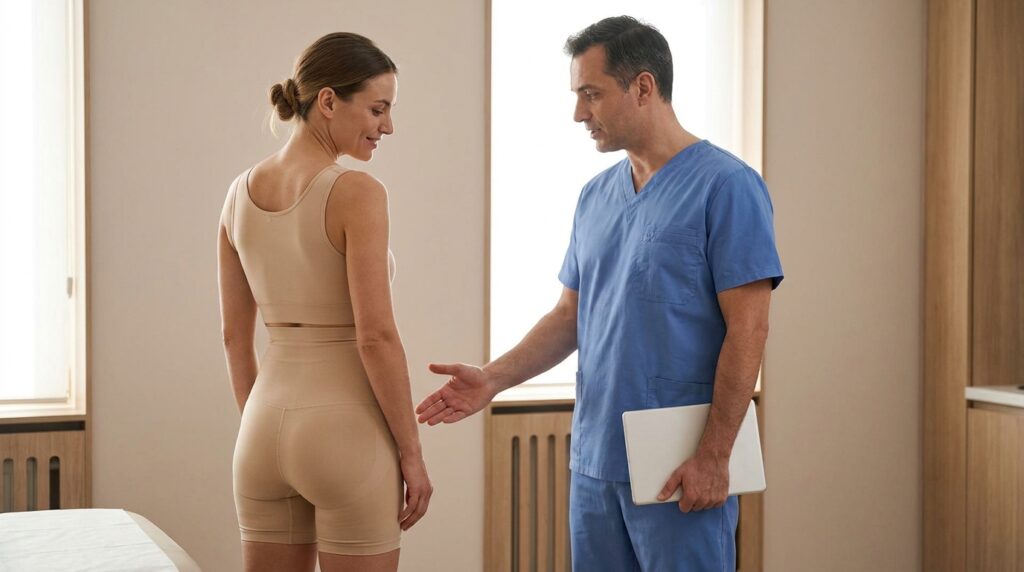
Have a question about Butt Implant Replacement?
In this article
- Is there a standard lifespan for butt implants?
- What does the research suggest about longevity and revision risk?
- When is butt implant replacement actually recommended?
- What affects how long butt implants last?
- How long is recovery if replacement is needed?
- How should you compare replacement with removal or another option?
- What does cost depend on, and what should a quote include?
- How do you choose a safe clinic and surgeon for butt implant revision?
Butt implants can last for many years, and some people keep them long term, but they should not be treated as a lifetime device that never needs review. If you are asking how long do butt implants usually last before replacement may be needed, the honest answer is that replacement depends less on a fixed expiry date and more on symptoms, implant position, firmness, pain, shifting, and whether a complication or cosmetic change develops over time.
Is there a standard lifespan for butt implants?
Unlike some devices that come with a simple service life, gluteal implants do not have a universal replacement deadline. In practice, surgeons usually replace or remove them because something changes, not because a calendar says it is time. That change may be medical, such as infection or implant movement, or cosmetic, such as visible asymmetry or a result that no longer suits the patient’s shape.
This is also why you will see different answers online. Butt implants are less common than breast implants, and there is no standard surveillance protocol specific to butt implants. Follow-up plans vary by surgeon, by implant type, by how the pocket was created, and by whether you have symptoms. Imaging is not routinely scheduled for every patient in the same way because there is no widely adopted screening timetable specific to gluteal implants.
Peer-reviewed studies on gluteal augmentation show that implants can stay in place for a long time, but revision surgery is not rare. Published reviews and case series report that reoperation may be needed for issues such as wound separation, seroma, infection, implant rotation, displacement, capsular contracture, or dissatisfaction with size and shape. The exact revision rate varies between studies because techniques, implant planes, surgeon experience, and patient selection differ.
The American Society of Plastic Surgeons, when discussing implants more broadly, makes a useful point that also applies here: implants are not considered lifetime devices. That does not mean everyone will need replacement on a schedule. It means long-term follow-up matters, and revision is driven by findings and symptoms rather than a guarantee of permanence.
📋 Key point There is no agreed routine imaging schedule for butt implants. Reviews are usually symptom-led unless your surgeon advises otherwise.
There is no single official lifespan for butt implants. Many remain in place for years, but replacement is usually considered only if there is a problem such as displacement, firmness, pain, asymmetry, infection, wound issues, or a change in appearance that matters to the patient.
What does the research suggest about longevity and revision risk?
The strongest evidence on gluteal implant longevity comes from surgical reviews, case series, and systematic summaries rather than one single landmark guideline. That evidence has limits, but it still helps answer the practical question. In published literature, many patients keep implants for years without replacement, yet revision is common enough that it should be discussed from the start.
Several peer-reviewed reviews of gluteal augmentation report complication patterns that can lead to later replacement or removal. The most repeated problems are wound dehiscence, which means the incision opens, seroma, which is a fluid collection, infection, implant malposition, visible or palpable implant edges, and capsular contracture, where scar tissue tightens around the implant. Some studies suggest that intramuscular placement, where the implant sits within the gluteal muscle rather than only under the skin, may reduce certain visibility and displacement problems compared with older placement methods, but it does not remove risk.
A useful way to read this evidence is not to ask, “How many years exactly?” but rather, “What makes an implant more or less likely to need revision?” In practice, the following matter most:
- ✓Surgical plane and technique
- ✓Implant size relative to your tissue
- ✓Wound healing and tension on the incision
- ✓Smoking, nutrition, and general health
- ✓Infection prevention and aftercare
- ✓How closely you follow sitting, sleeping, and activity restrictions
Mayo Clinic advises that cosmetic surgery carries risks such as bleeding, infection, fluid build-up, poor wound healing, scarring, and the need for more surgery. That statement is general, but it is directly relevant to butt implant revision because these are exactly the problems that often drive reoperation. The NHS also states that all cosmetic surgery has risks and that revision surgery may be needed if problems occur.
For patients comparing options, it helps to know that revision risk after butt implants is usually discussed more openly now than it was years ago. Good clinics should explain not only the expected result but also the realistic chance of future adjustment, removal, or replacement.
Research suggests butt implants often remain in place for years, but revision is a recognised part of long-term care. Studies do not support a fixed replacement date. Instead, they show that complication and reoperation risk varies with surgical technique, pocket placement, wound healing, infection risk, and aftercare.
When is butt implant replacement actually recommended?
A stable implant that feels comfortable, looks natural on your frame, and shows no sign of complication may not need replacement just because it has been in place for a long time. On the other hand, even a newer implant may need revision if healing has not gone well or the implant has shifted.
The most common reasons surgeons consider replacement or removal are straightforward. The implant may sit too high, too low, or rotate. The area may become firm or painful. There may be a recurrent fluid collection, an infection, or an incision that healed poorly. In some people, the issue is more cosmetic than medical: the buttocks may no longer look balanced after weight loss, weight gain, pregnancy, or normal ageing of the skin and soft tissue.
Signs that should prompt a review
If you already have implants, arrange a proper assessment if you notice increasing pain, new firmness, swelling, warmth, redness, a change in shape on one side, numbness that is getting worse, or a wound that opens or drains. These symptoms do not always mean replacement is necessary, but they do mean the area should be checked.
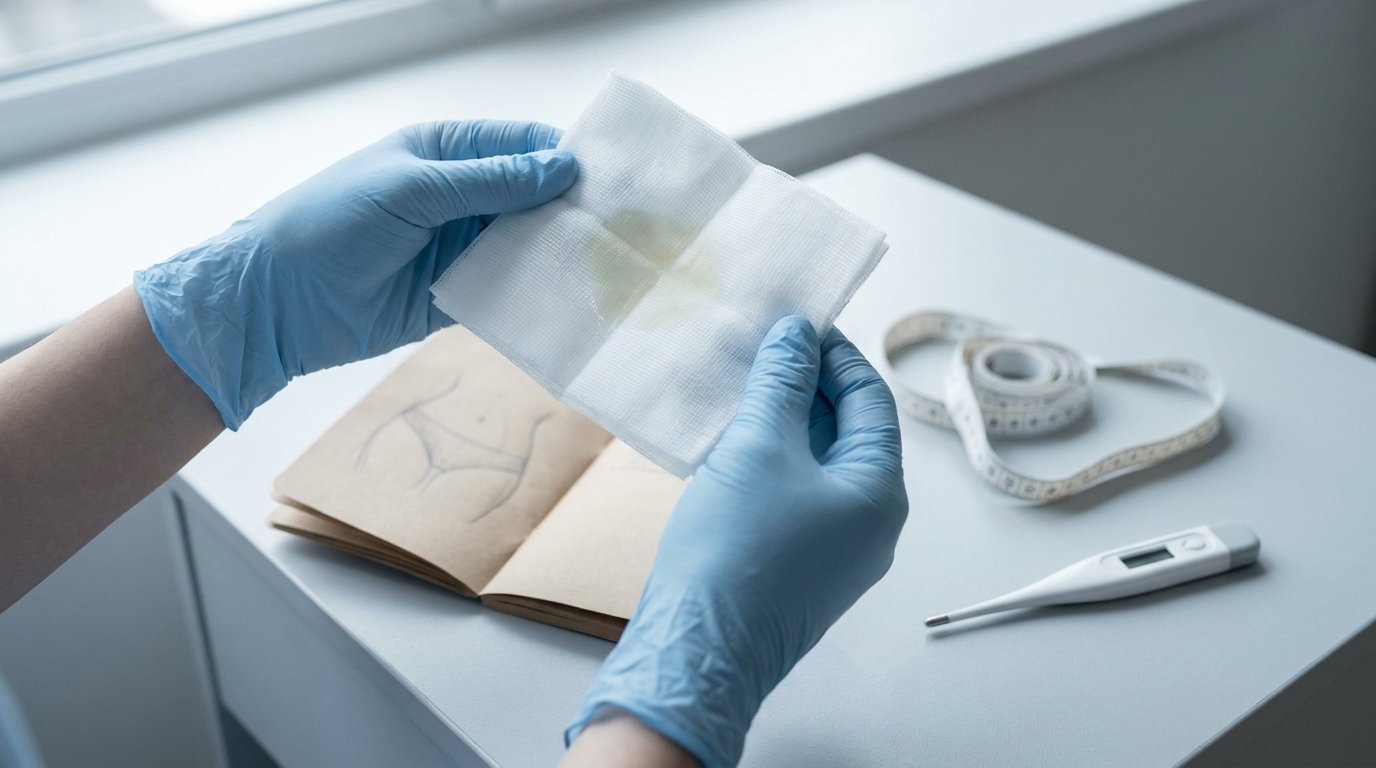
A careful surgeon will usually review several clinical points before advising revision. These include skin quality, scar position, pocket stability, implant plane, signs of infection, symmetry, and how much natural tissue covers the implant. If travel surgery is being considered, ask who would manage a problem after you return home and how follow-up photos, video reviews, or in-person checks would work.
If you are still deciding whether implants are right for you, it may also help to compare them with Brazilian butt lift options and with buttock augmentation with implants information so you understand the trade-offs in projection, feel, scars, and revision patterns.
Pain, shifting, recurrent fluid, infection, hardening, or a clear shape problem that matches exam findings.
Being told all old implants should be replaced automatically without a clear exam, imaging plan if needed, or explanation of why.
Replacement is usually recommended when there is a clear problem, not simply because a certain number of years has passed. Common reasons include implant movement, pain, hardening, infection, wound trouble, rupture concerns, visible asymmetry, or a result that has changed after weight change or ageing.
What affects how long butt implants last?
The implant itself matters, but the surrounding tissue and the way the surgery is done often matter more. A well-chosen implant in a carefully made pocket tends to behave better over time than an oversized implant pushing against tight tissues.
Intramuscular placement is commonly used because it gives better soft-tissue cover and may reduce edge visibility and some displacement issues. Even so, no technique eliminates the risk of revision. The gluteal area is under constant pressure from sitting, walking, and exercise, so early healing can be demanding.
Lifestyle and body changes count too. Smoking can affect blood flow and wound healing. Major weight swings can change the soft tissue around the implant. Very early return to gym training, repeated pressure on the area, or ignoring activity restrictions can all affect stability.
There is also a simple human factor: expectations change. Some patients seek replacement years later not because the implant failed, but because they want a different size, shape, or softer look. That is still revision surgery, and it should be planned with the same care as a medically necessary change.
- ✓Ask which implant plane is planned and why it suits your anatomy.
- ✓Ask how the surgeon reduces displacement and wound tension.
- ✓Ask what aftercare rules matter most during the first six weeks.
- ✓Ask how weight change and future pregnancy could affect the result.
Longevity depends on technique, tissue support, implant size, healing quality, and lifestyle factors. The best results usually come when the implant matches the body well, the pocket is precise, infection risk is controlled, and recovery rules are followed closely in the first weeks.
How long is recovery if replacement is needed?
Revision surgery is not always harder than first-time surgery, but it is rarely simpler. If the surgeon needs to remove scar tissue, treat a fluid collection, correct implant position, or manage skin that has thinned over time, recovery may be less predictable.
In the first days, swelling, tightness, and soreness are common. Sitting restrictions and sleeping advice are especially important because pressure on the buttocks can affect healing. Many patients need help with daily tasks at the start, even if they are otherwise fit.
For medical tourists, the practical question is not just when you feel better, but when you can move safely, attend follow-up checks, and travel without putting too much strain on the area. A clinic should explain how long to stay nearby after surgery, when dressings and drains, if used, are reviewed, and what would trigger a delay in flying home.
The table below gives a realistic general outline. Your surgeon’s plan should always take priority.
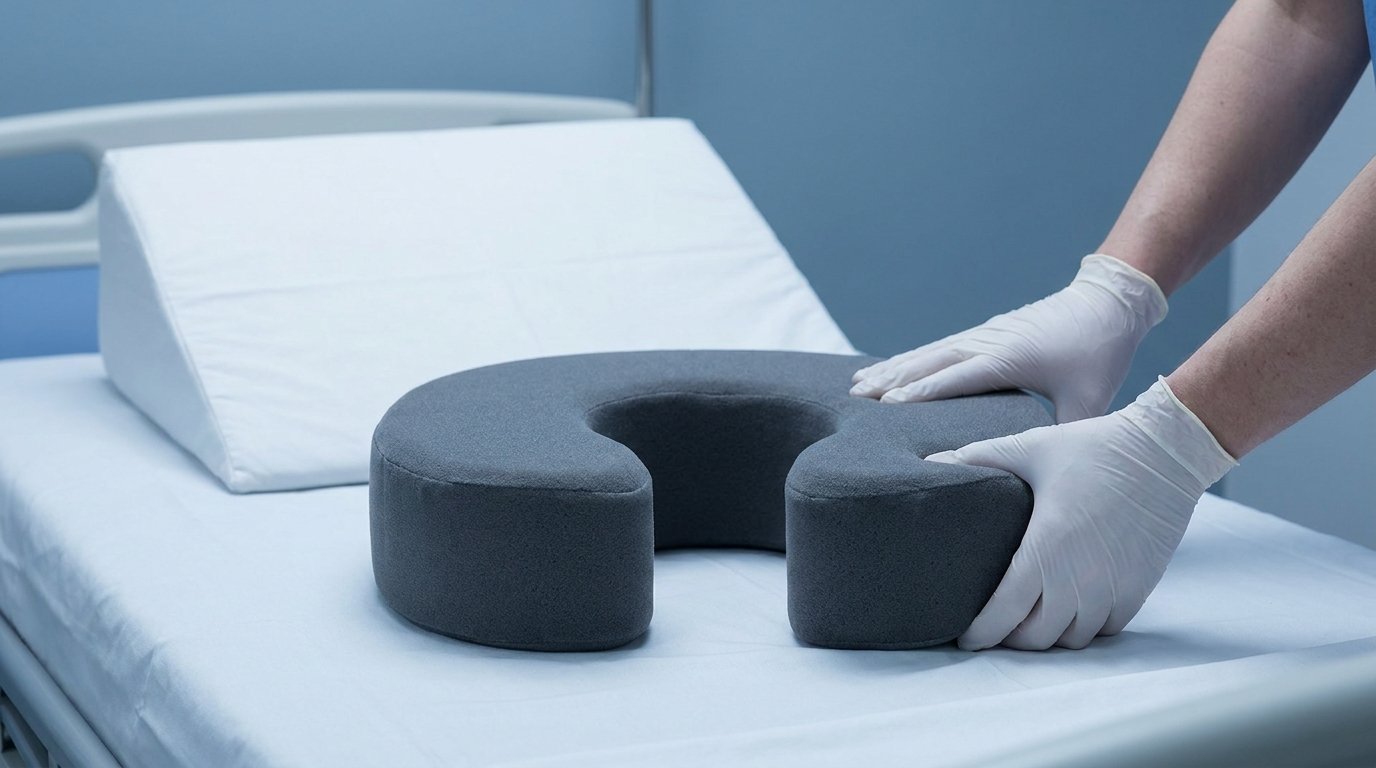
⚠️ Travel point Do not plan your return flight around the cheapest ticket alone. Plan it around wound checks, comfort sitting, and your surgeon’s advice.
Recovery after butt implant replacement is often similar to, or sometimes slightly more involved than, first-time surgery because scar tissue may need to be released and the pocket adjusted. Most patients need careful off-loading of pressure early on and should plan travel and work around a staged recovery.
How should you compare replacement with removal or another option?
Some patients assume that if an implant causes a problem, a new implant is the only answer. That is not always true. If the tissues are thin, the scar pocket is unstable, or infection has been a concern, simple replacement may not be the safest or most durable plan.
For some people, removal alone is the better option. For others, replacement can work well if the pocket is revised carefully and the new implant choice is more suitable. A few may be candidates for fat transfer instead, although this depends on available donor fat and the goals for projection.
If you are weighing those choices, ask for a clear explanation of what the surgeon is trying to fix. Is the main problem size, position, firmness, pain, or soft-tissue support? The answer changes the best revision plan.
Replacement is not the only path. Depending on your tissues, goals, and reason for revision, options may include removal alone, pocket correction with a new implant, or switching to fat transfer if you have enough donor fat. The right choice depends on anatomy and risk tolerance.
What does cost depend on, and what should a quote include?
Revision work is usually priced according to how complex the correction is. A simple exchange is different from surgery that also needs capsule work, pocket repair, drain management, wound treatment, or overnight medical support. That is why a reliable price is usually confirmed only after a consultation and photo or in-person assessment.
For international patients, look closely at what the quote includes. You want to know whether it covers pre-operative assessment, surgeon and hospital fees, anaesthesia, implants if new ones are needed, medication, garments, transfers, hotel arrangements if offered, follow-up visits, and support if your stay has to be extended.
It is also reasonable to ask what is not included. Extra nights, extra dressings, imaging, treatment for an unexpected complication, or revision outside the agreed plan may sit outside the initial quote. Clear answers matter more than a low headline price.
If you are arranging treatment from abroad, use an official consultation request and review the clinic background on the about page and surgeon details on the doctors page before you commit.
The cost of butt implant replacement is shaped by surgical complexity, not just the implant itself. A personalised quote usually depends on whether the old implant is removed or exchanged, whether scar tissue or infection is being treated, the length of stay, anaesthesia, garments, and follow-up arrangements.
How do you choose a safe clinic and surgeon for butt implant revision?
This is where details matter. Butt implant revision is not a procedure to book on marketing alone. Ask who will perform the surgery, what revision cases they treat regularly, where the operation takes place, and how complications are handled outside office hours.
Named clinical review criteria help here. Ask whether your assessment includes scar quality, tissue thickness, implant plane, pocket stability, infection signs, symmetry, skin laxity, and whether imaging is needed for your specific symptoms. A serious surgeon should be able to explain these points in plain language.
ASPS advises patients to choose a properly qualified plastic surgeon and to discuss risks, recovery, and the possibility of further surgery before proceeding. That is especially important in revision surgery, where the goal is not only improvement but also safe problem-solving.
Good health-tourism planning also means asking how long you should remain in Turkey, who checks you before flying, and what support is available after you return home. If those answers are vague, keep looking.
Your surgeon explains why replacement is or is not needed, what alternatives exist, and what would happen if you changed your mind after removal.
You are offered a quick booking without a proper review of symptoms, past surgery notes, photos, and a realistic discussion of complication management.
If implants are causing trouble, removal or a staged plan may be safer than immediate replacement in one operation.
Safety depends on the surgeon’s revision experience, the operating facility, and a clear aftercare plan. Choose a clinic that explains complications honestly, confirms who performs the surgery, documents emergency arrangements, and gives a practical follow-up plan for both your stay in Turkey and your return home.
Frequently Asked Questions
References
- 📎PubMed search: gluteal augmentation implants complications revision
- 📎PubMed search: buttock implants intramuscular technique outcomes
- 📎ASPS Cosmetic Procedures
- 📎NHS Cosmetic procedures
You Might Also Like



Related articles

Our specialists
 Clineca SpecialistErkan PinegözPlastic & Reconstructive Surgery
 Clineca SpecialistHakan AktaşPlastic & Reconstructive Surgery
 Clineca SpecialistOrkun UzuneyüpoğluPlastic & Reconstructive Surgery
 Clineca SpecialistSalim İskenderPlastic & Reconstructive Surgery
 Clineca SpecialistEngin SelamioğluPlastic & Reconstructive Surgery
 Clineca SpecialistCem AydınPlastic & Reconstructive Surgery
 Clineca SpecialistAlperen ÖnalEar, Nose & Throat (ENT)