
Have a question about Dental Crowns?
In this article
- What a dental crown is and what it does
- When a dentist recommends a crown instead of something smaller
- Crowns versus fillings, veneers, onlays, bridges and implants
- Crown materials: zirconia, porcelain, metal-ceramic and more
- How the crown procedure actually works, step by step
- How long do dental crowns last?
- What drives the cost of a dental crown
- Planning crown treatment abroad: how long to stay
- Risks, safety and choosing the right clinic
A dental crown is a custom-made cap that covers the whole visible part of a damaged tooth, restoring its shape, strength and appearance. It is one of the oldest and most common restorations in dentistry, which is exactly why the advice around it can feel vague — patients are told they "need a crown" without ever being shown what that means for the tooth underneath, the years ahead, or a treatment plan built around flights and a limited number of days abroad.
What a dental crown is and what it does
Think of a crown as a tailored jacket for a tooth. The dentist reshapes the natural tooth slightly, takes a digital scan or impression, and a laboratory builds a hollow cap that is then bonded or cemented over it. Once it is fitted, the crown takes the chewing load that the weakened tooth can no longer handle alone.
That is the key difference between a crown and most other repairs. A filling replaces missing tooth structure inside a cavity, so the remaining walls of the tooth still do the work. A crown wraps around the tooth and holds it together, which is why it is the usual answer when a tooth has cracked, has been heavily drilled, or has had root canal treatment and become brittle.
Crowns also sit on top of dental implants. In that case there is no natural tooth at all: the crown screws or cements onto an implant that has fused with the jawbone, and it is the visible tooth you actually see and chew with. The engineering is different, but the job is the same.
One more thing worth knowing early on, because it surprises people: a crown does not make the tooth underneath immune to problems. The margin where crown meets tooth is still exposed to plaque, and the nerve inside a crowned tooth can still become inflamed. Good brushing, flossing and check-ups matter as much after treatment as before.
📋 Crown, cap, or "tooth jacket"? Patients often hear all three words. They describe the same restoration — a full-coverage cap over a tooth or an implant. "Cap" is simply the everyday term for it.
When a dentist recommends a crown instead of something smaller
Most dentists work from the principle of doing the least that will reliably last. A crown is a bigger commitment than a filling because healthy enamel has to be trimmed away to make room for it, and that tooth structure never grows back. So a crown is chosen when the smaller options are likely to fail.
The usual reasons are a tooth with so little structure left that a filling would keep breaking, a cracked or split cusp that needs to be held together, a tooth that has had root canal treatment and now needs full protection, severe wear from grinding, a tooth that is badly discoloured or oddly shaped where a thin veneer would not be stable, or the final stage of an implant.
In front teeth the decision becomes partly cosmetic, and the bar is higher. Shade, translucency and the way light passes through the edge of the tooth all matter, and so does the gum line. Researchers have taken this seriously enough to build scoring systems for it: a 2005 study in Clinical Oral Implants Research described a “pink esthetic score” specifically for judging how the soft tissue sits around a single-tooth implant crown. It is a reminder that a front crown is judged on the gum as much as on the porcelain.
If your tooth only has a moderate cavity or a chipped edge, ask whether a partial restoration would do. An inlay or onlay preserves more enamel than a full crown, and a good clinic will tell you that unprompted.
The tooth is cracked or heavily broken down, has had root canal treatment, is carrying an old failing restoration, or is an implant that needs its final tooth.
The damage is limited to one surface or edge, the tooth is structurally sound, and only shade or shape bothers you — bonding, an onlay or a veneer may be enough.
Crowns versus fillings, veneers, onlays, bridges and implants
These treatments are often presented as competing choices, but they solve different problems. The table below is the short version of the conversation you should be having at consultation.
⚠️ Be cautious with full-mouth crown plans If many healthy front teeth are proposed for crowns purely for appearance, ask why veneers or more conservative work were ruled out. Crowning a sound tooth removes enamel permanently, so the reasoning should be specific to your teeth and written down.
Crown materials: zirconia, porcelain, metal-ceramic and more
Material choice is where quotes differ most, and where the trade-offs are real. Strength and beauty pull in opposite directions: the most translucent ceramics are usually not the toughest, and the toughest options are not always the prettiest at the edge of a front tooth.
Zirconia has become the workhorse for back teeth and for full-arch work because it is strong and can be milled precisely from digital scans. Layered or “multilayer” zirconia improves the look considerably. Glass ceramics such as lithium disilicate are often preferred for single front teeth, where light transmission matters more than raw strength. Metal-ceramic crowns — porcelain baked over a metal core — are still used and still durable, though a grey line can eventually show at the gum. Full metal crowns are rare in cosmetic plans but remain sensible on a hidden back molar with limited space.
This is not a fringe debate in dentistry. The 2018 ITI consensus report in Clinical Oral Implants Research reviewed prosthodontic evidence including direct comparisons of zirconia and metal-ceramic implant-supported single crowns, which tells you both are established, studied options rather than marketing labels. If you are weighing two quotes with different materials, our breakdown of zirconia versus porcelain crowns goes deeper into how each behaves in the mouth.
How the crown procedure actually works, step by step
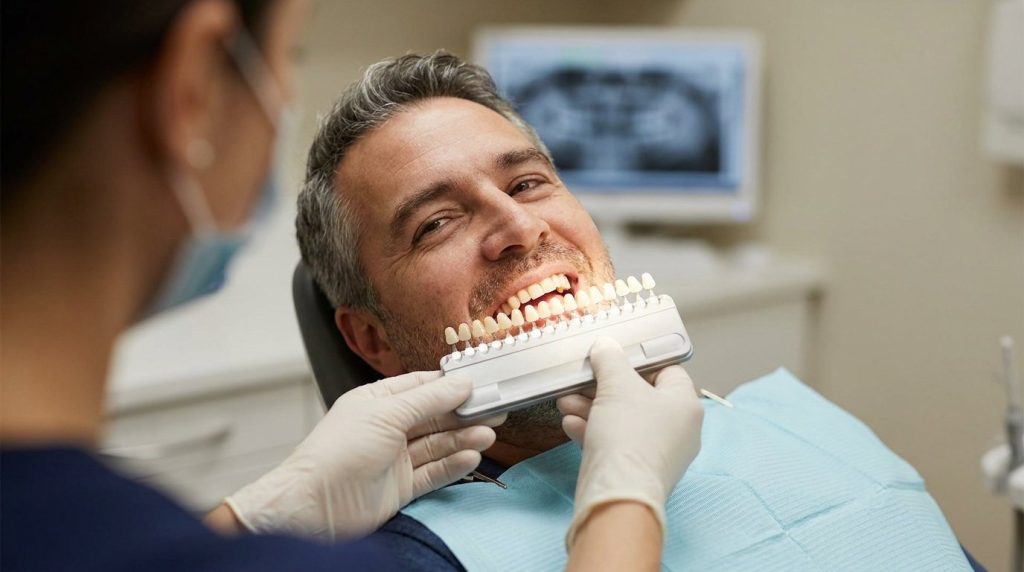
The visit itself is far less dramatic than most people expect. The tooth is numbed with local anaesthetic, any decay or failing old filling is cleaned out, and the tooth is reshaped into a slightly tapered stump. If the tooth is very broken down, the dentist may build up a core first, and a root-treated tooth sometimes needs a post inside it for support.
Next comes the record of your bite. Many clinics now use an intraoral scanner instead of putty impressions, which is faster and easier to tolerate. The scan, along with shade photographs, goes to the laboratory where the crown is designed and milled or layered.
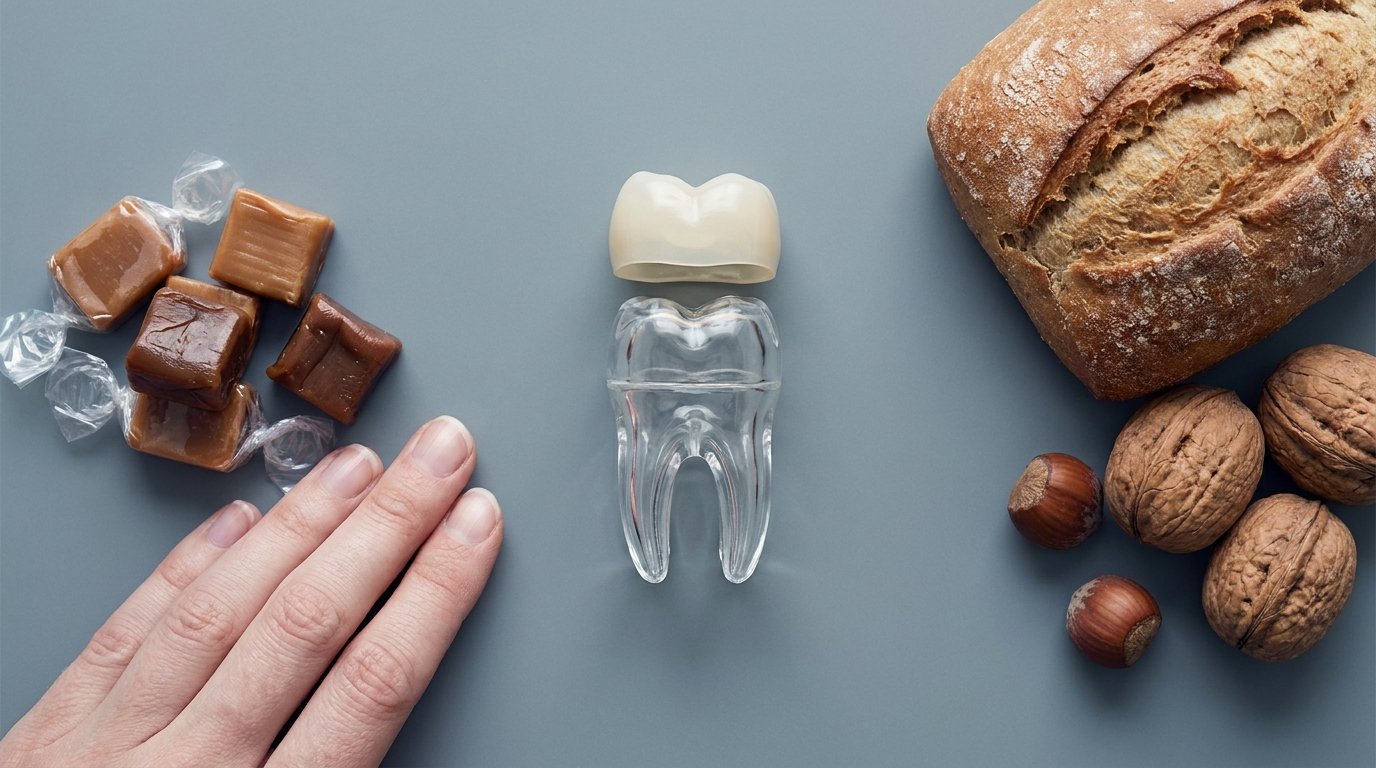
Between appointments you usually wear a temporary crown. It protects the tooth and keeps the gum in shape, but it is deliberately weakly attached, so sticky food and hard chewing on that side are off the menu. At the fitting visit the dentist checks the fit at the margin, the contact with neighbouring teeth, the bite and the shade before cementing it permanently. Small adjustments with a polishing bur at this stage are normal and a sign of care, not of a mistake.
Afterwards, mild sensitivity to cold or pressure for a few days is common, and the bite can feel slightly unfamiliar until you adapt. If it still feels high after a week, or you get a sharp jolt when biting, go back for an adjustment rather than waiting it out. Our guide to what to expect after a dental crown covers the normal timeline in more detail.
📋 Does it hurt? The preparation is done under local anaesthetic, so the appointment itself is usually painless. Any discomfort tends to come later as the anaesthetic wears off and is normally mild and short-lived.
How long do dental crowns last?
Dentistry usually talks about a well-made crown on a healthy, well-maintained tooth lasting in the region of ten to fifteen years. Plenty last considerably longer — twenty years or more is not unusual — while some need replacing within a few years. Nobody can promise you a number, because most of the variables live outside the crown itself.
What shortens crown life is fairly predictable. Grinding and clenching are the biggest culprits, especially on ceramics; a night guard is cheap insurance if you grind. Decay forming at the margin where crown meets tooth is the second big one, and it is almost always a plaque-control issue rather than a materials issue. Gum recession can expose that margin over the years. And if the underlying tooth had very little structure left to begin with, the whole restoration carries more risk from day one.
Replacement, when it comes, is usually straightforward: the old crown is removed, the tooth reassessed, and a new one made. That is worth planning for financially if you are having several crowns at once, because they will tend to reach the end of their working life around the same time.
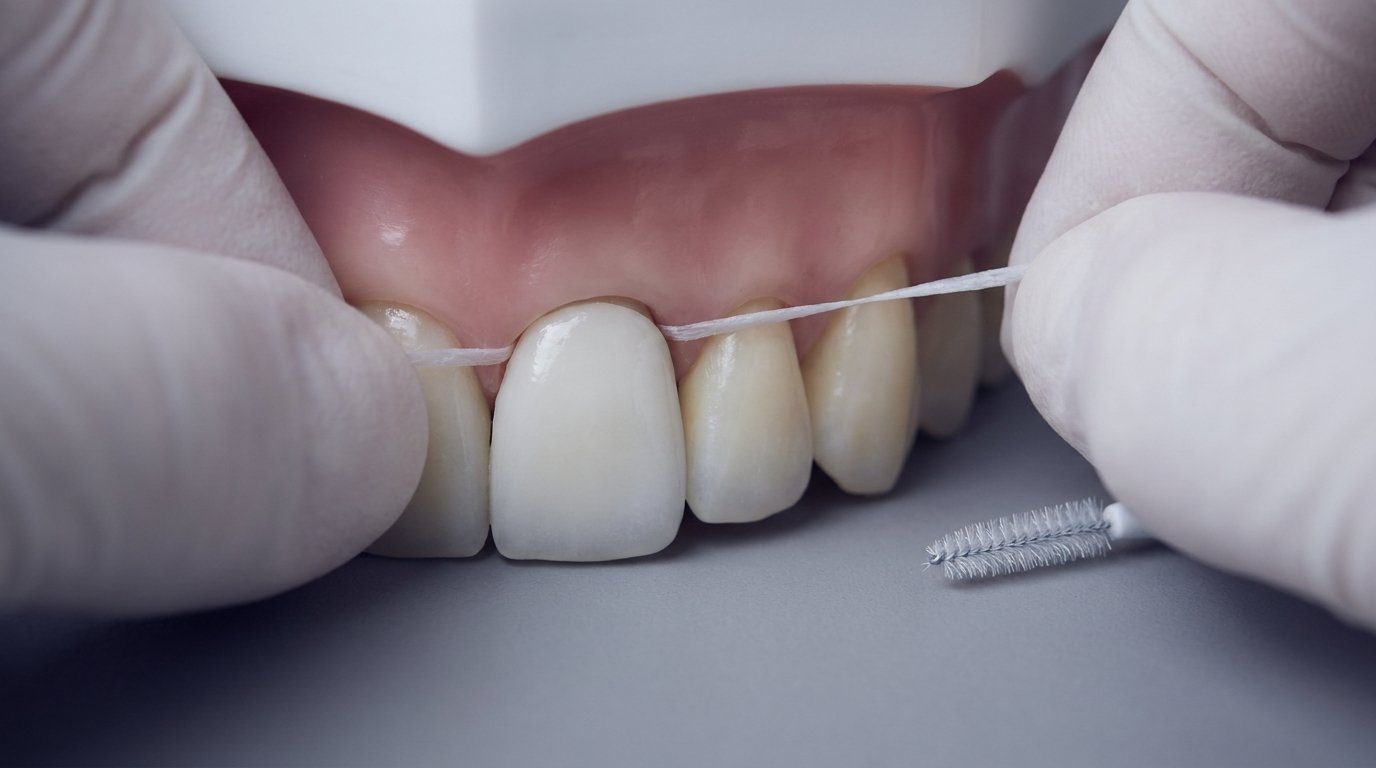
- ✓Clean the margin properly: Floss or interdental brushes at the gum line matter more for a crowned tooth than for a natural one.
- ✓Wear a night guard if you grind: Repeated clenching is the most common reason ceramic crowns chip or fracture early.
- ✓Keep regular check-ups: Decay under a crown is painless at first and usually found on an X-ray, not by the patient.
- ✓Treat hard foods with respect: Ice, nutshells and bone fragments break crowns and natural teeth alike.
What drives the cost of a dental crown
We do not publish figures, because a crown quote only means something once someone has looked at your teeth and X-rays. What we can be clear about is where the money goes — and it is rarely the crown alone.
The single biggest variable is preparatory treatment. A tooth needing root canal work, a build-up core, gum treatment or an extraction and implant is a different plan, and a different price, from a straightforward re-crown. After that come material and laboratory quality, the number of teeth involved, whether digital scanning and design are used, and the seniority of the clinician.
For patients travelling to Turkey, the quote is usually a package. Ask exactly what is inside it before comparing numbers: some include consultation, imaging, temporaries, hotel and transfers, while others list only the crowns themselves. Our overview of dental crowns in Turkey explains how these packages are normally structured, and what a personalised plan should spell out.
⚠️ Ask what happens if something needs redoing A quote should state whether remakes, adjustments after you fly home, and follow-up reviews are covered, and for how long. Written terms beat verbal reassurance.
Planning crown treatment abroad: how long to stay
Timing is one of the most frequent worries patients raise, usually because they are trying to fit treatment into limited annual leave. Crowns do have a laboratory stage, so they cannot honestly be promised in a single afternoon unless the clinic mills on site and the case is simple.
A typical straightforward crown plan is arranged around two clinical visits within one trip: preparation and scanning early in the week, then fitting a few days later, with temporaries in between. Cases involving root canal treatment, gum therapy or implants need more time, and implants in particular usually require a second trip months later once the bone has healed — something covered in our guide to dental implants in Turkey.
Build in a buffer day before flying home. It gives room for a bite adjustment or a shade change, and it is far easier to solve a niggle in the chair than by email from another country. Ask in advance who your point of contact is, how quickly messages are answered, and what happens if you notice something two weeks after landing — the practical organisation around treatment shapes the experience as much as the dentistry does.
Risks, safety and choosing the right clinic
Crowns are routine, but they are not risk-free. The most common issues are lingering sensitivity, a bite that needs adjusting, gum irritation around the margin, chipping of the ceramic, decay under the crown, and occasionally the need for root canal treatment later if the nerve becomes inflamed. A crown can also come loose, in which case it should be re-cemented rather than left out.
Risk drops sharply with good diagnosis. That means X-rays, a check of gum health before anything is prepared, an honest discussion of whether the tooth is restorable at all, and a plan written in language you understand. Clinics that skip straight to a price per tooth without seeing images are selling a product, not planning treatment.
On accreditation, look for a dentist registered with the national dental authority, a clinic licensed by the Turkish Ministry of Health, named clinicians you can look up, and a clear written treatment plan with aftercare terms. If you are combining dental work with facial surgery, the sequence also matters — our note on veneer and surgery timing applies to crowns too.
For general background reading from patient-facing health bodies, the NHS and Mayo Clinic both publish neutral overviews of dental and cosmetic procedures that are useful alongside a clinic’s own information.
This article is for informational purposes only and does not constitute medical advice. Always consult a qualified dentist or surgeon for personalised guidance.
X-rays and a gum assessment before any drilling, a written plan naming materials and lab, a named dentist with verifiable registration, clear aftercare and remake terms, and honest talk about conservative alternatives.
A fixed per-tooth price quoted without images, pressure to crown many healthy teeth quickly, no mention of temporaries or follow-up, refusal to name the treating dentist, and promises of a guaranteed lifetime result.
Frequently Asked Questions
References
- 📎Group 2 ITI Consensus Report: Prosthodontics and implant dentistry — Clinical Oral Implants Research, 2018
- 📎Evaluation of soft tissue around single-tooth implant crowns: the pink esthetic score — Clinical Oral Implants Research, 2005
- 📎NHS: Cosmetic procedures
- 📎Mayo Clinic: Tests and Procedures
Related Articles


You Might Also Like



Related articles


Our specialists
 Clineca SpecialistErkan PinegözPlastic & Reconstructive Surgery
 Clineca SpecialistHakan AktaşPlastic & Reconstructive Surgery
 Clineca SpecialistOrkun UzuneyüpoğluPlastic & Reconstructive Surgery
 Clineca SpecialistSalim İskenderPlastic & Reconstructive Surgery
 Clineca SpecialistEngin SelamioğluPlastic & Reconstructive Surgery
 Clineca SpecialistCem AydınPlastic & Reconstructive Surgery
 Clineca SpecialistAlperen ÖnalEar, Nose & Throat (ENT)