
Have a question about Breast Lift?
In this article
- Why does the length of stay vary at all?
- How long is the stay in practice?
- What happens on each day?
- What should you have ready before you fly out?
- What can make the stay longer?
- When is it safe to fly home?
- What should you book, and what should you leave open?
- What does the week cost you outside the operation?
- What if you are travelling alone?
The stay for breast surgery in Turkey is the time between landing and being cleared to fly home, and it is shorter than most people assume but far less flexible than they hope. In broad terms it runs to about a week, shaped by the operation itself, the first dressing change, and a final review before travel. What follows is what that week actually contains day by day, what reliably makes it longer, and the booking decisions that quietly turn a planned trip into an extended one.
Why does the length of stay vary at all?
Because the stay is not built around how you feel; it is built around the checks that have to happen before you can safely be in the air. Two people can have the same operation, feel equally well on day four, and still need different departure dates because one has a drain still in place and the other does not.
Three things set the length. The first is the operation itself: a breast lift, a lift with implants, and a reduction all carry slightly different wound loads. The second is whether anything else is being done at the same time, which is the single biggest variable. The third is your own healing, which nobody can predict in advance and which is the reason surgeons refuse to promise a fixed date before they have seen your wounds.
The practical consequence is that the stay is a range with a firm floor rather than a number. The floor exists because the follow-up review cannot happen earlier; the range exists because healing does not run to a schedule.
It is worth knowing that the floor is set by the clinic’s protocol, not by your stamina. Asking to leave earlier because you feel well is a request the surgeon will usually refuse, and the refusal is the point of the protocol rather than a failure of it.
How long is the stay in practice?
About a week, and the pattern is tighter than most people expect. In practice the trips we have on record run to roughly six nights after surgery before flying home, and the great majority sit exactly there rather than spreading across a wide range. Those six nights are not padding: they cover the operation, the days when dressings need looking at, and the final review that decides whether you travel.
Adding a second procedure changes the odds rather than the plan. Close to half of the patients who combine two operations end up needing extra days, against a much smaller share when a single procedure is planned. That is the number worth building your booking around, because it is the difference between a changeable ticket being a precaution and being a necessity.
It is also worth separating the stay from the recovery. Being cleared to fly is not the same as being recovered; it means the wounds are behaving and the risk of travelling is acceptable. The rest of the healing happens at home over weeks.
One more thing that catches people out: the count starts from the operation, not from landing. Arrival day and pre-operative testing sit in front of it, so the total time away from home is usually a day or two longer than the number people quote each other.
📋 The floor is the follow-up, not the flight. The earliest safe departure is set by when the surgeon can review the wounds, which is why the pattern clusters rather than spreads.
What happens on each day?
The shape of the week is consistent enough to plan around. Arrival and pre-operative tests come first, surgery follows, and most breast procedures include a night in hospital. The days after that are quieter than people imagine: dressing changes, gentle movement within the limits you are given, and one more review before you travel.
The part nobody plans for is the middle. There are usually two or three days where nothing medical happens at all and you are simply healing in a hotel room. People who have arranged something to do with that time — company, a comfortable room, food that does not require reaching — have a noticeably easier trip than people who discover it on day three.
None of this is fixed to the hour. Dressing changes happen when the wounds need them, and a review can move by half a day without anything being wrong. Treat the table as a shape rather than a schedule, and keep the last two days free of anything you cannot move.
What should you have ready before you fly out?
Most of what goes wrong on these trips is logistical rather than medical, and almost all of it is decided before you leave home. The list below is what people wish they had sorted out, gathered from the questions that come in during the first days after surgery.
📋 Sort the return ticket first. It is the one item here that costs money to fix later and nothing to get right now.
What can make the stay longer?
Three things, in order of how often they come up. None of them is a complication in itself; they are ordinary variations that need another day or two.
Combining procedures is the biggest one, and it is predictable enough to plan for. Fluid that the surgeon wants to watch is the second, and it usually resolves without anything being done. The third is a wound edge that needs one more dressing change before the surgeon is willing to put you on a plane.
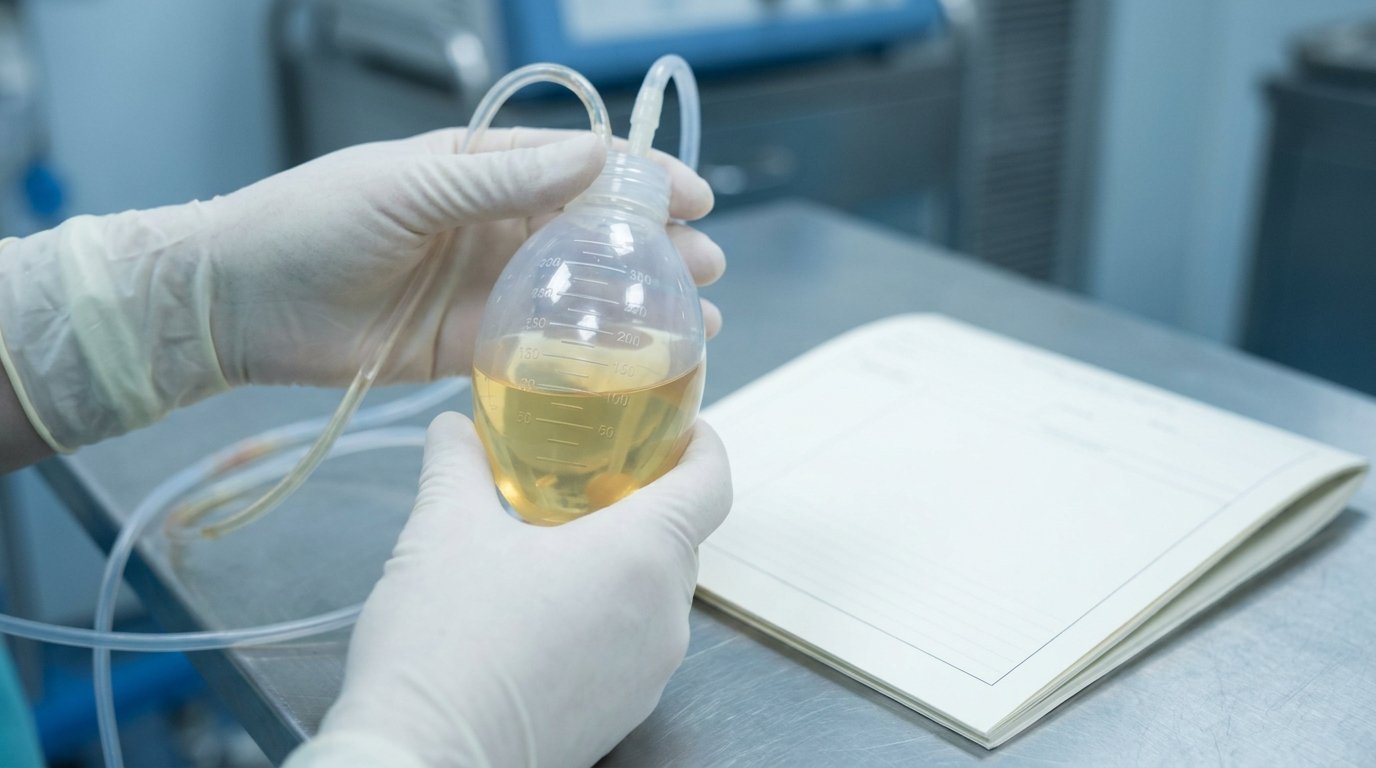
What almost never extends it is pain. Pain is managed, and it is rarely the reason a surgeon holds someone back. The reasons are mechanical: fluid, wound edges, and the practical question of whether a long flight is sensible yet.
- ✓Two procedures in the same plan, which roughly doubles the chance of needing extra days
- ✓A drain that is still producing more than the surgeon wants to see before travel
- ✓Swelling or bruising that is settling more slowly than usual
- ✓A wound edge that needs one more review
When is it safe to fly home?
When the operating surgeon says so, and not on a date chosen before surgery. Flying places you in a seat for hours with limited movement, which is exactly the situation that raises clot risk after any operation. That is why the clearance is a medical decision rather than a conversation about your calendar.
What you do on the flight matters more than the seat you booked. Move regularly in the cabin, keep drinking water, wear whatever compression you have been given, and take the aisle if you can so that getting up is not a negotiation with two strangers.
If your clearance is delayed, resist the urge to fly anyway on the ticket you booked. The cost of changing a flight is trivial next to the cost of a complication that develops at altitude with no doctor who knows your case within reach.
⚠️ Do not book a non-changeable return. If the clearance is delayed, a fixed ticket becomes pressure to travel before you should. Treat the return date as the flexible part of the plan.
What should you book, and what should you leave open?
Book the outbound flight and the accommodation for the full expected stay, and check what your package already includes, including one buffer night. Leave the return flexible, or accept in advance that you may pay to change it. The smoothest trips belong to people who booked a changeable ticket and never used it.
Packing matters more than usual because your arms are restricted. Front-opening tops, a support garment that does not need to go over your head, slip-on shoes, and anything you would otherwise have to reach for on a high shelf.
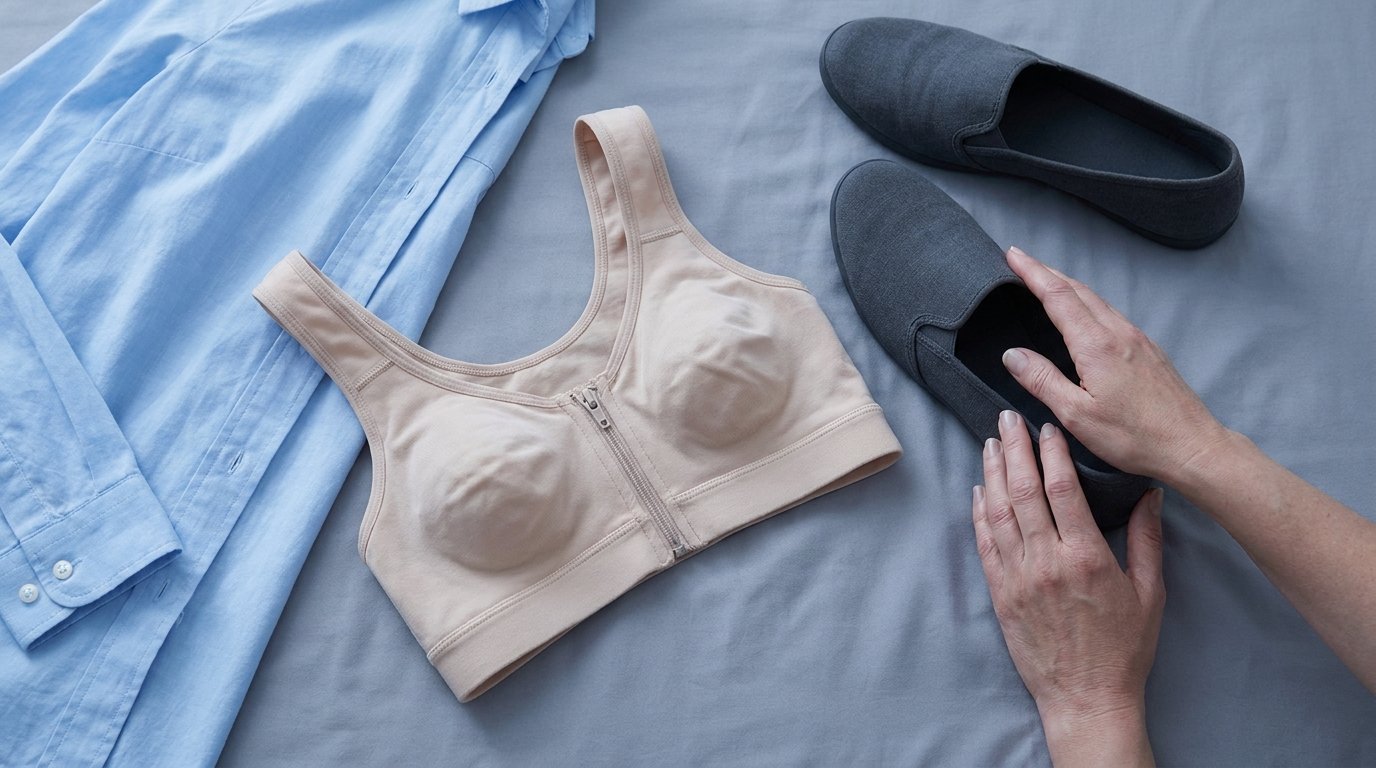
Two small things make a disproportionate difference: a room with a bed you can get out of without pulling yourself up, and somewhere to eat that does not require a taxi. Both sound trivial before surgery and stop sounding trivial on day two.
- ✓Accommodation for the whole stay plus one spare night
- ✓A changeable or refundable return ticket
- ✓Front-opening clothing and easy shoes
- ✓A companion for at least the first two days, if possible
What does the week cost you outside the operation?
Not money — time, and the kind of time that is hard to reclaim. The stay is roughly a working week away from home, and the days either side of it are not usable either. People who book it as a holiday tend to be disappointed; people who book it as a medical week and treat any sightseeing as a bonus tend to be fine.
There is also a quieter cost that only shows up afterwards. The first week back home is when the tiredness peaks for most people, because travelling is itself a strain on a body that is still healing. If you can arrange a light week after you land rather than returning straight to a full schedule, it makes more difference than anything you do in Istanbul.
The people who plan two weeks — one there, one gentle at home — almost never regret it. The ones who plan six days and go back to work on day seven usually do.
Employers generally handle this better when they are told a range rather than a date. If you have said you will be back on a specific Monday, a two-day delay becomes a conversation you do not want to have while you are still healing.
What if you are travelling alone?
It is entirely possible, and plenty of people do it, but the first forty-eight hours are easier with someone there. The difficulty is not pain and it is not danger; it is the ordinary mechanics of a day when reaching, lifting and pulling are all restricted. Luggage, doors, a bag on a shelf, a bottle with a tight cap.
If you are coming alone, the fix is planning rather than courage: a room close to the clinic, food that arrives, and a bag you can move without lifting it above waist height.
If nobody can come, tell the clinic in advance. Knowing you are alone changes small things about how the days are arranged, and it is much easier to plan for before you arrive than to solve once you are in a hotel room with a bag you cannot lift.
Frequently Asked Questions
References
Related Articles



You Might Also Like

Related articles


Our specialists
 Clineca SpecialistErkan PinegözPlastic & Reconstructive Surgery
 Clineca SpecialistHakan AktaşPlastic & Reconstructive Surgery
 Clineca SpecialistOrkun UzuneyüpoğluPlastic & Reconstructive Surgery
 Clineca SpecialistSalim İskenderPlastic & Reconstructive Surgery
 Clineca SpecialistEngin SelamioğluPlastic & Reconstructive Surgery
 Clineca SpecialistCem AydınPlastic & Reconstructive Surgery
 Clineca SpecialistAlperen ÖnalEar, Nose & Throat (ENT)