

Have a question about Labiaplasty?
In this article
- What is the usual swelling timeline after labiaplasty?
- Why can swelling last longer than expected?
- What is normal during healing, and what is not?
- How can you help swelling go down more comfortably?
- When can you travel, work, exercise, and have sex again?
- What affects price and how should you compare quotes safely?
- How do you choose a surgeon or clinic for safe aftercare?
Recovery after labiaplasty often feels harder to judge than the procedure itself. The area is delicate, swelling can look dramatic early on, and many patients worry that normal healing means something has gone wrong. If you are wondering how long does swelling last after labiaplasty, it helps to look at the recovery in stages rather than expecting a straight line.
What is the usual swelling timeline after labiaplasty?
For most patients, swelling is at its worst in the first week, settles noticeably over the next 2 to 4 weeks, and small residual swelling can take several months to fully fade. Individual healing varies, and the operating surgeon’s advice should always take priority over any general guide.
In the first few days, the tissues usually look more swollen than many people expect. That is partly because the vulval area has a rich blood supply and loose soft tissue, which means fluid collects easily after surgery. It can look uneven too, especially if one side swells more than the other early on.
By the end of the second week, many patients feel more comfortable walking, sitting, and wearing loose clothes. That does not mean healing is complete. The area may still look puffy, firmer than usual, or slightly distorted, especially later in the day or after being on your feet for a long time.
A more settled shape often appears between weeks 4 and 6, but subtle swelling can linger well beyond that. Final softening and refinement may continue for a few months. This broader pattern is consistent with patient guidance from the NHS on cosmetic procedure recovery and with published reports in journals such as Aesthetic Plastic Surgery and the Aesthetic Surgery Journal, where prolonged but improving swelling is recognised as part of normal healing after genital aesthetic surgery.
📋 A normal timeline is not a perfect timeline It is common for swelling to fluctuate during the day and from one week to the next. More activity often means more puffiness later.
Why can swelling last longer than expected?
The biggest reason is simply where the surgery is done. The labia are exposed to constant movement, moisture, pressure from sitting, and friction from underwear, pads, or clothing. Even when healing is going well, these everyday forces can keep tissues irritated for longer than patients expect.
Surgical technique also matters. A trim technique and a wedge technique both remove tissue, but they shape the labia differently and may create different patterns of tension and swelling. If the procedure is combined with work on the clitoral hood or nearby tissue, recovery may feel more extensive.
Your own healing style matters too. Some people bruise easily or swell more after any surgery. Smoking, poor circulation, certain medical conditions, and returning to exercise or sex too soon can all make swelling last longer. According to the NHS, smoking can slow wound healing in general, and that principle applies here as well.
Published reviews in Aesthetic Plastic Surgery and Facial Plastic Surgery & Aesthetic Medicine discussing cosmetic genital procedures also note that patient expectations are often challenged by the length of healing, especially in the first several weeks. The problem is not always that something is wrong. Often, the area just takes time to calm down.
Persistent puffiness can be part of normal healing, especially if it is gradually improving and there is no increasing pain, heat, discharge, or bleeding.
Tight leggings, cycling, prolonged walking, and sexual activity too soon can all trigger more swelling.
What is normal during healing, and what is not?
Normal healing can look untidy at first. Mild bleeding or spotting, bruising, stinging when you pass urine, asymmetry from uneven swelling, and a lumpy or over-corrected appearance in the early phase can all happen. Stitches may feel irritating before they dissolve or are removed, depending on the method used.
What matters more than the exact appearance is the overall direction. If the area is slowly becoming less swollen and less tender, even with some ups and downs, that usually points toward ordinary recovery.
You should contact your surgeon or seek medical review sooner if symptoms are getting worse rather than better. Warning signs include increasing pain after initial improvement, spreading redness, foul-smelling discharge, fever, heavy bleeding, wound separation, or one very tense swollen area that seems to be filling up. Those symptoms can suggest infection, a collection of blood called a haematoma, or wound healing problems.
The NHS advises patients considering cosmetic procedures to make sure they know how complications will be handled before surgery. That is particularly important with intimate surgery, because practical aftercare and easy access to advice matter just as much as the operation itself.
⚠️ Get checked urgently if symptoms escalate Rapidly increasing swelling, severe pain, fever, heavy bleeding, or a foul smell are not symptoms to watch at home for days.
- ✓Swelling that is gradually easing is usually reassuring.
- ✓Mild asymmetry early on is common because each side can heal at a different speed.
- ✓A fuller or firmer look does not reflect the final result in the first weeks.
- ✓If your surgeon has given you a different timeline, follow that plan rather than a generic one.
How can you help swelling go down more comfortably?
The best approach is usually gentle and boring rather than clever. Rest with your pelvis slightly elevated when possible, keep the area clean and dry as instructed, and avoid rubbing or checking it too often. Many patients make themselves more anxious by looking several times a day when the appearance can change hour by hour.

Cold packs can help in the first day or two if your surgeon advises them, but they should never be placed directly on the skin. After that early phase, comfort often comes more from reducing pressure and friction than from trying to “treat” the swelling itself.
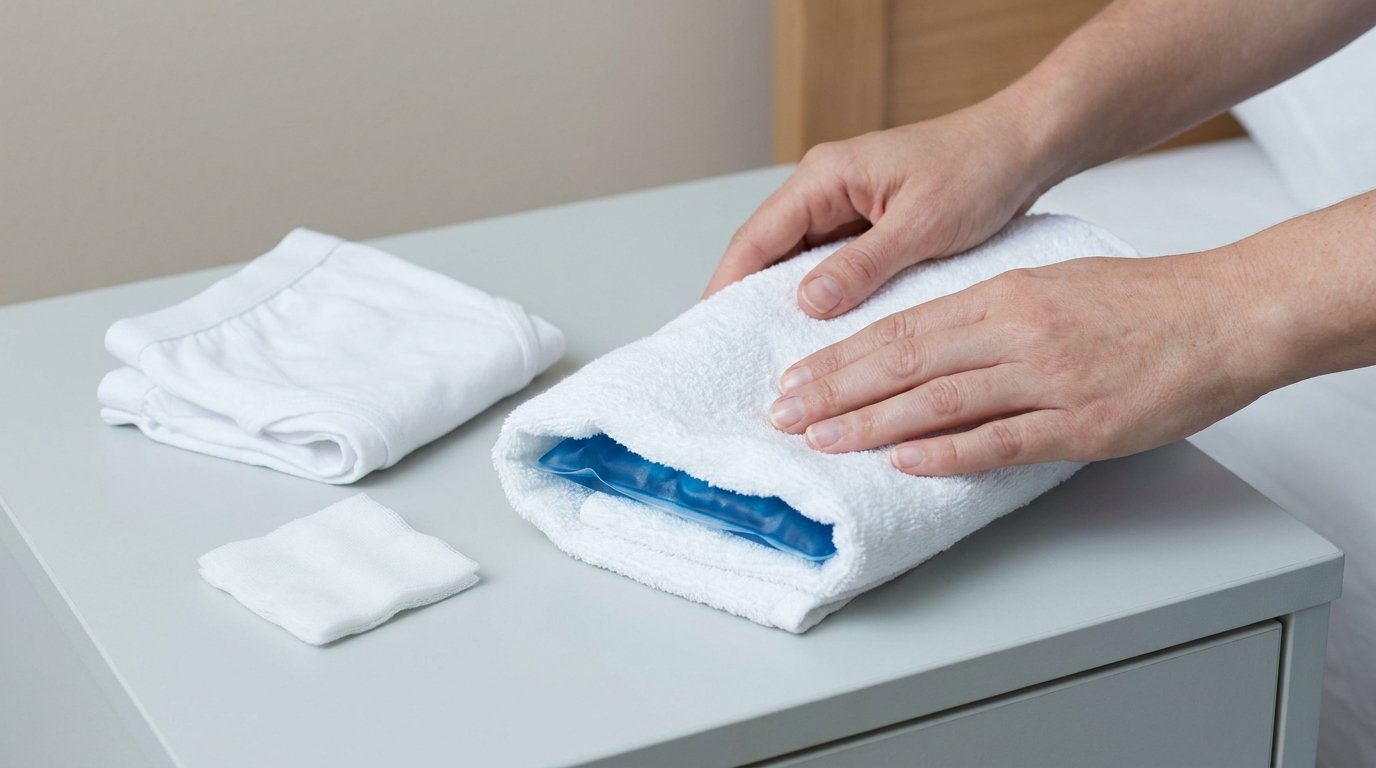
Loose cotton underwear, soft pads if needed, careful showering, and short easy walks are usually more helpful than long periods standing or sitting upright. It is also sensible to avoid exercise, cycling, swimming, and sex until your surgeon says the tissues are ready.
If you are travelling for surgery, this is one reason patients should avoid planning a rushed return. Even when pain is manageable, swelling and friction from flights, transfers, and lots of walking can make the first week harder. Anyone considering treatment abroad should make sure there is a clear aftercare plan and that the surgeon is appropriately trained and listed on relevant professional registers, such as EBOPRAS certification in Europe where applicable. General information on the clinic and team can be checked through pages such as the doctor profiles and the broader female genital rejuvenation information page, but individual advice still has to come from the operating surgeon.
- →Choose loose clothing for the first days rather than anything compressive.
- →Plan more downtime than you think you will need, especially if travelling.
- →Use only the creams, washes, or dressings your surgeon recommends.
- →Do not judge the final shape during the early swollen phase.
When can you travel, work, exercise, and have sex again?
This is where swelling matters in real life. Even if the wounds are healing normally, the area may still feel too irritated for long travel days, office chairs, gym clothing, or sexual activity.
Many patients can manage desk-based work relatively soon if they can sit comfortably, take short breaks, and wear loose clothes. Jobs that involve long standing, heavy lifting, cycling, or a lot of walking often need more recovery time. Exercise usually returns in stages, with gentle daily movement first and more intense activity later.
Sex needs more patience. The issue is not only pain. Friction can disrupt healing and prolong swelling. That is why surgeons often advise waiting until the tissues have closed and settled properly before penetrative sex or vigorous activity.
For medical tourists, the practical question is not only “Can I fly?” but “Can I get through the airport, transfers, and sitting time without making swelling worse?” A sensible plan usually includes enough local recovery time for an early review, clear written aftercare instructions, and a way to contact the surgical team once you are home. If you are arranging treatment abroad, a remote or in-person consultation should cover these details before you book anything.
What affects price and how should you compare quotes safely?
Labiaplasty cost is not just the operation fee. Quotes may differ because of the surgeon’s experience, whether the procedure is done in a hospital or day-surgery setting, the technique used, anaesthesia, follow-up care, and whether related areas are treated at the same time. For patients travelling to Turkey, airport transfers, accommodation, garments or dressings, medication, and revision policy can also affect the total package.
The safest way to compare quotes is to look at what is actually included, not simply which one sounds lower. You want to know who performs the surgery, what qualifications they hold, where the procedure takes place, how many follow-up checks are included, and what happens if you develop a wound problem or possible infection after you go home.
BAAPS and the NHS both emphasise informed consent and realistic understanding of risks before cosmetic surgery. In practice, that means a personalised quote should come after consultation, not before a proper assessment. If a quote feels vague about aftercare, that matters just as much as the procedure details.
How do you choose a surgeon or clinic for safe aftercare?
For this procedure, good aftercare is not a bonus feature. It is part of safety. You want a surgeon who performs genital aesthetic surgery regularly, explains the technique in plain language, and discusses complications as calmly as benefits.
Ask how swelling is usually managed, what the expected review schedule is, and what kind of photographs or messages they want if you are recovering abroad. A reliable team should make it clear who answers urgent questions out of hours and whether you would need local medical review if certain symptoms appear.
Credentials matter, but communication matters too. EBOPRAS certification or equivalent specialist training can be one useful sign, and checking a team’s background through an about page can help with basic verification, but the consultation should still do the heavy lifting. If answers are vague, rushed, or dismissive about healing concerns, that is useful information.
A careful surgeon will also tell you that symmetry is never perfect, swelling lasts longer than many online galleries suggest, and revisions are sometimes discussed only after full healing. That kind of honesty is usually a better sign than polished promises.
Clear explanation of technique, realistic healing advice, straightforward risk discussion, and a practical aftercare plan.
Pressure to book quickly, no named surgeon, vague complication policy, or language that makes recovery sound effortless.
Frequently Asked Questions
References
- 📎NHS: Cosmetic procedures
- 📎BAAPS
- 📎EBOPRAS
- 📎PubMed search: labiaplasty complications recovery aesthetic surgery journal
Related Articles


You Might Also Like


Related articles


Our specialists
 Clineca SpecialistErkan PinegözPlastic & Reconstructive Surgery
 Clineca SpecialistHakan AktaşPlastic & Reconstructive Surgery
 Clineca SpecialistOrkun UzuneyüpoğluPlastic & Reconstructive Surgery
 Clineca SpecialistSalim İskenderPlastic & Reconstructive Surgery
 Clineca SpecialistEngin SelamioğluPlastic & Reconstructive Surgery
 Clineca SpecialistCem AydınPlastic & Reconstructive Surgery
 Clineca SpecialistAlperen ÖnalEar, Nose & Throat (ENT)