Have a question about Cheek Augmentation?
In this article
- How do cheek implants and fat transfer actually differ?
- Which option looks more natural and lasts longer?
- Who is a better candidate for implants, and who is better for fat transfer?
- What are the risks and uncommon complications of each option?
- How do recovery and travel planning compare?
- What affects the cost, and what should be included in a quote?
- How should you choose a surgeon or clinic for cheek augmentation abroad?
- So which one is better for cheek augmentation?
The short answer to what is the difference between cheek implants and fat transfer for cheek augmentation is this: implants give a more fixed, structured change, while fat transfer uses your own body fat for a softer, less predictable volume increase. Both can work well, but the better option depends on your anatomy, goals, recovery tolerance, and whether you prefer a permanent implant or a graft that may partly reabsorb over time.
How do cheek implants and fat transfer actually differ?
The biggest difference is not just what is placed in the face, but the kind of result each method creates. Cheek implants are pre-shaped solid implants, most often made from medical-grade silicone, though other materials such as porous polyethylene may also be used in some practices. They sit on top of the cheekbone and are chosen to increase projection in a more architectural way. If someone says they want higher, sharper cheekbones, implants are often the more direct solution.
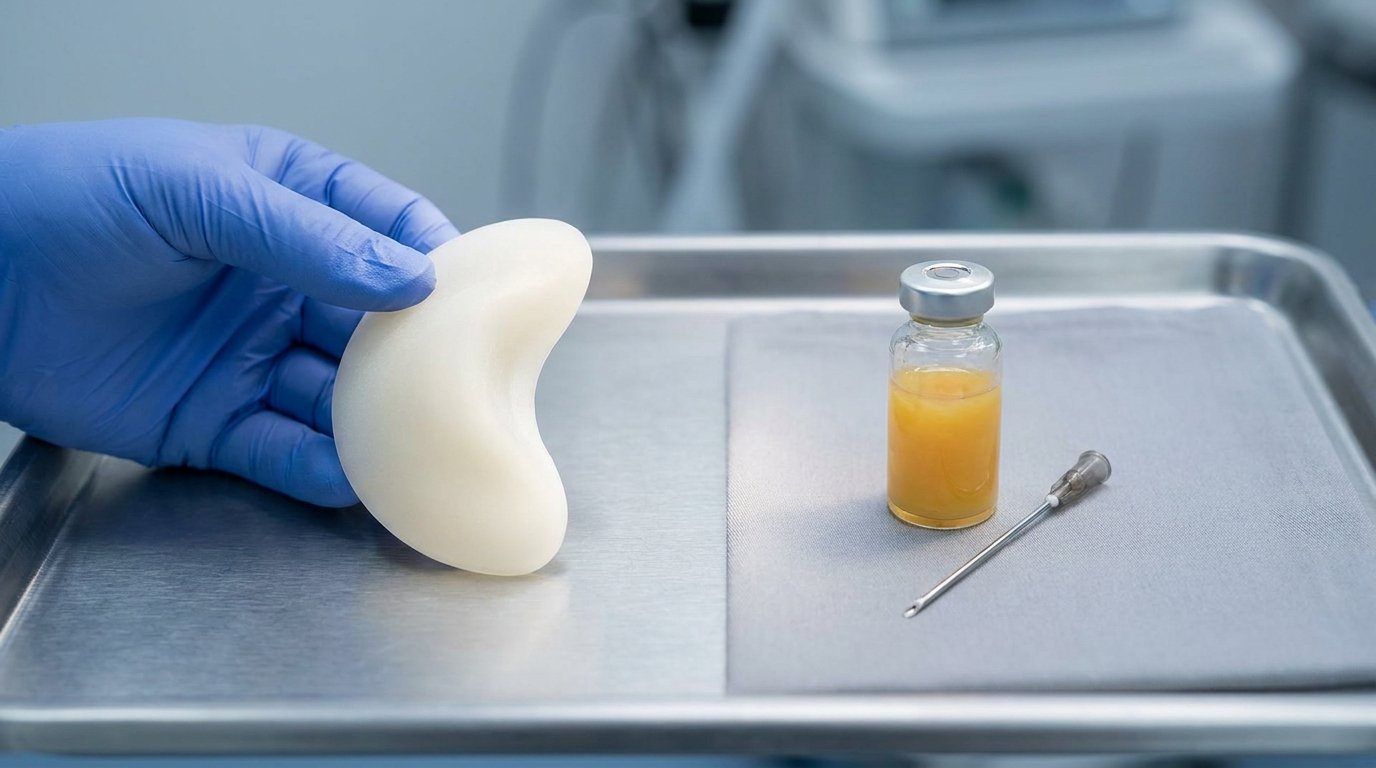
Fat transfer, also called fat grafting, works differently. A surgeon removes fat from an area such as the abdomen or thighs, purifies it, and injects small amounts into the cheeks. This usually creates a softer and more natural-feeling fullness. It can be especially useful when the face looks flat, hollow, or slightly deflated rather than simply lacking bone definition.
There is also a difference in precision and predictability. An implant has a fixed shape and size, so the surgeon can plan a more stable structural change. Fat transfer is more flexible in contouring, but some of the transferred fat does not survive. That means the early result is not always the final result, and touch-ups are sometimes needed.
If you are comparing these treatments because you are considering cheek augmentation, it helps to think in simple terms: implants build shape from underneath, while fat transfer fills from within the soft tissue.
📋 A simple way to picture it Cheek implants act more like a framework over the bone. Fat transfer acts more like padding or volume placed in the soft tissue.
Cheek implants and fat transfer both add cheek volume, but they do it in different ways. Implants place a shaped solid device over the cheekbone for defined projection. Fat transfer removes fat from another body area, processes it, and injects it into the cheeks for a softer change that can vary more over time.
Which option looks more natural and lasts longer?
For many patients, “natural” means different things. If you mean a cheek that feels like your own tissue and blends gently with the rest of the face, fat transfer often has an advantage. Because it uses your own fat, the result can move and feel very natural once healed.
If by “natural” you mean balanced facial proportions, implants can also look natural when they are selected conservatively and placed well. The problem is not the idea of an implant itself. The problem is usually an implant that is too large, poorly positioned, or chosen for a face that really needed soft volume rather than bony projection.
Longevity is where the two methods clearly part ways. Cheek implants are considered long-lasting because the implant does not simply dissolve. Still, long-lasting is not the same as maintenance-free. Rare issues such as shifting, infection, palpability, bone changes under the implant, or dissatisfaction with the look can lead to revision or removal.
Fat transfer has a mixed long-term story. The fat that successfully establishes a blood supply may remain for years, but a portion of the injected fat commonly resorbs during healing. This is why surgeons sometimes slightly overfill at first, and why a second session may be discussed. Review studies in the facial fat grafting literature on PubMed generally support the idea that fat grafting can provide durable improvement, but retention varies by technique, area treated, and patient factors such as smoking and weight change.
In practical terms, implants are usually the more stable choice for strong cheekbone definition. Fat transfer is often the better fit for subtle fullness, early facial ageing, or a patient who wants to avoid a permanent device.
Someone who wants clear cheek projection and has naturally flat or under-projected cheekbones.
Someone who wants softer volume, mild facial rejuvenation, or a less structural change.
Fat transfer often feels and looks more natural because it is your own tissue, but some of it can shrink as it heals. Cheek implants usually give longer-lasting shape because the implant stays in place unless removed, yet the look can seem too sharp if the size or position is not well chosen.
Who is a better candidate for implants, and who is better for fat transfer?
A good candidate for cheek implants usually has one or more of these features: flat midface structure, weak cheekbone definition, facial asymmetry that may benefit from fixed structural support, or a preference for a more predictable shape. The overlying soft tissue matters too. Very thin patients can still be candidates, but thin tissue may make implant edges more visible or easier to feel.
Fat transfer is often better for people whose main issue is volume loss rather than bone structure. That includes patients with mild hollowing under the eyes and across the cheeks, a naturally narrow face, or changes related to ageing. It can also help soften transitions in the midface in a way an implant alone may not.
There are also important limits. Fat transfer needs a usable donor area, so it can be harder in very lean patients. It is also less ideal if a patient wants a crisp, high-cheekbone look, because fat does not create the same rigid projection as an implant.
Contraindications deserve more attention than they usually get in cosmetic articles. Active skin or dental infection near the surgical area matters because implants, in particular, should not be placed through or near infection. Uncontrolled diabetes, poor wound healing, heavy smoking, and immune suppression can raise complication risk for both procedures. Patients with significant body dysmorphic concerns, unrealistic expectations, or a history of repeated dissatisfaction after cosmetic surgery also need careful assessment rather than a quick booking.
There are procedure-specific concerns too. Implants may be less attractive in patients with very thin facial tissue, a history of facial implant infection, or poor tolerance for the idea of a foreign material. Fat transfer may be less suitable in patients with major weight swings, since facial fat volume can change if body weight changes noticeably.
⚠️ Dental health matters If the implant is placed through an incision inside the mouth, untreated dental or gum infection can raise the risk of deeper infection. A surgeon may ask for dental issues to be treated first.
Cheek implants usually suit patients who want stronger cheekbone projection and have enough skin and soft tissue to cover the implant well. Fat transfer often suits people with facial hollowness or age-related volume loss. Smoking, unstable weight, active infection, and some medical conditions can make either option less suitable.
What are the risks and uncommon complications of each option?
No cheek augmentation method is risk-free, and the risk profile is not the same.
With cheek implants, the concerns patients hear about most often are infection, shifting, asymmetry, prolonged swelling, and a result that feels too strong or too artificial for the face. Less commonly, an implant can become palpable, visible at the edge, or uncomfortable. If a problem does not settle, revision surgery or removal may be needed. There are also reports in the literature of bone resorption, which means pressure-related thinning of bone under an implant over time in some cases.
Fat transfer avoids a permanent implant, but it has its own trade-offs. The common issue is unpredictability: one side may retain slightly more fat than the other, or the cheeks may lose more volume than expected during healing. Small lumps, oil cysts, firmness, contour irregularity, or calcification can happen. Overfilling can also make the midface look puffy rather than lifted.
One uncommon but important complication of facial fat grafting is vascular injury, where fat enters or compresses a blood vessel. In facial procedures, this can be serious. The exact risk depends on the area, technique, and injector experience, but it is one reason this is not a “simple filler-like treatment” when done surgically. This point is reflected in safety discussions in the wider facial fat grafting literature indexed on PubMed.
Recognised authorities such as the NHS and ASPS emphasise that all cosmetic surgery carries risks, and that patients should understand recovery, complications, and revision possibilities before going ahead. That matters even more when comparing a reversible concept like removing an implant with a partly unpredictable concept like fat survival after grafting.
🚨 A common misunderstanding Fat transfer may sound more natural, but it is still a real surgical procedure with its own risks. It should not be treated like a beauty treatment or a casual add-on.
- ✓Ask how the surgeon plans to avoid asymmetry and how often revision is needed in their own practice.
- ✓Ask whether the cheek implant would be placed through the mouth or through another incision and how that affects infection risk.
- ✓Ask how fat is harvested, processed and injected, because technique affects survival and contour smoothness.
- ✓Ask what happens if you dislike the result, including whether reversal, removal or staged correction is realistic.
Both options carry standard surgical risks such as swelling, bruising, bleeding, infection and dissatisfaction with symmetry. Implants add risks such as shifting, visible edges, nerve irritation and possible removal. Fat transfer adds risks such as uneven survival, lumps, cysts and the rare but serious danger of injecting fat into a blood vessel.
How do recovery and travel planning compare?
Recovery is one of the most practical differences, especially for international patients. With cheek implants, swelling is often concentrated in the midface and can look dramatic in the first days. Smiling, chewing, and facial expressions may feel tight. If the incision is inside the mouth, oral hygiene becomes part of recovery, and softer foods may be easier at first.
Fat transfer usually causes swelling in the cheeks too, but the recovery is split between two areas: the face and the donor site. If fat was taken from the abdomen, flanks, or thighs, you may also feel soreness, bruising, and stiffness there. Some patients find this double-site recovery more inconvenient than they expected.
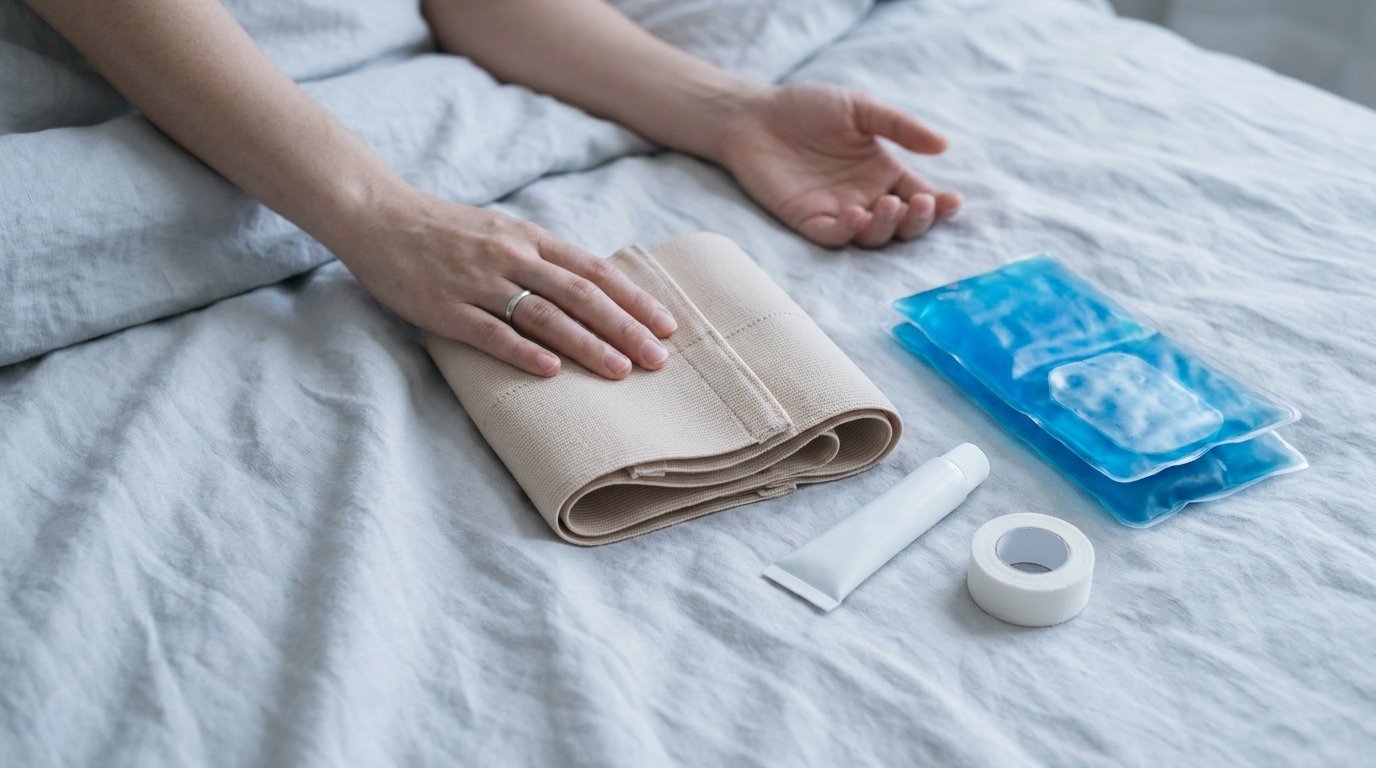
The early social downtime for either option is usually measured in days to weeks rather than hours. You may look presentable before the tissues are truly settled. Final contour takes longer, particularly with fat transfer, because some of the early fullness is temporary.
For patients travelling to Turkey, a sensible plan is to allow enough time not only for the procedure itself but for pre-operative assessment, early aftercare, and a review before flying home. If you are exploring a surgical consultation, ask specifically how long the treating team expects you to stay in the country for your chosen technique and whether an inside-the-mouth incision changes aftercare instructions.
The table below shows the usual pattern patients should expect. Exact timing varies by surgeon, technique and your own healing response.
Both treatments involve swelling and bruising, but recovery feels different. Implants may bring more tightness and pressure over the cheekbones, while fat transfer adds healing at the donor area as well. For medical travel, patients usually need enough time for early checks, swelling to settle, and any mouth incision or donor site review.
What affects the cost, and what should be included in a quote?
It is reasonable to compare cost, but the most useful question is not “Which is cheaper?” It is “What am I paying for, and does the plan fit my goal?” Fat transfer can involve more steps because fat must be harvested, prepared and injected carefully in layers. Implants may involve the cost of the implant itself and the details of the surgical placement.
A personalised quote is usually confirmed after consultation because anatomy matters. A patient needing subtle soft-tissue filling is not the same as someone needing strong bony projection or correction of asymmetry. Combining cheek augmentation with another facial procedure can also change the overall plan.
When you review a quote, make sure it is clear about what is and is not included. That matters more than a simple headline price.
📋 A good quote is specific Ask for a written breakdown of consultations, anaesthesia, aftercare, medication, accommodation or transfers if offered, and what happens if extra follow-up is needed.
Cheek implant surgery and fat transfer are priced differently because the work involved is different. Implant costs are influenced by the implant type, surgical approach and facility fees. Fat transfer pricing is shaped by harvesting, processing and injection time. A proper quote should explain what is included, not just give one headline figure.
How should you choose a surgeon or clinic for cheek augmentation abroad?
This decision should be more about facial expertise than glossy before-and-after galleries. Ask who will actually perform the procedure, what their background is in facial cosmetic surgery, and how often they perform your chosen technique. That is especially important for fat transfer, where injection technique strongly affects safety and smoothness, and for implants, where pocket creation and implant selection affect symmetry and feel.
Look for a clinic setting that explains consent properly, screens for medical issues, and does not rush you toward one method because it is easier to sell. The surgeon should explain why you are a better fit for implants, fat transfer, a combined approach, or no surgery at all. If every patient is told they need the same solution, that is not good assessment.
It is also worth reviewing the team information on a direct page such as the doctors page rather than relying on social media clips. You want to know credentials, consultation process, and what follow-up looks like if swelling lasts longer than expected or a result needs reassessment after you travel home.
For facial procedures, ask to see before-and-after examples of patients with a starting point similar to yours. A naturally full round face is very different from a thin face with low cheek projection. The right method can differ even if both patients say they want “more cheekbones.”
Clear explanation of alternatives, discussion of risks specific to your anatomy, and a written aftercare plan for both your stay and your return home.
Pressure to book quickly, vague answers about who performs the surgery, or no clear plan for revision and complication management.
Choose a surgeon and clinic by looking for appropriate specialist credentials, clear consent, realistic planning and transparent aftercare. For cheek implants and fat transfer, experience with facial anatomy matters more than marketing language. You should also know who will perform the procedure, where it will happen, and how complications would be handled.
So which one is better for cheek augmentation?
If your face lacks cheekbone definition and you want a more sculpted result, implants may be the better match. If your cheeks look hollow, tired, or slightly sunken and you want a softer improvement, fat transfer often makes more sense.
Some patients are surprised to learn that the answer is occasionally both. In selected cases, a modest implant provides structure and a small amount of fat smooths the edges and blends the contour. That approach is not necessary for everyone, but it shows why a proper facial assessment matters more than choosing a procedure name online.
The most useful next step is not chasing the trendier option. It is asking which method fits your anatomy, your tolerance for uncertainty, and your idea of a good result six months from now rather than six days from now.
Neither method is simply better for everyone. Cheek implants are usually better for defined structure and stable projection. Fat transfer is often better for softer fullness and facial volume loss. The right choice depends on whether your problem is mainly bone shape, soft-tissue volume, or a mix of both.
Frequently Asked Questions
References
- 📎PubMed search: facial fat grafting systematic review
- 📎PubMed search: malar implant complications review
- 📎NHS cosmetic procedures
- 📎ASPS cosmetic procedures
Related Articles


You Might Also Like



Related articles



Our specialists
 Clineca SpecialistErkan PinegözPlastic & Reconstructive Surgery
 Clineca SpecialistHakan AktaşPlastic & Reconstructive Surgery
 Clineca SpecialistOrkun UzuneyüpoğluPlastic & Reconstructive Surgery
 Clineca SpecialistSalim İskenderPlastic & Reconstructive Surgery
 Clineca SpecialistEngin SelamioğluPlastic & Reconstructive Surgery
 Clineca SpecialistCem AydınPlastic & Reconstructive Surgery
 Clineca SpecialistAlperen ÖnalEar, Nose & Throat (ENT)