Have a question about Breast Lifting?
In this article
- What does a breast lift with fat transfer actually achieve?
- Who is a good candidate and who should think twice?
- How does it compare with implants?
- What are the safety issues, complications, and imaging concerns?
- How long is recovery and how long should you stay in Turkey?
- What affects the cost and what should a quote include?
- How do you choose a safe clinic and surgeon?
Yes, a breast lift with fat transfer instead of implants can be a good option if you want a higher breast position and a modest increase in upper fullness without using implants. The main caveat is that it does not create the same dramatic size change or long-term shape control that implants can, and recovery includes both breast surgery and liposuction healing.
What does a breast lift with fat transfer actually achieve?
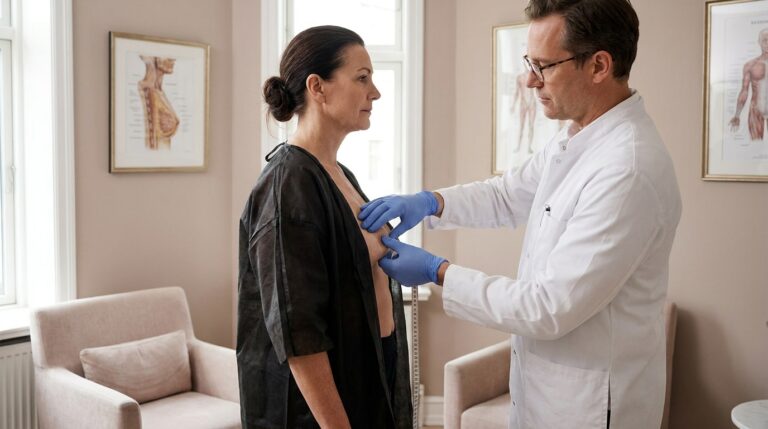
This operation combines two separate steps. A breast lift, also called mastopexy, moves the nipple to a higher position and tightens loose skin. Fat transfer adds volume by taking fat from one area of the body with liposuction, processing it, and then injecting it into selected parts of the breast.
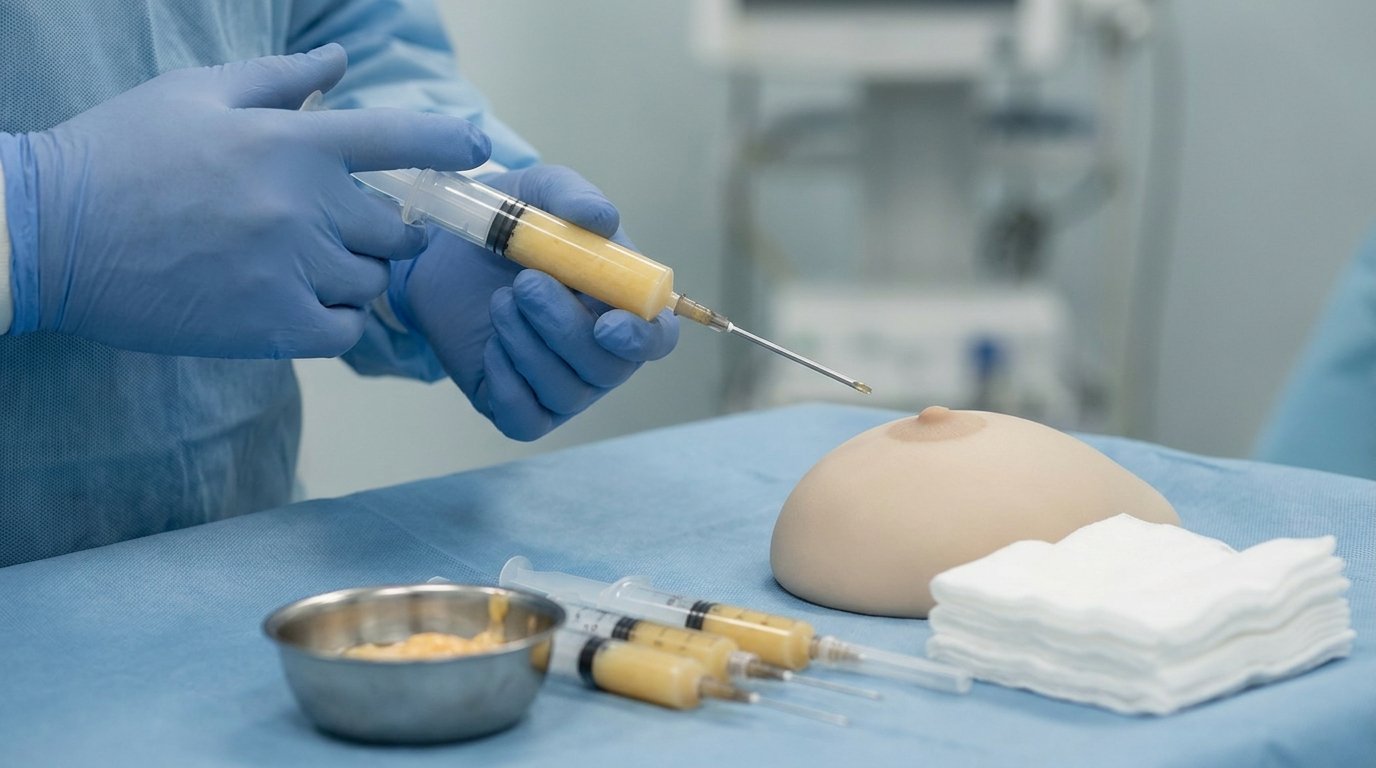
That matters because the lift and the volume change do different jobs. The lift improves droop. The fat helps fill flatter areas, often the upper pole, which is the upper part of the breast that can look empty after pregnancy, breastfeeding, weight loss, or ageing.
For many patients, this is the appeal of a breast lift with fat transfer instead of implants: no implant pocket, no implant maintenance issues, and a breast that usually feels more natural because it is your own tissue. But there is a trade-off. You usually get subtle to moderate enhancement, not the sharper projection or larger size that implants can provide.
Published evidence supports that fat grafting to the breast is a recognised technique, but graft survival is variable. Reviews indexed on PubMed consistently note that some transferred fat survives long term and some is reabsorbed by the body, which is why surgeons usually describe the result as less predictable than implants in pure volume terms.
If your main goal is to look lifted, softer, and a little fuller, this approach can make sense. If your goal is a clear cup-size jump or very full cleavage in a bra and out of a bra, it may leave you under-corrected and disappointed.
Patients with mild to moderate sagging, some spare body fat, and a wish for a natural-looking result rather than a large size increase.
Patients who want a much fuller upper breast, a larger size change, or who do not have enough donor fat may be better suited to implants or a different breast reshaping plan.
A breast lift with fat transfer can reshape and raise the breasts while adding some softness and fullness using your own fat. It is best for patients who want a natural feel and a modest volume increase, not a major size jump or very round implant-style fullness.
Who is a good candidate and who should think twice?
Suitability is more specific than many patients expect. The right candidate is not simply someone who dislikes implants. You need enough extra fat to harvest, skin that can heal well after a lift, and goals that match what fat grafting can realistically deliver.
A stable weight matters. If your weight is going up and down, the transferred fat can behave like fat elsewhere in the body and change with it. This can affect symmetry and long-term fullness. If you are actively losing a significant amount of weight, many surgeons will prefer to wait until your weight has been steady for a while.
Smoking is a major concern. Nicotine reduces blood flow, and both a breast lift and fat grafting depend on good circulation for healing. Poor blood supply raises the risk of wound problems, delayed healing, and loss of some of the transferred fat. Surgeons commonly require patients to stop nicotine products well before and after surgery.
Your breast history matters too. Prior breast surgery, breast lumps, cysts, family history of breast cancer, previous abnormal mammograms, or planned breast screening should all be discussed early. Fat grafting can cause benign changes such as oil cysts or calcifications. According to reviews indexed on PubMed and guidance discussed by professional plastic surgery bodies, these changes are usually distinguishable on imaging by experienced breast radiologists, but they still need to be documented properly.
Patients should also think carefully if they have a very low body fat level, poorly controlled diabetes, clotting problems, active infection, or unrealistic expectations about size. In those cases, the plan may need to change or surgery may need to be delayed.
If you are comparing options, a dedicated page on breast lift surgery can help you understand the lift part of the procedure, but your final suitability depends on an individual assessment rather than a standard package.
⚠️ Important screening point Tell your surgeon about any previous breast imaging, biopsies, lumps, family history of breast cancer, or abnormal mammogram findings before planning fat transfer.
- ✓Stable weight is usually better than recent gain or loss.
- ✓You need enough donor fat for harvesting.
- ✓Stopping smoking and nicotine is usually expected before surgery.
- ✓You should be comfortable with modest, not dramatic, volume change.
- ✓A history of breast imaging or breast disease needs careful review.
The best candidates have realistic expectations, stable weight, enough donor fat, and breast droop that can be corrected with a lift. Smoking, major weight fluctuation, poor skin quality, uncontrolled health conditions, or a complex breast history can make healing harder or results less reliable.
How does it compare with implants?
This is the real decision point for many patients. You are not just choosing a technique. You are choosing what compromises you prefer.
Implants are better at creating a clearer size increase and stronger upper-breast fullness. They also let the surgeon control shape more directly. The trade-off is that implants are devices, and devices can need monitoring, revision, or replacement over time. The NHS and ASPS both note that cosmetic breast implants are not considered lifetime devices.
Fat transfer avoids implant-specific issues such as rupture, implant malposition, and capsular contracture, which is hard scar tissue around an implant. It also uses your own tissue. But part of the transferred fat may not survive, and some patients need staged treatment or later top-up grafting if they want more fullness.
A lift can be combined with either option. If a patient mainly needs the nipple raised and skin tightened, then the volume choice comes down to how much fullness she wants, how much donor fat she has, and how much unpredictability she is prepared to accept.
Implants are often the more reliable choice when the main goal is a larger increase in breast volume.
Fat transfer may suit you better if avoiding implants matters more than getting a dramatic increase.
Compared with implants, fat transfer usually feels more natural and avoids implant-specific problems, but it gives less predictable volume and often less upper-pole fullness. Implants are stronger for size increase and shape control, while fat transfer is often better for subtle enhancement and patients who want to avoid a prosthetic device.
What are the safety issues, complications, and imaging concerns?
The safety discussion should be specific, not vague. You are dealing with two healing zones: the breasts and the liposuction donor areas. Typical surgical risks include bleeding, infection, fluid collection, slow wound healing, asymmetry, and scars that may settle well or may remain more visible than hoped.
The fat-transfer-specific issue patients should understand is fat necrosis. This means some transferred fat does not survive and forms firm areas, oil cysts, or calcifications. These changes are usually benign, but they can worry patients if they feel a lump later. Reviews on PubMed and position statements discussed by plastic surgery societies note that these findings can usually be assessed on mammogram or ultrasound by experienced breast imaging teams.
There is also the question of how much fat survives. Studies vary because technique, patient biology, smoking status, breast tissue characteristics, and post-operative care all matter. That is why ethical surgeons avoid promising an exact retained volume.
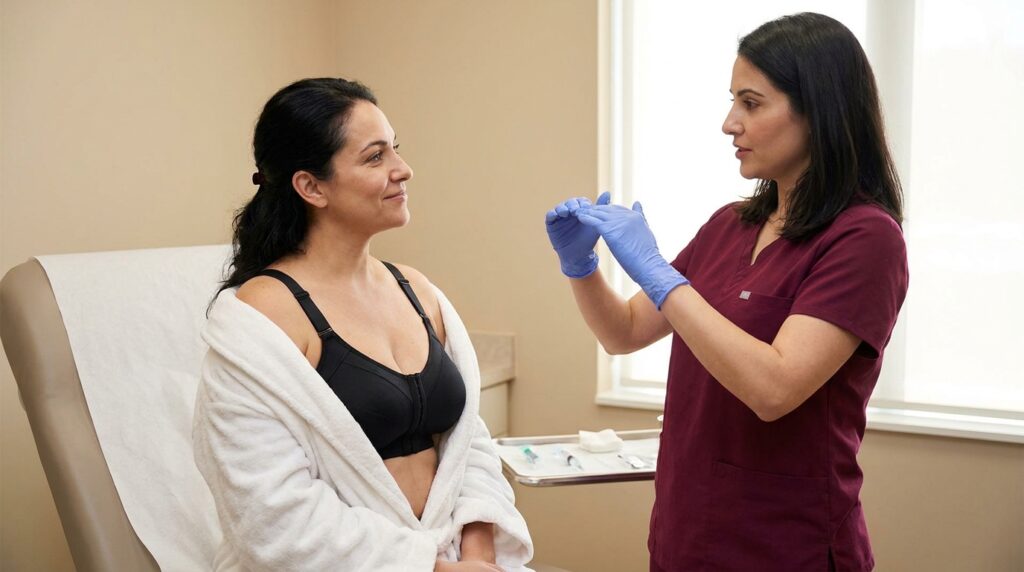
Another important point is who should do the operation and where. If you are travelling, ask whether the surgeon is a board-certified plastic surgeon, whether the operating hospital is accredited, and how complications are handled after you return home. If you want to review credentials before making enquiries, the clinic’s surgeon information page is more useful than browsing unrelated treatment pages.
According to the NHS guidance on cosmetic procedures, patients should understand both the benefits and the possible complications before agreeing to surgery. That sounds obvious, but in practice it means discussing scars, revision risk, mammogram history, and the realistic limit of fat transfer before you book a flight.
🚨 Do not ignore new breast lumps after surgery Many post-fat-transfer lumps are benign, but any new lump should be assessed properly, especially if you have a personal or family history of breast disease.
📋 Imaging after fat transfer Tell the radiology team that you have had breast fat grafting before any future mammogram or ultrasound so they can interpret changes in context.
Breast lift with fat transfer is generally considered feasible in properly selected patients, but it is still surgery with real risks. Key issues include wound healing problems, infection, fat necrosis, uneven fat survival, and breast imaging changes that should be documented and followed by qualified clinicians.
How long is recovery and how long should you stay in Turkey?
Recovery tends to be more layered than patients expect because there are two procedures happening at once. The breasts may feel tight, swollen, and tender after the lift. The liposuction areas can feel bruised, stiff, or surprisingly sore, especially when sitting up, turning, or sleeping.
Many people are up and walking early, but that is not the same as feeling normal. You may manage desk-type activity before you feel comfortable lifting, stretching, or exercising. Swelling changes week by week, and the breasts can sit higher at first before they settle into a more natural position.
Fat transfer also has a slower visual timeline. Early fullness is not the final result because some of the transferred fat will not survive. That is why surgeons usually advise patience before judging shape and volume.
For medical travellers, build in enough time for pre-operative assessment, surgery, and early follow-up before you return home. You should also ask who will answer questions once you are back, what happens if you develop a wound problem or a firm lump, and whether your local doctor will receive a summary of your operation.
A good consultation page such as online consultation information can help you organise photos and medical history before travel, but the practical questions about aftercare are just as important as the operation itself.
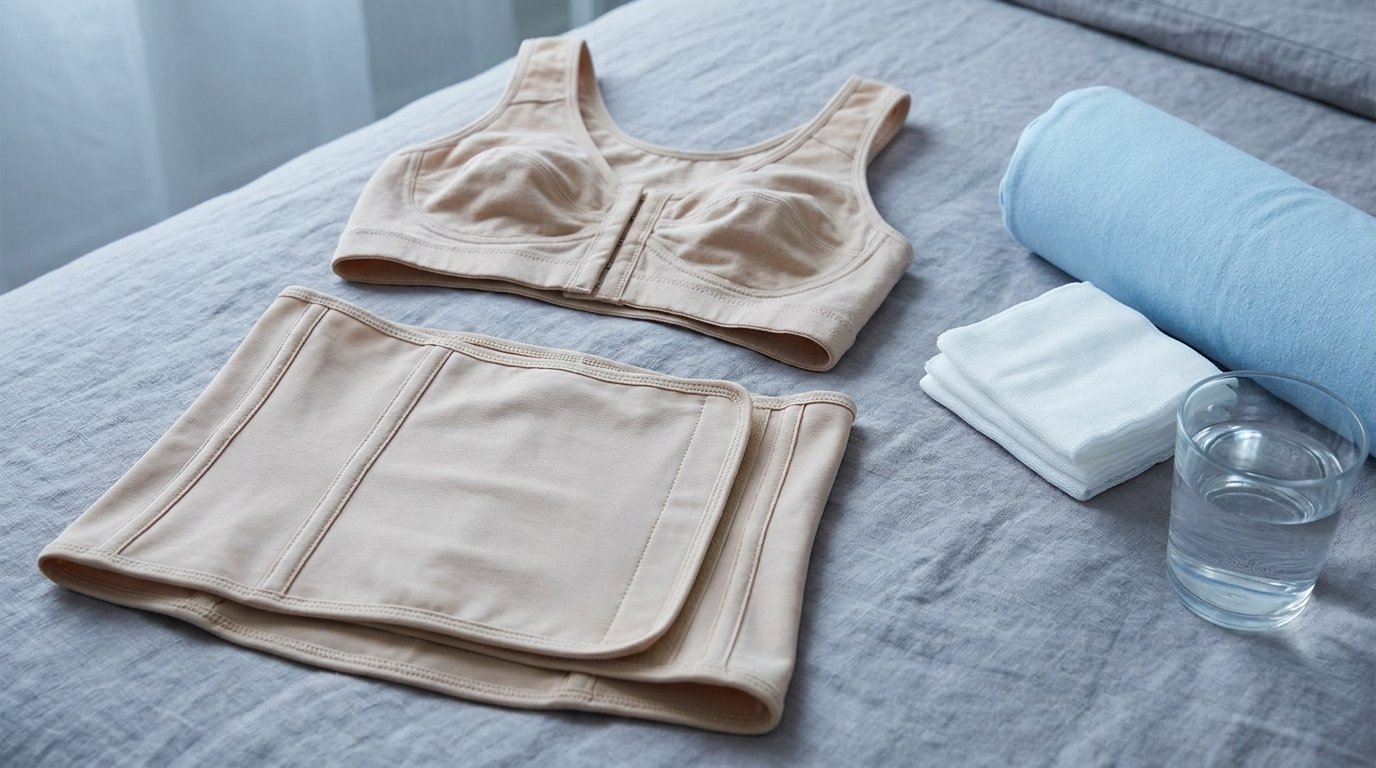
- →Ask how many nights of hospital care, if any, are included.
- →Check when your first follow-up visit is planned before flying home.
- →Ask when showering, bra use, sleeping position, and driving are allowed.
- →Clarify how urgent concerns are handled after you return to your own country.
Most patients feel the first recovery phase most strongly in the first couple of weeks, with soreness in both the breasts and liposuction areas. Travel plans should allow time for early checks and basic healing before flying home, and final settling takes much longer than the first visible improvement.
What affects the cost and what should a quote include?
Cost is not just about the operation name. A straightforward lift with limited fat grafting is different from a more complex case with significant droop, asymmetry, or larger donor-area liposuction. The surgeon’s experience, hospital standards, anaesthesia arrangements, garments, tests, medication, and follow-up all affect the final quote.
For international patients, practical extras also matter. Some packages include transfers, hotel stay, nursing support, and early follow-up. Others separate these items. That is why comparing quotes without checking the detail can be misleading.
A clear quote should tell you whether it covers pre-op tests, surgeon fees, anaesthesia, hospital charges, compression garments for donor areas, post-op bras if used, medications, transfers, accommodation, and review visits. It should also explain what happens if the plan changes after your examination or if a revision is recommended later.
If you are comparing surgical planning in Turkey, it is more useful to read a focused page on breast enhancement options only as background, then get an individual assessment based on your anatomy and goals rather than shopping by headline price alone.
The price depends on the complexity of the lift, how much liposuction and fat processing are needed, the surgeon and hospital setting, anaesthesia, aftercare, and travel-related logistics. A useful quote should explain what is included, what is optional, and when a personalised price is confirmed after consultation.
How do you choose a safe clinic and surgeon?
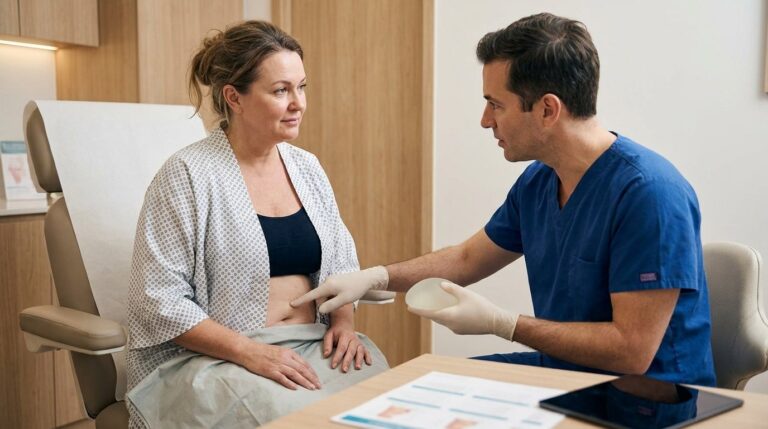
A good consultation should feel detailed, not rushed. The surgeon should ask about pregnancies, breastfeeding, weight changes, smoking, medications, previous breast surgery, breast imaging history, and your actual goal. That is how safe planning happens.
You should also see that the clinic is organised around follow-up, not only booking. Ask who you contact out of hours, what documents you receive after surgery, and whether operative notes can be shared with your doctor at home if needed.
Red flags are usually easy to spot once you know what to listen for. If someone promises a dramatic size increase without implants, dismisses the effect of smoking, or acts as if mammogram history is irrelevant, that is not a people-first consultation.
If you want to check background information, the about the clinic page and surgeon details page are reasonable starting points, but the real test is whether your consultation is thorough, honest, and specific to your body.
Clear discussion of limits, scars, imaging history, smoking, donor fat, recovery, and what happens if you need help after travelling home.
Pressure to book quickly, vague answers on accreditation, promises of exact volume retention, or no plan for follow-up once you leave Turkey.
Choose a surgeon with recognised plastic surgery credentials, a properly accredited operating facility, clear consent processes, and realistic planning. Be cautious if the discussion focuses on sales, guarantees cup-size-like promises, or avoids direct answers about scars, imaging, complications, and aftercare after you return home.
Frequently Asked Questions
References
- 📎PubMed search: autologous fat grafting breast complications imaging fat necrosis
- 📎PubMed search: breast fat grafting survival systematic review
- 📎NHS cosmetic procedures
- 📎ASPS cosmetic procedures
Related Articles
You Might Also Like



Related articles
Our specialists
 Clineca SpecialistErkan PinegözPlastic & Reconstructive Surgery
 Clineca SpecialistHakan AktaşPlastic & Reconstructive Surgery
 Clineca SpecialistOrkun UzuneyüpoğluPlastic & Reconstructive Surgery
 Clineca SpecialistSalim İskenderPlastic & Reconstructive Surgery
 Clineca SpecialistEngin SelamioğluPlastic & Reconstructive Surgery
 Clineca SpecialistCem AydınPlastic & Reconstructive Surgery
 Clineca SpecialistAlperen ÖnalEar, Nose & Throat (ENT)