
Have a question about canthopexy?
In this article
- What does canthopexy actually treat?
- Who is usually a good candidate for canthopexy?
- Who may not be a candidate, or may need a different procedure?
- How do surgeons decide whether your lower lids are truly loose?
- Can canthopexy be combined with other lower eyelid treatments?
- What are the trade-offs, recovery issues, and safety questions to think about?
- How do you choose a surgeon or clinic for lower eyelid support surgery?
If you are asking, am I a candidate for canthopexy if my lower eyelids look droopy, the short answer is that some people are good candidates, but not every droopy lower lid is best treated with canthopexy alone. In general, canthopexy tends to suit people with mild to moderate lower lid looseness and a weak outer corner, while people with marked eyelid sagging, scarring, facial nerve weakness, severe dry eye, or thyroid-related eye changes may need a different operation or a more complex plan. The important part is not whether the eyelid looks droopy in photos, but why it looks that way and how stable the lid is on examination.
Lower eyelids are small structures, but they matter a lot. A lid that sits too low can make the eyes look tired, round, sad, or irritated, and in some cases it can also cause watering, dryness, or exposure of the white of the eye. That is why candidacy for canthopexy is less about trends and more about careful diagnosis.
What does canthopexy actually treat?
Canthopexy is a procedure that tightens and supports the outer corner of the lower eyelid. That outer corner is called the lateral canthus. In simple terms, the surgeon reinforces the eyelid where it meets the side of the eye, helping the lower lid sit more securely against the eyeball.
This matters because not all “droopy” lower lids are the same. Some people have mild laxity, meaning the lid is just a little loose and sits slightly lower than ideal. Others have true lid malposition, where the eyelid has turned outward, pulled downward, or lost proper contact with the eye surface. The NHS notes that cosmetic eyelid surgery can carry risks including dry eyes, difficulty closing the eyes, and visible asymmetry, which is one reason a careful pre-op exam matters before deciding on any lower lid tightening procedure.
A canthopexy is often considered when the lower lid shape is still reasonably healthy but needs more support. It may be done on its own, but it is also commonly combined with lower eyelid surgery, often referred to as lower blepharoplasty, when a surgeon wants to reduce the risk of postoperative lid descent. The American Society of Plastic Surgeons describes eyelid surgery as something that can improve the appearance of the eyelids, but candidacy still depends on eye health, anatomy, and realistic goals rather than appearance alone.
If the main problem is puffiness, fat pads, excess skin, or under-eye hollows, canthopexy may only address part of the issue. If the main problem is a genuinely loose or weak lower lid, it may be much more relevant. That difference is why a surgeon will look at support, tone, eye surface symptoms, and scar history rather than relying on a mirror selfie.
📋 A droopy look is not one single diagnosis A lower lid can look droopy because of lid laxity, fat bulging, skin excess, hollowing, asymmetry, scarring, or eye surface irritation. The right treatment depends on the cause.
Who is usually a good candidate for canthopexy?
People who are usually considered good candidates tend to have mild to moderate lower lid looseness, a low or weak outer eye corner, or a rounder eye shape they want to support rather than dramatically change. They are generally in good health, have realistic expectations, and do not have untreated eye disease causing the problem.
A typical candidate often notices one or more of these concerns: the lower lid seems to sag a little with age, the eyes look more rounded than before, there is mild scleral show, meaning extra white is visible below the iris, or the lower lid seems slightly unstable when smiling. Surgeons may also suggest canthopexy when planning lower eyelid surgery in a patient whose lids are borderline loose, because extra support can help protect eyelid position during healing.
During consultation, the surgeon usually checks how quickly the lid snaps back after being gently pulled down, how far it can be distracted away from the eye, whether the outer canthus is in a good position, and whether there is any asymmetry between the two sides. Peer-reviewed papers in journals such as Plastic and Reconstructive Surgery and Aesthetic Surgery Journal discuss lower lid malposition and the role of lateral canthal support procedures in selected patients, especially when laxity is present.
Good candidates also understand the limits of the procedure. Canthopexy can refine support and shape, but it does not replace every other under-eye treatment. If your goal is mainly to remove under-eye bags or treat major skin excess, you may need a broader surgical plan rather than canthopexy alone.
- ✓Mild to moderate lower eyelid looseness
- ✓A weak or slightly descended outer eye corner
- ✓A rounded lower eyelid shape that needs support
- ✓Reasonable eye comfort, with no severe untreated dry eye
- ✓Realistic expectations about subtle structural improvement
Who may not be a candidate, or may need a different procedure?
Some patients are not ideal candidates for canthopexy alone. If the lid is significantly pulled away from the eye, turned outward, badly scarred, or affected by facial nerve weakness, a stronger repositioning procedure may be needed. In that setting, surgeons may discuss canthoplasty, which is different from canthopexy because it involves more formal reconstruction and repositioning of the outer corner.
Severe dry eye is another important caution. The Mayo Clinic notes that eyelid procedures require a full assessment of general health and eye conditions, and dry eye symptoms should be reviewed before surgery around the lids. A lower lid that already does not protect the eye surface well can become more symptomatic if the operation is not matched correctly to the anatomy.
Thyroid eye disease, previous lower eyelid surgery, trauma, and long-term irritation of the eye surface can also change candidacy. In these cases, the problem may be less about mild laxity and more about tissue shortage, scar pull, or inflammation. A simple tightening stitch may not be enough.
There is also a group of patients whose “droopiness” is really hollowing, cheek descent, or under-eye shadows. Those people are not wrong about what they see, but the fix may not be canthopexy. The lower lid can look older because the area under it has lost support, not because the canthus itself is weak.
If you have a history of eye disease, frequent redness, contact lens intolerance, prior eyelid surgery, or trouble fully closing your eyes during sleep, that needs to be discussed early. These are not automatic exclusions, but they do change how carefully a surgeon must plan the operation.
⚠️ Dry eye is not a minor detail A patient with significant dryness, irritation, or incomplete eyelid closure needs proper eye assessment before cosmetic planning. Eye comfort and corneal protection come before shape.
Marked ectropion, strong scar pull, facial nerve weakness, severe dry eye, or major tissue shortage often call for a different operation or a combined approach.
Depending on the cause, alternatives may include canthoplasty, lower blepharoplasty, midface support, scar release, or non-surgical treatment for eye surface disease.
How do surgeons decide whether your lower lids are truly loose?
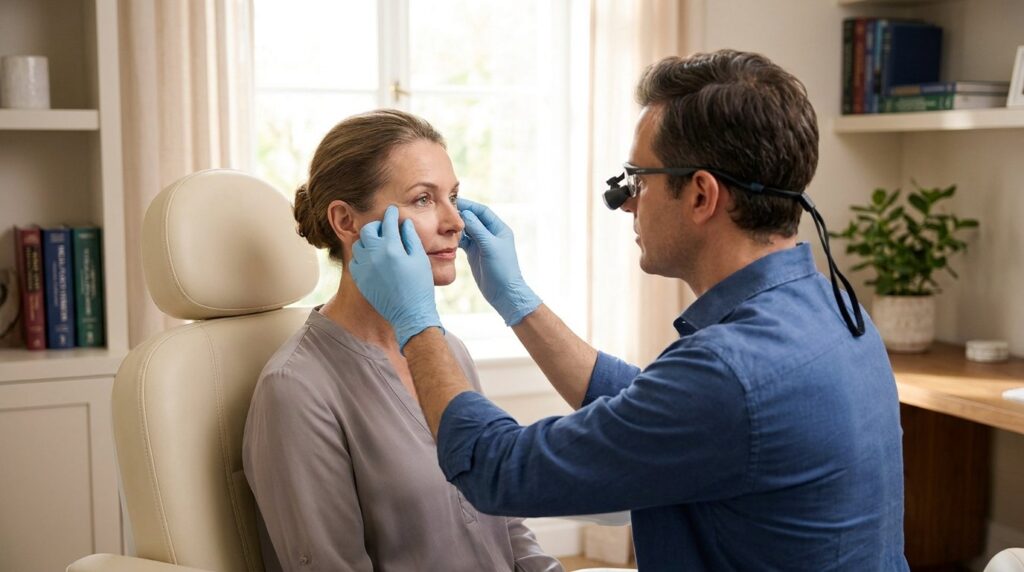
This is the most important part of the whole decision. A good consultation is hands-on and specific. The surgeon does not just look at photos. They examine lid tone, eye shape, blink quality, the position of the lower lid relative to the iris, and the relationship between the lid and the cheek.
Common assessments include the snap-back test and distraction test. In the snap-back test, the lower lid is gently pulled down and released to see how quickly it returns to its normal position. In the distraction test, the surgeon checks how far the lid can be pulled away from the eyeball. These tests do not tell the whole story on their own, but they help show whether support is weak.
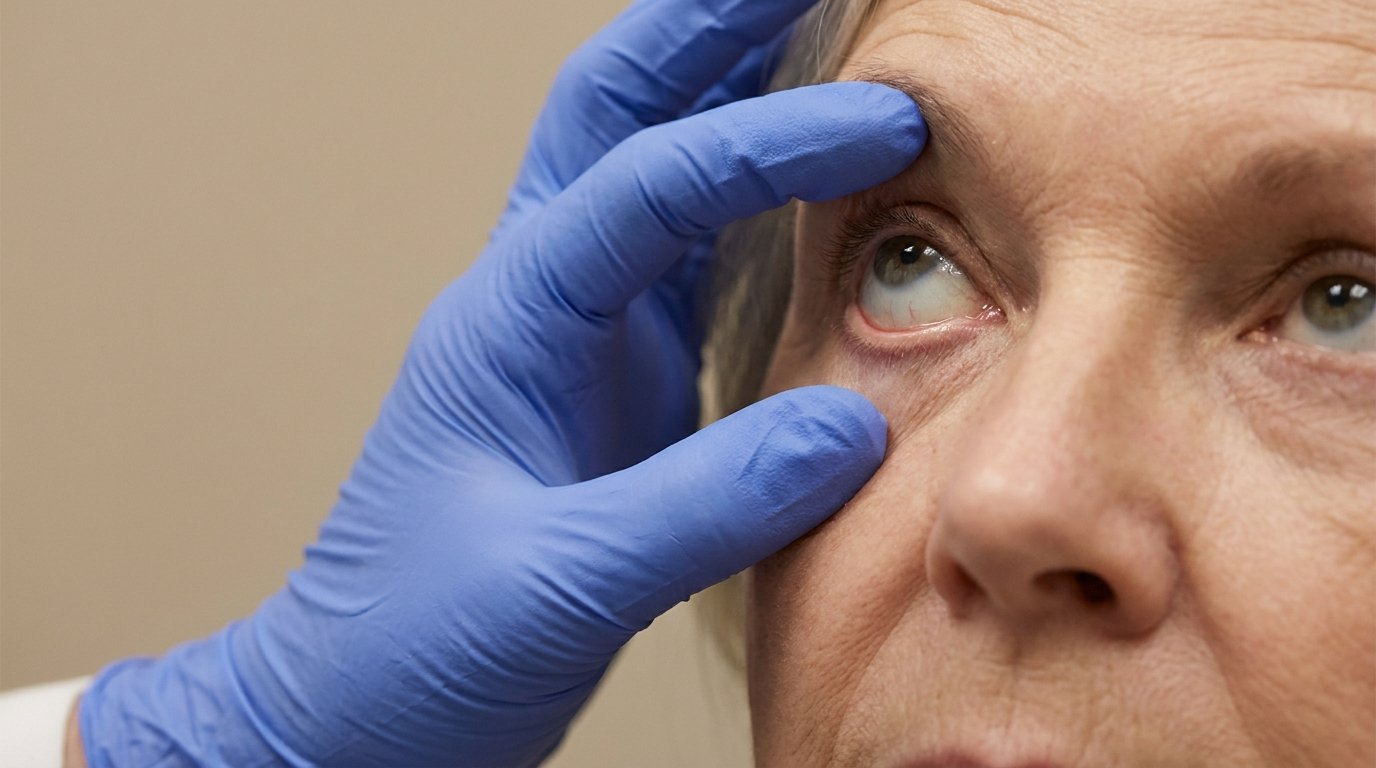
A proper exam should also cover the eye surface. That means asking about burning, watering, gritty sensation, prior laser eye surgery, allergies, and use of lubricating drops. Studies discussed in Facial Plastic Surgery & Aesthetic Medicine and Plastic and Reconstructive Surgery have repeatedly emphasised that preoperative recognition of lower lid laxity and dry eye risk is central to avoiding postoperative malposition.
Photos are useful, but they can mislead. A slight head tilt, lighting from above, smiling, or even under-eye filler can make the lower lids look more droopy than they really are. That is why an in-person assessment matters more than trying to self-diagnose from online images.
If you are already exploring a broader under-eye assessment, it can help to read about eyelid surgery options in a general sense. But the decision between canthopexy, canthoplasty, lower blepharoplasty, or no surgery at all still comes down to anatomy and eye health.
📋 A careful exam should include symptoms, not just appearance Watering, grittiness, light sensitivity, past eye surgery, and sleeping with eyes partly open all matter when planning lower lid surgery.
Can canthopexy be combined with other lower eyelid treatments?
Yes, and that is often where it makes the most sense. A canthopexy is commonly added when a surgeon is already treating under-eye bags or lower lid skin and wants to give the lid more support during healing. In selected patients, this can reduce the chance that the lower lid will settle too low after surgery.
That said, combining procedures should not be automatic. More treatment is not always better. If your lower lid support is already good, adding a canthopexy simply because it sounds more complete may not be necessary. On the other hand, if there is real laxity and it is ignored, the aesthetic result and eye comfort can both suffer.
This is one of the more nuanced decisions in facial plastic surgery. The surgeon balances appearance, lid mechanics, corneal protection, scar behaviour, and your baseline eye symptoms. That is also why you should ask not just what procedure is planned, but why that exact combination was chosen for your anatomy.
What are the trade-offs, recovery issues, and safety questions to think about?
Even when canthopexy is appropriate, it is still surgery around the eye. Swelling, temporary tightness, asymmetry during healing, and short-term irritation are common concerns people should expect to discuss. The NHS lists bleeding, infection, scarring, dry eyes, and difficulty closing the eyes among recognised risks of cosmetic eyelid surgery, and those points are directly relevant here.
The first stage of recovery is usually about swelling and tightness rather than final shape. Early on, the outer corner can look higher or firmer than expected. That does not automatically mean the result is wrong. The tissues soften gradually, and the eyelid position is judged over time rather than in the first few days.
For international patients, logistics matter more than many people expect. You need enough time in the country for pre-op assessment, surgery, early review, and the first part of recovery before flying home. You also need a plan for lubrication drops, sleeping position, follow-up, and urgent help if one eye becomes very painful, vision changes, or the lid cannot protect the eye properly.

When comparing quotes, keep cost discussions practical rather than headline-driven. A canthopexy quote may vary based on whether it is standalone or combined with other eyelid work, where the procedure takes place, what anaesthesia is used, whether hotel and transfers are bundled, and how follow-up is handled. A personalised quote is normally confirmed after consultation and review of your photos or examination.
If you are travelling, also ask who examines your eyes before surgery, who reviews you after surgery, and what happens if you develop dryness or asymmetry after you return home. If you want to understand the team’s background before any consultation, you can review the surgeon information available on the doctors page and request a personalised assessment through the consultation page.
🚨 Seek urgent review for red-flag symptoms Sudden vision change, severe pain, rapidly increasing swelling, marked bleeding, or inability to close the eye properly should be assessed promptly.
How do you choose a surgeon or clinic for lower eyelid support surgery?
Lower eyelid support surgery is not the place to shop by photos alone. The anatomy is delicate, and a beautiful result depends on both appearance and function. You want a surgeon who regularly assesses lower lid laxity, discusses dry eye risk openly, and can explain why they recommend canthopexy instead of another option.
Look for training, board standards, and a consultation process that feels specific rather than scripted. EBOPRAS is one recognised European board in plastic surgery, and BAAPS also emphasises informed consent and realistic discussion of risks in aesthetic surgery. Those credentials do not replace judgement, but they are useful signs that the surgeon takes standards seriously.
You should also expect detailed questions about your eye history. A rushed consultation that ignores watering, gritty eyes, contact lens issues, prior blepharoplasty, facial weakness, or thyroid history is not reassuring. In lower lid surgery, those details can change the whole plan.
The best consultation often feels slightly cautious. That is a good sign. If someone tells you every droopy lower lid is a straightforward canthopexy case, that is too simplistic for this area of the face.
- →Ask what the surgeon sees on examination: They should be able to explain whether the problem is laxity, excess skin, fat bulging, scar pull, hollowing, or a combination.
- →Ask how dry eye risk is assessed: A proper lower lid plan should include questions about symptoms and eye surface comfort.
- →Ask what happens if canthopexy is not enough: A thoughtful surgeon will explain alternatives such as canthoplasty or combined lower eyelid surgery when appropriate.
- →Ask about follow-up for overseas patients: You should know how early reviews are organised and who to contact if symptoms develop after you travel home.
Frequently Asked Questions
References
- 📎NHS: Cosmetic procedures
- 📎ASPS: Cosmetic procedures
- 📎PubMed search: lower eyelid malposition canthopexy dry eye blepharoplasty
- 📎Mayo Clinic: tests and procedures
Related Articles


You Might Also Like



Related articles


Our specialists
 Clineca SpecialistErkan PinegözPlastic & Reconstructive Surgery
 Clineca SpecialistHakan AktaşPlastic & Reconstructive Surgery
 Clineca SpecialistOrkun UzuneyüpoğluPlastic & Reconstructive Surgery
 Clineca SpecialistSalim İskenderPlastic & Reconstructive Surgery
 Clineca SpecialistEngin SelamioğluPlastic & Reconstructive Surgery
 Clineca SpecialistCem AydınPlastic & Reconstructive Surgery
 Clineca SpecialistAlperen ÖnalEar, Nose & Throat (ENT)