
Teeth Retainers in Istanbul
Dental retainers are used in order to keep your teeth in place, usually prescribed after orthodontic treatments like braces, to keep the reshaped teet...
What Are Retainers?
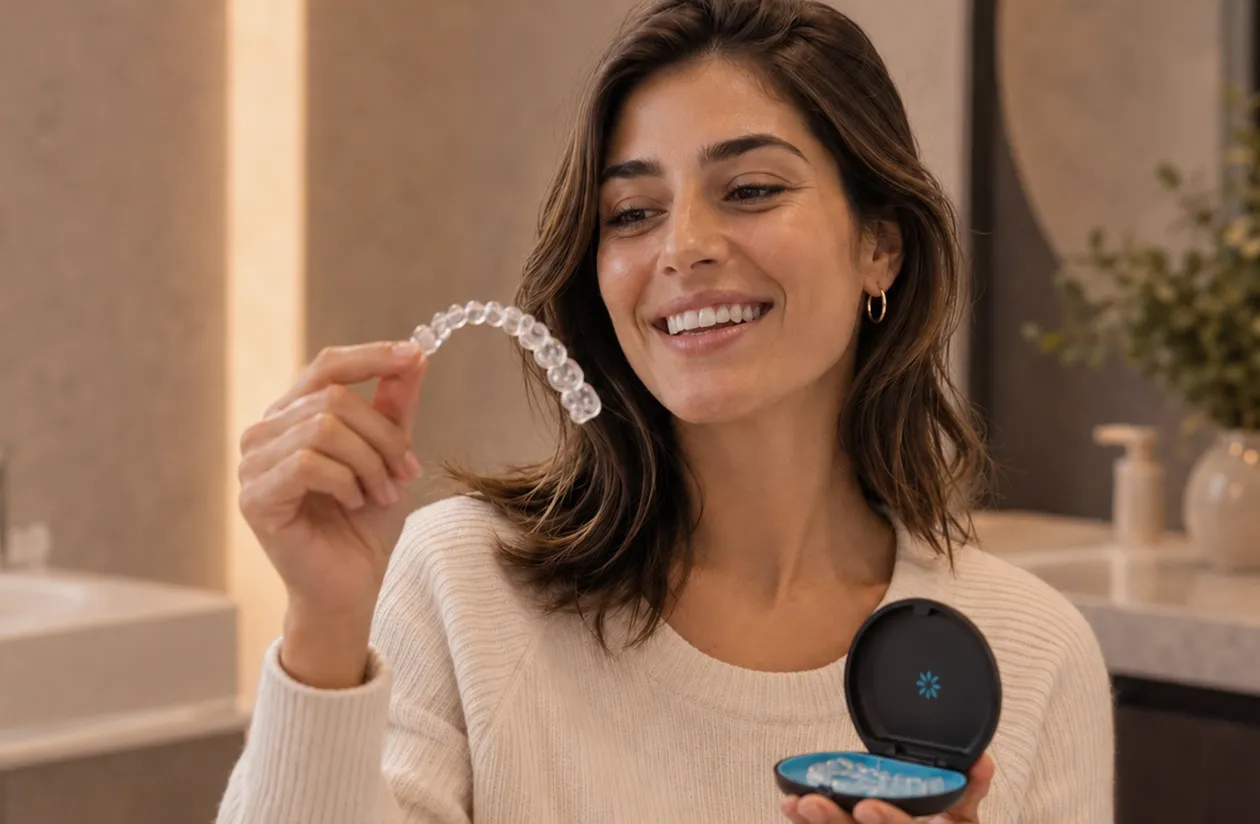
Dental retainers are used in order to keep your teeth in place, usually prescribed after orthodontic treatments like braces, to keep the reshaped teeth from returning to their old places. Bonded retainers also known as fixed retainers are unremovable, and attached to the teeth after the braces treatment, for a few months to allow the bone and gums. Hawley retainers can be removed. They are composed of a hard acrylic plate that fits to the roof of your mouth. Clear plastic retainers are also removable, and usually preferred for aesthetic reasons.
Who Is A Good Candidate For Retainers?
Retainers are usually given to people after braces treatment, although sometimes they can be used for straightening purposes if the level of crookedness or misalignment is minor. If your braces are just removed, you need to wear retainers for a few months to keep your newly aligned teeth in place, as the bone and gums take longer to adapt to your teeth’s new positions.
What Are The Expected Outcomes Of Retainers?
The outcomes of Teeth Retainers can be analyzed in three main categories: health-related, aesthetical, and psychological. Each malocclusion type comes with a variety of complications, uneven bite and proneness to teeth decay are the most common health problems. After retainers the malocclusion will be prevented it will give you a normal bite. Misaligned teeth can look unattractive. Whether you’re done with braces treatment or the misalignment is mild so this is the first choice of corrective treatment for your misaligned teeth, it will provide you with perfectly aligned teeth. Malocclusion can cause loss of self-esteem and can affect your daily life. You may smile less often, afraid to show your teeth. After getting the perfect smile with your perfectly aligned teeth, you will feel more confident and smile more!
How Are Retainers Applied?
After the removal of braces, depending on the type of retainers to be used, the procedure varies. If a bonded/fixed type will be used, your dentist will bond a wire to the back of your teeth.
Custom Retainer
If a Hawley type will be used, your mouth impression will be taken for the custom retainer to be made. The impression will be sent to a dental laboratory for the making of the custom retainer, and in 1-2 weeks you’ll be seen in the dentist’s office for the retainers to be fitted.
Taking A Mouth Impression
If clear retainers will be used, your mouth impression will be taken for them to be made in a dental laboratory, and after the custom retainer is made, you’ll be given your retainer during your second visit to the dentist about a week or two after the first one.
Risks and Complications
Retainers is a low risk and low complications procedure. Possible complications can include: Discomfort: Some people may experience discomfort or soreness in their mouth when they first start wearing their retainers. This is typically a temporary issue that goes away as the patient becomes accustomed to wearing the retainer. Difficulty Speaking: Some people may have difficulty speaking clearly when they first start wearing their retainers. This is also a temporary issue that typically improves as the patient becomes more accustomed to wearing the retainer. Damage: If a retainer is worn excessively or for too long, it can cause tooth erosion or damage to the enamel on the teeth. It's important to follow your orthodontist's instructions on how to wear and care for your retainer to prevent this. Allergic Reaction: Rarely, some people may develop an allergic reaction to the materials used to make their retainers. this could cause irritation, itching or redness. Dental Decay: If a retainer is not cleaned properly, bacteria can accumulate on it and cause decay on the teeth. It's important to clean your retainers regularly to prevent this.
What To Expect During A Retainers Recovery?
During the first week of retainer recovery, you may experience some discomfort as your mouth adjusts to the new appliance. Your mouth may feel sore or tender, and your speech may be slightly affected. It is normal for your mouth to feel uncomfortable and for your speech to be affected during this initial adjustment period. To help with any discomfort, you can take over-the-counter pain medication as directed. You should also avoid eating hard or sticky foods, as they can damage your retainer or cause discomfort. It is important to wear your retainer as directed by your orthodontist. Most orthodontists recommend wearing your retainer at all times, except when eating or brushing your teeth. It may take some time to get used to wearing your retainer, but with practice, it will become second nature. After the first week, you should start to notice that your mouth is adjusting to the retainer and any discomfort or tenderness should subside. Your speech should also start to improve as you become more comfortable with the retainer. It is important to continue wearing your retainer as directed by your orthodontist to ensure that your teeth maintain their new position. Over time, you may need to have your retainer adjusted or replaced as your mouth and teeth continue to change. If you have any concerns or questions about your retainer or the retainer recovery process, be sure to talk to your orthodontist. They will be able to provide guidance and support to ensure that your retainer is effective and that your teeth remain straight and healthy. After meeting with your dentist at their office during your consultation you express your expectations and the dentist checks the condition of your teeth. They will inform you about their professional opinion while taking your expectations and the condition of your teeth into consideration. Then, photos of your teeth will be taken for a 3D simulation. The size, model and color can be decided by you, and you can even choose the color from the tooth color chart. After deciding, on the first operation day teeth will be scraped and if there is a need for an extraction it will also take place on the first day. Temporary veneers will be put on and your dentist will prescribe you with painkillers and antibiotics. You will stay at the hotel for about 4-5 days. During your stay you will be visited by a wellbeing specialist, and if you’re having any problems your dentist will be contacted. After these 4-5 days, your permanent veneer will be applied and it will be all done.
What To Do Before Retainers?
If you are preparing to receive retainers, there are a few things you can do to ensure the best possible outcome. Wear your retainers as directed: It's important to wear your retainers as directed by your orthodontist. Wearing them for the recommended amount of time each day will help your teeth stay in the correct position. Clean your retainers: Your retainers should be cleaned regularly to remove plaque and bacteria. You can use a toothbrush and mild soap to clean them, or a retainer cleaning solution. Brush and floss regularly: Brush your teeth at least twice a day and floss once a day to remove plaque and food debris from your teeth and retainers. Handle your retainers with care: Retainers are delicate and can easily break if not handled carefully. Be sure to keep them in a hard, protective case. Be mindful of what you eat: Hard, sticky, or chewy foods can damage or dislodge your retainers. It's best to avoid these foods while wearing them.
What To Do After Retainers?
After having retainers, here are the some of the things to keep the oral hygiene. Having good oral hygiene practices; brushing twice and flossing once a day as normal. It is important to remove the retainers for meals and beverages (if removable), and putting them in their case. Wear the retainers as instructed by your dentist. Avoid wrapping the retainers in napkins and clean the retainers regularly. Keep them moist when not in use and avoid the high heat.
Who performs your teeth retainers
Dt. Ceren Saruhanoğlu
Doctorate in Prosthodontics (Istanbul University) · aesthetic dentistry & smile design · founder of Bright Dental Studio
Frequently asked questions
Do I need retainers?+
If your braces treatment is complete, or your orthodontist prescribed you retainers as teeth straightening treatment, you should wear retainers.
What are the types of retainers?+
Basically 3 types of retainers exist. Fixed retainers are thin metal wires bonded to the back of your teeth. Hawley type retainers consist of a hard acrylic plate that sits on the roof of your mouth and wires on the fronts of your teeth. Clear retainers look similar to Invisalign aligners but they are used to retain the teeth in place rather than move the teeth in a new position as the Invisaligns do.
How long do I need to wear retainers?+
After the braces have been removed, you’ll be given retainers which you should wear 24/7 for 3-6 months, and after that during evenings and while sleeping will be enough. The longer you wear the retainers, the less likely your teeth will shift.
How to take care of retainers?+
If your retainers are removable, you should remove them for meals, and beverages. You should put the retainers in their container/case after removing them. Keeping the retainers away from heat, cleaning them once a day will increase their lifespan.
Do retainers hurt?+
Wearing retainers doesn't hurt. If you are having discomfort while wearing them you should contact your orthodontist for a replacement.
My job requires me to speak publicly, will retainers affect my speech?+
The upper and lower Hawley retainers have been shown to distort speech for about a week up to 3 months. Constantly wearing them and practicing speech will make your adaptation faster and soon you will talk normally.
I wore braces for so long and I don’t want to wear retainers. Do I have to wear them?+
If you don’t wear your retainers after your braces treatment your teeth most likely move to their original position. It is very crucial to wear retainers after aligning treatments to make sure you sustain your results.
I am a heavy grinder. What happens if I grind through my retainers?+
Grinding is very damaging to your teeth, whether you wear retainers or don’t. Your dentist will probably suggest you use a nightguard. They are made of hard acrylic and they are very durable. They will protect your teeth during the night, and you can wear them in place of the retainers.
Plan your teeth retainers
Pick your surgeon and dates — we’ll tell you exactly when to fly and what's included.