
Eyelid Surgery in Istanbul
Eyelid surgery (also known as Blepharoplasty) can be performed on lower eyelids, upper eyelids, or both

What is Eyelid Surgery?
Eyelid surgery (also known as Blepharoplasty) can be performed on lower eyelids, upper eyelids, or both. Through blepharoplasty, you can get rid of droopy or baggy appearance on the upper eyelids, the excess skin on the upper eyelids that can block the peripheral vision, excess skin on the lower eyelids, and the under-eye bags. While lower eyelid surgery is purely cosmetic, upper eyelid surgery can also improve the peripheral vision.
Eyelid Surgery — before & after
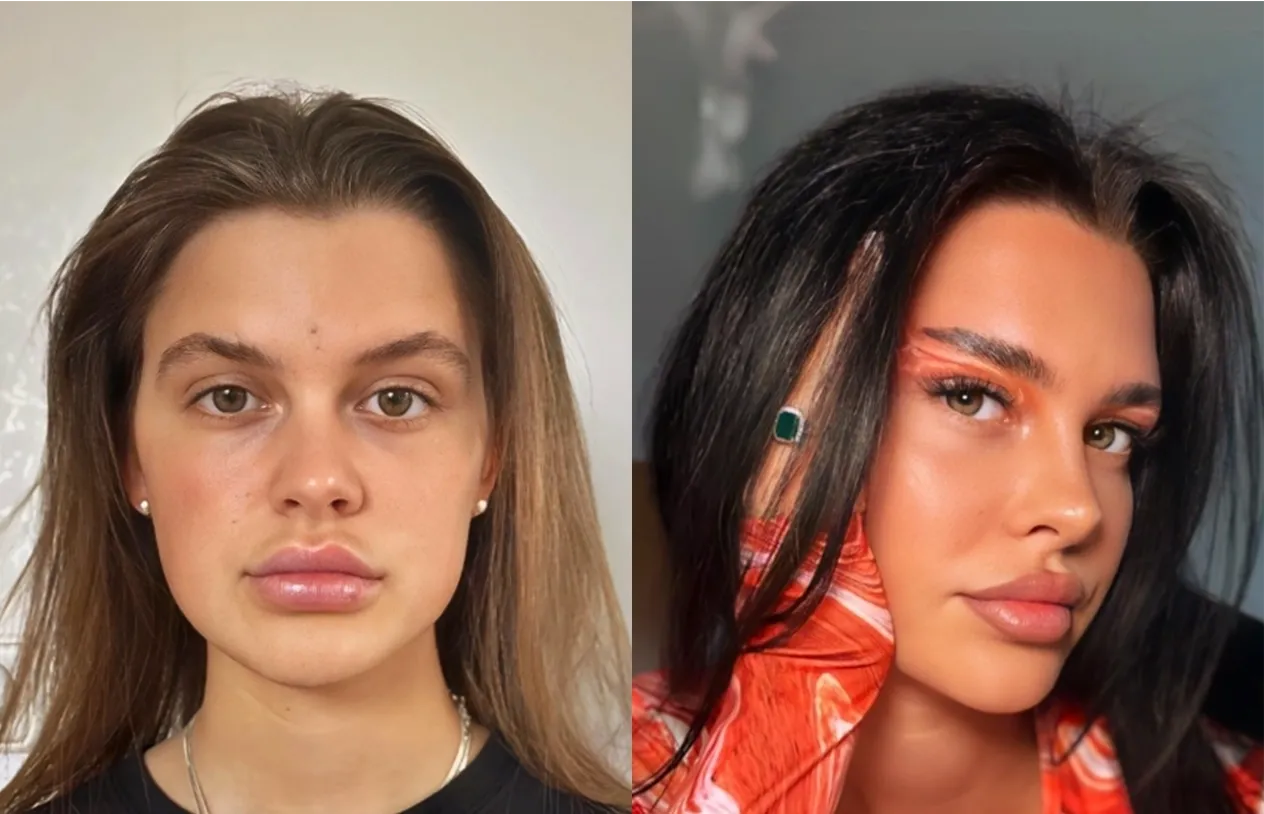 BeforeAfter
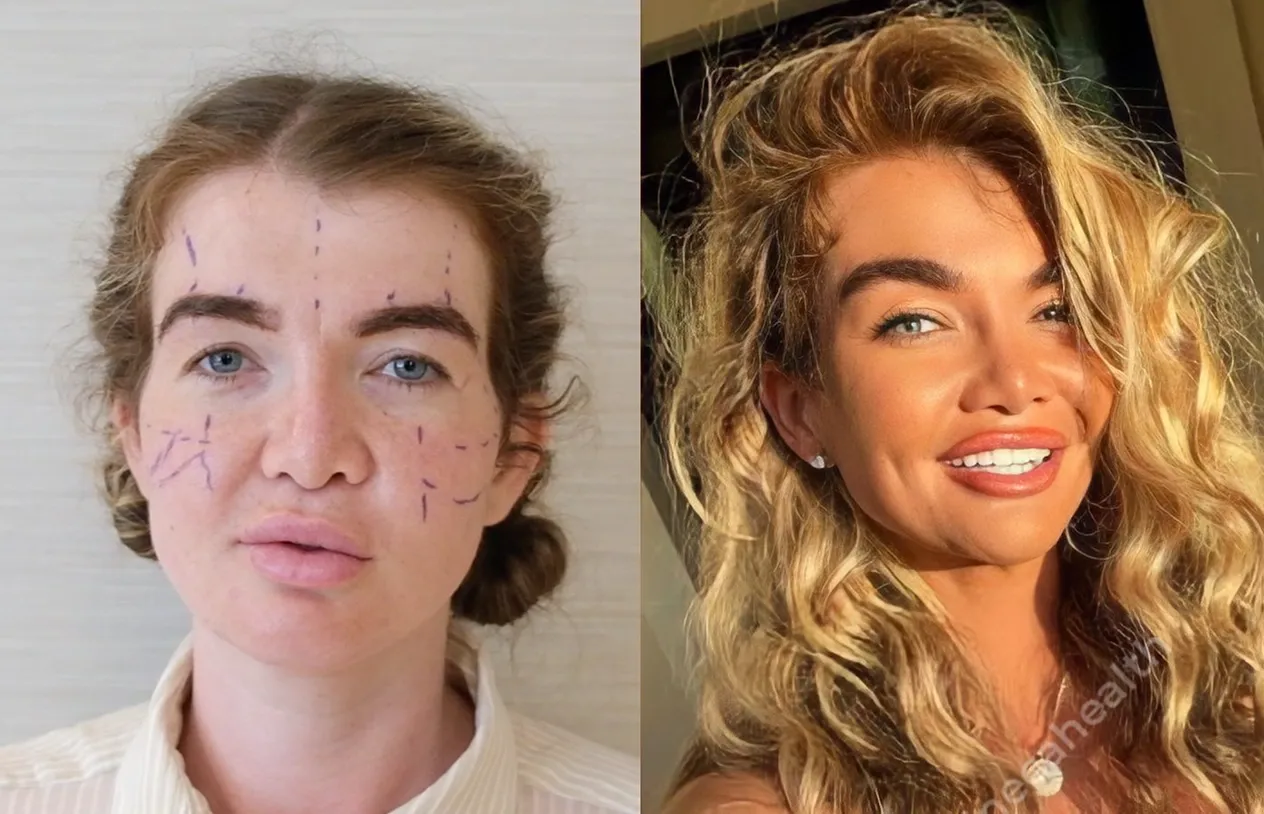 BeforeAfter
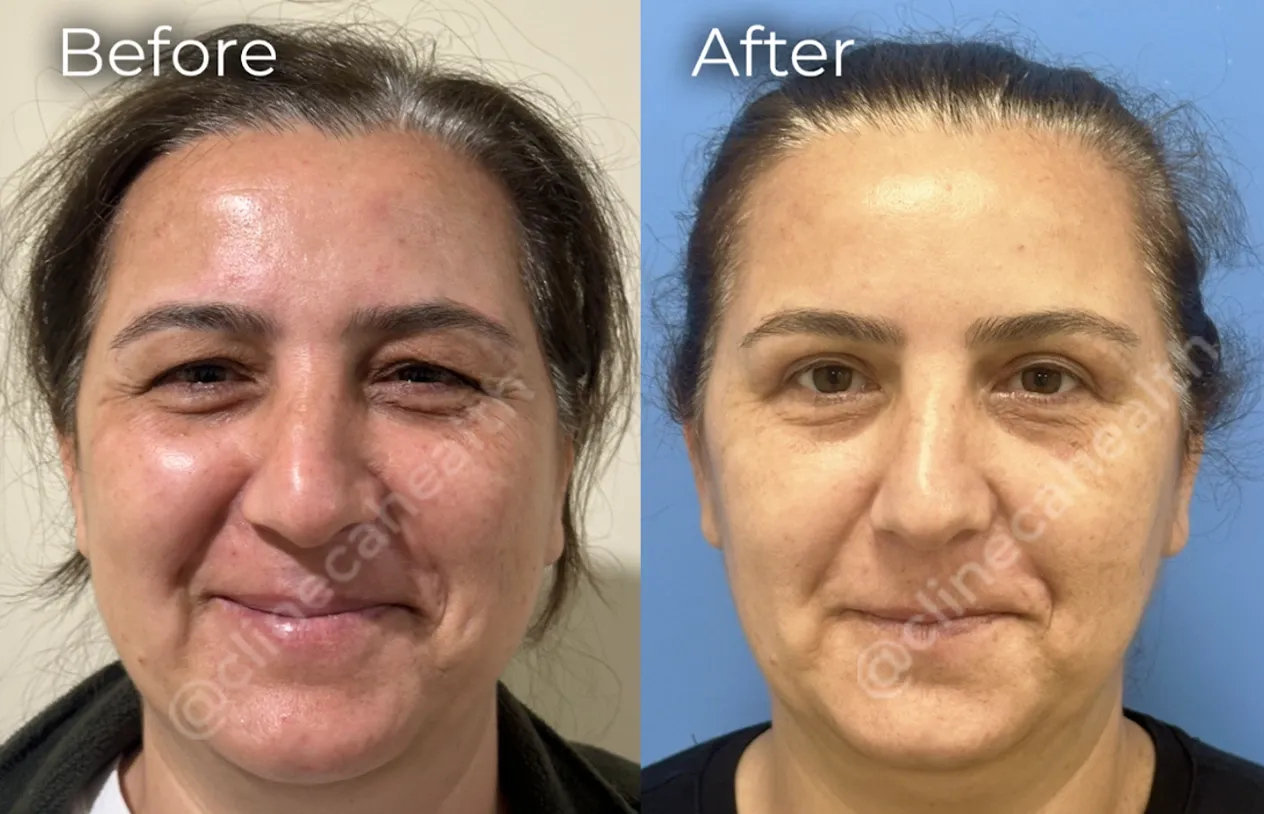 BeforeAfter
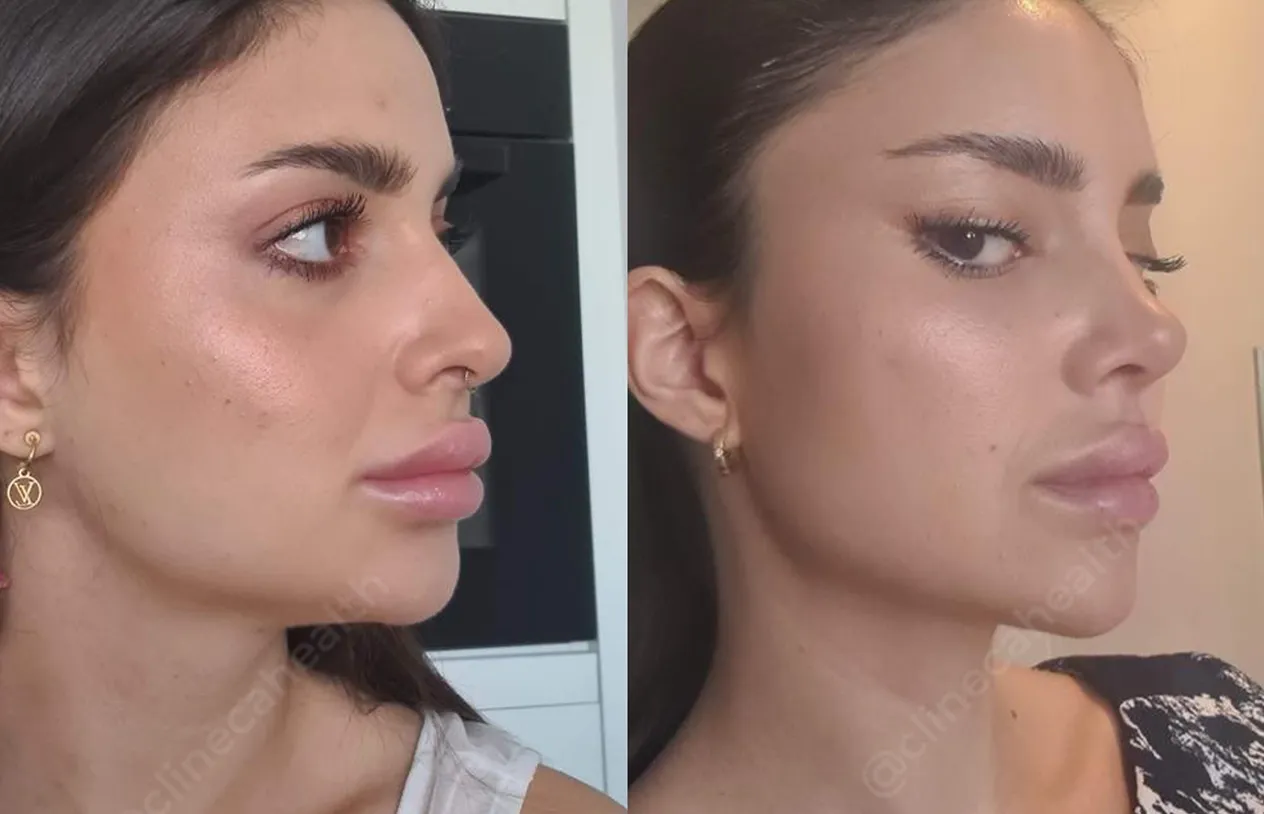 BeforeAfter
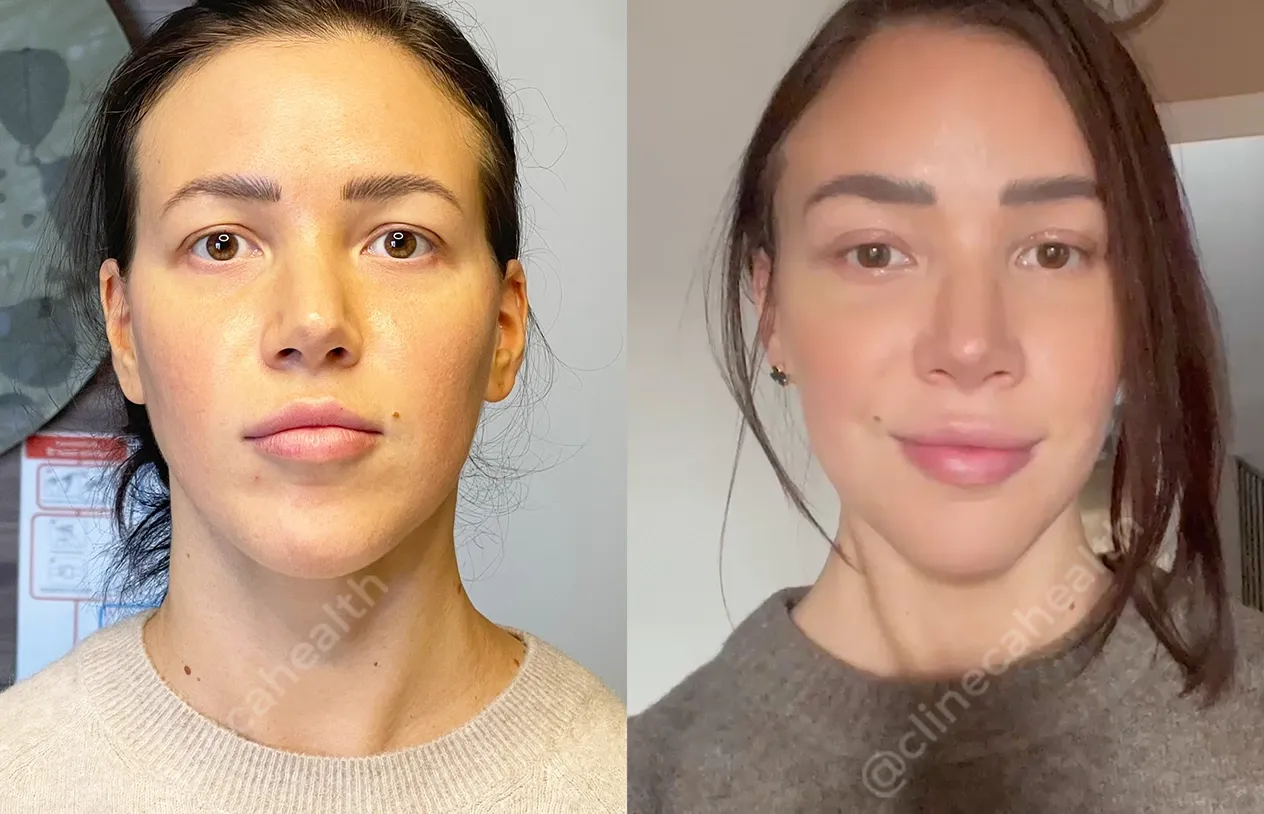 BeforeAfter
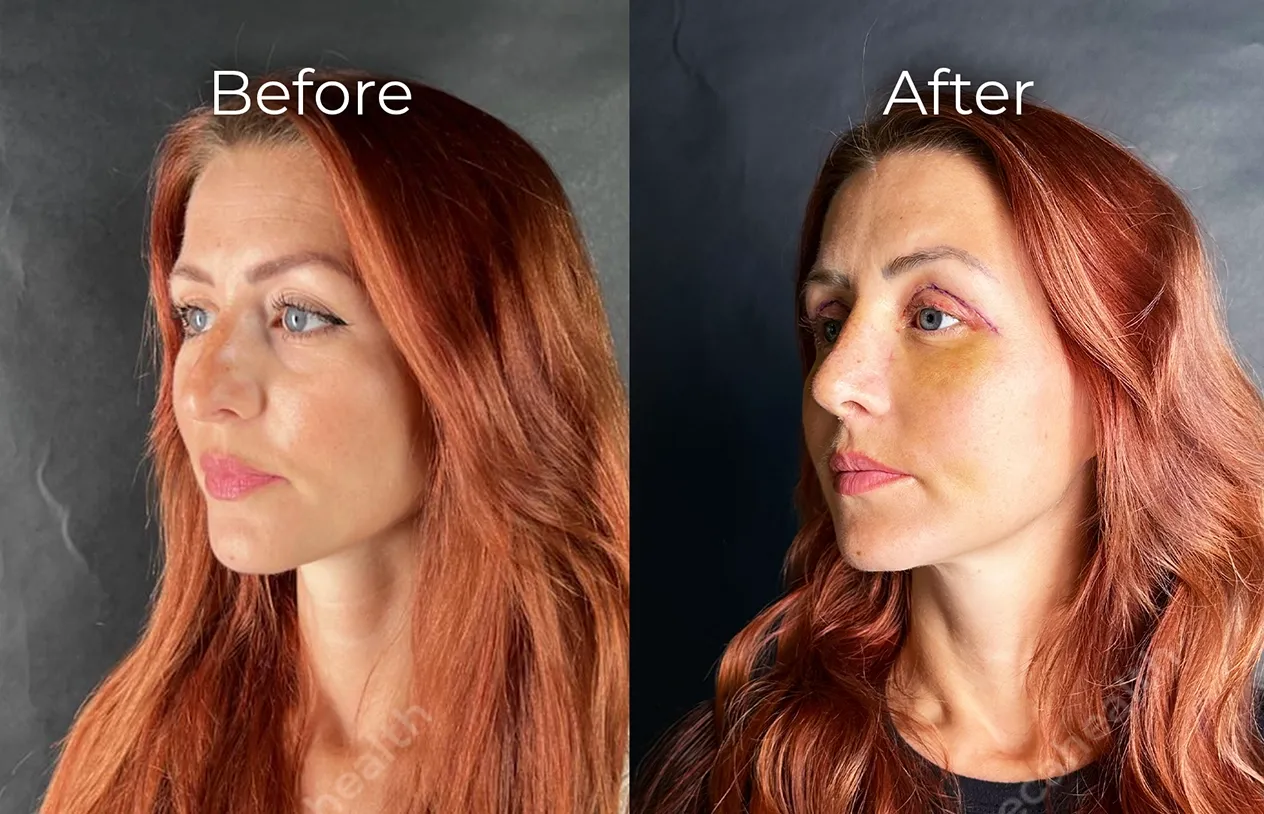 BeforeAfter
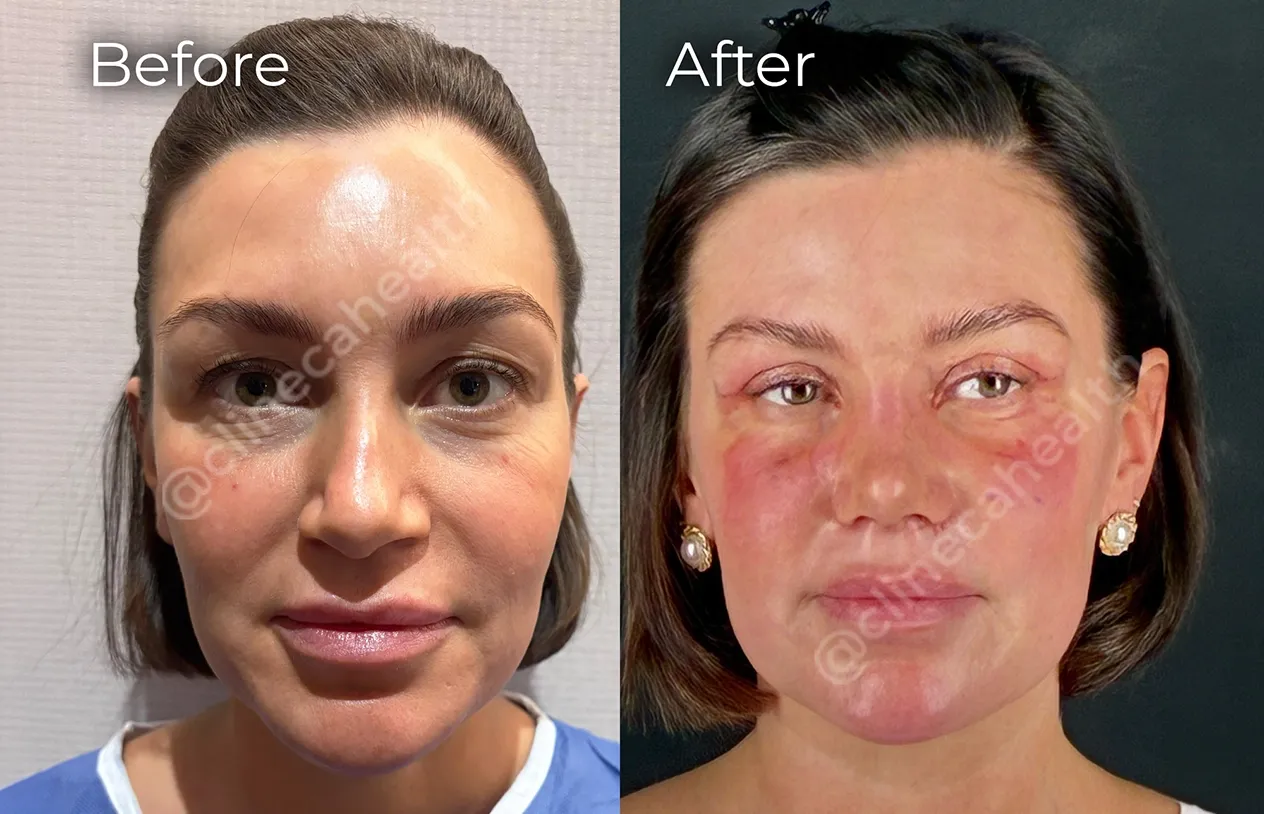 BeforeAfter
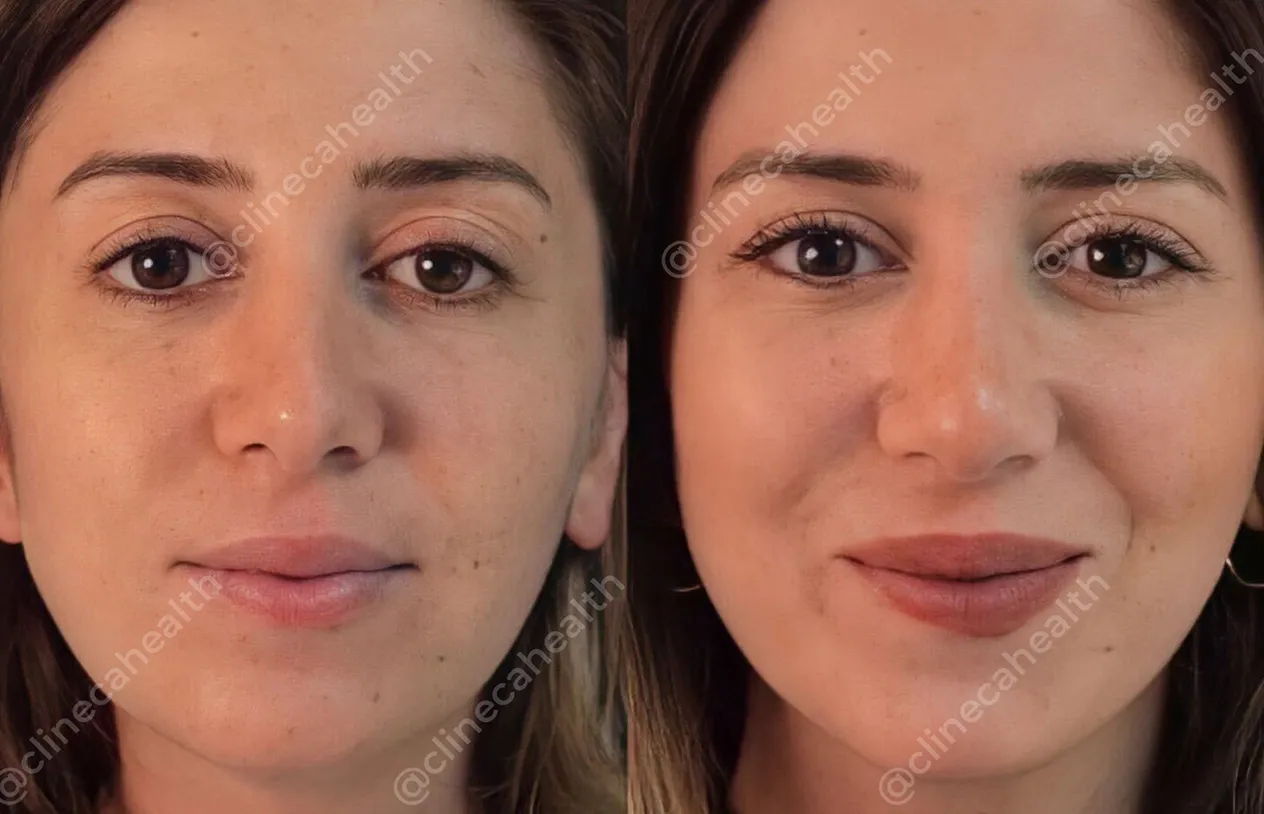 BeforeAfter
Who Is A Good Candidate For Eyelid Surgery?
It is not hard to be eligible for an eyelid surgery. If you are reading this, you are probably a candidate! The first requirement to be eligible for an eyelid surgery is to be healthy. If you are healthy and have realistic expectations, then you are a good candidate for this procedure! If you have undesirable excess skin on either eyelids If your droopy upper eyelid affects your vision If your upper eyelids are puffy If there are bags under your eyes because of excess skin on the lower eyelid If you have realistic expectations If you are healthy and have no serious eye conditions Children are able to have otoplasty when the ears are almost fully grown, and the ear cartilage complete its development and is stable enough for correction.
What Are The Expected Outcomes of Eyelid Surgery?
The outcomes of blepharoplasty can be analyzed in three main categories: aesthetical, health-related, and psychological. Your eyelids determine how your eyes look like, and the way your eyes look like determines how you are perceived by the others. The appearance of your eyelids has a tremendous effect on your facial aesthetics. Upper and lower eyelid surgeries can significantly rewind the effects of aging and gravity. With an upper eyelid surgery, you can get rid of baggy or droopy appearance on your upper eyelids and the excess skin of them which interferes with your peripheral vision. With a lower eyelid surgery, you can get rid of the excess skin of your lower eyelids and the bags under them. Lower eyelid surgery is done just for cosmetic reasons. However, upper eyelid surgery has an important health benefit, in addition to its cosmetic benefits. It is very common that with aging, sagging on the upper eyelids develop. This excess skin can block your peripheral vision. In addition to the psychological distress caused by this, which is also dangerous, especially when you are in the traffic. An upper eyelid surgery can easily remove the excess skin and give you your uninterrupted peripheral vision back. The psychological outcomes of the procedure are as important as the physical ones. The eyes are the focus of attention. They are the most prominent feature on our faces. If you don’t like the way your eyes look, you won’t want others to look you in the eye. If you think the appearance of your eyes make you look older, you may not want to look in the mirror. Fortunately, eyelid surgeries achieve amazing result when done by an experienced and talented plastic surgeon. Elimination of problems related to the appearance of your eyes can lead to significant psychological and social improvements.
“A natural and youthful appearance is what we seek through eyelid surgeries. We are not looking for artificial looks. We unleash your natural beauty and energy by removing the effects of time.”
How is the Eyelid Surgery Done?
Eyelid surgery is a cosmetic surgery procedure performed to change the appearance of upper, lower, or both eyelids.
Anesthesia
Like all kinds of surgery, blepharoplasty requires anesthesia. Usually, in the eyelid surgery, local anesthesia combined with sedation is used. Local anesthesia will be applied on your eyelids. You will be awake but sedated during the procedure.
Surgery
There are 2 different cosmetic eyelid surgeries: the upper eyelid surgery and the lower eyelid surgery. You can have one, or both. If you are having both, your surgeon will first work on the upper eyelids. All the incisions will be made carefully so that they will be concealed within the natural folds and creases of your eyelids. The surgery takes around 2 hours if both upper and lower eyelids are done. There is also a functional eyelid surgery: ptosis, which is a condition where the upper eyelid droops, repair. *1 It can be done in combination with your cosmetic eyelid surgeries.
Upper Eyelid Surgery
Your surgeon will make an incision on the natural crease of your upper eyelid. They will remove excess skin and muscles and remove or relocate fats inside your upper eyelid. *2 Then they will repeat the same procedure for your other upper eyelid.
Lower Eyelid Surgery
Your surgeon will make an incision below the lash line of your lower eyelid (or inside your lower eyelid). They will remove excess skin and muscle and remove or relocate fat inside your lower eyelid (if the incision is made inside the eyelid, no skin is removed). Then they will repeat the same procedure for your other upper eyelid. Eyelid surgery, or blepharoplasty, is a widely performed operation, thus the risks are minimized. But as with any other surgery, especially if done by inexperienced surgeons, there can be some complications such as: Bruising is not a complication, but an expected side effect. However, excessive bruising can prolong the recovery, cause infections and skin pigmentation. To minimize the bruising, the patient can avoid taking anticoagulants, apply ice-compress, and when lying down, keep their head elevated. Wound opening: The stitches may break if you are a restless sleeper, or sustain even a minor postoperative trauma, or if the wound gets infected. Thus, it is important to be careful during the recovery. Scar Abnormalities: The positioning of the scar, if done incorrectly and is not in the crease, may result in an abnormal and perhaps even asymmetrical look. Overcorrection: If too much skin is excised, the result will not be what was hoped for. Asymmetry: Each eye can have good results but may not be asymmetrical. Ptosis: Of a varying degree, it is expected. Any experienced surgeon wouldn’t be alarmed. Postoperative ptosis can be problematic if your choice of surgeon is inexperienced. Problems with blinking: Due to swelling after the surgery, this is a common side effect. It can cause discomfort, dry eyes and overflow of tears, but it will pass as the swelling subsides. Double-vision: This is an extremely rare complication, but still a known complication. With experienced surgeons, this is not an issue to be worried about. Eye injury: Yet again, if the surgeon is inexperienced and perform the surgery too close to the eyeball, they can injure the eye. The only risk is not an inexperience surgeon, though. If you have protruding eyes, such as in the thyroid eye disease, that can also be a risk factor for eye injury. Hemorrhage in eye: this is a very rare, but very important complication, as it can cause vision loss. If recognized early, and responded rapidly, treatment is possible without any vision loss occurring. Unfortunately, treatment beyond 1 to 6 hours of total or near-total vision loss is unlikely to be effective. Pigmentation: Postoperative hyperpigmentation can occur because of a hematoma, or excess sun exposure.
What To Expect During A Eyelid Surgery Recovery?
After the surgery, there will be stitches on your eyelids for up to a week. Right after the surgery, ointment will be applied on your eyes to prevent them from drying. Your eyes may also be covered with gauze. You may temporarily experience blurred vision, light sensitivity, dry or watering eyes, swelling, and bruising. You may also experience some pain or discomfort. The pain can be easily controlled by painkillers that your surgeon will prescribe to you. It is important to avoid strenuous activities and exercises for 2-4 weeks. Because they can increase blood flow to your eyes. You should also be careful about daily activities that can increase the pressure in your head, such as lifting heavy objects, bending, or lying on your back without keeping your head elevated. The swelling and bruising are gone within one to two weeks. *3 Then, you will feel ready to go outside and have fun! The recovery time for eyelid surgeries is very short! However, the scars can take several months to fade. You should not expose your eyelid skin to too much sunlight until the healing process is fully complete. A wellbeing assistant will visit you in your hotel room every day during the first week after the surgery. We will expect you to be in our clinic for your post-op examination 1 week after the surgery, before you leave Istanbul. We will still follow your recovery process while you are away. Clineca will provide you with complete support and inform you about everything you need to know during your recovery. We will be with you from your consultation to the very end of your recovery.
What to Do Before Eyelid Surgery?
During your online consultation, your surgeon will ask you questions about your medical history. They will also conduct a physical examination. Your surgeon will inform you about everything you need to know before the surgery. Clineca will provide you with complete guidance and support before your surgery. You will have a complete and detailed list of instructions. Most important instructions include, Stop smoking at least 2 weeks before the surgery. Avoid non-steroidal anti-inflammatory medications (such as ibuprofen and aspirin) for 2 weeks before the procedure. Avoid herbal remedies and supplements Take only the medications approved by your surgeon.
What to Do After Eyelid Surgery?
What you need to do after the surgery will be explained to you in detail by your surgeon and Clineca will provide you with all the support and guidance you need. Most important instructions include: Do not smoke for at least 2 weeks after the surgery. Do not take non-steroidal anti-inflammatory medications after the surgery until your surgeon approves using them. Avoid strenuous activities for a week. You should avoid highly strenuous activities like weight-lifting for a month. Use ice packs on your eyes according to your surgeon’s instructions. Clean your eyes gently and use the medications prescribed by your surgeon. Do not use contact lenses for 2 weeks. Raise your head higher than your chest while you are resting in bed for a few days. Apply cool compresses according to your surgeon’s instructions. Love yourself and show the world how beautiful you are!
“An upper eyelid surgery is not only a cosmetic procedure. We can remove the excess skin of the upper eyelids that can block the peripheral vision. So you not only look better, you will also see better!”
Who performs your eyelid surgery
Dr. Hakan Aktaş
Board-certified plastic surgeon · TPRECD & EPCD member · 3D simulation
Dr. Orkun Uzuneyüpoğlu
2,000+ surgeries · São Paulo observership · nose, breast & body
Dr. Salim İskender
13+ yrs operating · 3,000+ surgeries · open & closed rhinoplasty
Dr. Engin Selamioğlu
Assoc. Prof. · European Board (EBOPRAS) certified · ISAPS member
Dr. Cem Aydın
Specialist, Marmara University · microsurgery · published research
Dr. Alperen Önal
ENT surgeon · functional & aesthetic rhinoplasty
Frequently asked questions
What is blepharoplasty?+
Blepharoplasty is an eyelid surgery. There are 2 types of cosmetic eye surgeries: upper and lower eyelid surgeries. In these surgeries, muscle and excess skin is trimmed, the excess fat is removed or redistributed in order to obtain a youthful appearance.
Are there any health benefits of eyelids surgeries?+
The lower eyelid surgery is purely cosmetic. However, upper eyelid surgery has an important health benefit in addition to its cosmetic benefits. An upper eyelid surgery can restore your peripheral vision that may have been restricted due to excess skin on the upper eyelid.
How long does an eyelid surgery take?+
If both the upper and lower eyelid procedures are performed, the surgery takes around 2 hours. However, depending on the case, it may take more or less.
How long does the recovery take?+
The stitches in your eyelids will be removed a week after the procedure, and the bruises and swelling will disappear after around 2 weeks. However, complete healing of the scars may take a few months.
What are the side effects of an eyelid surgery?+
After the surgery, you will experience swelling, bruising, discomfort, and some pain. You may also experience blurred vision, light sensitivity, dry or watering eyes after the surgery, but all side effects are temporary.
Will there be bandages on my eyes after the surgery?+
In most cases, no bandages are needed after cosmetic eyelid surgeries. However, rarely, gauzes may be placed over the eyes temporarily.
When will the stitches be removed?+
We will expect you to be in our clinic 1 week after the surgery, before you leave İstanbul. In this follow-up meeting, your surgeon will examine you and your stitches will be removed.
What happens during an eyelid surgery?+
During the surgery, your surgeon will make incisions in the natural creases of the eyelids. They will remove the excess skin and muscles and either remove or redistribute the fat. The surgery is done using local anesthesia with sedation.
Plan your eyelid surgery
Pick your surgeon and dates — we’ll tell you exactly when to fly and what's included.