
Dentures in Istanbul
Dentures are removable replacements for missing teeth and surrounding tissues
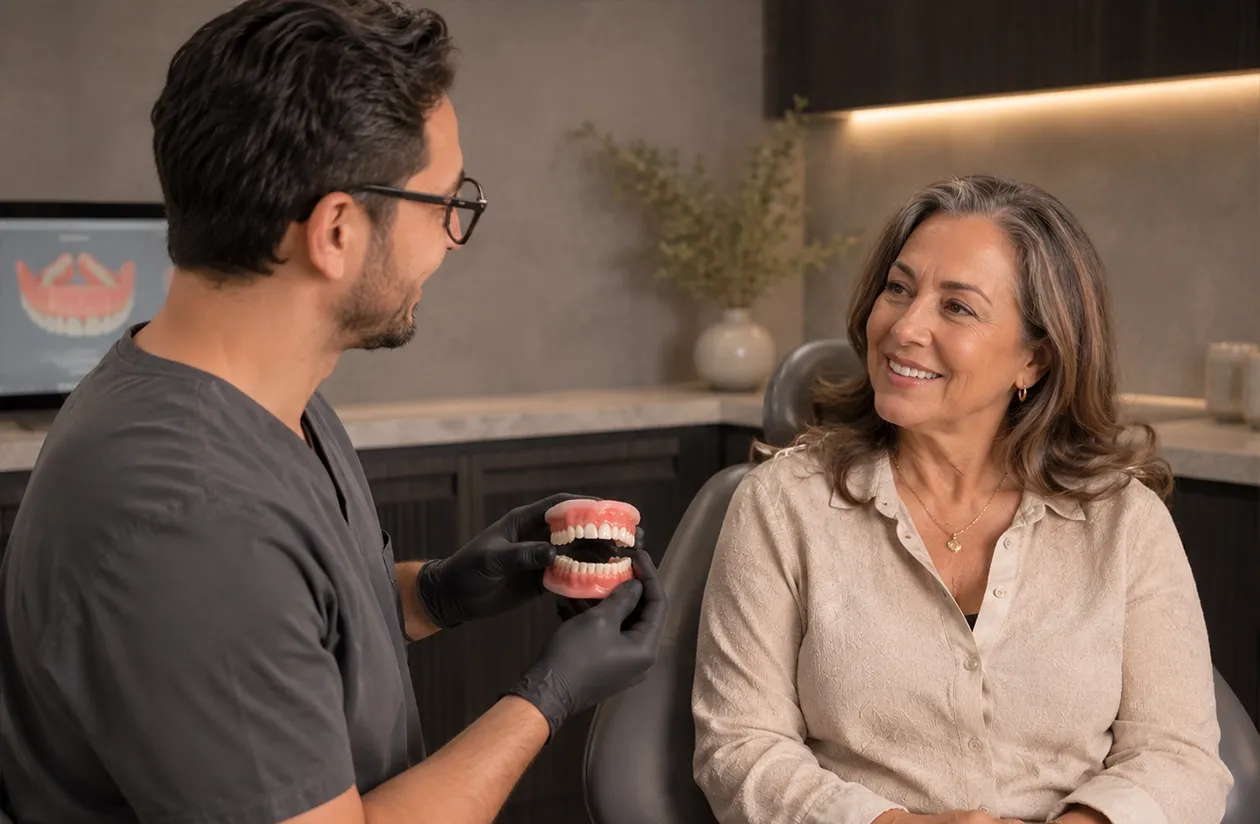
What Are Complete Dentures?
Dentures are removable replacements for missing teeth and surrounding tissues. There are two types of dentures; partial dentures used when some teeth are present, and complete dentures when all the teeth are missing. After removal of the teeth and the gums are healed completely, which takes about 8 - 12 weeks, conventional dentures can be placed. On the other hand, the immediate dentures can be placed right after the removal. For that, the dentures are made in advance. This ensures that the patient doesn’t have to be without teeth after the removal of the teeth. However during the healing period, the bones and gums shrink and the immediate dentures become unfitting. This requires the immediate dentures to be adjusted, thus the immediate dentures are a temporary solution until conventional dentures are made.
What Are Partial Dentures?
Partial dentures can be either removable or fixed. Removable partial dentures consist of replacement teeth that are attached to a gum-colored base. The base is connected to a metal framework for support. Fixed partial dentures replace missing teeth by placing crowns on the teeth on either side of the gap, while attaching artificial teeth in between. It is similar to a bridge as how it works, and preferred if the amount of missing teeth is more than one or two. Partial dentures are also usually cheaper than bridges.
Who Is A Good Candidate For Dentures?
if you are missing most or all of your teeth, you may be a good candidate for dentures. However, other factors, such as your oral health, overall health can also influence your suitability for dentures. It is important to consult with your dentist before getting dentures to determine the best treatment option for your needs.
What Are The Expected Outcomes Of Dentures?
The outcomes of dentures can be analyzed in three main categories: aesthetical, health-related, and psychological. Missing teeth often cause an unpleasant smile and after getting your customized dentures you won’t have to worry about aesthetics because they will be perfect. Missing teeth can cause uneven bite and irritability and sensitivity on your gums. After getting your dentures all these problems will resolve. After getting a denture, you’ll get rid of your insecurities related to your missing teeth and will be much more confident and happy with your smile.
How Are The Dentures Applied?
The procedure can take several appointments and about 2 months. On your first visit, your dentist will examine your mouth and determine the best appliance for your case. After they decide on the approach, your teeth will be removed, then an impression of your jaw and measurements will be taken. According to the impression and measurements, models of the denture will be made. There may be fitting appointments for the perfect fit during the development of the denture. Shape, color, and fit will be assessed during the fittings to cast the final denture.
Risks and Complications
If you are considering getting dentures, it's important to be aware of the potential risks and complications. Loss of Denture Retention: This can occur if the dentures do not fit properly and can cause the dentures to move or shift when you eat or speak. This can make it difficult to eat and speak properly and can cause discomfort. Pain: Dentures can cause discomfort when they are first fitted, and it can take some time to get used to them. In some cases, the dentures may not fit properly, which can cause irritation and pain in the gums and mouth. Gingival Hyperplasia: This is a condition in which the gums overgrow and become swollen. This can occur if the dentures do not fit properly and put pressure on the gums. Denture Stomatitis: This is an infection of the mouth that can cause redness, swelling, and pain. It is often caused by bacteria that build up on the dentures and in the mouth. Loose Teeth: If the dentures do not fit properly, they can put pressure on the natural teeth and cause them to loosen or fall out.
What To Expect During A Dentures Recovery?
During the first week of the dentures recovery process, you can expect to experience some discomfort and difficulty as you adjust to the presence of the dentures. Your gums may be sore for the first few days after getting dentures. This is normal and should go away on its own within a few days. Difficulty eating; you may find it difficult to eat at first because of the soreness and the presence of the dentures. Stick to soft foods and cut your food into small pieces to make it easier to chew. You may also find it difficult to speak at first because of the dentures. This should improve over time as you get used to the dentures. It's important to maintain good oral hygiene while wearing dentures. Brush your gums, tongue, and palate every morning with a soft-bristled brush before you insert your dentures. After the early weeks of the dentures recovery process, you can expect the dentures to become more stable and comfortable as your mouth adjusts to them. Improved eating and speaking; as your mouth becomes more accustomed to the dentures, you should find it easier to eat and speak. As the dentures become more stable, they should look more natural and blend in with your other teeth. You will continue to have follow-up appointments with your dentist to check on the progress of your treatment. These appointments are usually scheduled every 4-6 weeks. Denture adjustments also will be done. You may need to have the dentures adjusted or refitted as your mouth changes shape over time. This is normal and helps ensure that the dentures continue to fit properly. After meeting with your dentist at their office during your consultation you express your expectations and the dentist checks the condition of your teeth. They will inform you about their professional opinion while taking your expectations and the condition of your teeth into consideration. Then, photos of your teeth will be taken for a 3D simulation. The size, model and color can be decided by you, and you can even choose the color from the tooth color chart. After deciding, on the first operation day teeth will be scraped and if there is a need for an extraction it will also take place on the first day. Temporary veneers will be put on and your dentist will prescribe you with painkillers and antibiotics. You will stay at the hotel for about 4-5 days. During your stay you will be visited by a wellbeing specialist, and if you’re having any problems your dentist will be contacted. After these 4-5 days, your permanent veneer will be applied and it will be all done.
What To Do Before The Dentures?
If you are considering getting dentures, there are several things you should do before making the decision. Plan for the adjustment period. Getting used to dentures can take some time, and you may experience discomfort or difficulty speaking and eating at first. Make sure you have support from friends and family during it. Take care of your existing teeth. If you still have some natural teeth, it's important to keep them healthy. Brush and floss regularly, and see your dentist for regular check-ups. Talk to your dentist about any concerns you may have. This is a good opportunity to ask about the different types of dentures available, how they are made, and how well they will fit.
What To Do After Getting Dentures?
Dentures will require daily cleaning. For a good denture care it is advised to: Brushing gums, tongue, and roof of the mouth as well as any remaining teeth twice a day using a soft-bristled toothbrush. Clean the dentures over a towel or in a water-filled sink. This will make the dentures less likely to break on an accidental drop. Don’t use a regular toothbrush or toothpaste on the dentures, instead a small amount of hand soap, mild dishwashing gel, or denture cleanser applied on a toothbrush made specifically for dentures are better. Keep the dentures moist. While not wearing, place the dentures in a container of cool water or denture-cleanser solution, and avoid placing dentures in hot water which can warp the dentures. Rinse off the dentures after meals and don’t sleep with dentures on. If dentures are damaged, or broken, instead of trying to repair or glue them yourself, schedule an appointment with your dentist. Also do not use whitening products on the dentures.
Who performs your dentures
Dt. Ceren Saruhanoğlu
Doctorate in Prosthodontics (Istanbul University) · aesthetic dentistry & smile design · founder of Bright Dental Studio
Frequently asked questions
How long does it take?+
The dentures are made specifically for you and the making of your dentures can take about 2 months to complete.
Does the procedure hurt?+
If your teeth are going to be extracted, local anesthesia will be used meaning during the extraction you won’t feel any pain. However during the healing period you may experience mild pain but it can be easily managed with over the counter painkillers.
What do dentures feel like?+
At first you may feel weird with the dentures on, and it may take a few weeks for you to get accustomed to your new dentures. During this phase, your cheek and tongue muscles will learn how to keep the dentures in place and you will get comfortable with insertion and removal of the dentures. There may be an increase in the saliva flow which will decrease as you adjust to the dentures.
Will the dentures affect eating?+
During your accustomation period, it may feel strange to have dentures in your mouth. However, after a few weeks you will notice it gets easier to eat. Chewing slowly and on both sides, while avoiding hard and sticky foods and chewing gums is advised. You also shouldn’t use toothpicks on your dentures.
Will the dentures affect speaking?+
During your accustomation period, it may feel strange to have dentures in your mouth. However, after a few weeks you will notice it gets easier to speak. Some words may feel difficult to pronounce with dentures but with practice you can get fluent. If your dentures “click” while talking, take an appointment with your dentist, however occasional slips while laughing, coughing or smiling are normal.
Should I use adhesives for the dentures?+
It is advisable to use adhesives on your dentures to improve retention, stability, and biting strength; to assist with the dry mouth conditions which diminishes the denture adherence to the gums; and to provide extra stability and security for the people who uses too much facial gestures such as public speakers, actors and musicians.
How to apply adhesives?+
It is not advisable to use adhesives on your dentures if you have an allergy to an ingredient of the adhesive; your oral hygiene isn’t maintainable; you haven’t seen your dentist for denture evaluation in a long time; your dentures are ill-fitting.
Are denture adhesives safe?+
Using the minimal amount of adhesive and placing 3 dots in the ridge area of the denture, wet your finger and spread the adhesive evenly on the surface of the dentures that comes in contact with the gums. Before applying the adhesive, make sure the dentures are clean. Do not use adhesives on the ill-fitting dentures.
Plan your dentures
Pick your surgeon and dates — we’ll tell you exactly when to fly and what's included.