
Dental Implants in Istanbul
Dental implants are both functional and aesthetic dental treatments that recover teeth that were lost due to decay or fractures
What Is A Dental Implant?
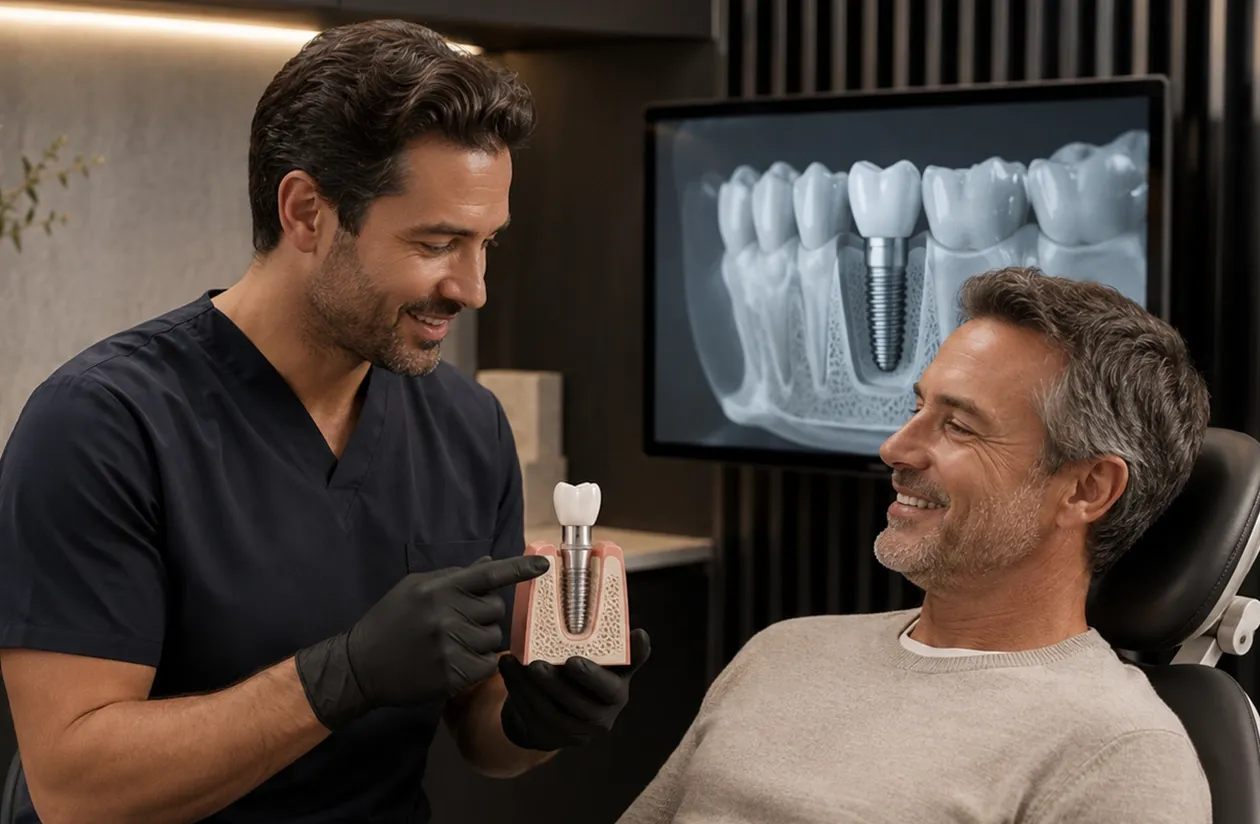
Dental implants are both functional and aesthetic dental treatments that recover teeth that were lost due to decay or fractures. Implants are artificial tooth roots made from titanium or titanium alloy screws (can be ceramic as well) that are placed inside the drilled holes on the bone. They serve as supports for dental prosthetics.
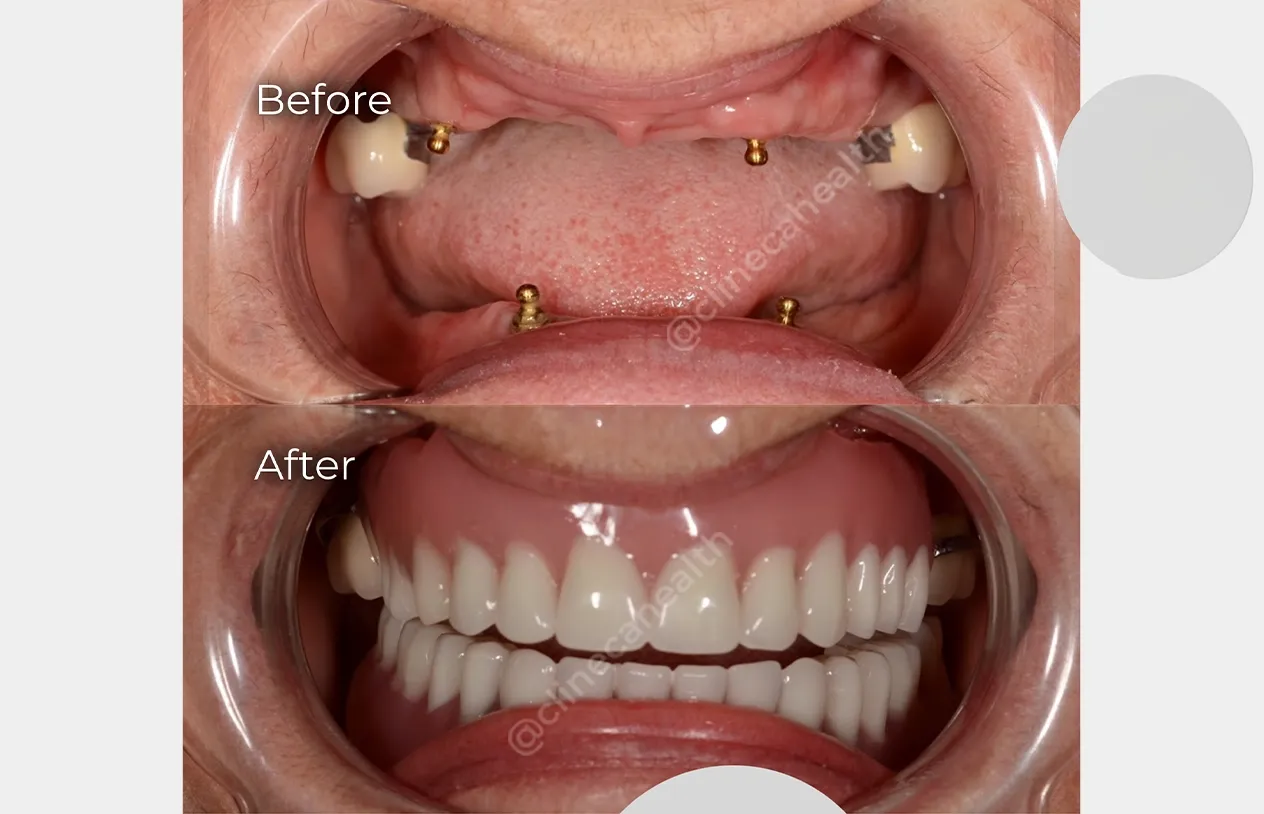
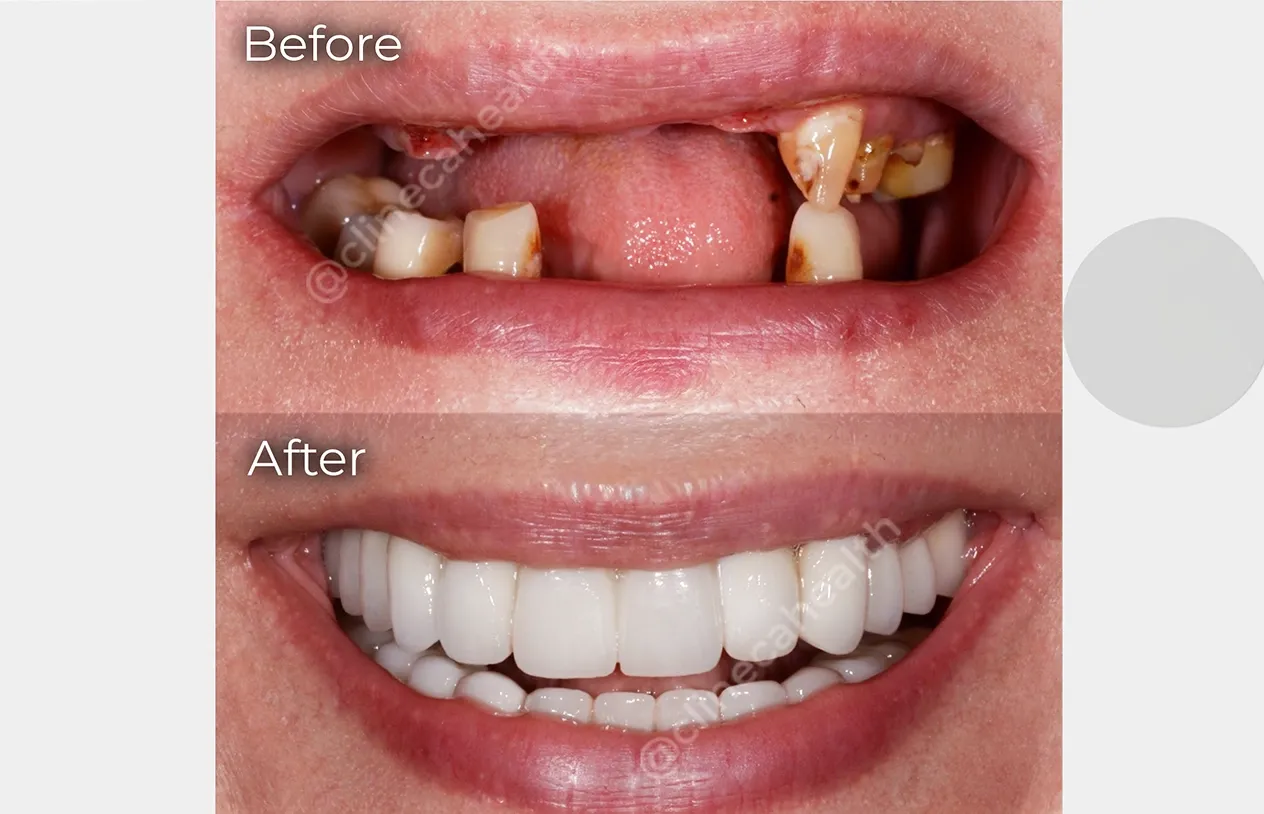
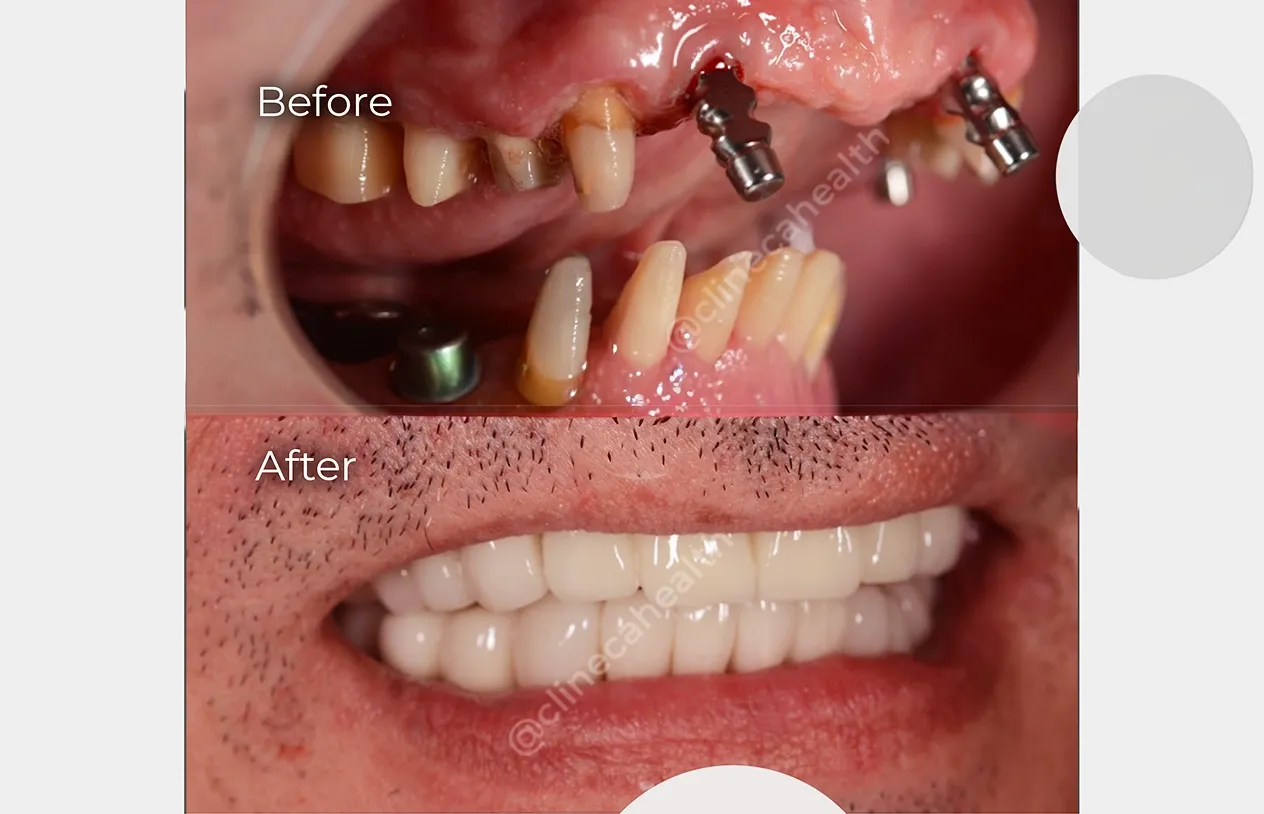
Dental Implants — before & after
 BeforeAfter
 BeforeAfter
 BeforeAfter
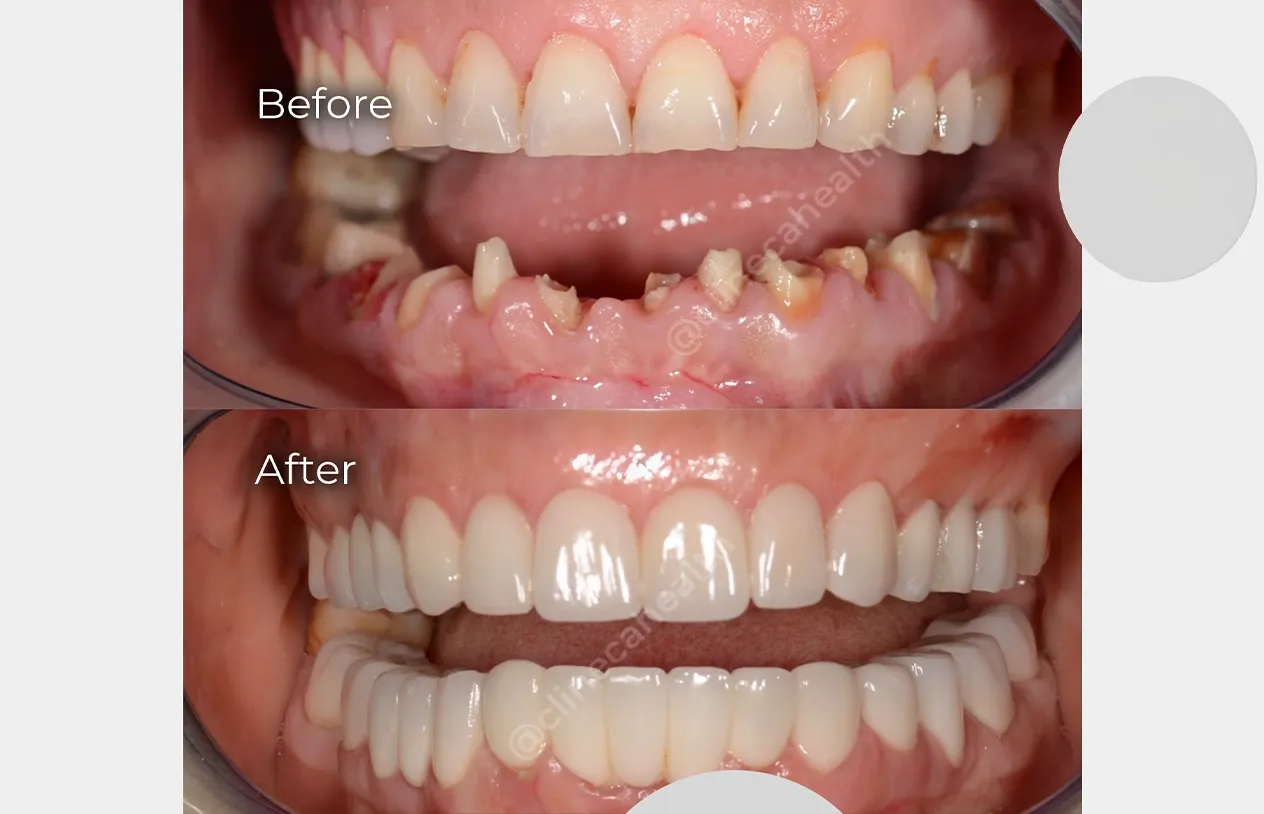 BeforeAfter
Who Is A Good Candidate For Dental Implants?
After your jaw development is complete (around age 16-18), if you are overall healthy, your oral health is in good condition (no gum diseases), and your bone structure is robust enough; and you are missing a tooth, you are a good candidate for dental implant.
What Are The Expected Outcomes Of Dental Implants?
The outcomes of Dental Implants can be analyzed in three main categories: health-related, aesthetical, and psychological. Dental implants are designed to function like natural teeth, allowing you to eat, speak, and smile with confidence. This can help to improve your overall oral health and prevent the surrounding teeth from shifting out of place. Missing teeth can cause embarrassment and insecurity, leading to a lack of confidence in social and professional settings. Dental implants can help to restore your confidence and allow you to smile, speak, and interact freely. When you are missing a tooth, you feel self-conscious and avoid smiling, laughing and perhaps even talking. With implants, you can get past the embarrassment you feel due to your missing tooth, and can gain your self confidence back.
How Are The Dental Implants Done?
A dental implant is a surgical procedure in which a metal or ceramic post is inserted into the jawbone to support a replacement tooth or bridge.
Pre-Surgery
General health inspection will start with a blood test, because diabetes and hypertension can be a risk factor. Infections such as bronchitis or sinusitis, can affect the success of the implant surgery negatively. After, mouth inspection will be done. Your gums and current biting is checked in order to decide on the size and position of the implant that will be placed. Any gum ailments, tooth decay, biting abnormalities you may have will be identified. Then, X-ray will be taken, because your bones will be examined to determine the correct bone height and length of the implant to be placed. Tomography may be needed in certain cases tomography. Then, treatment plan will be done. An individualized plan will be made by your dentist for your specific case.
Surgery - Implant Placement
After numbed with anesthetics, gum is incised to expose the bone. Then with a drill a space for the implant is opened on the bone. After that, the dental implant is screwed into the bone under the gum (endosteal implantation). With the implant screwed to the bone, the incision will be closed with one or two stitches.
Osseointegration Phase - Healing
After the operation, a few weeks to a few months later the implant and the bone will integrate together and become one. Only after that, can the crown be securely attached on top.
Abutment Screw Placement
Implant is an artificial root to which an artificial crown can be placed. After the implant is integrated with the bone, your dentist will re-expose the implant through another incision, this time to place the abutment on the implant and to take measurements for a fitting crown.
Crown Creation & Crown Fitting
Depending on the patient’s and dentist’s preferences, creating the best crown will take several appointments by determining the color, shape and form of the crown. The last step in implant treatment is fitting the crown.
Risks and Complications
Like any surgical procedure, dental implant treatment carries certain risks. Bone-Implant Integration Failure: Which occurs when the implant fails to properly integrate with the surrounding bone tissue. This can happen if the jawbone is not strong enough to support the implant, or if the implant is not placed properly. Infection: Since the implant is placed directly into the jawbone, there is a risk of infection at the surgical site. This can be caused by bacteria entering the wound during the surgery, or by poor hygiene and oral health care after the surgery. Bone Decay: This can occur if bacteria from the mouth enter the jawbone through the implant, causing the surrounding bone tissue to break down. Breakage or Wear: The implant itself and the abutment screw that holds the implant in place can both be subject to mechanical failure if they are not made from high-quality materials or if they are not placed properly.
What To Expect During A Dental Implant Recovery?
During the first week of the dental implant recovery process, you can expect to experience some discomfort as your mouth adjusts to the presence of the dental implant. You might experience soreness during the first week. Your gums and mouth may be sore for the first few days after getting a dental implant. This is normal and should go away on its own within a few days. You may find it difficult to eat at first because of the soreness and the presence of the dental implant. Stick to soft foods and cut your food into small pieces to make it easier to chew. You may also find it difficult to speak at first because of the dental implant. This should improve over time as you get used to the implant. It's important to maintain good oral hygiene while healing from a dental implant. Brush your teeth at least twice a day and use floss threaders or a water flosser to clean between your teeth and around the implant. After the early stages of the dental implant recovery process, you can expect the dental implant to become more stable and comfortable as your mouth adjusts to it. Decreased soreness; as your mouth adjusts to the dental implant, you should experience less soreness and discomfort. Improved eating and speaking; as your mouth becomes more accustomed to the dental implant, you should find it easier to eat and speak. Improved appearance; as the dental implant becomes more stable, it should look more natural and blend in with your other teeth. You will continue to have follow-up appointments with your dentist to check on the progress of your treatment. After meeting with your dentist at their office during your consultation you express your expectations and the dentist checks the condition of your teeth. They will inform you about their professional opinion while taking your expectations and the condition of your teeth into consideration. Then, photos of your teeth will be taken for a 3D simulation. The size, model and color can be decided by you, and you can even choose the color from the tooth color chart. After deciding, on the first operation day teeth will be scraped and if there is a need for an extraction it will also take place on the first day. Temporary veneers will be put on and your dentist will prescribe you with painkillers and antibiotics. You will stay at the hotel for about 4-5 days. During your stay you will be visited by a wellbeing specialist, and if you’re having any problems your dentist will be contacted. After these 4-5 days, your permanent veneer will be applied and it will be all done.
What To Do Before Implant Surgery?
Your dentist will provide you with instructions on do's and don'ts at first, but; Meal preparation for the days coming. Do not make important plans for the week after just in case. Medications; ask your dentist if your medications are ok to take. Certain medications thin the blood and can cause increased bleeding. If you choose to be sedated during the surgery, you should not eat for 4-12 hours before the surgery. Wear loose and comfy clothes for the surgery.
What To Do After Implant Surgery?
After the dental implants procedure, you need to keep good oral hygiene. Mouthwashes: To increase the success rate of the surgery, you should use antibacterial mouthwashes prescribed to you to keep your mouth sterile. Brushing: Whatever the dental operation you go under, keeping up with your regular brushing is important. There is no problem with toothpaste or soft toothbrush coming in contact with the operation area. Cold compresses: during the first 48 hours cold compress application will reduce the postoperative swelling, bleeding and pain. Smoking: don’t smoke for at least the first 48 hours, if possible for the first postoperative week, to prevent infection. Bleeding control: Bleeding is normal in the first 48 hours, pressure application with gauge can be used. Avoid hot beverages or food. Eating: Avoid hard, too hot or too cold foods and beverages. On the other hand, you must eat enough to heal well.
Who performs your dental implants
Dt. Ceren Saruhanoğlu
Doctorate in Prosthodontics (Istanbul University) · aesthetic dentistry & smile design · founder of Bright Dental Studio
Frequently asked questions
What are dental implants?+
Dental implants are prostheses used to replace missing teeth. They are basically screws that are implanted into the bone and after the bone and gum tissues are recovered, crowns, bridges or dentures are placed on the implant to replace the missing teeth.
Who can get dental implants?+
If you are missing a tooth or several teeth, and your overall oral health is good, then you can get implants.
What are the advantages of dental implants?+
Dental implants can improve the function and appearance of your teeth by replacing missing teeth with artificial ones.
What are the disadvantages of dental implants?+
Dental implants are invasive corrective surgeries and come with possibility of complications of surgeries. Infection, inflammation, and pain can occur.
How long does it take to get dental implants?+
It takes several weeks to several months for a dental implant treatment to be complete. First a screw is planted into the bone, if the bone tissue is not strong or not unavailable, bone and gum grafting may be required and that will increase the duration of the treatment as the screw placement will be postponed until the tissues are recovered and healthy enough. Then the implant is placed and the gums and bone needs to heal for the crown to be placed and the procedure to be completed. The duration will depend on the healing speed.
Is it painful?+
As an invasive operation, you should expect a certain level of pain. Anesthesia will be used during the procedure so you won’t feel any pain. After the procedure you may feel a level of pain and tenderness around the operation site. That will last a maximum of 7 days with decreasing intensity.
How long do dental implants last?+
Dental implants are made to last your lifetime.
Are dental implants removable?+
Dental implants are permanent and nonremovable, and require surgery to be removed.
Plan your dental implants
Pick your surgeon and dates — we’ll tell you exactly when to fly and what's included.