
Dental Bridges in Istanbul
The dental bridge is a series of connected crowns that fills a gap between teeth
What Are Dental Bridges?
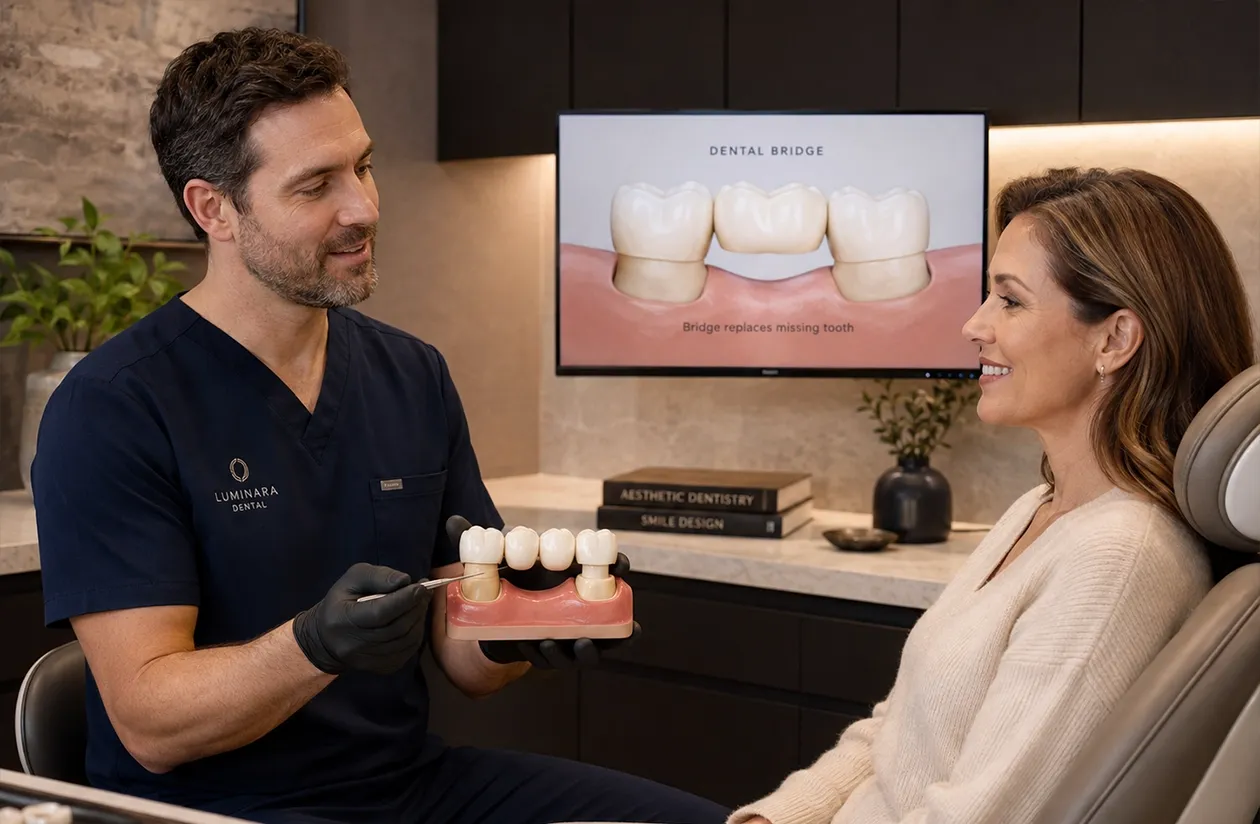
The dental bridge is a series of connected crowns that fills a gap between teeth. It replaces a missing tooth with a full artificial tooth crown in between caps. Traditional fixed bridges are two or more crowns that are connected to a filler tooth or teeth. The crowns keep the bridge in place. Cantilever bridge is the false tooth connects to only one abutment tooth. Maryland bridge is a resin bonded bridge generally used in the front teeth. It is made of porcelain fused to metal or ceramic teeth supported with a framework. Implant supported bridge is the similar to the traditional fixed bridge.
Who Is A Good Candidate For A Dental Bridge?
If you are missing a tooth with neighboring teeth healthy, bridge can be an ideal treatment for you. Missing teeth can cause biting and chewing difficulties, as well as self-consciousness about your smile, having a dental bridge done can solve these problems.
What Are The Expected Outcomes Of Dental Bridges?
The outcomes of Dental Bridges can be analyzed in three main categories: aesthetical, health-related, and psychological. Missing teeth, especially the front teeth, looks unpleasant. By replacing the missing teeth with bridges, you'll have a beautiful set of teeth you’ll not be afraid to show! Missing teeth may cause irritation, or biting problems. With a dental bridge you will have your full set of teeth and these won’t be problems anymore! Missing front teeth can cause psychological distress and cause low self-esteem. You may become too self-conscious and pause whenever you want to smile or laugh. This will cause psychological stress and can lead to anxiety. With dental bridge treatment you can regain your confidence and free yourself from this stress!
How Are The Dental Bridges Done?
A dental bridge is a permanent dental appliance that is used to replace missing teeth by attaching artificial teeth to the surrounding natural teeth or dental implants.
Preparation
In a traditional bridge procedure, you will need two visits to the dentist’s office. First the neighboring teeth will be prepared for crown fitting, with filing the teeth to an appropriate shape for the crown. Then impressions or a 3D scan of the area will be taken to send to a laboratory. Your dentist will cover the filed down teeth and exposed areas with a temporary bridge while your permanent bridge is being prepared in the laboratory. The impressions or digital scans sent to the laboratory for bridge preparation. Using the mold or the scan the dental laboratory will create a bridge, false tooth/teeth and crowns.
Placing The Crown
On your next visit, the laboratory will sent your permanent bridge to the dentist’s office and your dentist can remove the temporary bridges to replace with the permanent ones. Your dentist will carefully place the bridge and crowns, and make sure it fits.
Risks and Complications
Every medical treatment comes with risks and complications. Possible complications of a dental bridge treatment include: Bridge fail due to tooth decay: Surrounding teeth decaying can cause the bridge to fail Bridge fail due to deterioration: Cement used while placing the bridge can deteriorate, which will cause the bridge to fail. Looseness: The bridge can come loose.
What To Expect During A Dental Bridge Recovery?
During the first week of the dental bridge recovery process, you can expect to experience some discomfort as your mouth adjusts to the presence of the dental bridge. Here are some things you might experience during the first week: Your teeth and gums may be sore for the first few days after getting a dental bridge. This is normal and should go away on its own within a few days. You may find it difficult to eat at first because of the soreness and the presence of the dental bridge. Stick to soft foods and cut your food into small pieces to make it easier to chew. You may also find it difficult to speak at first because of the dental bridge. This should improve over time as you get used to the bridge. It's important to maintain good oral hygiene while wearing a dental bridge. Brush your teeth at least twice a day and use floss threaders or a water flosser to clean between your teeth and around the bridge. After the early months of the dental bridge recovery process, you can expect to see the bridge become more stable and comfortable as your mouth adjusts to it. Decreasing soreness; as your mouth adjusts to the dental bridge, you should experience less soreness and discomfort. Improving eating and speaking; as your mouth becomes more accustomed to the dental bridge, you should find it easier to eat and speak. As the dental bridge becomes more stable, it should look more natural and blend in with your other teeth. You will continue to have follow-up appointments with your dentist to check on the progress of your treatment. These appointments are usually scheduled every 4-6 weeks. After meeting with your dentist at their office during your consultation you express your expectations and the dentist checks the condition of your teeth. They will inform you about their professional opinion while taking your expectations and the condition of your teeth into consideration. Then, photos of your teeth will be taken for a 3D simulation. The size, model and color can be decided by you, and you can even choose the color from the tooth color chart. After deciding, on the first operation day teeth will be scraped and if there is a need for an extraction it will also take place on the first day. Temporary veneers will be put on and your dentist will prescribe you with painkillers and antibiotics. You will stay at the hotel for about 4-5 days. During your stay you will be visited by a wellbeing specialist, and if you’re having any problems your dentist will be contacted. After these 4-5 days, your permanent veneer will be applied and it will be all done.
What To Do Before The Bridges?
Here are some things to care for your teeth before a dental bridge operation: Avoid certain medications: Your dentist may ask you to avoid taking certain medications before the procedure, as they can interfere with the anesthetic or increase your risk of bleeding. Be sure to follow your dentist's instructions on this. Avoid certain foods and drinks: Your dentist may also ask you to avoid certain foods and drinks before the procedure, such as caffeine or alcohol, as they can interfere with the anesthetic or increase your risk of bleeding. Brush and floss your teeth: It's important to maintain good oral hygiene before the procedure to ensure your mouth is clean and healthy. Be sure to brush your teeth at least twice a day and floss daily. Use an antimicrobial mouthwash: Using an antimicrobial mouthwash before the procedure can help kill bacteria and reduce your risk of infection.
What To Do After The Bridges?
Here are some things you should do after having a dental bridge: Take prescribed medications as directed: Your dentist may prescribe pain medications or antibiotics to help manage pain and reduce your risk of infection. Be sure to take these medications as directed. Avoid hard or crunchy foods: Avoid eating hard or crunchy foods for the first few days after the procedure to allow your mouth time to heal. Stick to soft foods and cut your food into small pieces to make it easier to chew. Avoid alcohol and tobacco: Avoid consuming alcohol and tobacco products for at least the first few days after the procedure to allow your mouth time to heal. Maintain good oral hygiene: It's important to maintain good oral hygiene after the procedure to ensure the success of your dental bridge. Brush your teeth at least twice a day and use floss threaders or a water flosser to clean between your teeth and around the bridge.
Who performs your dental bridges
Dt. Ceren Saruhanoğlu
Doctorate in Prosthodontics (Istanbul University) · aesthetic dentistry & smile design · founder of Bright Dental Studio
Frequently asked questions
How long does it take?+
Since the bridge is prepared specifically for your case, you need 2 visits to the dentist’s office, in the first visit an impression or a scan of your teeth will be taken to sent to a laboratory for the dental bridge to be prepared. Depending on the laboratory, material, and type of the bridge this period can last a few weeks. After the laboratory sends back your bridge it will be placed during your second visit and the procedure will be ended.
Does the procedure hurt?+
There is no pain involved in the procedure, filing of the teeth doesn’t hurt as there are no nerves on the teeth. Placement of the temporary/permanent bridges also does not hurt. You may feel slight discomfort, but not pain.
How long does the bridge last?+
Dental bridges last 5-10 years, depending on the wear and tear effects on it. With a good oral hygiene practice and regular dentist visits, it can last more than 10 years.
Is it hard to speak/eat with a dental bridge?+
The bridge fills the gap caused by a missing tooth or missing teeth, This will allow you to eat better, and speak clearly. At first you may need to get accustomed to your new dental bridge, it may feel weird, and during this time you may choose to avoid hard foods.
Are there alternatives to dental bridges?+
Partial dentures that are removable false teeth can be chosen instead of dental bridges. Another option would be dental implants. See the respective pages for more information on them.
What would a dental bridge improve?+
Getting a bridge will help with your biting/chewing, prevent remaining teeth from moving out of place, restore speech and give you a better smile with a full set of teeth.
My tooth was removed over a year ago for a dental bridge but I couldn’t get it done. Is it too late now to get a dental bridge?+
You don’t have to worry. A dental bridge can still be applied. You can also choose to get a dental implant. Consult your dentist before you choose.
I’m considering getting a dental bridge but am afraid it will affect my eating habits. For example, can I bite an apple with a bridge?+
Dental bridges are made to function as natural teeth. You can eat and bite into apples as you like. However, you should avoid hard foods to make dental bridge as well as your natural teeth last longer.
Plan your dental bridges
Pick your surgeon and dates — we’ll tell you exactly when to fly and what's included.