
Braces in Istanbul
Braces are used to correct misalignment of the teeth and bite
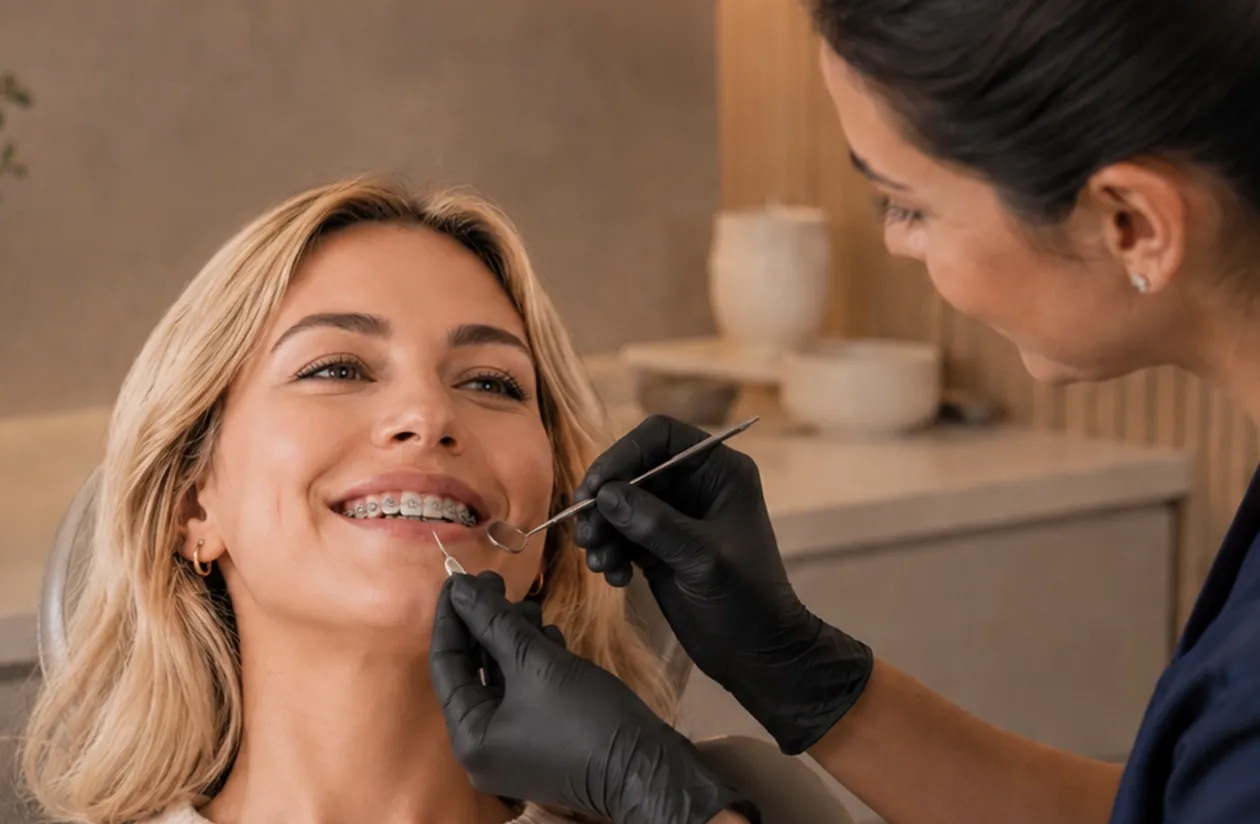
What Are Braces?
Braces are used to correct misalignment of the teeth and bite. Braces are one of the most widely used methods to straighten teeth and it is by far the most effective. Brackets can be made of ceramic, plastic or metal. Ceramic and plastic ones are preferred for cosmetic reasons. However, plastic ones are prone to staining. Invisalign Aligners type of straightening makes use of custom made teeth trays to correct the teeth. Lingual-type brackets are one of the braces that are hidden on the inner side of the teeth.
Who Is A Good Candidate For Braces?
If you want to conceal chips in your teeth, or camouflage discolorations; or if you want the gaps between your teeth to be gone or change the shape of your teeth, you can have a braces procedure to do all of that.
What Are The Expected Outcomes Of Braces?
The outcomes of braces can be analyzed in three main categories: aesthetical, health-related, and psychological. Misaligned teeth often look unpleasant and less aesthetically pleasing. After your braces treatment you will have perfectly aligned teeth which will give you more confidence in your daily life and you’ll smile more often! Each malocclusion type comes with a variety of complications, uneven bite and proneness to teeth decay are most common health problems that comes with malocclusion of the teeth. After braces the malocclusion will be corrected and it will give you a normal bite, and these complications can be prevented. Malocclusion can cause loss of self-esteem and can affect your daily life. You may smile less often, afraid to show your teeth. After getting the perfect smile with your perfectly aligned teeth, you will feel more confident and smile more!
How Are The Braces Treatment Done?
The way braces treatment applying is constant pressure to move the teeth over a period of time.
Examination
On your first visit to the orthodontist’s office, they will conduct a clinical exam, ask questions about your health, take pictures and X-ray your mouth as well as take impressions of your teeth. Then, they will develop a treatment plan according to the information they’ve gathered. The duration of the treatment is determined by the severity of the malocclusion, available space in the mouth, the distance the teeth will move, health level of the gums and bone and how closely you follow the instructions. On average, a braces treatment lasts between one to three years.
Adjustments
During the treatment, you will have frequent visits to the dentist’s office, typically once a month, during which your dentist will examine the progress of your teeth and the pressure the braces are putting on your teeth. They may make adjustments to create more tension and pressure if they find it necessary. They may add rubber bands and/or adjust the wire. In extreme cases where the pressure needed can not be provided by just the brackets alone, a headgear can be applied to be worn at home. In some cases, an orthodontic surgery might be needed.
Retainers
After the desired result is achieved, that is the teeth are straightened, your braces will be taken off and your teeth will be thoroughly cleaned. Your dentist may take another set of X-rays and impressions to check the improvement. After the braces, your dentist will recommend you to wear retainers for a while to prevent the teeth from shifting back. The retainers are crucial in post-braces care, because as straight as your teeth become with the braces, your gums and bone structure fall behind catching up to them. If you don’t wear retainers, there is a good possibility that your teeth will shift and leave you with not so straight teeth. To prevent that, retainers will be given to you by your orthodontist, and you should wear them full time for the first six months and then while sleeping after six months. However, it is depending on the case.
Risks and Complications
Every medical treatment comes with a set of risks and complications. Braces treatment can have these possible complications: Tooth Decay or Gum Disease: During the braces treatment it may be hard to clean the teeth properly and that might lead to tooth decay and/or gum disease. It's crucial to keep the good oral hygiene by brushing twice and flossing once a day. Soft Tissue Injuries and Canker Sores : Contact with the braces can make your inner cheeks, lips and gums sore and can cause canker sores. In this case, you should ask your orthodontist for a prescription for reducing the irritation. Root Resorption: Root resorption means shortening of the tooth roots during the treatment. Rarely this problem causes significant long-term health problems for the affected teeth. It is seen more in prolonged treatments beyond 2-3 years. Decalcification & Cavities: Decalcification is white spots on the teeth and cavities can be caused by improper oral hygiene. Keeping a good oral hygiene practice by brushing twice and flossing once a day can prevent this. Ankylosis: Very rarely tooth roots can fuse with the bone which is known as “ankylosis”. In such cases braces cannot move that tooth and the surrounding teeth will move around that tooth and cause improper alignment. Relapse: More than being a complication, a relapse is a potential consequence of the treatment. To prevent, retainer use is advised to be worn as instructed.
What To Expect During The Braces Recovery?
During the first week of the braces recovery process, you can expect to experience some discomfort as your mouth adjusts to the presence of the braces. Your teeth and gums may be sore for the first few days after getting braces. This is normal and should go away on its own within a few days. You may find it difficult to eat at first because of the soreness and the presence of the braces. Stick to soft foods and cut your food into small pieces to make it easier to chew. You may also find it difficult to speak at first because of the braces. This should improve over time as you get used to the braces. It's normal for your teeth to feel loose after getting braces. This is because the braces are pulling your teeth into their proper positions. The teeth will eventually tighten back up as the treatment progresses. It's important to maintain good oral hygiene while wearing braces. Brush your teeth after every meal and use interdental brushes or a water flosser to clean between your teeth and around the brackets. After the earlier recovery process, you can expect to see progress in the alignment of your teeth. As your mouth adjusts to the braces, you should experience less soreness and discomfort. As your teeth become more aligned, you should find it easier to eat and speak. As the braces work to move your teeth into their proper positions, you may feel your teeth getting tighter. This is a normal part of the treatment process. As your teeth become more aligned, you may notice changes in your bite. Your orthodontist will monitor these changes and make any necessary adjustments to your braces. When the teeth become more aligned, as appearance, your teeth may look more straight and your smile may look different. After meeting with your dentist at their office during your consultation you express your expectations and the dentist checks the condition of your teeth. They will inform you about their professional opinion while taking your expectations and the condition of your teeth into consideration. Then, photos of your teeth will be taken for a 3D simulation. The size, model and color can be decided by you, and you can even choose the color from the tooth color chart. After deciding, on the first operation day teeth will be scraped and if there is a need for an extraction it will also take place on the first day. Temporary veneers will be put on and your dentist will prescribe you with painkillers and antibiotics. You will stay at the hotel for about 4-5 days. During your stay you will be visited by a wellbeing specialist, and if you’re having any problems your dentist will be contacted. After these 4-5 days, your permanent veneer will be applied and it will be all done.
What To Do During The Braces Treatment?
The braces can sometimes be uncomfortable and painful. When needed you can take over the counter painkillers to relieve the pain. If the pain becomes unbearable after an adjustment, you should contact your dentist. Eating with braces is an important topic as the food can get stuck in the braces and can damage them or deteriorate your teeth health. You should avoid chewy, crunchy, sticky foods. Also you should avoid to bite hard fruits. You may feel like you have a loose tooth during the treatment, but that is completely normal as the way braces work is making them move which creates this looseness but it will be fine with time. If the wires or bands on your braces come loose, call your dentist as soon as possible to make an appointment for fixing. The braces can trap the food, so it is important that you follow a good oral hygiene practice. You should brush your teeth after each meal, rinse with mouthwash and floss once a day.
What To Do After The Braces Treatment?
When the wished result is achieved, your dentist will remove the braces and give you retainers instead. The retainers are very important to keep your teeth straight. They allow bone and gum tissues to support the newly aligned teeth by keeping the teeth in a certain position. You should wear the retainers as your dentist’s instructions for the best results.
Who performs your braces
Dt. Ceren Saruhanoğlu
Doctorate in Prosthodontics (Istanbul University) · aesthetic dentistry & smile design · founder of Bright Dental Studio
Frequently asked questions
What kind of problems can braces fix?+
Crooked, gapped teeth and uneven bites (malocclusions) can be treated with braces.
What happens during abdominoplasty surgery?+
During abdominoplasty surgery, your surgeon will work to remove extra fat and skin of the abdomen and then repair and tighten your abdominal muscles. Liposuction may be required according to your needs.
Are braces painful?+
At first, and after each adjustment to the braces, you can experience soreness and some level of pain, for which you can take over the counter painkillers. If the pain is too severe, you should discuss it with your orthodontist.
How long does the braces treatment take?+
The duration of the treatment depends on the severity of the problem your teeth has. Other than the level of malocclusion, the amount of room available in your mouth, your general oral health and how closely you follow the instructions also affect the duration of the treatment.
Which type of braces should I get?+
Your orthodontist will suggest the best option for your case. Although you may choose lingual or clear braces for aesthetic reasons.
How often will I need to see my dentist?+
You need to see your dentist once every month or two months for evaluation of the process and making adjustments to the braces.
How do braces work?+
Braces apply constant pressure to move the teeth. According to the distance the teeth must be moved and the speed in which the teeth move and the bone and the gums to heal determines the duration of the treatment.
Are there any restrictions on what I eat?+
You should not eat hard foods, chewy or sticky foods, crunchy foods as these can stick to the braces or harm the braces. If food gets stuck in the braces it can cause tooth decay, and if the braces get damaged your treatment duration will increase.
Plan your braces
Pick your surgeon and dates — we’ll tell you exactly when to fly and what's included.