

Have a question about Facial Fat Transfer?
In this article
- What is the usual swelling timeline after facial fat transfer?
- Why does swelling last longer in some parts of the face?
- When should swelling start to worry you?
- What helps swelling go down faster without harming the graft?
- How long should you stay in Turkey after facial fat transfer?
- What affects the overall cost if you are considering treatment abroad?
- How do you choose a clinic and surgeon for facial fat transfer safely?
How long does facial fat transfer swelling last? Most people see the biggest drop in swelling within the first 2 to 3 weeks, but mild puffiness and shape changes can continue for 6 to 12 weeks, and final settling may take 3 to 6 months. The exact timeline depends on where fat was placed, how much was transferred, whether liposuction was also done, and how your body heals.
What is the usual swelling timeline after facial fat transfer?
The short answer is that facial fat transfer swelling lasts longer than many people expect, but most of the visible swelling is front-loaded. Days 2 to 4 are often the puffiest. By the end of the first week, bruising may still be present and your face can look overfilled. That is common after fat grafting.
A practical way to think about recovery is in stages. In the first 7 to 10 days, the face often looks swollen enough that people prefer to stay home or limit social plans. During weeks 2 and 3, the face usually starts looking more recognisable. After that, recovery becomes less dramatic but more gradual. Small changes in fullness, firmness, and symmetry can continue for weeks.
This slower phase matters because fat transfer is not like filler settling over a few days. Transferred fat has to establish a blood supply to survive. Some of the initial volume is swelling, some is the transferred fat itself, and some of that fat will not survive long term. Reviews in PubMed literature on facial fat grafting describe this as a staged healing process, which is why final results are judged months, not days, after surgery.
A realistic week-by-week view
- ✓Days 1 to 3: swelling rises and often peaks; the treated areas may feel tight or firm.
- ✓Days 4 to 7: bruising and puffiness are still common; the face may look larger than expected.
- ✓Weeks 2 to 3: swelling usually drops enough for most people to look socially presentable, though still not final.
- ✓Weeks 4 to 6: lingering puffiness becomes more subtle; asymmetry often improves.
- ✓Months 2 to 3: contour continues to settle; firmness softens.
- ✓Months 3 to 6: a better point to judge the longer-term result.
If the fat transfer was done together with another procedure, such as a facelift, eyelid surgery, or a facial contouring procedure, swelling usually lasts longer and can be harder for patients to interpret. In those cases, it is normal for one area to settle faster than another.
📋 Early overfilling can be normal Many surgeons expect the face to look too full at first. That early fullness includes swelling, not just the transferred fat that will remain long term.
For most patients, swelling is most obvious in the first few days, improves clearly by week 2 or 3, then settles more slowly over the next 1 to 3 months. Final softness and contour often take several months. The face may look uneven early on, and that alone does not always mean a problem.
Why does swelling last longer in some parts of the face?
This is where patient expectations often go wrong. People hear one timeline, then worry when their own swelling behaves differently. In real life, swelling after facial fat transfer is very area-specific.
The under-eye and lower eyelid area often looks swollen for longer because the skin is thin and even a small amount of fluid shows easily. A little puffiness here can look dramatic. The cheeks and midface can also stay full for a while, especially when more volume is placed to restore age-related hollowing. In contrast, some temple or jawline swelling may feel firmer but be less visually obvious.
Volume matters too. A small touch-up transfer to one area usually settles faster than a full-face transfer. If fat was harvested with liposuction at the same session, you are also recovering from the donor area. That does not increase facial swelling directly, but it adds to the overall recovery burden and can make the first week feel harder.
Another factor is technique. Fat is usually placed in small amounts through multiple passes rather than one large pocket. This is done to help the graft survive, but it still causes tissue trauma, and that trauma contributes to swelling. Reviews of autologous fat grafting in PubMed literature consistently note oedema, bruising, and temporary irregularity as expected short-term effects.
If you are comparing your face to online photos, be careful. Photos taken at different angles, in different light, or at different stages can make swelling look much worse or much better than it really is.
Swelling lasts longer when the treated area has delicate tissues, when larger volumes are injected, or when several facial areas are treated at once. Under-eye and midface areas often show swelling longer than deeper or broader areas. Combined surgery also tends to extend recovery.
When should swelling start to worry you?
Most swelling after facial fat transfer is normal. The harder part is knowing when it stops being normal.
Expected healing can include puffiness that shifts during the day, one side settling faster than the other, firmness in injected areas, and bruising that changes colour over 1 to 2 weeks. These features often improve gradually rather than in a straight line.
There are, however, urgent warning signs. Infection can show up as increasing warmth, redness, tenderness, pus, or fever. The NHS notes that cosmetic procedures can lead to complications including infection, and patients should know who to contact if something does not look right. PubMed literature on facial fat grafting also describes vascular complications as rare but important. These happen when blood flow to tissue is compromised. Signs may include severe pain, skin that turns pale, dusky, or mottled, unusual blistering, or areas that seem to be breaking down instead of healing.
A separate red flag is any change in vision, severe headache with facial symptoms, or new eye pain after fat transfer around the upper face. While uncommon, visual complications are treated as emergencies in the medical literature because delays matter.
If swelling is suddenly increasing after it had been improving, that also deserves review. A slow recovery is one thing. A reversal in the pattern can point to a haematoma, infection, or another problem.
You should have clear written aftercare instructions and a direct contact route before treatment. If you are travelling for surgery, this matters even more, because problems do not always wait until you are back home.
⚠️ Get urgent medical help for eye or skin blood-flow symptoms Seek urgent assessment if you develop vision changes, severe eye pain, rapidly worsening pain, pale or dusky skin, marked blanching, blistering, or tissue that seems to be dying rather than healing.
⚠️ Infection needs prompt review Call your surgical team or local doctor if you have fever, spreading redness, warmth, pus, or swelling that becomes more painful instead of less.
Mild asymmetry, firmness, bruising, and slow improvement are common. What is not routine is swelling that suddenly worsens, severe pain, spreading redness, pus, fever, skin colour change, or visual symptoms. These need urgent medical advice because infection or blood-flow problems can become serious if ignored.
What helps swelling go down faster without harming the graft?
The best approach is boring, and that is usually a good sign. Give the graft time and avoid anything that adds pressure, heat, or unnecessary irritation in the early phase.
Sleep with your head elevated if your surgeon advises it. Avoid pressing on the treated areas, including face-down sleeping and tight masks or goggles if they put pressure where fat was injected. Go easy on workouts until you are cleared to return. Heavy exercise early on can increase swelling and throbbing.

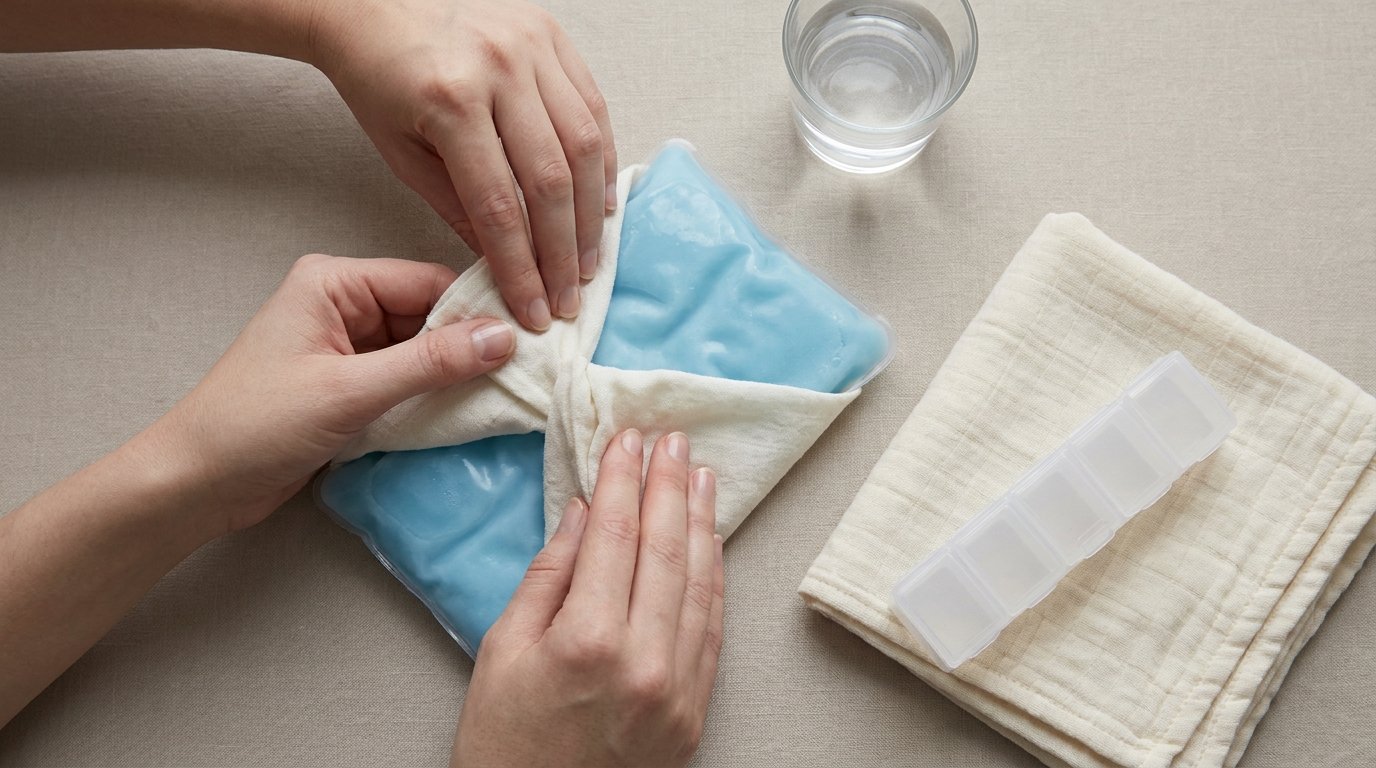
Cold compresses are sometimes advised in the first day or two, but only if your own surgical team recommends them and tells you how to use them safely. Too much cold, too much pressure, or homemade remedies can irritate the skin. The same goes for massage. Patients often want to smooth lumps early, but massaging too soon can be unhelpful when the fat is still settling.
Hydration, light walking, and sticking to your prescribed medicines all matter more than miracle products. If you smoke or use nicotine, be aware that it can reduce blood flow and may affect graft survival and healing. That concern is widely reflected in plastic surgery guidance and medical reviews of fat grafting.
If the treatment involved the cheeks or under-eyes, patience is especially important. Those areas can look puffy long after the painful part is over.
- ✓Sleep with your head raised if advised
- ✓Avoid pressure on the treated facial areas
- ✓Pause strenuous exercise until your surgeon says it is safe
- ✓Take medicines only as directed
- ✓Avoid smoking and nicotine during healing
You cannot rush healing, but you can avoid making swelling worse. Head elevation, avoiding pressure on the face, following medication advice, and taking a short break from intense exercise usually help. The goal is steady healing, not aggressive massage or unapproved treatments that may disturb the graft.
How long should you stay in Turkey after facial fat transfer?
For a straightforward facial fat transfer, patients often want to know whether a very short trip is realistic. From a recovery point of view, staying long enough for the first post-op check is usually the safer choice. That gives your surgeon time to assess swelling, bruising, and early signs of infection or blood-flow issues.
A practical point of view is this: the first few days are often when swelling looks worst, and it is not ideal to be handling airports, bags, and long flights while you are most puffy and least comfortable. If facial fat transfer is combined with another facial procedure, the stay usually needs to be longer.
When comparing providers, ask specific aftercare questions rather than general promises. Who checks you before you fly? What happens if one side becomes suddenly harder or redder? Who do you contact after hours? If you are still at the research stage, the clinic’s consultation page and doctor information page should help you understand who plans treatment and how follow-up is organised.
This is also the stage to ask whether the procedure is being done alone or alongside something like facelift surgery, eyelid surgery, or another facial contouring treatment. Combined surgery changes the recovery picture, and your travel plan should match that reality.
For international patients, staying long enough for early reviews is usually wiser than leaving as soon as swelling peaks. Many people plan around a week, but the right stay depends on the extent of treatment, combined procedures, and the surgeon’s follow-up plan. Flying too soon can make a stressful first recovery feel harder.
What affects the overall cost if you are considering treatment abroad?
For this topic, it is more useful to understand what drives the quote than to focus on a generic number. Facial fat transfer is not one standard procedure. A small under-eye correction is different from a full-face volume restoration plan, and both differ again if fat transfer is added to facelift or eyelid surgery.
The final quote usually depends on the number of facial areas treated, the amount of harvesting needed, whether the procedure is done with local anaesthetic or general anaesthetic, and whether overnight observation is included. Surgeon experience and the clinic’s aftercare structure also affect price.
If you are comparing options abroad, ask for a written breakdown of what is and is not included. That can include pre-op assessment, post-op checks, medications, compression or dressings for the donor area, transfers, and hotel support if offered. The most useful quote is the one that makes the recovery plan clear, not just the headline price.
There is no single fixed price for facial fat transfer because cost depends on the treatment plan. The main drivers are how many areas are treated, whether another procedure is combined, the complexity of anaesthesia, the surgeon’s experience, and how follow-up is arranged. A personalised quote is usually given after consultation.
How do you choose a clinic and surgeon for facial fat transfer safely?
A good consultation for facial fat transfer should sound specific, not vague. You want to hear where the fat will be placed, how much overcorrection may be expected early on, which areas tend to stay swollen longest, and what the plan is if the result looks uneven at first.
It is also reasonable to ask about urgent complications in plain language. How does the team monitor for infection? What symptoms suggest a blood-flow issue in the skin? Who reviews you if you are worried before your flight home? Honest answers to those questions are more useful than broad claims about comfort or convenience.
If you are researching from abroad, use the provider’s about page, team page, and contact page to confirm who you are dealing with and how communication works. Then use the consultation to test whether the medical planning is clear.
The American Society of Plastic Surgeons explains that fat grafting uses your own fat to restore volume, but like any procedure it has limits, risks, and a real healing period. That is the right mindset to bring into your decision: not fear, but realism.
You are given a clear timeline for swelling, follow-up checks, and specific warning signs that need urgent review.
You are told recovery is trivial, swelling is minimal for everyone, or no one explains what happens if you have a problem after hours.
In some cases, fillers or a staged plan may be discussed instead of, or before, fat transfer depending on the area and goal.
Look for a qualified surgeon who performs facial fat grafting regularly, gives a clear aftercare plan, and explains both swelling and complications honestly. Safe choice is less about glossy marketing and more about who is assessing you, how emergencies are handled, and whether the recovery plan makes sense for a traveller.
Frequently Asked Questions
References
- 📎PubMed search: facial fat grafting recovery complications
- 📎PubMed search: autologous facial fat grafting edema bruising vascular complications
- 📎NHS: Cosmetic procedures
- 📎ASPS: Cosmetic procedures
You Might Also Like


Our specialists
 Clineca SpecialistErkan PinegözPlastic & Reconstructive Surgery
 Clineca SpecialistHakan AktaşPlastic & Reconstructive Surgery
 Clineca SpecialistOrkun UzuneyüpoğluPlastic & Reconstructive Surgery
 Clineca SpecialistSalim İskenderPlastic & Reconstructive Surgery
 Clineca SpecialistEngin SelamioğluPlastic & Reconstructive Surgery
 Clineca SpecialistCem AydınPlastic & Reconstructive Surgery
 Clineca SpecialistAlperen ÖnalEar, Nose & Throat (ENT)