
Have a question about Ethnic Rhinoplasty?
Message us on WhatsAppIn this article
- What is ethnic rhinoplasty and how is it different from standard rhinoplasty?
- How much does ethnic rhinoplasty cost in Turkey?
- What affects the price of ethnic rhinoplasty in Turkey?
- Who is a good candidate for ethnic rhinoplasty?
- How long does it take to recover from ethnic rhinoplasty?
- Is ethnic rhinoplasty in Turkey safe?
- How do you choose a surgeon and clinic for ethnic rhinoplasty?
- Ethnic rhinoplasty vs standard rhinoplasty: which is better?
- What should you expect during the trip to Turkey?
- What are the main risks, limitations, and alternatives?
Ethnic rhinoplasty Turkey costs vary considerably and are only confirmed after consultation, is generally safest when planned with a properly qualified surgeon and realistic assessment, and usually needs a stay in Turkey of a number of days plus several months for swelling to settle. The key caveat is that ethnic rhinoplasty turkey is not one standard operation: price, safety, and recovery depend on your nose shape, skin thickness, breathing issues, whether it is a first-time or revision nose job, and what is actually included in the quote.
What is ethnic rhinoplasty and how is it different from standard rhinoplasty?
Ethnic rhinoplasty is nose surgery tailored to preserve or refine features linked to a person’s background rather than forcing every nose toward the same narrow ideal. In practice, that often means careful support, subtle reshaping, and attention to thicker skin, weaker cartilage, nostril width, bridge height, and breathing.
Ethnic rhinoplasty is a type of rhinoplasty nose job designed around facial balance, skin thickness, cartilage strength, and cultural or family features that matter to the patient. The aim is usually refinement without erasing identity.
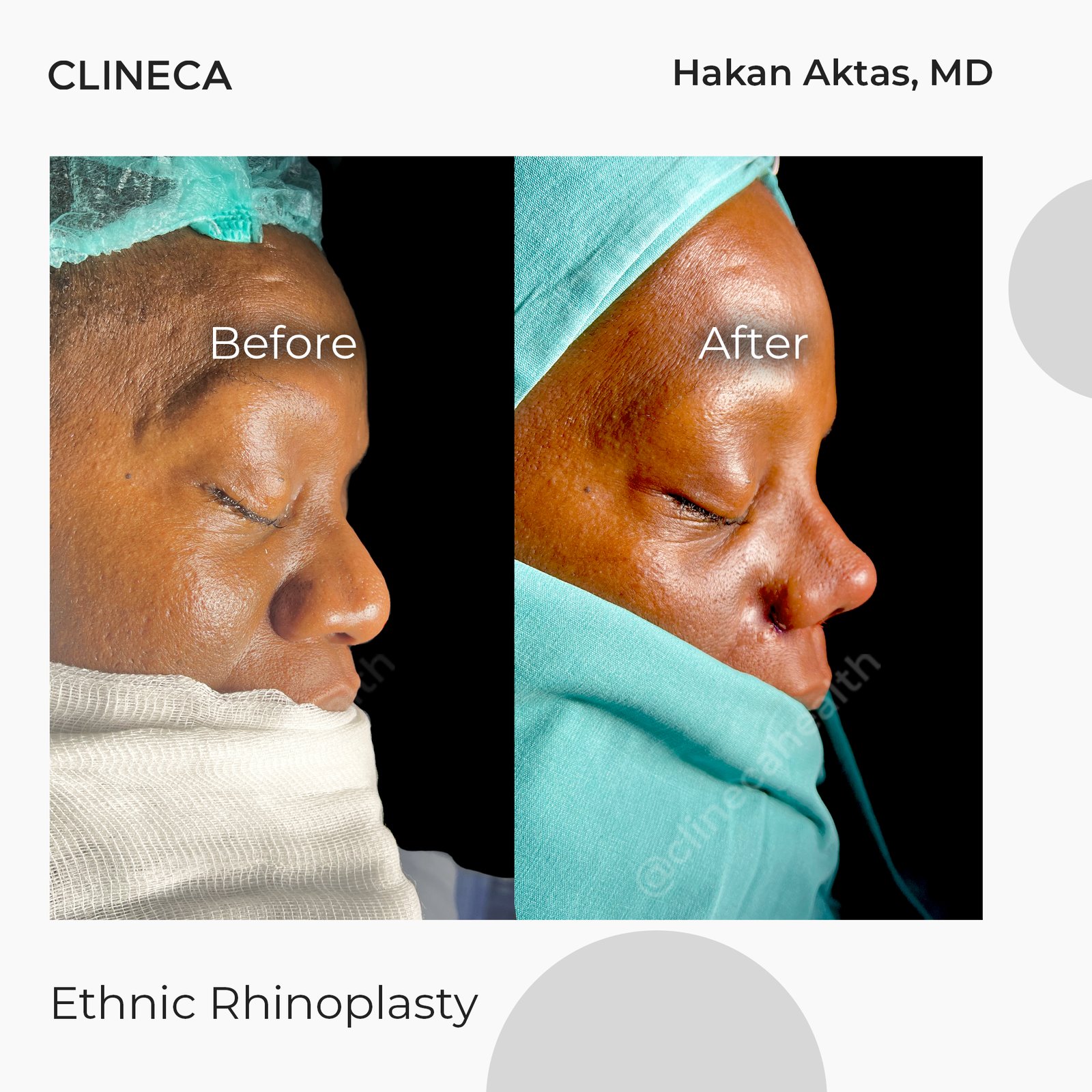
That matters because many people searching for rhinoplasty for nose changes are not asking for a small, sharply defined “Western” nose. They may want a bridge built up rather than reduced, nostrils narrowed without over-tightening, or a drooping tip supported without looking pinched. A good plan starts with your anatomy and your goals, not a template.
Common concerns in ethnic rhinoplasty include:
- ✓A low bridge that needs augmentation rather than reduction
- ✓A broad or rounded tip with thicker skin
- ✓Weaker tip cartilage that needs support grafts
- ✓Wide nostrils or a broad base
- ✓Asymmetry from prior surgery or injury
- ✓Breathing issues alongside cosmetic changes
This can apply to many patients, including people of African, Middle Eastern, Asian, Latin American, Mediterranean, or mixed heritage. It is not one fixed technique.
Why the surgical plan may be different
In some standard rhinoplasty cases, the surgeon mostly removes bone and cartilage. In ethnic rhinoplasty, the operation often needs a more conservative approach. Support is important. If too much cartilage is removed, the nose can look collapsed, over-narrowed, or less natural over time.
That is why grafts are often discussed. A graft is a small piece of your own cartilage, commonly taken from the septum inside the nose, and sometimes from the ear if extra support is needed. In more complex revision cases, rib cartilage may be considered.
According to the American Society of Plastic Surgeons (ASPS), rhinoplasty can change the size, shape and proportions of the nose and may also improve impaired breathing. That dual cosmetic-and-functional aspect is especially relevant when an ethnic rhinoplasty plan includes both appearance and airflow goals.
📋 Identity-preserving results matter Many patients do not want a completely different nose. They want a nose that fits their face better while still looking like them.
- ✓Bridge augmentation instead of bridge reduction
- ✓Tip support instead of aggressive tip narrowing
- ✓Nostril narrowing only when it suits the whole face
- ✓Breathing assessment as part of the plan
How much does ethnic rhinoplasty cost in Turkey?
Ethnic rhinoplasty in Turkey starts from around €3,500 when your own cartilage is used for grafting. That is a starting point, not a guaranteed quote — your own figure is confirmed after consultation, once the surgeon has assessed your skin thickness, how much structural support the tip and bridge need, and whether breathing work is part of the plan. Cases that need costal cartilage, or revision work on a previously operated nose, sit above that figure.
Ethnic rhinoplasty in Turkey varies in cost, and any figure is only indicative until confirmed after consultation. Final pricing depends on the surgeon, hospital, city, revision complexity, graft needs, and package contents. Prices are not standardised across providers, and exchange rates can change what you actually pay.
This is one of the first questions people ask: how much is the rhinoplasty, how much is a rhinoplasty, or how much does rhinoplasty cost in Turkey? The honest answer is that quotes vary quite a lot.
For ethnic rhinoplasty turkey, approximate prices are often lower than in the UK, US, or parts of Western Europe, but the quote is only meaningful if you know what it covers. Some clinics quote surgery only. Others include hospital fees, anaesthesia, medicines, hotel stay, airport transfers, translation support, or follow-up visits.
You should treat any online figure as a guide, not a fixed offer. Final fees are confirmed after consultation and review of your nose, your health, and your goals.
A revision case, a nose that needs structural grafting, or a case involving both cosmetic reshaping and breathing work will usually sit higher than a straightforward first-time nose job.
⚠️ Price quotes are not directly comparable Quoted prices are not standardised across providers. One quote may include hospital, transfers and hotel, while another may not. Exchange rates and package contents can also change.
- ✓Ask whether the quote covers surgeon, anaesthetist and hospital fees
- ✓Check if septoplasty or breathing work is included
- ✓Ask if cartilage grafts change the price
- ✓Confirm medicines, follow-up visits and any revision policy in writing
- ✓Ask what happens if your surgery is postponed for medical reasons
What affects the price of ethnic rhinoplasty in Turkey?
Two people can both book a nose surgery in Turkey and pay very different amounts. That does not automatically mean one is overpaying or the other is getting a bargain. The details matter.
The biggest cost factors are usually:
- ✓Primary or revision surgery: revision work is harder because of scar tissue, altered anatomy, and less available cartilage.
- ✓Open or closed approach: both are used in rhinoplasty; the right choice depends on what needs changing.
- ✓Need for grafts: support grafts often make surgery more complex.
- ✓Breathing correction: if a deviated septum or internal valve problem needs repair, the operation may be broader than cosmetic reshaping alone.
- ✓Hospital standards and length of stay: accredited facilities and an overnight stay can affect pricing.
- ✓Location and surgeon experience: fees vary between cities and between individual surgeons.
It is also worth asking whether your quote is for surgery done in a fully equipped hospital setting or a smaller day-case setting. That can affect both cost and logistics.
If you want a general overview of rhinoplasty rather than the ethnic-specific planning discussed here, you can read the clinic’s main rhinoplasty page.
Who is a good candidate for ethnic rhinoplasty?
A good candidate is usually someone who is medically suitable for surgery, understands what rhinoplasty can and cannot change, and wants improvement rather than perfection.
You may be a candidate if you:
- ✓Dislike the shape, width, projection, or profile of your nose
- ✓Want changes that still look natural on your face
- ✓Have finished facial growth
- ✓Are healthy enough for surgery and anaesthesia
- ✓Can stop smoking or vaping before and after surgery if advised
- ✓Accept that swelling can last months, especially with thicker skin
You may need a more cautious review if you:
- ✓Have had a previous nose job
- ✓Have major breathing problems
- ✓Have body image concerns or highly filtered photo goals
- ✓Have medical issues that raise surgical risk
A consultation should cover your goals, exam findings, breathing, skin thickness, internal support, and whether your expectations match what surgery can realistically do. Eligibility is individual. No article can confirm that for you.
How long does it take to recover from ethnic rhinoplasty?
Most people need about 7 to 10 days in Turkey, feel socially presentable after 2 to 3 weeks, and see steady improvement over several months. Final definition often takes longer in thicker skin noses, so ethnic rhinoplasty results usually reveal themselves gradually rather than all at once.
Most people need about a week away from work, sometimes a little more. If your job is public-facing, two weeks is often more comfortable.
NHS advice on rhinoplasty notes that you may have a blocked nose for a few weeks and need to avoid strenuous exercise for about 4 to 6 weeks. That lines up with the typical recovery pattern many international patients experience.
Why ethnic rhinoplasty can look swollen for longer
Thicker skin can hide the fine detail of tip work early on. That does not mean the operation has failed. It usually means patience is needed. The bridge may look closer to final shape before the tip does.
Travel timing
For medical travel, many patients plan 7 to 10 days in Turkey. That gives time for surgery, early review, and basic reassurance before flying home. The UK Civil Aviation Authority (CAA) advises that fitness to fly after an operation depends on the type of surgery and your doctor’s advice. In other words, do not book your return flight based only on a blog timeline.

📋 Recovery is gradual You may look much better at two weeks and still feel far from “final”. That is normal for rhinoplasty, especially around the tip.
- →Sleep with your head elevated in the early days
- →Do not wear heavy glasses on the nose unless your surgeon says it is fine
- →Avoid smoking, vaping, and strenuous activity during early healing
- →Protect the nose from bumps, pressure, and strong sun
Is ethnic rhinoplasty in Turkey safe?
Ethnic rhinoplasty in Turkey can be carried out safely, but safety is never guaranteed by destination alone and lower price does not equal lower risk. Safety depends on proper patient assessment, realistic planning, an appropriate surgical setting, clear aftercare, and whether you are actually fit for surgery and travel.
A better question than “is Turkey safe?” is: is this specific operation, for this specific patient, in this specific setting, appropriately planned?
Turkey has many experienced rhinoplasty surgeons and a large international patient market. That said, there is no country where rhinoplasty is risk-free. Problems can happen anywhere, including bleeding, infection, asymmetry, breathing changes, scarring, prolonged swelling, dissatisfaction with shape, or need for revision.
The NHS states that rhinoplasty carries risks such as bleeding, infection, breathing difficulties, and dissatisfaction with the final appearance. The Mayo Clinic also notes that rhinoplasty risks include bleeding, infection, scarring, septal perforation, and the possibility of an uneven-looking nose or need for additional surgery.
For medical tourists, safety also includes travel planning:
- ✓Whether you are medically fit for anaesthesia
- ✓Whether you have enough time in Turkey before flying home
- ✓Whether follow-up is clear if you return with swelling or concerns
- ✓Whether someone will support you in the first 24 to 48 hours
The UK Foreign, Commonwealth & Development Office (FCDO) has advised that people travelling abroad for cosmetic surgery should research the provider carefully and make sure insurance and aftercare are understood. That is sensible advice for rhinoplasty too.
Signs of a safer process
A safer pathway usually includes:
- ✓A full consultation and health screening
- ✓Discussion of what cannot safely be achieved
- ✓Clear explanation of revision risk
- ✓Consent that is not rushed
- ✓Surgery in an appropriate licensed hospital setting
- ✓Planned follow-up before you travel home
Choosing a qualified surgeon matters, but it does not remove all risk or guarantee a result. Your own health, anatomy, healing pattern, and the limits of surgery matter too.
⚠️ No nose job is risk-free Even with good planning, healing can be unpredictable and revision surgery is sometimes needed. Any provider suggesting certainty or a perfect result should make you cautious.
Your consultation includes breathing, skin thickness, internal support, realistic limits, and recovery logistics.
You are pushed to book quickly, given a fixed quote without proper assessment, or promised a specific “before and after” result.
How do you choose a surgeon and clinic for ethnic rhinoplasty?
Look for a surgeon with consistent rhinoplasty experience, clear examples of work on noses with similar skin and structure, and a process that covers breathing, support, recovery, and revision risk. Avoid choosing on price alone, and treat polished social media photos as only one small piece of evidence.
This is where many people searching rhinoplasty near me or looking at overseas packages get overwhelmed. The best choice is rarely the cheapest quote or the flashiest Instagram page.
Ask practical questions instead:
- ✓Who will actually perform the operation?
- ✓Is the surgeon experienced in ethnic rhinoplasty, not just general facial surgery?
- ✓Are there before-and-after examples of noses with anatomy similar to yours?
- ✓How often does the surgeon do revision rhinoplasty?
- ✓Where will the operation take place?
- ✓What follow-up is included before you fly home?
- ✓What happens if you have concerns after returning home?
When you review nose job before and after photos, look for consistency rather than dramatic one-off transformations. Good results should fit the face from different angles. Overly tiny tips, pinched nostrils, or noses that all look the same are not reassuring.
If you want to verify credentials or understand who is involved, use factual pages such as the clinic’s doctors page or about page. That is more useful than relying on marketing slogans.
- ✓Ask for a written breakdown of what is included
- ✓Ask how many days the surgeon wants you to stay locally
- ✓Ask whether thick skin may limit tip definition
- ✓Ask whether your breathing could change after surgery
- ✓Ask what the realistic revision pathway is if you are unhappy
Ethnic rhinoplasty vs standard rhinoplasty: which is better?
Neither is automatically better. Ethnic rhinoplasty is usually the better framework when preserving identity, supporting weaker cartilage, or working with thicker skin and bridge augmentation goals. Standard rhinoplasty can still be appropriate in straightforward cases, but the technique should always follow anatomy and goals.
In reality, many surgeons do not sharply separate the two. They simply build a rhinoplasty plan around the patient in front of them. That is the sensible approach.
If a consultation ignores your background, skin, cartilage strength, or wish to keep familiar features, it is probably not specific enough for ethnic rhinoplasty.
What should you expect during the trip to Turkey?
For an international patient, the trip is usually quite structured. You arrive, complete in-person assessment and tests, have surgery, rest locally, attend review appointments, then fly home once medically cleared.
A common schedule looks like this:
- ✓Day 1: arrival
- ✓Day 1 or 2: consultation, exam, blood tests, photos, anaesthetic review
- ✓Day 2 or 3: surgery
- ✓Next 1-2 days: rest and early checks
- ✓Days 7-10: splint review or removal and fit-to-fly guidance
Do not plan a sightseeing-heavy holiday around a nose job. In the first week you may feel swollen, blocked, tired, and not especially social. Keep the trip simple.
It is also worth checking practical points before you travel:
- ✓Passport validity and visa rules
- ✓Who meets you after surgery
- ✓Whether someone needs to stay with you the first night
- ✓Your travel insurance wording around elective surgery abroad
- ✓How you will contact the team after returning home
Simple planning makes recovery less stressful.
What are the main risks, limitations, and alternatives?
Ethnic rhinoplasty can improve shape, profile, and sometimes breathing, but it has clear limits. Thick skin will not behave like thin skin. Scar tissue from prior surgery makes results less predictable. Very aggressive narrowing can look artificial or affect support.
Possible risks and trade-offs include:
- ✓Bleeding and infection
- ✓Visible or internal asymmetry
- ✓Prolonged swelling
- ✓Numbness or stiffness early on
- ✓Breathing changes
- ✓Dissatisfaction with subtle details
- ✓Need for revision surgery
If your goal is modest, non-surgical rhinoplasty with filler is sometimes discussed as an alternative. It can camouflage dips or create the look of a straighter bridge, but it cannot reduce nose size, fix breathing, or replace structural surgery. It also has serious vascular risk if done badly, so it is not a casual substitute.
Some patients are better served by doing nothing for now, especially if the goal is driven by temporary pressure, trending beauty filters, or major life stress.
Filler can sometimes smooth a profile or lift the appearance of the bridge, but it cannot make the nose smaller or solve internal structural problems.
The strongest result is often a natural-looking improvement that fits your face, not a dramatic change copied from another person.
Frequently Asked Questions
References
Related Articles



You Might Also Like



Related articles



Our specialists
 Clineca SpecialistErkan PinegözPlastic & Reconstructive Surgery
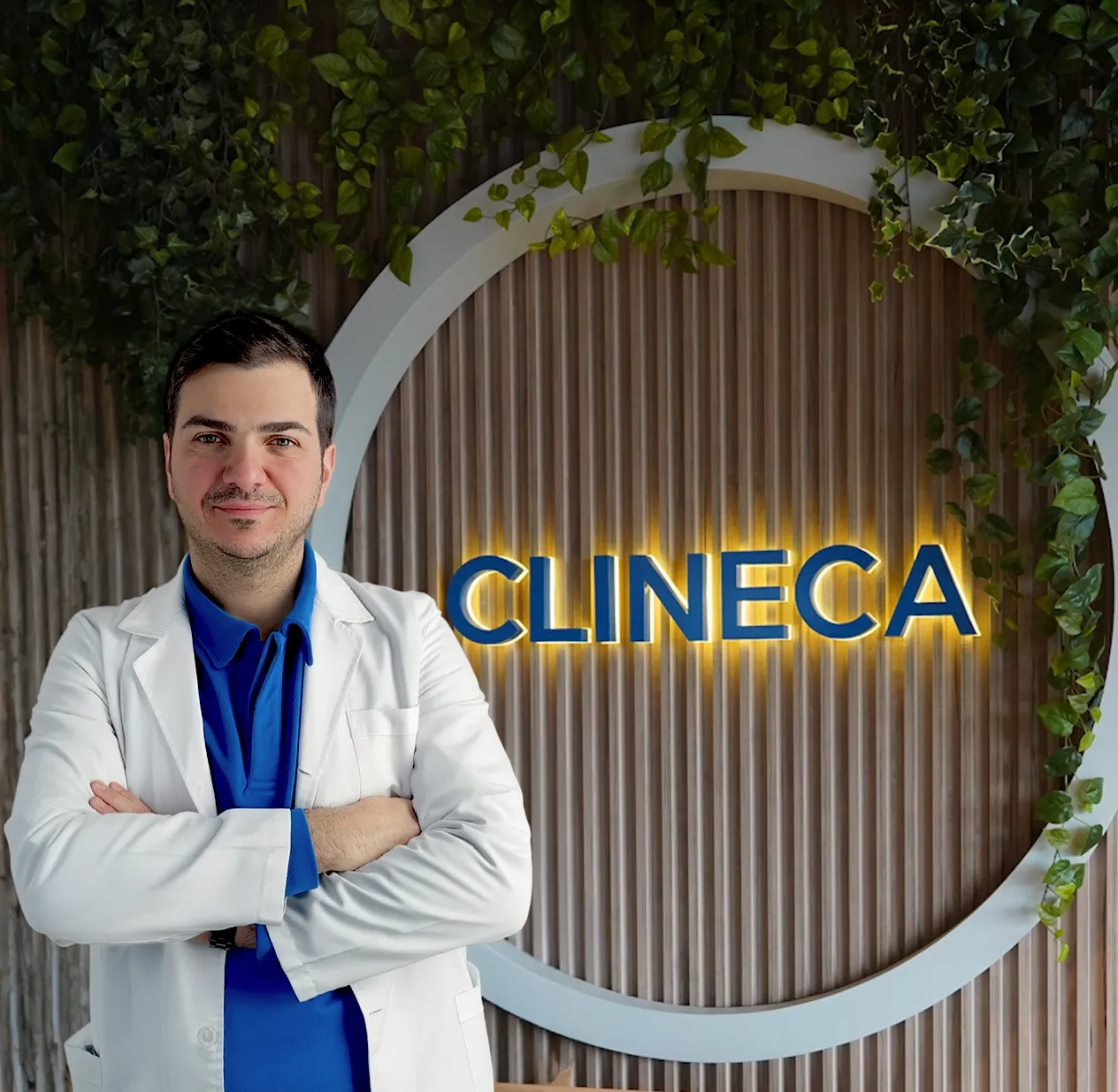 Clineca SpecialistHakan AktaşPlastic & Reconstructive Surgery
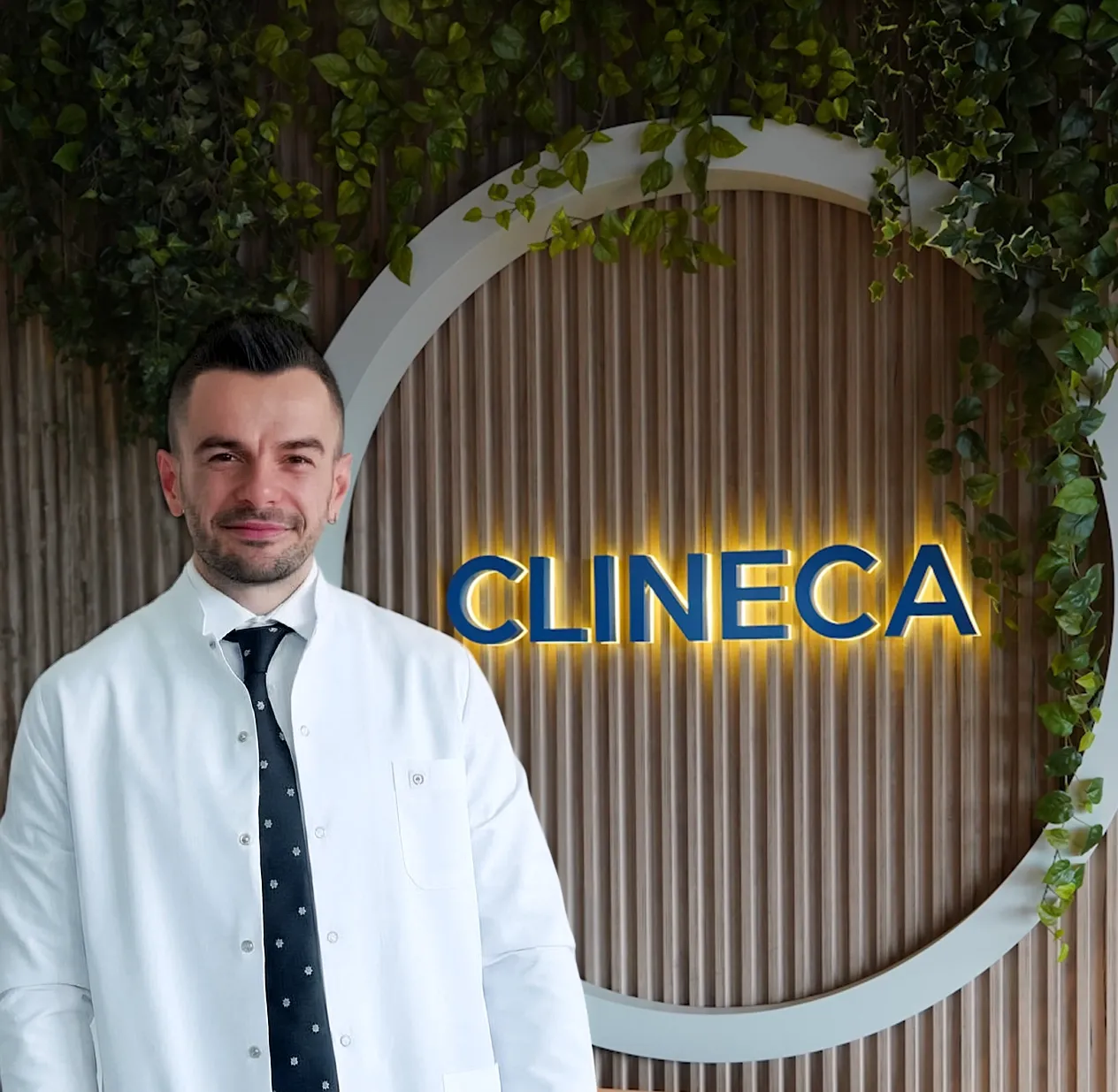 Clineca SpecialistOrkun UzuneyüpoğluPlastic & Reconstructive Surgery
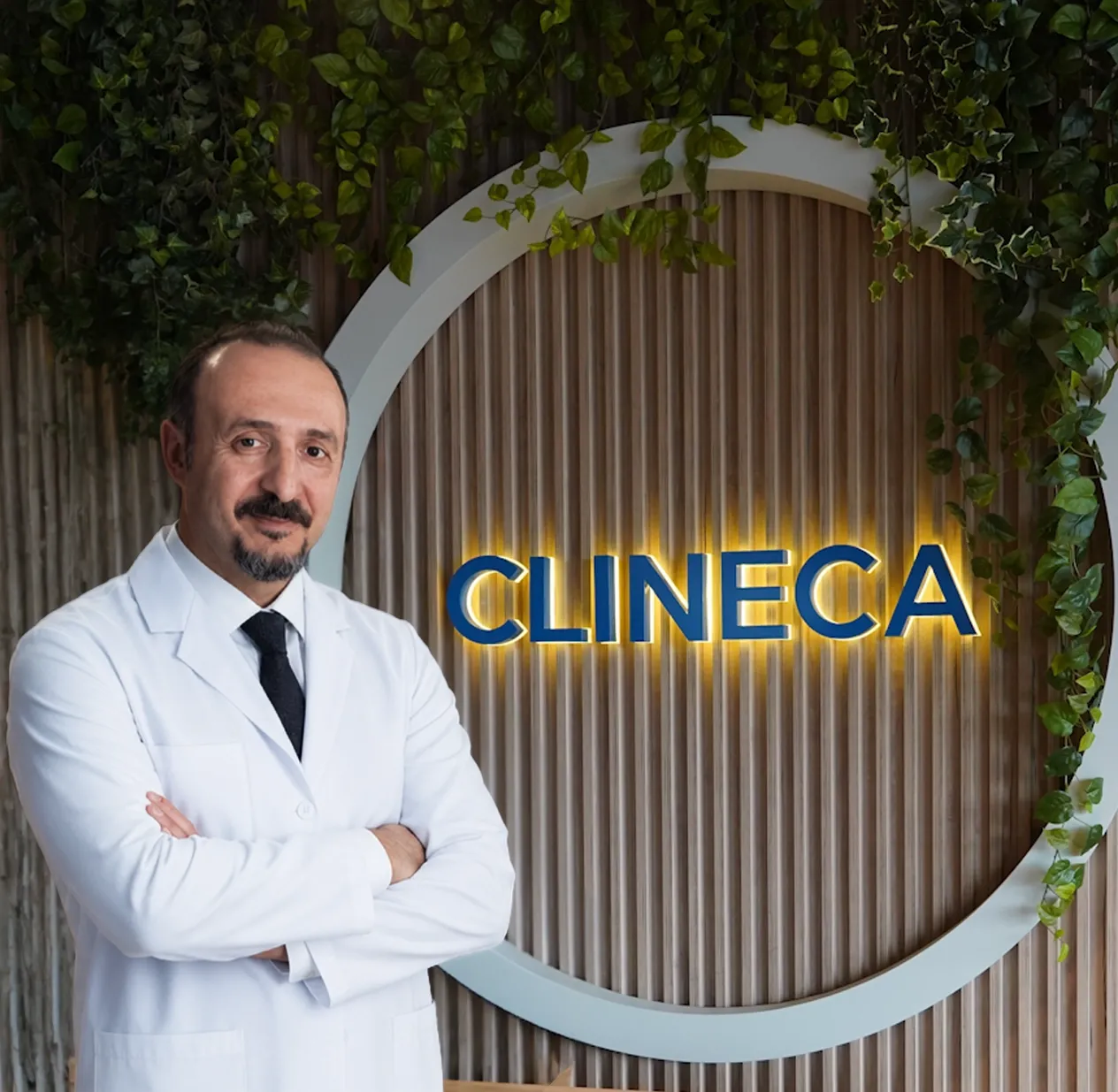 Clineca SpecialistSalim İskenderPlastic & Reconstructive Surgery
 Clineca SpecialistEngin SelamioğluPlastic & Reconstructive Surgery
 Clineca SpecialistCem AydınPlastic & Reconstructive Surgery
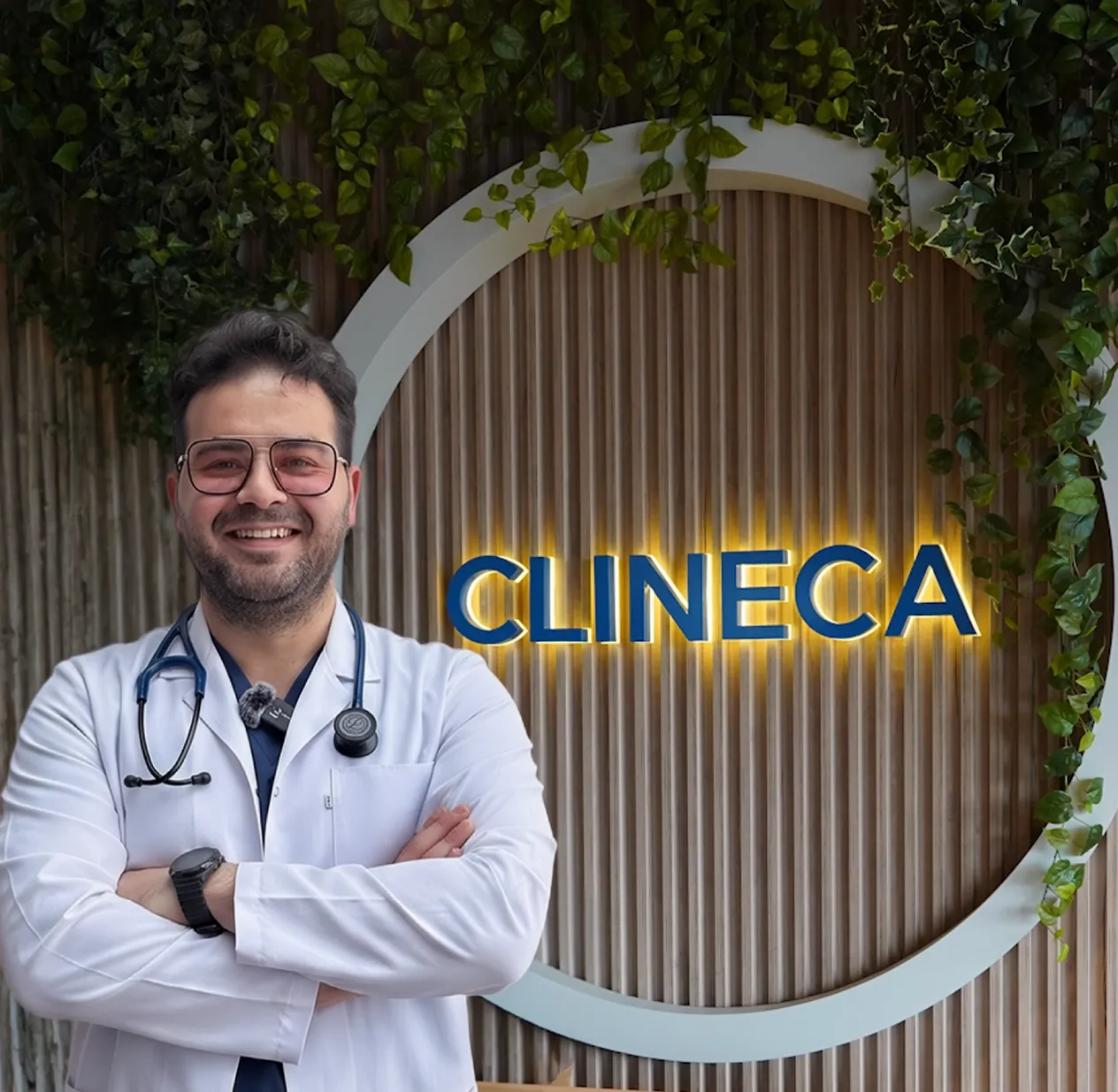 Clineca SpecialistAlperen ÖnalEar, Nose & Throat (ENT)