
Have a question about Tummy Tuck?
In this article
- What is an FDL tummy tuck?
- Who is a good candidate for fleur-de-lis abdominoplasty?
- How is an FDL tummy tuck different from a standard or mini tummy tuck?
- How much does a tummy tuck cost if you need the FDL technique?
- What scars should you expect with an FDL tummy tuck?
- What is recovery like after an FDL tummy tuck?
- How long should you stay in Turkey for surgery and follow-up?
- What are the main risks and safety points to know?
- How do you choose a surgeon and clinic for an FDL tummy tuck?
- Can insurance pay for a tummy tuck or FDL tummy tuck?
An fdl tummy tuck is a more extensive form of abdominoplasty used when loose skin needs tightening both side to side and up and down, usually after major weight loss. In general, recovery takes several weeks, scars are more visible than a standard tummy tuck, and costs are variable and confirmed only after consultation; the trade-off is better contouring for the right patient, but it is not the best option for everyone.
What is an FDL tummy tuck?
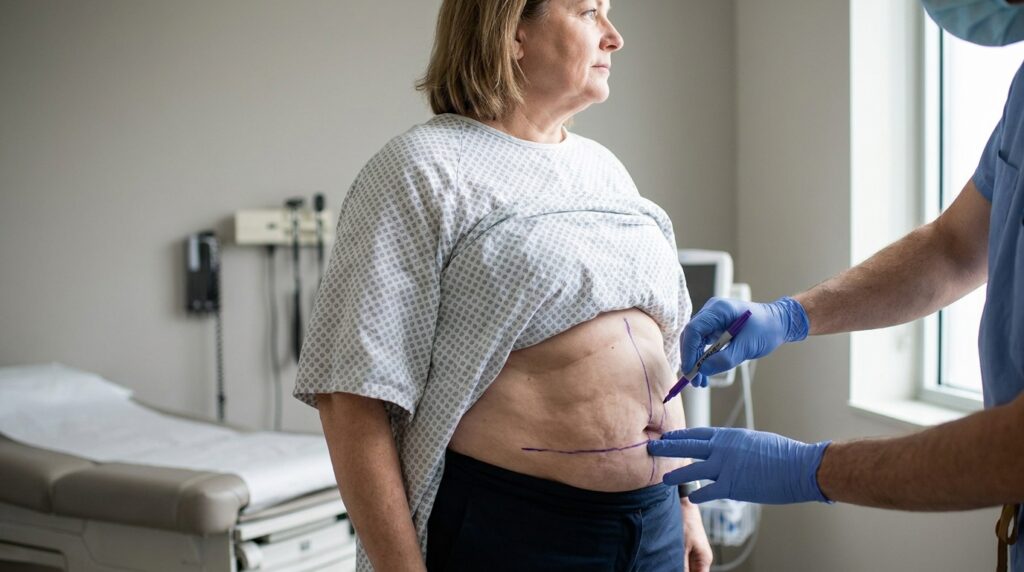
An FDL tummy tuck, or fleur-de-lis abdominoplasty, removes excess skin in two directions: across the lower abdomen and vertically through the midline. It is mainly used after significant weight loss when a standard tummy tuck may not tighten enough loose skin around the waist and upper abdomen.
A tummy tuck and abdominoplasty mean the same thing: surgery to remove excess skin and fat from the abdomen and tighten the abdominal wall when needed. An FDL tummy tuck is a specific type of surgical abdominoplasty designed for people who have a lot of loose skin not only in the lower tummy, but also across the middle and upper abdomen.
The name “fleur-de-lis” comes from the scar pattern. In most cases, the surgeon makes:
- ✓A horizontal scar low on the abdomen, similar to a standard tummy tuck
- ✓A vertical scar in the centre of the abdomen
That vertical scar is the key difference. It allows more skin to be removed from side to side, which can help when the skin feels loose in multiple directions after major weight loss or bariatric surgery.
Compared with a standard tummy tuck, an FDL procedure is usually considered when there is:
- ✓Significant skin overhang
- ✓Loose skin above the belly button as well as below it
- ✓Excess skin around the waistline or central abdomen
- ✓Stretched tissues after major weight change
It is not the same as a mini tummy tuck. A mini tummy tuck usually treats a smaller amount of loose skin below the belly button and does not address more extensive upper abdominal laxity.
You may also hear people ask, what is tummy tuck surgery, what is abdominoplasty tummy tuck, or what is a mini tummy tuck. Those are related questions, but the short version is this: the FDL technique is usually the more powerful option for more severe skin excess, and it comes with a longer scar and a somewhat bigger recovery.
For a general overview of abdominoplasty, see this abdominoplasty page.
- ✓Best known for treating loose skin after major weight loss
- ✓Adds a vertical scar to improve tightening
- ✓Usually more extensive than a standard or mini tummy tuck
- ✓Often includes moving the tummy tuck belly button opening into a natural-looking position
Who is a good candidate for fleur-de-lis abdominoplasty?
The best candidates are usually people at a stable weight with significant loose abdominal skin, often after losing a large amount of weight. Smoking, uncontrolled medical problems, or plans for future pregnancy can affect suitability, timing, and risk, so candidacy needs an individual assessment.
The FDL technique is most often considered after massive weight loss, including weight loss following bariatric surgery. It is less about losing more weight and more about reshaping what remains when skin has lost its ability to shrink back.
In practical terms, you may be a reasonable candidate if:
- ✓Your weight has been stable for several months
- ✓Your main issue is loose skin, not just localised fat
- ✓The looseness affects the upper abdomen, lower abdomen, and midline
- ✓Rashes, discomfort, clothing fit, or body image are ongoing concerns
- ✓You understand and accept the trade-off of a vertical scar
According to the American Society of Plastic Surgeons (ASPS), body contouring after major weight loss is usually best timed once weight is stable, because ongoing weight changes can affect the result. The NHS also advises that smoking increases surgical risks and can slow healing, which matters in a procedure with long incisions and wound-healing demands.
People may need to delay surgery if they:
- ✓Are still actively losing weight
- ✓Smoke or use nicotine products and cannot stop in the recommended timeframe
- ✓Have poorly controlled diabetes, heart problems, or other medical issues
- ✓Are planning pregnancy soon
- ✓Have unrealistic expectations about scars or recovery
Smoking matters more than many people expect
Nicotine reduces blood flow to healing tissue. With an FDL tummy tuck, that can raise the risk of wound breakdown, delayed healing, and skin problems. Surgeons commonly ask patients to stop smoking and avoid nicotine replacement or vaping for a period before and after surgery, but the exact timing varies by surgeon and your health profile.
What about post-bariatric patients?
Post-bariatric patients often do well with body contouring, but they need a careful nutrition review. Low protein intake, vitamin deficiencies, or anaemia can make healing harder. This is one reason a proper pre-operative assessment matters, especially if your weight loss was recent or rapid.
⚠️ Stable weight is important If your weight is still changing, it is usually better to wait. Further weight loss after surgery can leave more loose skin, while weight gain can affect contour and scar tension.
Large amounts of loose skin after major weight loss, especially when a standard tummy tuck is unlikely to remove enough skin from the upper or central abdomen.
Active smoking, unstable weight, untreated medical issues, or expecting a scar-free result.
How is an FDL tummy tuck different from a standard or mini tummy tuck?
An FDL tummy tuck removes more skin than a standard tummy tuck and far more than a mini tummy tuck, especially in the upper and central abdomen. The main trade-off is a more visible vertical scar, along with a potentially longer operation and recovery.
If you are comparing tummy tuck mini tummy tuck options, the easiest way to think about it is scope.
A mini tummy tuck deals with a smaller lower-abdominal problem. A standard tummy tuck addresses the lower abdomen more fully and often includes muscle repair. An FDL tummy tuck goes further by tightening in two directions, which can be especially helpful after major weight loss.
This matters because many people researching tummy tuck before and after photos notice the same pattern: a standard tummy tuck can improve the apron of skin, but it may leave side-to-side looseness or bunching in the upper middle abdomen if the skin excess is severe.
- →Mini tummy tuck: smaller correction, smaller scar, narrower use
- →Standard tummy tuck: most common full abdominoplasty option
- →FDL tummy tuck: more aggressive skin removal when standard methods may fall short
How much does a tummy tuck cost if you need the FDL technique?
FDL tummy tuck pricing is highly variable because the operation is more complex than a standard tummy tuck and often depends on operating time, surgeon fees, hospital fees, compression garments, and follow-up needs. Any figures online should be treated as indicative only; your final quote should be confirmed after consultation.
For the FDL technique, the safest answer on price is that it varies significantly by country, hospital setting, surgeon experience, case complexity, and whether extra procedures are added.
Because pricing changes over time, and because ASA/CAP guidance requires cost information to be clear and not misleading, it is better to treat any number you see online as approximate and date-sensitive, not as a guaranteed fee.
What usually affects the price:
- ✓Surgeon’s fee
- ✓Anaesthetist’s fee
- ✓Hospital or operating theatre charges
- ✓Pre-op tests
- ✓Compression garments
- ✓Medication
- ✓Overnight stay length
- ✓Whether liposuction or other body contouring is added
- ✓Aftercare and follow-up schedule
A consultation should also clarify what is not included. For example, revisions, extra hotel nights, treatment for a complication, or changes to travel dates may be separate costs.
If you are comparing countries, avoid assuming one quote represents the same operation as another. One clinic may quote for a standard tummy tuck while another is quoting for a fleur-de-lis abdominoplasty with muscle repair and liposuction. The scar pattern, time in theatre, and recovery needs are not identical.
📋 Pricing should be confirmed after consultation A responsible quote for an FDL tummy tuck should be individual, clearly itemised where possible, and based on your anatomy, goals, and medical history rather than a one-price-fits-all promise.
What scars should you expect with an FDL tummy tuck?
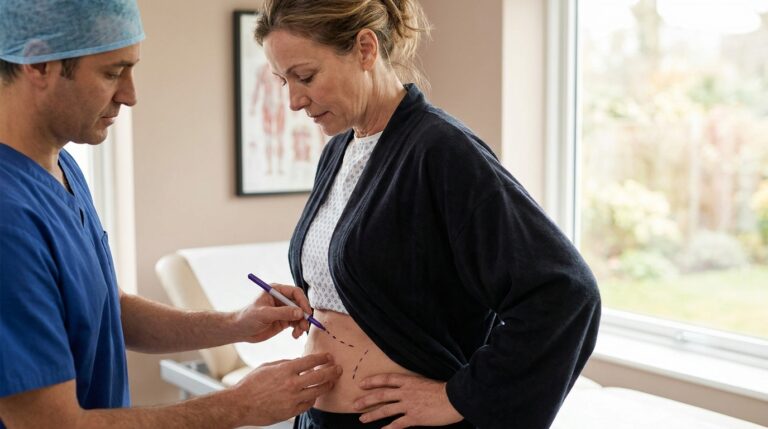
You should expect two main scars: a low horizontal tummy tuck scar and a vertical scar in the midline. Most people choose the FDL technique because the extra skin removal is worth that trade-off, but scar quality varies and cannot be predicted exactly in advance.
Scarring is the biggest reason some people hesitate about the FDL approach. That concern is reasonable. The procedure creates a longer and more obvious scar pattern than standard abdominoplasty.
Typical scar areas include:
- ✓A low scar across the lower abdomen
- ✓A vertical scar from the lower abdomen toward the upper abdomen
- ✓A scar around the belly button if it is repositioned
The important question is not whether there will be a scar. There will. The real question is whether the scar is an acceptable trade for better shape, less overhang, and improved clothing fit.
Scar quality depends on several factors:
- ✓Your natural healing pattern
- ✓Skin type and skin tension
- ✓Whether you smoke
- ✓Nutrition and general health
- ✓Wound care and infection risk
- ✓How much movement or tension the scar is under in early healing
Early scars are usually redder, firmer, and more noticeable. They often soften and fade over months, but they rarely disappear. Before and after images can be useful, but remember they show selected points in healing and do not predict your personal result.
Belly button shape and placement
Many patients also ask about the tummy tuck belly button. In full abdominoplasty and FDL surgery, the belly button is usually brought through a new opening in the tightened skin. That means there will be a scar around it, and its appearance depends partly on anatomy and healing.
The FDL technique can improve contour where other tummy tuck methods may not, but it does so by accepting a vertical scar in the centre of the abdomen.
What is recovery like after an FDL tummy tuck?
Recovery after an FDL tummy tuck is usually measured in weeks, not days. Most people need help early on, gradual walking from the start, and a slower return to work, exercise, and travel than with less extensive body contouring surgery.
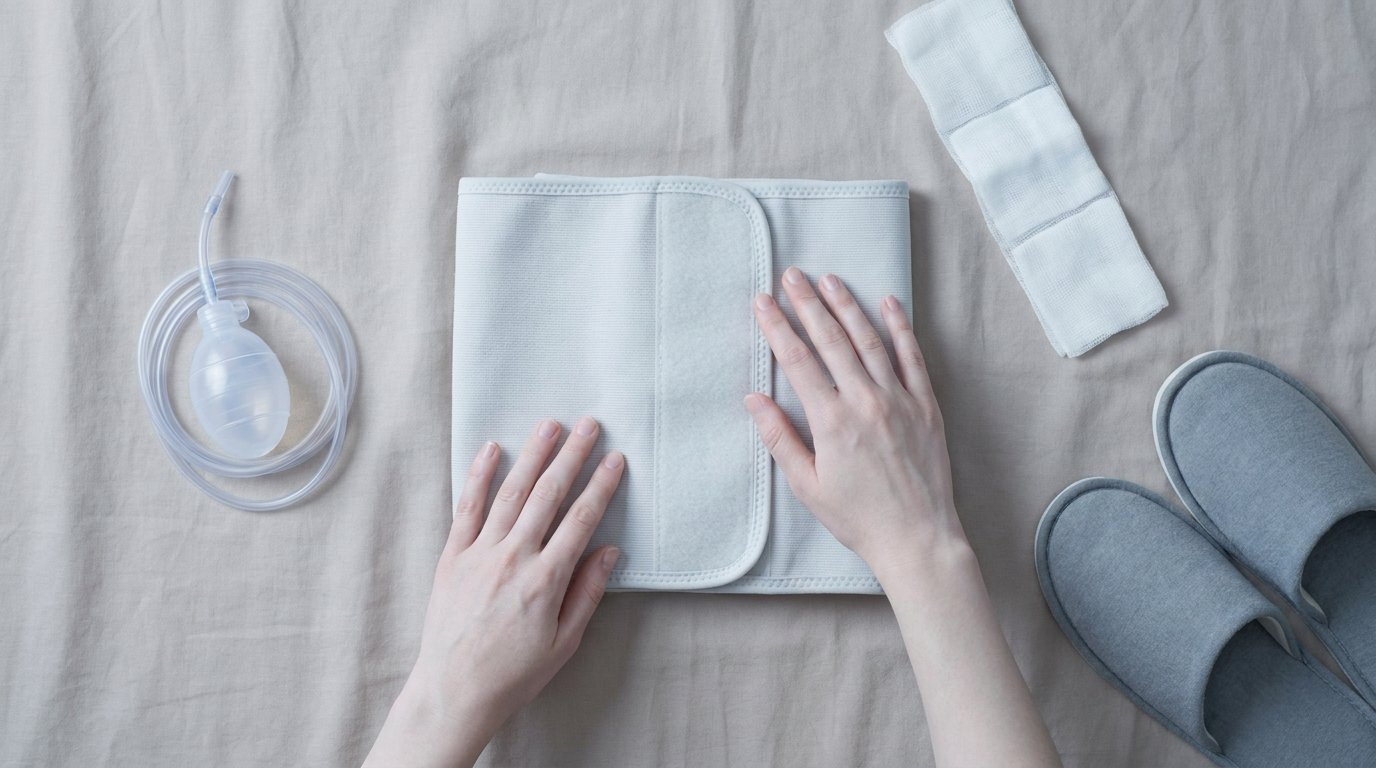
This is where people often underestimate the procedure. An FDL tummy tuck is not just a cosmetic weekend. It is major surgery, and the first two weeks are usually the hardest.
You can expect some combination of:
- ✓Swelling
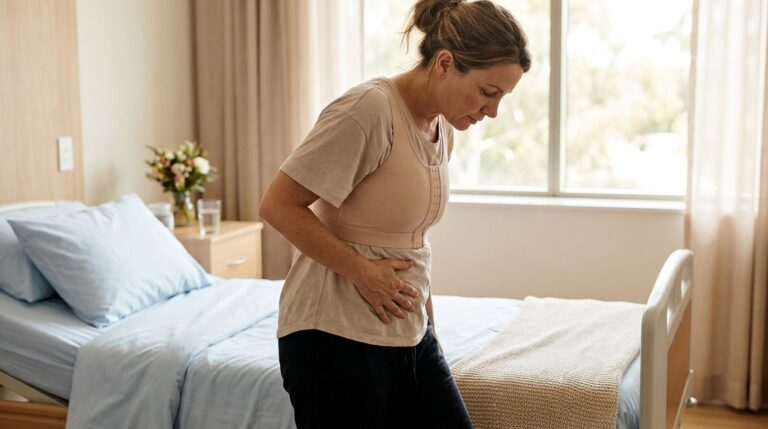
- ✓Tightness and a bent-forward posture at first
- ✓Discomfort when standing fully upright
- ✓Reduced energy
- ✓Drains in some cases
- ✓Restrictions on lifting, exercise, and twisting
According to the NHS, early walking after surgery helps reduce the risk of complications such as blood clots. That does not mean long walks or pushing through pain. It means regular, gentle movement as advised by your surgical team.
A realistic recovery timeline looks something like this, though your surgeon’s instructions come first.
⚠️ Travel timing matters Long journeys soon after surgery may increase discomfort and can matter for clot risk. Your travel plan should be cleared by your surgeon, especially after more extensive body contouring procedures.
- ✓Plan at least the first week as true recovery time
- ✓Arrange help with luggage, childcare, and getting in and out of bed
- ✓Do not judge your final result in the first month
- ✓Expect swelling to last longer than many online posts suggest
How long should you stay in Turkey for surgery and follow-up?
If you are travelling for surgery, build your plans around safety and review appointments, not just flight prices. An FDL tummy tuck usually needs a longer stay than smaller procedures because early checks are important and mobility can be limited.
For many international patients, a stay of around 10 to 14 days is often discussed for tummy tuck follow-up, but the right timeline depends on your healing, whether drains are used, and whether any issues need extra observation. You should not treat a typical stay length as a guarantee that you will be fit to fly on a set date.
The NHS notes that deep vein thrombosis, a blood clot in a deep vein, can be linked to long periods of immobility and long-distance travel. That is one reason surgeons are cautious about travel timing after major surgery.
Practical tips:
- ✓Book flexible flights if possible
- ✓Choose accommodation with a lift or easy access
- ✓Avoid carrying heavy suitcases yourself
- ✓Ask who will review you before you fly home
- ✓Ask what happens if your drain is still in place or your wound needs dressing changes
- ✓Get written instructions for compression garments, walking, showering, and medicines
If you are considering surgery abroad, it is sensible to ask for a remote follow-up plan too. Once you are back home, you need to know who to contact, what photos may be requested, and when to seek urgent local medical help.
For questions about arranging an assessment, you can use the clinic’s consultation page.
🚨 Do not plan a rushed return A fixed short trip can become stressful if swelling, drains, pain control, or wound checks delay your discharge or change your flying date.
What are the main risks and safety points to know?
FDL tummy tuck risks include bleeding, infection, fluid collection, delayed healing, wound separation, poor scarring, numbness, and blood clots. Safety depends on your health, the surgical plan, nicotine avoidance, early mobilisation, and choosing a properly qualified surgeon and accredited hospital setting.
Every tummy tuck surgery carries risk, and the risks can be higher when surgery is longer or more extensive. That does not mean the procedure is unsafe by default, but it does mean you should approach it seriously.
Possible risks include:
- ✓Bleeding
- ✓Infection
- ✓Seroma, which means a collection of fluid under the skin
- ✓Delayed wound healing
- ✓Wound breakdown, especially at points of high tension
- ✓Skin loss in small areas
- ✓Numbness or altered sensation
- ✓Asymmetry or contour irregularity
- ✓Unsatisfactory scarring
- ✓Deep vein thrombosis or pulmonary embolism, which are blood-clot complications
The ASPS advises that smoking increases complication risk in body contouring surgery. The NHS also warns that major surgery and immobility increase clot risk, which is why hydration, movement, compression, and sometimes anti-clot medication are part of planning.
Questions worth asking before you commit
- ✓Is the surgeon experienced in post-weight-loss abdominoplasty, including the fleur-de-lis pattern?
- ✓Will the operation take place in an accredited hospital?
- ✓What blood clot prevention steps are used?
- ✓If I have had bariatric surgery, will my nutrition be checked?
- ✓What complication rate information can you share for this type of operation?
- ✓What happens if I need extra wound care after I travel home?
Benefits and risks vary from person to person. Even when surgery goes well, you may still have swelling, visible scars, areas of numbness, or a result that improves shape but does not create a perfectly flat abdomen.
Clear consent process, realistic discussion of scars and recovery, surgeon credentials you can verify, and a hospital-based setting with aftercare arrangements.
Pressure to book quickly, vague answers about complications, no discussion of clot prevention, or prices presented as fixed before a proper medical assessment.
How do you choose a surgeon and clinic for an FDL tummy tuck?
Choose a surgeon who regularly performs complex abdominoplasty, shows consistent results in patients with a similar body shape, and discusses risks as openly as benefits. A safe clinic pathway should include pre-op assessment, hospital accreditation, aftercare, and a realistic travel plan.
The right choice is not only about before and after photos. It is about whether the team assesses your case properly and plans around your risks, your scar pattern, and your recovery needs.
Look for:
- ✓A surgeon whose qualifications you can verify
- ✓Specific experience with post-weight-loss body contouring
- ✓A proper consent process, not just a sales call
- ✓Clear advice on stopping smoking and nicotine
- ✓Medical review of previous abdominal surgery, hernias, and weight history
- ✓A hospital or surgical facility with recognised standards
- ✓Clear instructions on what to do if you develop problems after returning home
You can review clinician information on the doctors page and general background on the about page, but the real test is the quality of the consultation.
Ask to see cases like yours
This matters more than seeing only the best-looking photos. Ask for examples of patients with:
- ✓Similar weight-loss history
- ✓Similar skin quality
- ✓Similar scar burden
- ✓Similar goals around contour versus scar acceptance
A responsible surgeon should also explain when an FDL is not the best option. In some patients, a standard tummy tuck, a lower body lift, or staging procedures may be more appropriate. If you have circumferential laxity around the trunk, a body lift procedure may be part of that conversation rather than an FDL alone.
Can insurance pay for a tummy tuck or FDL tummy tuck?
This depends heavily on the country and the insurer. In many cases, an FDL tummy tuck is treated as cosmetic surgery, especially when the goal is contour improvement. That said, some policies may consider cover when there is clear medical need, such as persistent skin infections or functional problems caused by skin overhang.
If you are asking how to get a tummy tuck paid for by insurance, the usual steps are:
- ✓Check your policy wording carefully
- ✓Ask whether panniculectomy and abdominoplasty are treated differently
- ✓Collect records of rashes, infections, or failed medical treatment
- ✓Get letters from relevant doctors if symptoms are ongoing
- ✓Ask exactly what evidence the insurer requires
A panniculectomy is not exactly the same as a tummy tuck. It mainly removes overhanging skin and tissue, while an abdominoplasty more often includes contouring and muscle repair. That distinction can matter for coverage.
If you are self-funding, ask for a written quote after consultation and make sure you understand what is included, what could increase the cost, and what happens if your travel dates change.
Frequently Asked Questions
References
- 📎NHS – Cosmetic surgery
- 📎NHS – Deep vein thrombosis
- 📎American Society of Plastic Surgeons – Body contouring after major weight loss
Related Articles


You Might Also Like



Related articles

Our specialists
 Clineca SpecialistErkan PinegözPlastic & Reconstructive Surgery
 Clineca SpecialistHakan AktaşPlastic & Reconstructive Surgery
 Clineca SpecialistOrkun UzuneyüpoğluPlastic & Reconstructive Surgery
 Clineca SpecialistSalim İskenderPlastic & Reconstructive Surgery
 Clineca SpecialistEngin SelamioğluPlastic & Reconstructive Surgery
 Clineca SpecialistCem AydınPlastic & Reconstructive Surgery
 Clineca SpecialistAlperen ÖnalEar, Nose & Throat (ENT)