
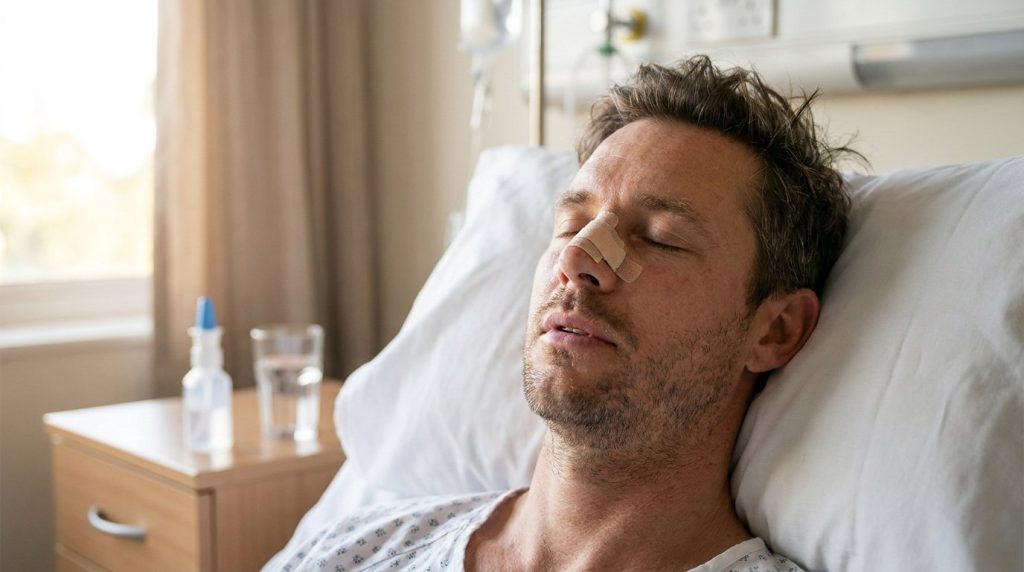
Have a question about Rhinoplasty?
In this article
- What septoplasty changes inside your nose — and why the first days feel blocked
- Septoplasty recovery week by week
- When can you fly home, and how long should you stay?
- Work, exercise, sleeping and nose blowing
- Red flags: when to contact your surgeon
- What makes recovery slower — and what results to expect long term
- What drives the cost, and what a quote should include
- Choosing a surgeon and clinic you can rely on
Septoplasty is one of those operations that looks minor on paper and feels anything but minor in the first few days. Nothing changes on the outside of your nose, yet you wake up breathing through your mouth and wondering whether this is normal. Because septoplasty recovery time is paced by healing you cannot see, the honest answer comes in stages rather than a single number — and the stages are worth knowing before you book a flight home.
What septoplasty changes inside your nose — and why the first days feel blocked
Your septum is the thin wall of cartilage and bone that divides the two sides of your nose. When it is bent, one airway is narrowed and often the other is partly crowded too. In surgery the surgeon lifts the soft lining off that wall, straightens or removes the deviated sections, and lays the lining back down.
That matters for recovery for one simple reason. The work happens under a layer of delicate mucous membrane, so what heals is not skin but lining — and lining swells. For the first several days the inside of your nose is more swollen than it was before surgery, which is why many people feel more blocked at day two than they did the week before the operation. It is temporary, and it is not a sign the surgery failed.
If no work was done to the outside structure, you usually avoid the bruising people associate with nose surgery. There are no external cuts and no black eyes in most straightforward cases. What you do get is stuffiness, crusting, a dull pressure behind the nose and sometimes a sore throat from breathing through your mouth overnight.
Swelling is also the part patients underestimate. Of the people who write to us about their nose, barely one in fifty mention swelling before surgery, yet it becomes the thing almost everyone searches for once they are home. The practical lesson is to raise it at your consultation and ask your surgeon directly how long your lining is likely to stay puffy, so the first fortnight feels expected rather than alarming.
📋 Splints and packing Many surgeons place soft internal splints or dissolvable material rather than old-style hard packing. Splints are usually removed about a week later and the appointment itself takes minutes. Ask in advance what will be in your nose and when it comes out, as this shapes your first week more than anything else.
Septoplasty recovery week by week
No two noses heal on the same schedule, but the shape of the curve is fairly predictable. Breathing improves in steps, not smoothly, and the last 10 percent of improvement takes the longest.
The table below is a planning guide rather than a promise. A septoplasty combined with rhinoplasty, turbinate work or revision surgery will usually sit a few days to a couple of weeks behind this.
⚠️ Blocked again at week two? Usually not a problem A nose that opens beautifully after splint removal and then feels tighter again a few days later is common. Lining swelling fluctuates with position, temperature and allergies. Persistent one-sided blockage that is still there at three months deserves a review.
When can you fly home, and how long should you stay?
For patients travelling to Turkey, the stay is usually built around splint or suture removal rather than the surgery itself. That means planning on roughly a week in the country for a standalone septoplasty, with the flight home after a face-to-face check. Some surgeons release patients a day or two earlier and arrange follow-up remotely, but it is safer to have your nose looked at before you sit on a plane.
Cabin air is dry and pressure changes make a freshly operated nose feel tighter. Most people cope with saline spray and sips of water. The real precaution is movement: get up and walk the aisle, keep fluids going and avoid long stretches of complete stillness, because the clot risk after any operation is highest in the first weeks. Our guide on how long to stay in Turkey after plastic surgery covers the broader planning side, and if you are combining procedures the stay is set by the bigger operation.
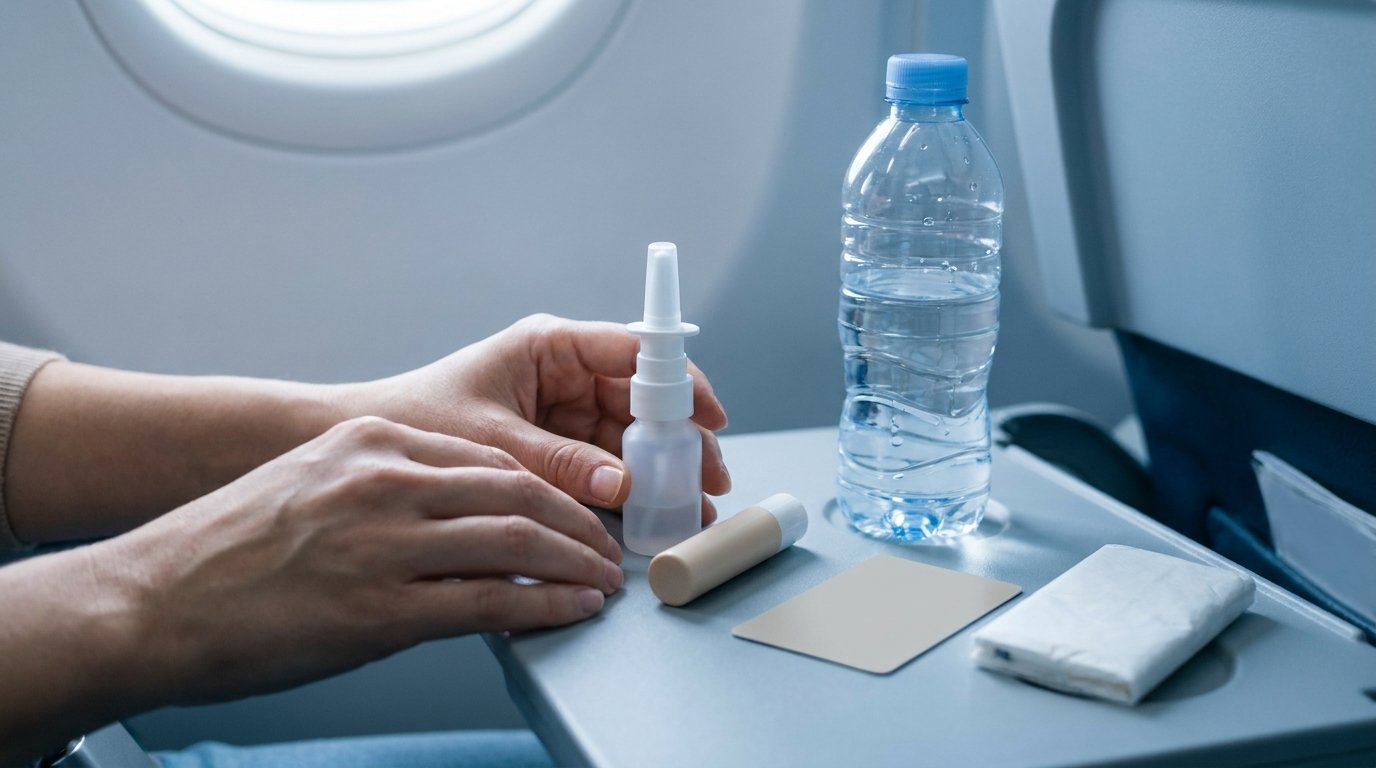
Before you board, make sure you leave with written aftercare, your surgeon’s direct contact route and a plan for who sees you if something changes once you are home. A clinic that cannot answer that last question is not ready to treat international patients.
- ✓Confirmed in-person check before your flight home
- ✓Saline spray and lip balm in your hand luggage, not the hold
- ✓An aisle seat so standing and walking is easy
- ✓A written list of warning signs and a 24-hour contact number
Work, exercise, sleeping and nose blowing
Desk work is realistic for many people in the second week, and some manage light tasks from home before that. Anything physical runs on a slower clock. Lifting, straining and bending forward raise pressure in the nose and can restart bleeding, so most surgeons ask for four to six weeks before you return to serious training.
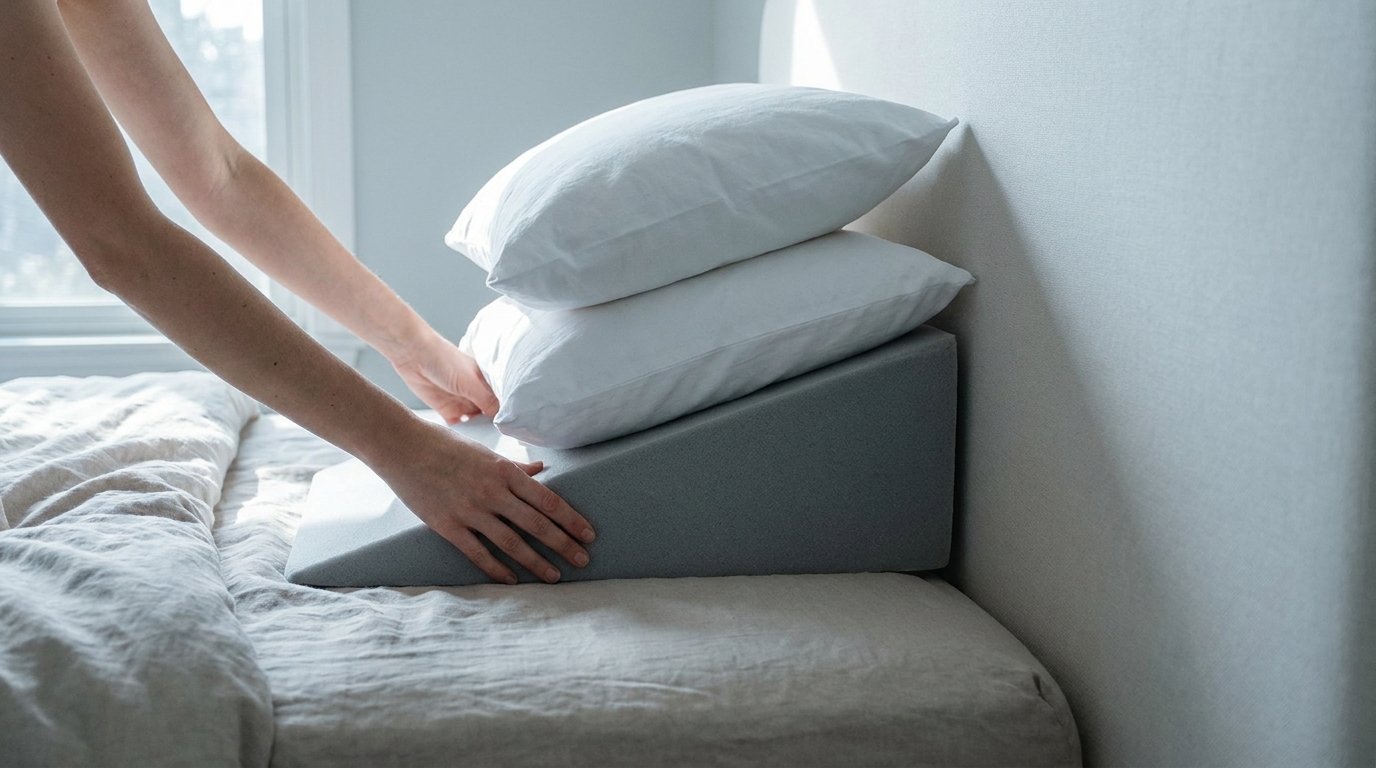
Sleep with your head raised on two pillows or a wedge for the first week or two. It genuinely reduces morning congestion. Our note on sleeping elevated after nose surgery explains the practical set-up.
Do not blow your nose while the lining is raw — usually for the first two weeks, or as long as your surgeon specifies. Sneeze with your mouth open. Use saline rinses to soften crusts instead of picking at them, and resist the urge to look inside with a torch and judge the result. Swimming, saunas and anything that could knock the nose should wait until your surgeon clears you.
Smoking deserves its own line. A 2017 study in the American Journal of Rhinology & Allergy examined smoking in septoplasty patients and looked at septal perforation and the healing process afterwards — a reminder that stopping before and after surgery is one of the few healing variables fully in your hands.
📋 Glasses and masks Glasses are usually fine after a pure septoplasty, because nothing was done to the bridge. If rhinoplasty was added, the rules change — see our guide on wearing glasses again after rhinoplasty for the timeline.
Red flags: when to contact your surgeon
Most of what worries people in the first fortnight is normal. Mild oozing on the first day or two, a blocked nose, crusting, a dull headache, a dry mouth and broken sleep are all expected and settle on their own.
A short list of things is different and needs a response the same day, not at your next appointment:
- ✓Bleeding that soaks through dressings or tissues and does not settle after 10–15 minutes of gentle pressure with your head upright — contact your surgeon or seek urgent local care.
- ✓Fever, worsening rather than easing pain, or thick foul-smelling discharge — these suggest infection; contact your surgeon or seek urgent local care.
- ✓Sudden severe headache, a stiff neck, or clear fluid dripping steadily from one nostril — rare but serious; seek urgent care immediately.
- ✓Vision changes, double vision, or swelling and redness spreading around the eye — seek urgent care immediately.
- ✓Calf pain or swelling, chest pain or breathlessness, especially after a flight — treat this as an emergency and go to the nearest hospital, then tell your surgeon.
If you are already home in another country, use local emergency services first and inform the operating clinic in parallel. Ask before you travel how your surgeon handles this, and keep our guidance on complications after surgery abroad to hand.
🚨 Do not wait for a clinic to open Heavy bleeding, breathing difficulty, chest pain, vision changes or a stiff neck with severe headache are reasons to go to an emergency department now. Nothing about recovering abroad changes that.
What makes recovery slower — and what results to expect long term
Several things push the timeline out. Turbinate reduction added to the same operation means more raw surface inside the nose and a longer crusting phase; our article on combining turbinate reduction with deviated septum surgery covers that pairing. Revision surgery on a previously operated septum is slower again. Allergies, chronic sinus inflammation and smoking all drag the lining phase out.
Adding cosmetic work changes the picture more substantially. A combined septorhinoplasty brings bruising, taping and a longer swelling curve with it, and the recovery you should plan for is the longer one of the two. A 2020 paper in the Journal of Craniofacial Surgery looked at endoscopic septoplasty performed as part of full rhinoplasty, describing septal correction as a key step for both function and shape. If you are weighing this up, our piece on whether septoplasty and rhinoplasty can be done together sets out the trade-offs.
On long-term results, honesty matters more than optimism. Most patients breathe markedly better and stay that way. But a 2015 study in European Archives of Oto-Rhino-Laryngology compared short- and long-term symptom relief after septoplasty and found that the improvement reported soon after surgery was not always maintained years later. Allergy, turbinate swelling and ongoing sinus disease are the usual reasons a nose feels blocked again despite a straight septum — which is why a careful diagnosis before surgery matters as much as the surgery.
If your blockage is mostly allergic or inflammatory, a proper trial of medical treatment — steroid sprays, allergy management, saline rinses — can be the more sensible starting point. A good surgeon will say so.
Septoplasty straightens the inside wall. It does not reshape the outside of the nose. If you want both, that is a combined operation and should be quoted and planned as one.
What drives the cost, and what a quote should include
Prices for septoplasty vary widely between countries and even between clinics in the same city, and a single figure quoted without a consultation tells you very little. What moves the number is the complexity of your septum, whether turbinate reduction or cosmetic reshaping is added, the surgeon’s experience, the type of hospital and anaesthesia, and how much follow-up is built in. A personalised price is only meaningful once a surgeon has examined your nose, usually with an endoscopic look inside.
What matters more than the headline figure is knowing exactly what sits inside it. Compare quotes line by line rather than number to number — a cheaper package that excludes the splint-removal visit or a revision policy is not cheaper. Our detailed breakdown of septoplasty in Turkey walks through the same logic.
⚠️ Ask about the revision policy in writing Noses are one of the harder areas to revise. Before you pay a deposit, get the clinic’s position on further surgery, who pays for what, and over what period — in writing, not in a chat message.
Choosing a surgeon and clinic you can rely on
Septoplasty is a functional operation, so the person doing it should be assessing function properly: a nasal endoscopy, questions about allergy and sinus history, and a clear explanation of which structure is actually causing your blockage. A consultation that moves straight to pricing without examining the inside of your nose is a poor sign.
Look for recognised specialist qualifications in ENT or plastic and reconstructive surgery, surgery performed in a licensed hospital with an anaesthetist present, and named follow-up arranged before you fly. European board certification through EBOPRAS or national specialist registration is a reasonable baseline to ask about. Our guide on how to choose a rhinoplasty surgeon in Turkey applies equally to septal surgery.
This article is for informational purposes only and does not constitute medical advice. Always consult a qualified surgeon for personalised guidance.
Endoscopic examination at consultation, a named surgeon you speak to directly, a licensed hospital, written aftercare and a 24-hour contact route for when you are home.
A price quoted before anyone has looked inside your nose, pressure to pay a deposit the same day, no named surgeon, guaranteed results, or no answer on who manages complications after you fly.
Frequently Asked Questions
References
- 📎Long-term symptom relief after septoplasty — European Archives of Oto-Rhino-Laryngology, 2015
- 📎The effect of smoking on perforation development and healing after septoplasty — American Journal of Rhinology & Allergy, 2017
- 📎Rhinoplasty Assisted by Endoscopic Septoplasty: Precise Job and an Educational Tool — Journal of Craniofacial Surgery, 2020
- 📎EBOPRAS — European Board of Plastic, Reconstructive and Aesthetic Surgery
Related Articles

You Might Also Like


Related articles


Our specialists
 Clineca SpecialistErkan PinegözPlastic & Reconstructive Surgery
 Clineca SpecialistHakan AktaşPlastic & Reconstructive Surgery
 Clineca SpecialistOrkun UzuneyüpoğluPlastic & Reconstructive Surgery
 Clineca SpecialistSalim İskenderPlastic & Reconstructive Surgery
 Clineca SpecialistEngin SelamioğluPlastic & Reconstructive Surgery
 Clineca SpecialistCem AydınPlastic & Reconstructive Surgery
 Clineca SpecialistAlperen ÖnalEar, Nose & Throat (ENT)