
Have a question about BBL?
In this article
- What actually causes hip dips?
- How to fix hip dips without surgery, and where that stops working
- How hip dip fat transfer is performed
- Fat transfer, hip implants or fillers: how the options compare
- Hip dips surgery recovery, week by week
- What drives the cost of hip dip surgery
- Planning the trip: how long to stay and who should operate
- Setting expectations before you commit
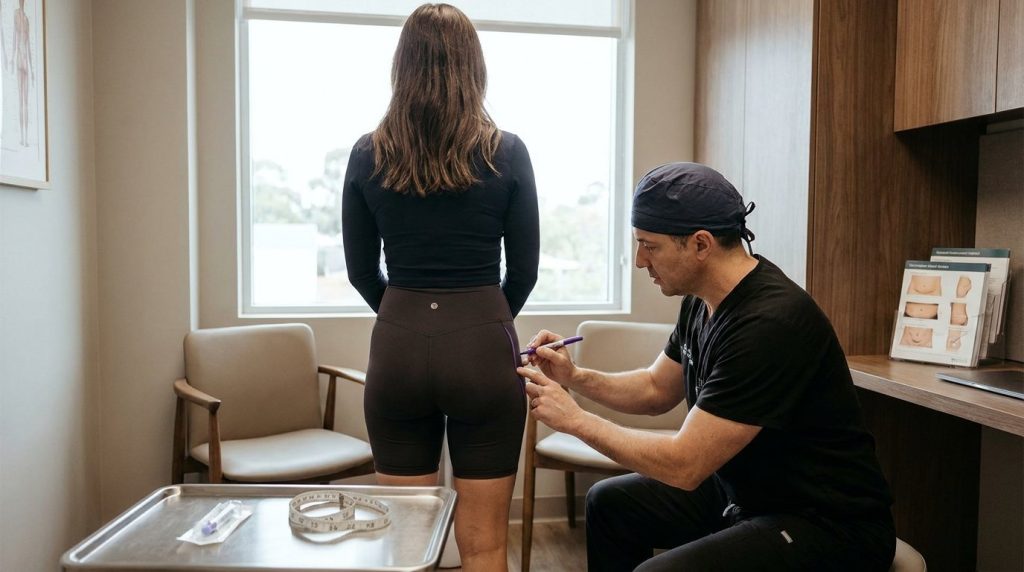
Stand side-on to a mirror and you may notice a soft inward curve just below each hip bone. On some bodies it is barely there; on others it is the one detail that shows through every pair of jeans, and that is why hip dips surgery has become one of the most asked-about body contouring requests of the last few years. What makes the topic interesting is that part of the shape comes from bone you cannot move, and part from soft tissue a surgeon genuinely can.
What actually causes hip dips?
Hip dips, sometimes called violin hips or trochanteric depressions, sit in the gap between the top of your hip bone and the top of your thigh bone. In plain terms, the pelvis flares out at the top and the thigh bone juts out lower down, and between those two bony points there is a natural hollow where the muscle and fat layer is thinner.
The depth of that hollow depends mostly on things you were born with: how wide your pelvis is, how high or low it sits, the angle of your thigh bone, and where your body prefers to store fat. Two people at the same weight can look completely different here. That is why the dip often stays visible after weight loss, after the gym, and after pregnancy.
Muscle plays a smaller supporting role. The gluteus medius and the small muscle on the outer hip cover part of that area, so building them can fill the upper edge of the hollow a little. They do not sit deep inside the dip itself, though, so there is a ceiling on what training achieves.
It is worth saying clearly that hip dips are a normal anatomical feature, not a medical problem or a sign of poor fitness. Treating them is a cosmetic choice, and a surgeon worth trusting will say so before they say anything about technique.
📋 Bone sets the frame, soft tissue fills it No cosmetic procedure moves your pelvis or femur. Surgery works by adding volume on top of the bony hollow so the outline looks smoother, which is also why results look different from one skeleton to the next.
How to fix hip dips without surgery, and where that stops working
Most people try the non-surgical route first, and it is a sensible place to start. Targeted glute and outer-hip work, such as side-lying leg raises, banded walks, hip abduction and step-ups, can thicken the muscle that caps the hollow. Over several months of consistent training the dip can look softer, especially if you were starting from very little muscle.
Gaining weight is the other suggestion that circulates online, and it is unreliable. Fat distribution follows your own pattern, so extra weight may land on your waist, thighs or face long before it lands in the one spot you want it. Many people end up with a bigger silhouette and the same dent.
Dermal fillers and biostimulators are offered for hips in some clinics. The difficulty is volume: the hollow usually needs far more product than facial treatment ever uses, the effect fades, and the ongoing expense adds up. For a shallow dip in someone who wants nothing permanent it can be a reasonable experiment, but it is not a substitute for grafted fat.
Builds the outer hip and upper glute. Low risk, low cost, slow. Softens the edge of the dip but cannot fill the deep part of it.
Temporary, repeated sessions, large volumes needed. Best suited to a mild dip in someone who wants to avoid an operation.
You cannot choose where fat is stored, so the hip hollow often stays while everything else fills out.
How hip dip fat transfer is performed
Hip dip fat transfer uses your own fat as the filler. It is the same family of surgery as a Brazilian butt lift, and many surgeons treat the hips and buttocks as one continuous shape rather than separate targets. If you want the background on the parent operation, our explainer on what BBL surgery involves covers the basics.
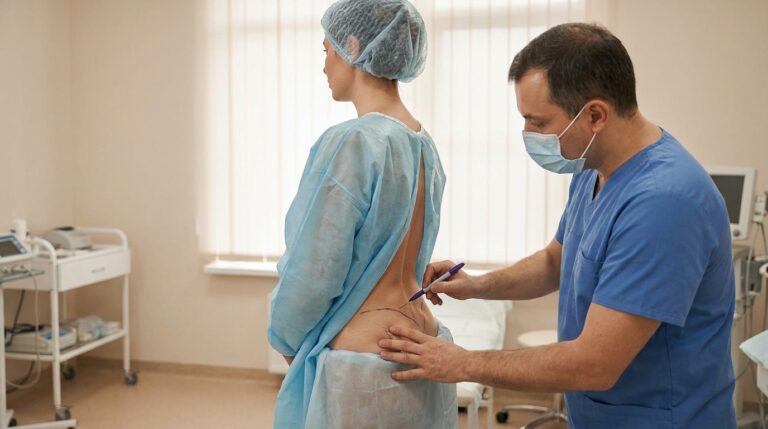
The operation runs in three stages during a single session, usually under general anaesthesia. First, fat is removed by liposuction from wherever you have a surplus — most often the abdomen, waist, flanks, lower back or inner thighs. Second, that fat is processed to separate usable fat cells from fluid, blood and oil. Third, it is injected in fine passes into the soft tissue layer over the hollow, building the shape up in thin layers rather than one lump.
The liposuction half of the procedure is not an afterthought. Taking fat from the waist and lower back sharpens the curve above the hip, so part of the visual improvement comes from what is removed rather than what is added. A surgeon who only looks at the dip and ignores the waist above it usually produces a flatter, less convincing result.
Why some fat does not stay
Transferred fat has to pick up a new blood supply before it settles permanently. A share of it never does and is reabsorbed over the first weeks and months, which is normal and expected. Surgeons allow for that when planning volume, and they avoid overfilling in one session because overcrowded grafts survive less well. If you are naturally very slim, the limiting factor is simply how much fat there is to harvest — our piece on skinny BBL and how much donor fat is needed goes into that trade-off.
Results are not guaranteed to be symmetrical or permanent. Significant weight change afterwards will alter the grafted fat just as it alters fat anywhere else, and a small number of patients choose a second, smaller session once everything has settled.
⚠️ The injection plane matters more than anything else Fat grafting to the hips and buttocks is safest when the fat is placed in the layer above the muscle, not deep inside it. Deep intramuscular injection is the mechanism behind the rare but serious fat embolism cases reported with buttock fat grafting. Ask directly which plane your surgeon injects into and whether ultrasound guidance is used.
Fat transfer, hip implants or fillers: how the options compare
Three routes exist for adding volume to the hip hollow, and they are not equal. Fat transfer is by far the most commonly performed, because it uses your own tissue, improves the waist at the same time and leaves only small access incisions.
Silicone hip implants are a real option for people with very little donor fat, but they are a bigger commitment. The implant sits in a pocket on the outer hip, an area that moves constantly and takes pressure every time you lie on your side. Reported problems include fluid collection, implant shifting, visible edges and infection, and relatively few surgeons offer the procedure at all. It usually makes sense only when fat grafting has been ruled out.
The comparison below is a general guide; which option suits you depends on your donor fat, your target shape and your tolerance for maintenance or revision.
Hip dips surgery recovery, week by week
Recovery after hip fat grafting is awkward rather than agonising for most people. The grafted hips need protection from pressure, and the liposuction areas feel sore, tight and bruised in a way that peaks around days two to four.
The pressure rule is the part patients underestimate. With buttock grafting the restriction is sitting; with hip grafting the restriction is lying on your side and anything tight across the hips, including waistbands, belts and a badly fitted garment. If your plan includes both hips and buttocks, both restrictions apply, and our guides on how long to avoid sitting after a BBL and BBL recovery week by week are worth reading before you book.
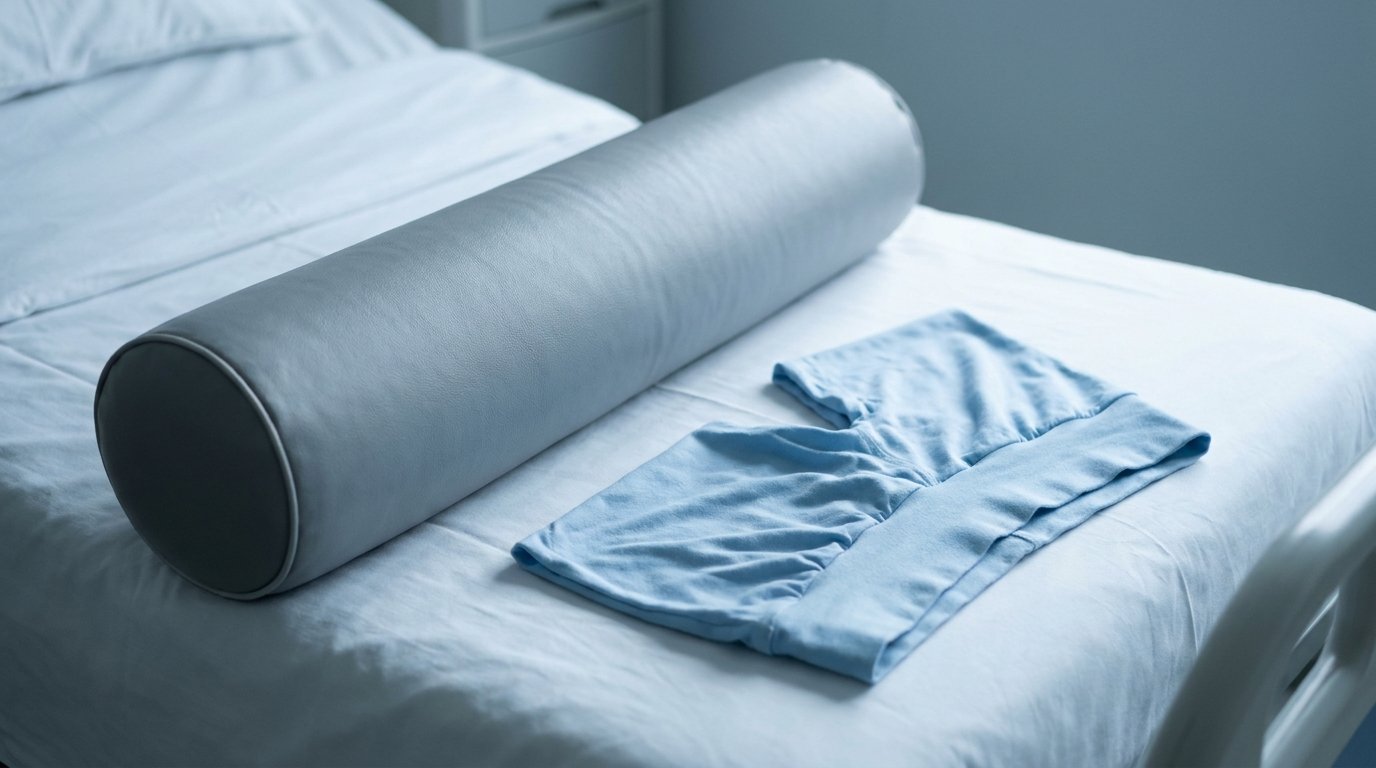
Swelling makes the hips look fuller than the final shape for the first few weeks, then volume drops as swelling settles and some graft is reabsorbed. Judging your result before about three months is a reliable way to panic over nothing.
🚨 Get urgent help for these symptoms Shortness of breath, chest pain, a fast heartbeat, fever, spreading redness, foul-smelling discharge, or pain and swelling in one calf all need immediate medical assessment, wherever you are in the world. Do not wait for a message back from the clinic.
What drives the cost of hip dip surgery
There is no single price for this operation, because no two plans move the same amount of fat. The biggest variables are how many areas need liposuction to collect enough graft, how much volume is being placed, whether the buttocks are being treated at the same time, and whether any technology such as ultrasound-assisted liposuction is part of the plan.
The second variable is scale. A little over half of the Brazilian butt lift plans we arrange are booked alongside at least one other operation, most often liposuction of further areas or a tummy tuck. That matters when you compare quotes: the figure many patients are shown is for a combined session, so a single-procedure price from another clinic is not the same thing. Ask every clinic to itemise exactly which procedures and which liposuction areas their quote covers before you compare them side by side.
A proper quote should also make clear what surrounds the surgery — anaesthesia and hospital time, pre-operative tests, your compression garment, medication, follow-up appointments and the clinic’s policy if a revision is ever needed. In Turkey, accommodation and airport transfers are often bundled into a package, which makes the headline figure look different from a surgery-only fee elsewhere. A personalised price can only be confirmed after a consultation and photo assessment, because that is when your donor fat is actually evaluated.
Planning the trip: how long to stay and who should operate
For a hip fat transfer, most clinics in Turkey ask patients to allow somewhere around seven to ten nights in the country. That covers pre-operative tests, surgery, the first dressing and garment checks, and a review before you fly. If your plan is combined with a tummy tuck or extensive liposuction, the stay is set by the bigger operation, not the hips.
Flying too early is the common mistake. Long-haul travel means hours of immobility, pressure on freshly grafted tissue and a higher clot risk, which is why surgeons want you walking comfortably and cleared before you board. Our guidance on flying after a BBL explains how patients usually manage seats, movement and compression on the journey home.
Age is rarely the deciding factor people expect it to be. Our Brazilian butt lift patients average 28 at the time of surgery, so if you are in your twenties or thirties you are squarely in the usual range — and if you are older, being outside the average matters far less than having stable weight, good general health and realistic goals.
Choosing a surgeon for this specific procedure
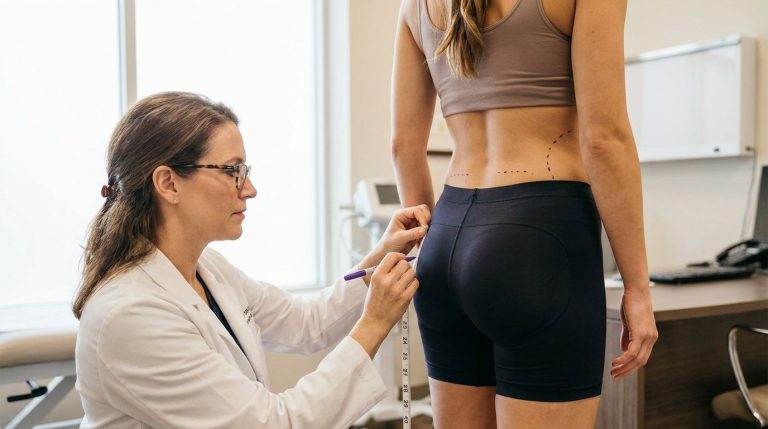
Hip grafting is a shaping operation, so the surgeon’s eye matters as much as their certificate. Ask to see unedited before-and-after photographs of hips specifically, taken from the side and the back, on bodies that look something like yours. A portfolio full of buttock projection tells you little about how someone handles the lateral hip.
Honest talk about what your bone structure limits, a surgeon who declines or stages treatment when donor fat is thin, clear written quotes, and a named point of contact after you fly home.
Promised volumes before anyone has examined you, time-limited discounts, no named surgeon, retouched photographs, and quotes that go quiet on anaesthesia, hospital or revision terms.
- ✓Verify the surgeon, not the clinic brand: Ask for the operating surgeon’s name and specialist registration, and confirm who will actually be in theatre.
- ✓Insist on a surgeon consultation before payment: A sales coordinator reviewing your photos is not an assessment of your donor fat.
- ✓Ask about the injection plane and guidance: Fat placed above the muscle, and the use of ultrasound guidance, are the central safety questions here.
- ✓Check the hospital and anaesthesia setup: A licensed, accredited facility with a dedicated anaesthetist and overnight care, not an office-based room.
- ✓Get the aftercare and revision policy in writing: Who you contact at 2am, how follow-up works once you are home, and what happens if a touch-up is needed.
Setting expectations before you commit
The most satisfied patients tend to be the ones who understood the ceiling in advance. Fat grafting can soften a hollow, blend the hip into the thigh and create a smoother line in clothing. It cannot give you a different skeleton, and a deep dip on a high, narrow pelvis will improve rather than disappear.
It also helps to think of the result as something you maintain. Stable weight protects grafted fat, large fluctuations change it, and pregnancy afterwards can alter the shape again. Some patients are happy after one session; others accept from the start that a smaller top-up at a later date is part of the plan.
If you are weighing this up, book a consultation where someone examines your donor areas, discusses the injection plane and shows you photographs of hips rather than a generic gallery. That conversation tells you more about your likely outcome than any price list.
This article is for informational purposes only and does not constitute medical advice. Always consult a qualified surgeon for personalised guidance.
Frequently Asked Questions
References
- 📎American Society of Plastic Surgeons — Cosmetic Procedures
- 📎NHS — Cosmetic Procedures
- 📎ISAPS Global Survey Statistics
Related Articles


You Might Also Like


Related articles

Our specialists
 Clineca SpecialistErkan PinegözPlastic & Reconstructive Surgery
 Clineca SpecialistHakan AktaşPlastic & Reconstructive Surgery
 Clineca SpecialistOrkun UzuneyüpoğluPlastic & Reconstructive Surgery
 Clineca SpecialistSalim İskenderPlastic & Reconstructive Surgery
 Clineca SpecialistEngin SelamioğluPlastic & Reconstructive Surgery
 Clineca SpecialistCem AydınPlastic & Reconstructive Surgery
 Clineca SpecialistAlperen ÖnalEar, Nose & Throat (ENT)