
Have a question about Veneers?
In this article
Ask how long do veneers last and you will get a slightly different answer from almost every dental website you read. Part of that is marketing, part of it is genuine clinical variation — the same material can behave very differently in two different mouths. This guide gives the real numbers, explains what actually decides whether you reach the top or the bottom of each range, and walks through what happens when a veneer finally needs replacing.
How long do veneers last on average?
Porcelain veneers usually last around 10 to 15 years, and a well-cared-for set can go beyond that. Composite (resin) veneers are shorter-lived, generally in the region of 4 to 8 years before they need refreshing or replacing. Zirconia-based restorations are the toughest of the group and can pass 15 years, though that depends heavily on your bite, your gums and how much healthy tooth was there to begin with.
Those ranges are averages, not promises. Two patients can leave the same clinic on the same day with identical porcelain veneers, and one set is still immaculate at year fourteen while the other needs attention at year six. The difference is rarely the ceramic itself — it is grinding, gum health, bite forces and whether the bonded edge stays sealed.
It also helps to separate two ideas that often get mixed up. A veneer can survive for years while gradually losing some of its original polish or showing a hairline stain at the margin. Dentists call this the quality of survival, and it matters more to patients than raw survival figures. A randomised split-mouth trial published in the Journal of Dentistry (2019) followed indirect resin composite and ceramic laminate veneers on front teeth for up to ten years, assessing both whether the veneers lasted and how well they held their quality over that period — a useful reminder that veneers are a long-term restoration, not a permanent one.
Finally, a point too many websites skip: veneers do not make the tooth underneath immune to decay. The lifespan of your veneer is tied to the lifespan of the tooth and gum supporting it.
📋 Lifespan vs. lifetime Once enamel has been reduced for a porcelain veneer, the tooth will always need some form of covering. Replacement, not removal, is the realistic long-term plan — so build the cost of one future replacement into your thinking from the start.
Does the material change how many years veneers last?
Yes — material is the single biggest predictable factor, with composite at the short end, porcelain in the middle, and zirconia-based work at the long end. The trade-off is that longer-lasting materials usually mean more tooth preparation and less easy repair.
Composite veneers are built directly onto the tooth, often with little or no drilling. A 2025 narrative review in Minerva Dental and Oral Science describes direct composite veneers as a conservative way to improve the look of front teeth without extensive preparation — which is exactly their appeal. The cost of that conservatism is that resin picks up stain, loses shine and chips at the edges sooner than ceramic. The upside is that it is quick and cheap to polish or patch, and nothing irreversible has happened to your enamel. We compare the two options in more detail in our guide to composite bonding vs veneers.
Porcelain and lithium disilicate (the material behind e-max restorations) are made in a laboratory and bonded on. They resist staining almost completely and hold their surface gloss for years, but they cannot be repaired in the mouth — a fractured ceramic veneer is replaced, not rebuilt. Zirconia is stronger still, which is why it is often chosen for heavy bites or for teeth already badly worn or restored, but it generally involves a crown-style preparation rather than a thin facing. Our zirconia vs porcelain comparison explains where each one fits.
You want colour stability and a long service life, you have enough healthy enamel to bond to, and you are comfortable that the change is not reversible.
Your concerns are small chips or minor shape issues, you want to keep your enamel untouched, or you want to test a new smile shape before committing.
What shortens a veneer’s lifespan?
Most veneers that fail early do not fail because the ceramic was poor. They fail because of forces or biology around them.
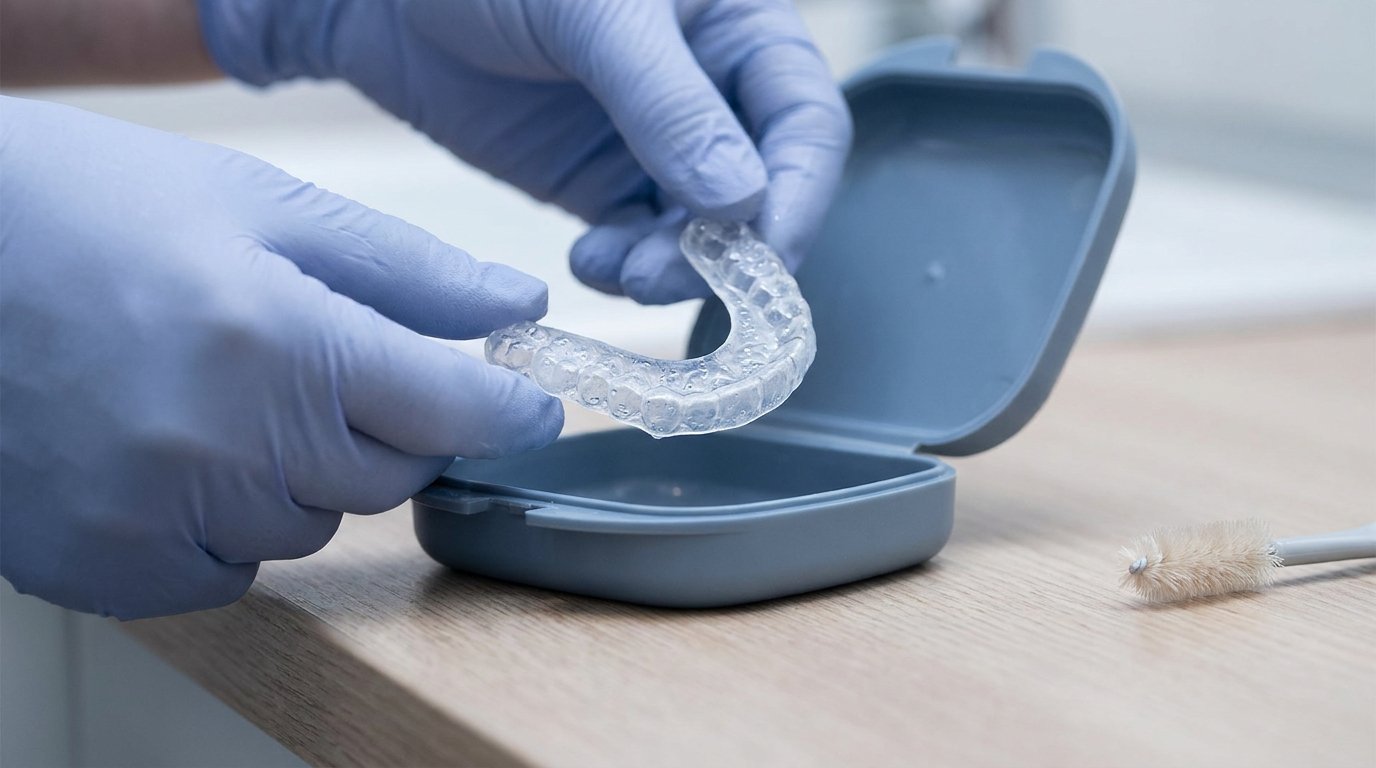
Grinding and clenching are the biggest culprits. Night grinding puts repeated load on thin ceramic edges, and that is how incisal chips and cracks appear years before they should. If you grind, a night guard is not an optional extra — it is part of the treatment, and skipping it is the fastest route to a cracked veneer.
Gum recession is the second common problem. The veneer stays intact, but the gum drifts back and exposes a line of natural tooth or the old margin, which is visible rather than structural. It is still a reason people choose to replace a set that is technically fine.
Then there is the bond itself. Veneers bond best to enamel; where a tooth already has large old fillings or very little enamel left, the bond is less predictable. Decay forming at the edge of a veneer, acid erosion from fizzy drinks or reflux, biting fingernails and opening packaging with your front teeth all chip away at longevity in a very literal sense.
The quality of the planning stage matters too. A set designed without checking how the teeth meet when you chew and move your jaw sideways will take abnormal load somewhere, and that spot eventually gives way.
⚠️ Over-preparation is a long-term problem If more tooth is removed than the case needs, the tooth becomes weaker and more sensitive, and future replacements get harder. Ask any clinic exactly how much tooth reduction your plan involves and whether a mock-up will be used to check it first.
- →Unmanaged bruxism: Repeated grinding load cracks thin ceramic edges. A custom night guard protects the investment.
- →Gum disease and recession: Healthy gums keep the margin hidden and sealed; inflamed gums expose and undermine it.
- →Decay at the margin: The tooth under the veneer can still decay, which usually means remaking the veneer.
- →Too little enamel to bond to: Heavily filled or worn teeth may be better served by a crown than a thin veneer.
- →Habits: Nail biting, pen chewing, ice crunching and using teeth as tools cause avoidable chips.
Signs your veneers need replacing
The clearest signs are a visible dark line or gap at the gum edge, a chipped or cracked surface, a veneer that feels loose or rough to the tongue, new sensitivity to cold or sweetness, and a shade that no longer matches your neighbouring teeth. Any one of those deserves an examination rather than a wait-and-see approach.
Some changes are cosmetic only and can be monitored. A composite veneer that has dulled or yellowed, or a slight shade mismatch as your natural teeth age, is a preference decision rather than a clinical emergency. Other changes are structural. A veneer that debonds, leaks at the margin or hides decay is a problem that gets worse and more expensive the longer it is left.
Sensitivity deserves a word of its own, because it is normal for a short period after new veneers are fitted and worrying when it appears years later. If a settled veneer suddenly becomes sensitive, suspect a leaking margin or decay underneath. Our article on veneer sensitivity and how long it lasts explains the difference between normal settling and a warning sign.
Replacement is usually simpler than the first treatment. The old veneer is carefully removed, the tooth is assessed and cleaned up, and a new one is made — often without further tooth reduction, provided the underlying tooth is healthy.
A dark line at the gum, a veneer that moves or clicks, bleeding gums around one tooth, new sensitivity after years of comfort, or a visible crack.
Gradual dulling of composite, a mild shade difference with ageing natural teeth, or minor edge roughness that can be polished.
How to make veneers last as long as possible
Day-to-day care is unglamorous and genuinely decisive. Brush twice a day with a non-abrasive paste, clean between the teeth every day — the margins are where problems start — and keep your regular hygiene appointments so the gums stay healthy and sealed.
Protect the edges. If you grind or clench, wear the night guard. If you play contact sport, wear a mouthguard. Treat your front teeth as if they were made of fine glass with excellent manners: they can bite into a sandwich, not into a bottle cap.
Watch the acid, not just the sugar. Frequent fizzy drinks, citrus and sports drinks soften the enamel around the veneer margins and encourage leakage over the years. Reflux does the same thing from the inside and is worth treating if you have it.
And keep seeing a dentist, even when nothing hurts. Most veneer failures are visible to a clinician long before they are obvious to you, and catching a marginal leak early can mean a repair rather than a remake.
- ✓Soft or medium brush, low-abrasion toothpaste, twice daily
- ✓Daily interdental cleaning around every veneer margin
- ✓A custom night guard if you grind or clench
- ✓Professional hygiene visits and a yearly veneer check
- ✓No nail biting, ice crunching or using teeth as tools
Cost, replacement and planning veneer treatment in Turkey
Longevity and cost are connected, so it is worth understanding what drives a quote rather than chasing the lowest headline figure. The main variables are the material chosen, how many teeth are being treated, whether any gum work or a night guard is needed, the laboratory and technician doing the work, and whether a digital mock-up and trial smile are part of the plan. A personalised price is confirmed after a consultation and X-rays, because the condition of your existing teeth changes the plan more than anything else.
A proper quote should state the material by name, the number of units, how many appointments are involved, what the temporary stage looks like, and what happens if something needs adjusting after you fly home. If a quote does not name the material, that is a gap worth questioning. Our overview of dental veneers in Turkey sets out the full process, and if you are planning travel dates, how many days veneers take in Turkey covers the realistic stay.
On timing, most veneer cases need a stay of roughly five to seven working days split across preparation, try-in and final bonding, with temporaries in between. Rushing that sequence is one way to end up with a bite that was never properly checked — and a bite that was never properly checked is one way to shorten the lifespan of the whole set.
Choosing a clinic that protects longevity
Look for a dentist who examines before designing, who talks about your bite and your gums rather than only shade and shape, and who shows you a mock-up before any tooth is touched. Ask who makes the ceramics and whether the laboratory is in-house. Ask what the follow-up and warranty arrangements are, and what happens in year three if one unit chips. Patients who want general background on cosmetic dental and surgical procedures can also read the NHS information on cosmetic procedures before committing.
Finally, be cautious about anyone promising a specific number of years. Honest clinics talk in ranges and conditions, because that is how the evidence reads.
This article is for informational purposes only and does not constitute medical advice. Always consult a qualified surgeon for personalised guidance.
🚨 Veneers are not a fix for untreated problems Active gum disease, decay or an unmanaged grinding habit should be treated before veneers are placed. Covering them over shortens the life of the restoration and can damage the tooth beneath.
Material named in writing, digital mock-up or wax trial before preparation, bite and gum assessment, clear aftercare and review plan, realistic lifespan language.
A full set designed from photos alone, no mention of your bite or gum health, ‘lifetime’ guarantees, pressure to add more units than you asked about, no written treatment plan.
Frequently Asked Questions
References
- 📎Randomized clinical trial on indirect resin composite and ceramic laminate veneers: Up to 10-year findings — Journal of Dentistry, 2019
- 📎Esthetic smile rehabilitation with direct composite veneers: a narrative review — Minerva Dental and Oral Science, 2025
- 📎NHS — Cosmetic procedures
Related Articles



You Might Also Like



Related articles



Our specialists
 Clineca SpecialistErkan PinegözPlastic & Reconstructive Surgery
 Clineca SpecialistHakan AktaşPlastic & Reconstructive Surgery
 Clineca SpecialistOrkun UzuneyüpoğluPlastic & Reconstructive Surgery
 Clineca SpecialistSalim İskenderPlastic & Reconstructive Surgery
 Clineca SpecialistEngin SelamioğluPlastic & Reconstructive Surgery
 Clineca SpecialistCem AydınPlastic & Reconstructive Surgery
 Clineca SpecialistAlperen ÖnalEar, Nose & Throat (ENT)