
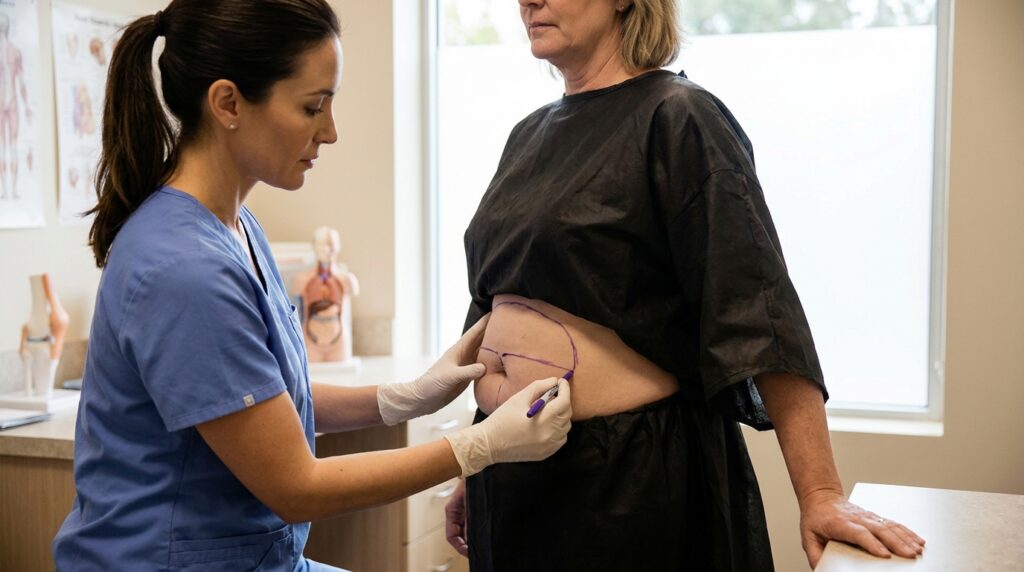
Have a question about mini tummy tuck?
In this article
- What is the real difference between a mini and a full tummy tuck?
- How do the scars and belly button changes differ?
- Who is a better candidate for each option?
- How do recovery and time off work compare?
- What risks should you weigh before choosing?
- Which option gives a better result?
- How do cost, travel, and clinic choice work in Turkey?
The main answer to what is the difference between a mini tummy tuck and a full tummy tuck is simple: a mini tummy tuck treats loose skin below the belly button, while a full tummy tuck addresses a larger area of skin and fat across the whole lower abdomen and may also include muscle repair if needed. In practice, the right choice depends on where your laxity is, how much correction you want, and what trade-offs you accept around scar length, recovery, and result limits.
What is the real difference between a mini and a full tummy tuck?
The biggest difference is how much of the abdomen is treated. A mini tummy tuck is designed for people whose main concern sits below the belly button: a small pouch, mild loose skin, or some lower-abdominal fullness that has not improved with weight loss or exercise. A full tummy tuck, also called a standard abdominoplasty, treats more skin and tissue across the entire front of the abdomen.
In a mini procedure, the belly button often stays in place because the upper abdomen is not usually lifted to the same extent. In a full tummy tuck, the surgeon generally lifts more of the abdominal skin and may need to reshape the belly button opening as part of closing the skin lower and tighter.
Muscle repair is where online explanations often become too simplistic. People are often told that a full tummy tuck always includes muscle tightening and a mini never does. Real surgical practice is more nuanced. Not all full tummy tucks include muscle repair, and in selected cases a surgeon may perform limited lower-abdominal muscle tightening with a mini approach if the anatomy allows. Whether muscle repair is useful depends on the pattern of muscle separation, called diastasis, and on the surgeon’s technique.
If your concern is mainly a small amount of loose skin low on the tummy, a mini can be enough. If you have skin laxity above and below the navel, stretched abdominal tissues after pregnancy or major weight change, or a more global abdominal overhang, a full tummy tuck is usually the closer match.
For a broader overview of abdominoplasty, patients often start with a general tummy tuck information page such as abdominoplasty treatment information, but the decision between mini and full is really about anatomy rather than labels.
Mild loose skin and fullness mainly below the belly button, with limited excess in the upper abdomen.
More widespread skin laxity, a larger lower-abdominal apron, or a need for broader contour correction.
A mini tummy tuck is a smaller operation focused on the lower abdomen, usually below the navel. A full tummy tuck treats a wider area and often reshapes the whole abdominal wall. The scar, recovery, and amount of correction are usually greater with a full procedure, but surgeon technique and your anatomy matter.
How do the scars and belly button changes differ?
For many patients, this is the deciding factor. A mini tummy tuck usually has a shorter scar placed low on the bikini line, although “shorter” is relative and still varies with your body shape and how much skin is removed. A full tummy tuck usually creates a longer horizontal scar because more tissue has to be removed and tightened.
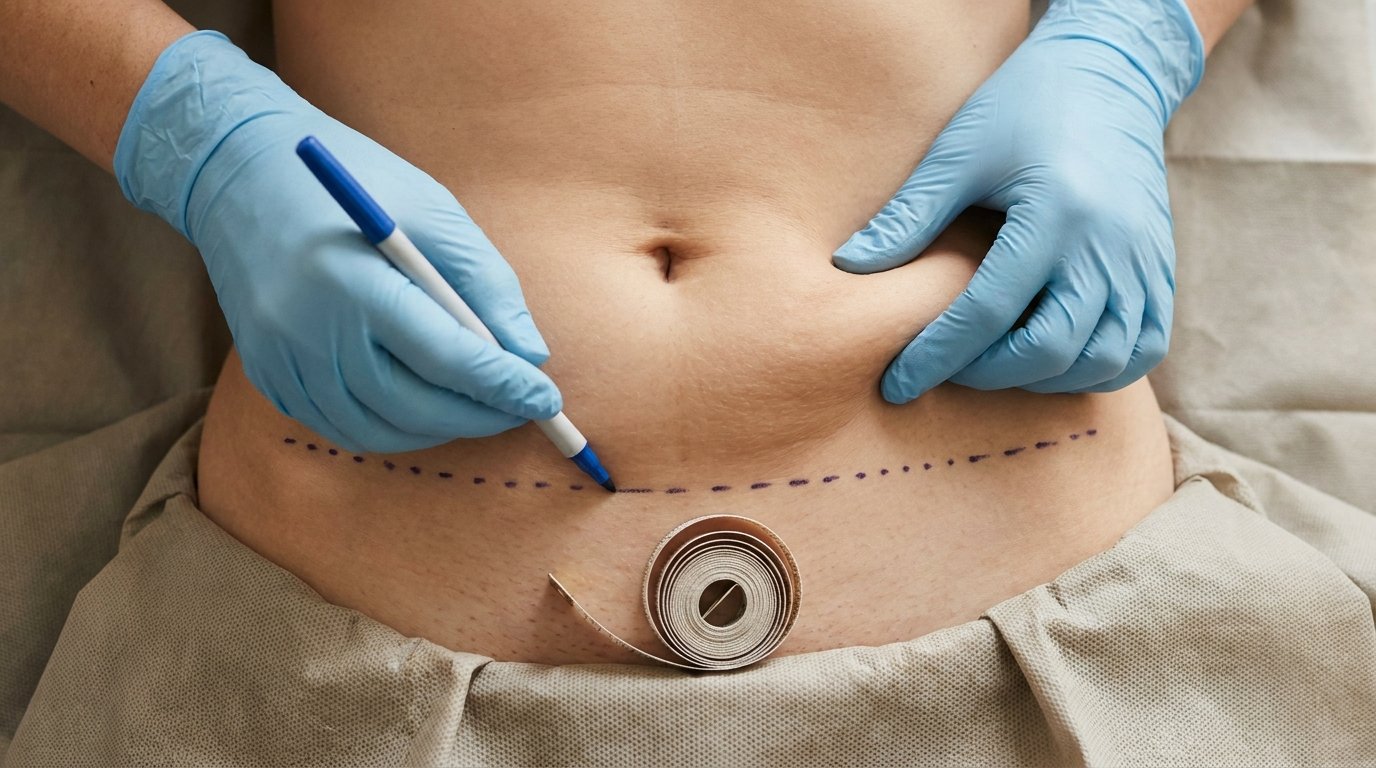
The belly button is another visible difference. In many mini tummy tucks, the navel is left alone because the correction stays low. In a full tummy tuck, the upper abdominal skin is commonly moved downward, so the surgeon usually creates a new opening for the belly button. That does not mean the belly button itself is removed; it means the surrounding skin is reshaped.
Scar quality depends on far more than incision length. Your skin type, smoking status, wound healing, tension on the closure, and aftercare all matter. A shorter scar is attractive, but it is only a good trade if the operation actually matches the problem. A mini tummy tuck with too little correction can leave upper-abdominal looseness untouched, which some patients later regret.
📋 Important trade-off A smaller scar is not automatically the better result if it means the area that bothers you most is not fully addressed.
A mini tummy tuck usually leaves a shorter low scar and often does not require the belly button to be repositioned. A full tummy tuck usually leaves a longer scar from hip to hip and often involves creating a new opening for the belly button after the skin is redraped.
Who is a better candidate for each option?
A mini tummy tuck is often a better fit when your weight is fairly stable and the issue is localised. You may be close to your goal weight, but still have a small lower-belly fold or “pooch” that does not respond to exercise. The upper abdomen usually needs to be in reasonably good shape for this to work well.
A full tummy tuck is more often recommended when the problem is broader and more structural. That may include loose skin above the belly button, stretch marks spread across a larger area, a hanging apron of skin, or weakness through the abdominal wall after pregnancy. It can also be the better option after major weight loss, especially when the skin excess is significant.
Candidacy is not only about appearance. Surgeons also look at whether you are medically well enough for surgery, whether your weight has been stable, whether you smoke or vape, and whether you are planning future pregnancy. Future pregnancy can stretch the tissues again, so many people prefer to wait until their family is complete.
Liposuction may be combined with either operation in selected cases, but it does not replace skin removal when skin elasticity is poor. If your concern is fullness with good skin tone rather than loose skin, the discussion may shift toward liposuction options rather than tummy tuck alone.
- ✓Mini tummy tuck is more likely to suit mild lower-abdominal skin laxity.
- ✓Full tummy tuck is more likely to suit loose skin above and below the belly button.
- ✓Neither procedure is a weight-loss operation.
- ✓The final plan depends on examination, skin quality, scar position, and whether muscle repair is actually needed.
Mini tummy tuck candidates usually have mild excess skin and fat limited to the lower tummy. Full tummy tuck candidates more often have loose skin above and below the navel, abdominal wall laxity, or changes after pregnancy or major weight loss. Final suitability depends on examination, not photos alone.
How do recovery and time off work compare?
Recovery is often where the difference feels most real. A mini tummy tuck is usually less disruptive because the area treated is smaller. Many patients still feel sore, swollen, and tight for the first one to two weeks, but everyday movement tends to return faster than after a full tummy tuck.
A full tummy tuck generally asks more of you. Standing fully upright may feel uncomfortable at first, especially if a large amount of skin was removed or muscle repair was performed. Swelling lasts longer, the abdomen often feels tighter, and you may need more help at home in the first several days.
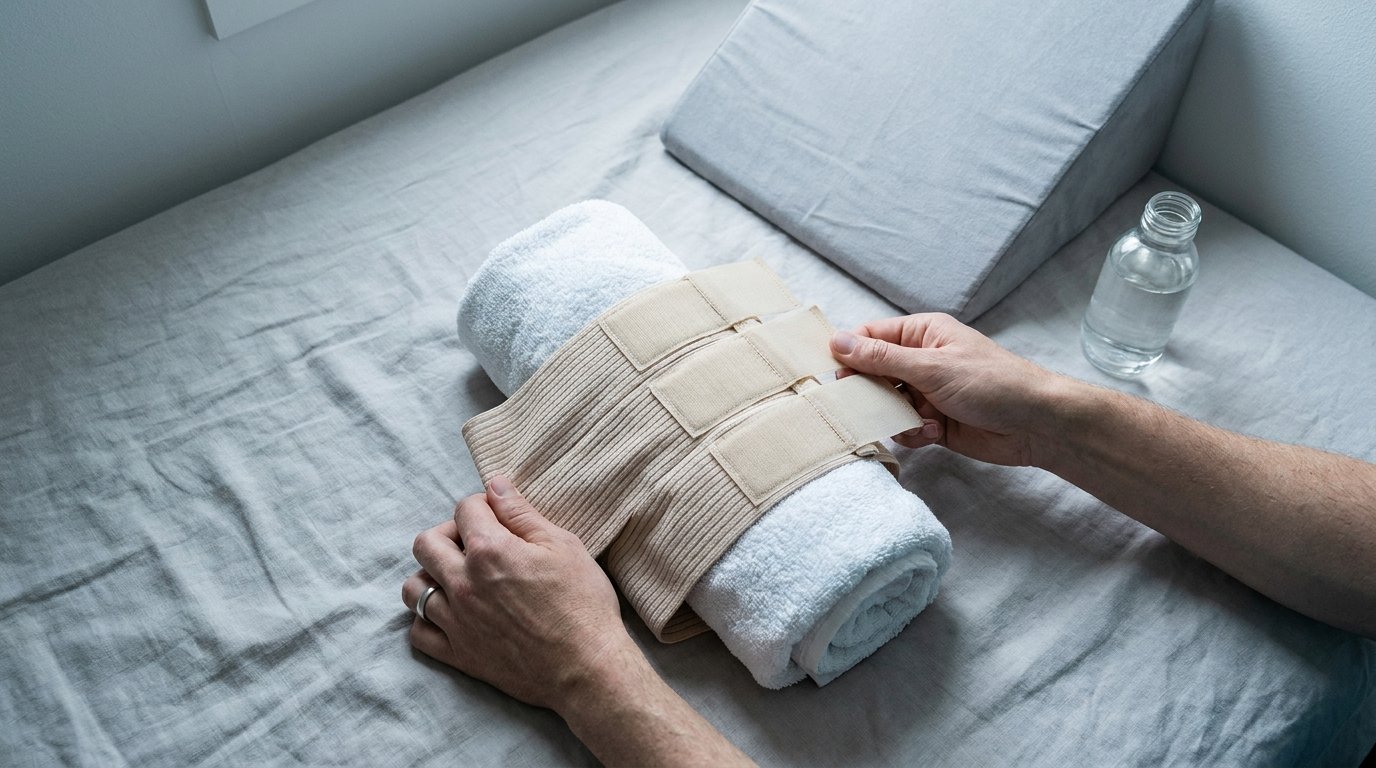
The NHS notes that recovery after cosmetic surgery takes time and that risks increase if aftercare advice is not followed. The American Society of Plastic Surgeons also advises that abdominal contouring surgery involves swelling, drains in some cases, compression garments, and staged return to activity. Those points matter more than any neat online timeline.
Below is a practical comparison, but exact recovery varies by surgeon technique and by whether liposuction or muscle repair was added.
⚠️ Do not book a rushed return flight After body-contouring surgery, travel plans should allow time for early checks, dressing changes, and safe movement before flying home.
A mini tummy tuck usually has a shorter, easier recovery than a full tummy tuck, but both still need proper downtime. Many patients feel mobile sooner after a mini procedure, while a full tummy tuck more often brings tighter movement, longer swelling, and more time before normal exercise feels comfortable.
What risks should you weigh before choosing?
This is not just a smaller-versus-bigger version of the same decision. Both procedures involve anaesthesia, incisions, and healing under tension. According to the NHS and ASPS, tummy tuck surgery carries recognised risks such as bleeding, infection, fluid collections called seromas, poor wound healing, numbness, scarring, and blood clots in the legs or lungs, known as venous thromboembolism or VTE.
A full tummy tuck may have a higher burden of swelling and wound care because a larger area is treated, but that does not make a mini procedure trivial. Even a limited tummy tuck can lead to wound separation, delayed healing, contour irregularity, or a scar that sits higher or longer than expected.
Revision surgery is another important part of informed consent. Sometimes the issue is purely aesthetic, such as residual fullness or scar placement. In other cases, it relates to healing problems or persistent asymmetry. A revision does not always mean something was done wrongly. It can simply reflect how variable human healing is.
You should contact your surgical team urgently if you develop worsening one-sided leg swelling, chest pain, shortness of breath, fever, spreading redness, increasing rather than improving pain, foul-smelling wound drainage, or sudden enlargement of the abdomen. Those signs need timely review.
Signs worth taking seriously
A useful rule is this: mild swelling and bruising are expected; steadily worsening symptoms are not. The following deserve prompt medical advice, especially in the first days after surgery:
- ✓Rapidly increasing swelling or tightness
- ✓Fluid sloshing or a new bulge that may suggest seroma
- ✓Wound edges opening or darkening skin
- ✓Persistent fever or feeling unwell
- ✓Calf pain, marked leg swelling, breathlessness, or chest pain
Good risk reduction starts before surgery. That includes smoking cessation, honest discussion of your medical history, following instructions on blood-thinning medicines, wearing compression if advised, and getting up to walk early after the operation.
🚨 Emergency warning signs Chest pain, sudden shortness of breath, or a painful swollen calf can be signs of a blood clot and need urgent medical attention.
Both mini and full tummy tucks carry real surgical risks, including bleeding, infection, seroma, wound healing problems, blood clots, asymmetry, and the possibility of revision surgery. Full tummy tucks often involve a wider dissection and can carry a greater recovery burden, but mini procedures are not risk-free.
Which option gives a better result?
Patients often ask this as if it were a quality ranking, but it is really a matching problem. A mini tummy tuck can give a very satisfying result when the excess is truly limited to the lower abdomen. In that setting, choosing a full operation may mean more scar and more downtime than you need.
The opposite is also true. If you have skin looseness above the navel, a mini tummy tuck may improve the lower tummy while leaving the upper part looking unchanged. That can feel disappointing even if the surgery itself was technically fine. The fuller operation may be the more honest option if your goal is smoother contour across the whole abdomen.
This is why good consultations include standing examination, pinch tests for skin excess, a discussion of scar placement, and clear explanation of what will not change. Stretch marks, for example, may improve only if they sit on skin that is actually removed. A tummy tuck can tighten contour, but it does not turn every abdomen into a perfectly flat one.
Neither option is universally better. A mini tummy tuck can look more natural when the problem is small and low on the abdomen. A full tummy tuck usually gives a more complete change when laxity is broader. The better result is the one that matches your anatomy without promising correction it cannot deliver.
How do cost, travel, and clinic choice work in Turkey?
There is no honest fixed online price for the mini-versus-full decision because the treatment plan changes the theatre time, the complexity of the operation, whether liposuction is added, whether an overnight stay is needed, and how many follow-up visits are built into the package. A personalised quote is normally confirmed only after consultation.
In simple terms, a full tummy tuck often costs more than a mini because it usually involves more surgical work and a longer recovery pathway. But cheap comparison shopping can be misleading if one quote includes garments, hospital stay, medication, and reviews while another does not.
If you are travelling to Turkey, focus on practical questions. How long should you stay safely after surgery? Who reviews you before you fly home? Is the surgeon experienced in abdominoplasty, and are they open about whether you are better suited to a mini or full approach? Those questions protect you better than any headline price.
Look for a clinic and surgeon team that explains risks clearly, gives written aftercare instructions, and does not push a smaller operation simply because the scar sounds more attractive. If you want to ask about candidacy in a structured way, a formal surgical consultation is the right next step rather than relying on social media photos alone.
- →What drives price: Extent of skin removal, whether muscle repair is needed, added liposuction, hospital stay, anaesthesia, garments, and follow-up care.
- →What drives travel time: Drain management, wound checks, your mobility, and whether the surgeon wants to review you again before flying.
- →What drives safety: Accredited facilities, qualified surgeon assessment, VTE prevention, clear aftercare, and realistic case selection.
- →What drives satisfaction: Choosing the operation that matches your anatomy, not the one with the most appealing name or shortest scar.
For this topic, cost should be discussed qualitatively rather than as a fixed figure. A full tummy tuck usually costs more than a mini because it is more extensive, but the final quote depends on your anatomy, surgeon plan, hospital setting, and whether other procedures are added. Travel planning and surgeon credentials matter as much as price.
Frequently Asked Questions
References
- 📎NHS – Cosmetic procedures
- 📎ASPS – Cosmetic procedures
- 📎PubMed search: abdominoplasty complications seroma venous thromboembolism wound healing
- 📎PubMed search: mini abdominoplasty versus full abdominoplasty

You Might Also Like



Related articles


Our specialists
 Clineca SpecialistErkan PinegözPlastic & Reconstructive Surgery
 Clineca SpecialistHakan AktaşPlastic & Reconstructive Surgery
 Clineca SpecialistOrkun UzuneyüpoğluPlastic & Reconstructive Surgery
 Clineca SpecialistSalim İskenderPlastic & Reconstructive Surgery
 Clineca SpecialistEngin SelamioğluPlastic & Reconstructive Surgery
 Clineca SpecialistCem AydınPlastic & Reconstructive Surgery
 Clineca SpecialistAlperen ÖnalEar, Nose & Throat (ENT)