Have a question about Neck Lift?
In this article
- When does a neck lift make sense for loose skin without much fat?
- How do surgeons decide if you are a good candidate?
- What if your issue is skin laxity, neck bands, or a weak jawline rather than fullness?
- What are the risks, scars, and limits if you mainly want tighter skin?
- What is recovery like after a neck lift?
- How should medical tourists judge safety and surgeon credentials?
- What affects the price if there is not much fat to remove?
- What should you do next if you think you fit this profile?
Yes, you may be a good candidate for a neck lift if you have loose skin but not much fat, especially if the main problem is skin laxity, neck banding, or a poorly defined jawline rather than fullness. The important caveat is that candidacy depends on skin quality, muscle changes under the chin, your health, and whether a surgeon thinks a neck lift alone will meet your goals or if another approach would suit you better.
When does a neck lift make sense for loose skin without much fat?
If you are asking, am I a candidate for a neck lift if I have loose skin but not much fat, the short answer is often yes. Many people assume a neck lift is mainly for a “double chin,” but that is only one pattern. Another very common pattern is thin or moderate loose skin, visible neck bands, and a soft jawline with very little extra fat.
According to the American Society of Plastic Surgeons (ASPS), neck lift surgery is commonly used to address excess skin, fat, and banding in the neck. That matters because it shows the operation is not only about liposuction. In real consultations, surgeons often separate the problem into three layers: skin, fat, and muscle. If fat is minimal but the skin and the thin neck muscle called the platysma have started to loosen, a neck lift may still be the most direct fix.
A surgeon may consider you a stronger candidate if you have:
- ✓Loose or hanging skin under the chin or along the neck
- ✓Visible vertical neck bands
- ✓A blurred jawline caused by skin laxity rather than bulk
- ✓Stable weight and realistic expectations
- ✓Good general health and no uncontrolled medical problems
The NHS advises that cosmetic surgery should only be considered after you understand the risks, limits, and likely recovery. That is especially relevant here, because loose skin usually does not improve much with creams, facial exercises, or skin treatments once laxity becomes more established.
If your concern is mostly skin looseness, a consultation for a neck lift is usually more useful than focusing only on fat-reduction options. The key question is not whether you have a lot of fat. It is whether surgery can improve the specific structures causing the aged or tired neck contour.
📋 Loose skin and low fat is a real neck-lift pattern A neck can look older because of skin laxity and muscle banding even when there is very little fat under the chin.
A neck lift often makes sense when the neck looks loose, crepey, or banded but is not especially heavy or fatty. In that situation, surgery is usually aimed less at fat removal and more at tightening skin, improving the neck angle, and sometimes adjusting the platysma muscles that create vertical neck bands.
How do surgeons decide if you are a good candidate?
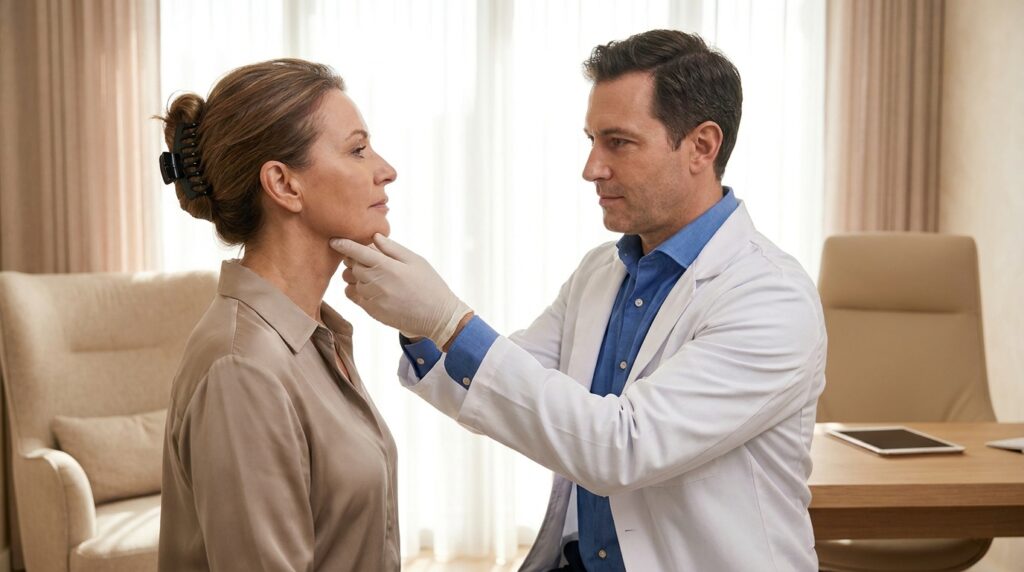
A proper assessment is more detailed than a quick look in the mirror. Surgeons typically examine you from the front and side, often with your chin at rest rather than lifted, because that shows what the neck is really doing in daily life.
They usually look at skin elasticity first. Thin, crepey, sun-damaged skin behaves differently from thicker skin. Both can be treated, but the likely degree of tightening is not identical. They also check for platysmal banding. These are the vertical cords some people notice when talking or clenching. If bands are part of the problem, a simple skin-only treatment may disappoint you.
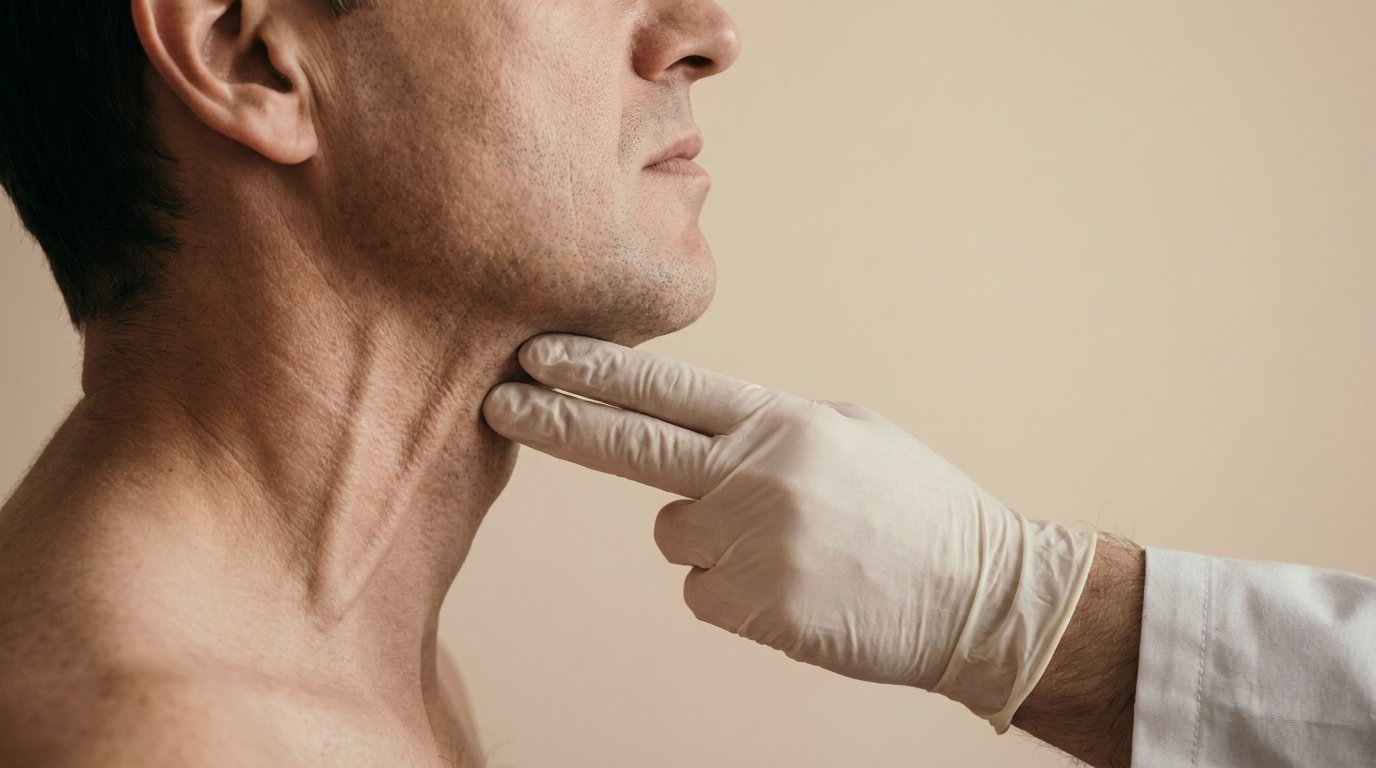
Chin position matters as well. A small or set-back chin can make the neck look less defined even when there is little fat. In some cases, a surgeon may discuss whether chin support could affect the result. That does not automatically mean you need another procedure, only that neck shape is not judged in isolation.
Questions the surgeon is really trying to answer
The consultation often comes down to a few practical questions. Is the issue mostly loose skin, mainly muscle laxity, or a mix of both? Will a neck lift alone create enough change to justify surgery? And will the scar placement and recovery make sense for your goals?
Your health history is also central. The NHS notes that smoking increases surgical risks and can impair healing. A surgeon may ask you to stop nicotine before and after surgery. Blood thinners, diabetes that is not well controlled, and a history of poor scarring can also affect whether surgery is advised or whether timing needs to change.
A good candidate is not simply someone who wants a tighter neck. It is someone whose anatomy matches the operation and who understands what it can and cannot do.
- ✓Skin laxity under the chin and along the neck
- ✓Neck bands caused by platysma muscle changes
- ✓Jawline definition and chin support
- ✓Weight stability and smoking status
- ✓Previous surgery, scars, and medical conditions
Surgeons usually assess candidacy by examining skin elasticity, the amount and location of fat, the platysma muscles, chin support, jawline shape, and your overall health. A person with little fat can still be a good candidate if loose skin or neck banding is the main issue and expectations are realistic.
What if your issue is skin laxity, neck bands, or a weak jawline rather than fullness?
This is where many people get clearer answers. If you do not have much fat, your result will depend on whether the visible problem is mostly loose skin, underlying muscle laxity, or facial structure.
Loose skin alone can sometimes be improved with a neck lift. But when there are strong vertical bands, the procedure may also involve tightening the platysma muscle. If your lower face is also sagging, a surgeon may explain that a neck lift by itself can improve the neck but may not fully sharpen the jawline. In those cases, people are sometimes assessed in relation to a facelift rather than neck surgery in isolation.
A weak chin can also make the neck seem heavier than it is. Some patients who think they need fat removal actually have a structural issue that changes the profile. That is why side-view examination is so important. A consultation may include discussion of whether chin augmentation would change the balance of the lower face and neck, though that depends entirely on anatomy and goals.
The most useful mindset is this: little fat does not rule you out. It simply changes what needs to be corrected. The operation becomes less about volume removal and more about redraping and support.
If fullness is not the main issue, treatment may focus on tightening skin, repairing or tightening neck muscles, and improving the jaw-neck angle. A weak jawline or small chin can change the overall result, so some people need a broader facial assessment rather than neck surgery alone.
What are the risks, scars, and limits if you mainly want tighter skin?
The ASPS advises that every cosmetic surgery procedure has risks, and a neck lift is no exception. If your main goal is tighter skin, it is important to understand both what the operation can do and what it cannot do.
Typical concerns include bleeding, infection, fluid collection, numbness, asymmetry, visible scarring, and delayed healing. Temporary tightness and reduced neck comfort are common early on. There is also a small but important risk of nerve injury, which is one reason surgeon training and careful technique matter so much.
Scars are usually placed around the ears and sometimes under the chin, depending on the method used. Good surgeons try to hide these well, but no scar is truly invisible. If your skin is very thin or if you heal with raised or pigmented scars, this should be discussed before surgery, not after.
The limits matter too. A neck lift can improve contour, but it does not stop future ageing. If you have very heavy lower-face laxity, a neck-only operation may leave you wishing the jawline improved more than it did. If your chin is naturally small, the final profile may still be softer than you expect.
The best consultations are honest. They do not treat a neck lift as a magic fix for every neck shape.
⚠️ A tighter neck is not the same as a new facial structure If bone support is limited or the lower face is also sagging, a neck lift may help but may not create a sharply cut jawline.
A neck lift can improve skin laxity, but it does leave scars and carries real surgical risks such as bleeding, infection, nerve injury, asymmetry, and delayed healing. It can tighten and refine the neck, but it will not stop ageing or always create a dramatic jawline if bone structure is limited.
What is recovery like after a neck lift?
Recovery is often easier when patients know what the timeline really feels like. You will usually not look “finished” quickly, even if the surgery goes smoothly. The first days are often defined by swelling, bruising, a feeling of tightness, and sleeping with the head elevated.

The NHS and ASPS both emphasise that recovery varies by person and by the extent of surgery. In practical terms, many people need a period of genuine downtime rather than trying to turn it into a mini-break abroad. If stitches, dressings, or drains are used, those early checks shape how long you should stay near your surgical team.
Here is the kind of timeline people often find useful to plan around.
📋 Travel planning matters For medical tourists, the key issue is not just the flight home. It is staying long enough for your early review visits and for any immediate concerns to be checked in person.
Most people need at least one to two weeks away from public-facing work or social plans, with swelling and tightness improving gradually over several weeks. Travel patients should usually plan to stay long enough for early review appointments, because the first postoperative period is when swelling, dressings, and wound checks matter most.
How should medical tourists judge safety and surgeon credentials?
This is one area where you should be very methodical. Cosmetic surgery abroad can be done well, but only if you verify the basics yourself rather than relying on marketing language.
Start with the surgeon. Ask for their full name, specialty, and board or society memberships relevant to plastic surgery. Membership alone is not proof of quality, but vague claims like “aesthetic expert” are not enough. You should also ask who will actually perform the operation and who will provide anaesthesia.
Then check the facility. Ask whether surgery takes place in a licensed hospital or an accredited surgical facility, and what emergency support is available if a complication happens. A reputable provider should be able to explain this plainly. You should also ask what follow-up is included, who you contact after hours, and what happens if you develop a seroma, bleeding, or wound issue after you return home.
For background on the provider, you can review the clinic’s about page and the listed doctors, then use your consultation to verify details rather than assuming the website tells you everything you need.
Safety checks worth doing before you book
- ✓Ask for the surgeon’s plastic surgery credentials and where they trained.
- ✓Confirm the operating facility is licensed or accredited for surgical care.
- ✓Ask who gives the anaesthetic and what their qualifications are.
- ✓Request a clear written aftercare plan, including emergency contact details.
- ✓Ask how long you should remain in Turkey before flying home.
- ✓Check whether your health conditions, smoking, or medication use increase your risk.
If you want to discuss your own anatomy and travel plan, arranging a consultation is more useful than comparing before-and-after photos alone. Good candidacy decisions come from examination, not from guessing based on someone else’s result.
The team gives specific answers about surgeon credentials, facility licensing, anaesthesia, complications, and follow-up.
You are pushed to book quickly, prices are discussed before clinical suitability, or no one can clearly say who operates and where.
Safety starts with checking who is operating, where the surgery will happen, and what happens if something goes wrong. Ask for the surgeon’s specialist credentials, the hospital or clinic accreditation, the anaesthesia plan, and the aftercare pathway. If answers are vague, treat that as a warning sign.
What affects the price if there is not much fat to remove?
For this topic, cost is best understood as a planning issue rather than a fixed figure. A neck with little fat is not automatically simpler or cheaper, because the operation may involve more attention to skin redraping or platysma tightening rather than liposuction.
In practice, the quote is usually shaped by how much correction is needed, whether the lower face is also being treated, the operating facility, anaesthesia, garment or dressing needs, and the follow-up plan. Travel costs, hotel stay, and the length of time you need to remain locally also affect the total trip budget.
That is why responsible clinics give a personalised quote after reviewing photographs or, better still, after consultation. A low headline price is not very meaningful if it leaves out anaesthesia, revision policy, hospital stay, or post-op checks.
When cost is discussed for this kind of neck lift, the main drivers are usually the complexity of skin and muscle work, whether other facial procedures are combined, the surgical setting, anaesthesia, and aftercare. The final cost is normally personalised after consultation rather than based simply on how much fat is present.
What should you do next if you think you fit this profile?
If you have loose neck skin but not much fat, the best next step is a consultation focused on anatomy, not assumptions. Ask the surgeon to explain exactly what is causing the loose look in your case: skin, muscle, chin support, lower-face descent, or a combination.
Bring clear front and side photos if you are starting remotely. Be honest about smoking, medications, weight changes, and any history of poor healing. Ask what result is realistic from a neck lift alone and what the scar pattern would be.
Most importantly, judge the quality of the explanation. A good consultation should help you understand whether you are a candidate, not pressure you into becoming one.
Frequently Asked Questions
References
- 📎NHS – Cosmetic procedures
- 📎American Society of Plastic Surgeons – Cosmetic Procedures
- 📎Mayo Clinic – Tests and Procedures
- 📎WebMD – Cosmetic Surgery
Related Articles


You Might Also Like



Related articles



Our specialists
 Clineca SpecialistErkan PinegözPlastic & Reconstructive Surgery
 Clineca SpecialistHakan AktaşPlastic & Reconstructive Surgery
 Clineca SpecialistOrkun UzuneyüpoğluPlastic & Reconstructive Surgery
 Clineca SpecialistSalim İskenderPlastic & Reconstructive Surgery
 Clineca SpecialistEngin SelamioğluPlastic & Reconstructive Surgery
 Clineca SpecialistCem AydınPlastic & Reconstructive Surgery
 Clineca SpecialistAlperen ÖnalEar, Nose & Throat (ENT)