
Have a question about BBL Revision?
In this article
- What is the safest usual timeframe for a BBL revision?
- When should revision be delayed, and when might it be needed sooner?
- What does a surgeon need to assess before deciding on revision?
- How long is recovery after BBL revision, and when can you travel?
- How is the cost of BBL revision worked out?
- How do you choose a safe clinic and surgeon for revision abroad?
In most cases, when is it safe to consider a bbl revision after the first surgery comes down to waiting until swelling settles, fat survival becomes clearer, and scar tissue softens, which commonly means around 6 to 12 months rather than rushing back to theatre early. The important caveat is that timing is not the same for everyone: it depends on what went wrong, how you have healed, whether there are warning signs such as infection or tissue problems, and what an experienced surgeon finds on examination.
What is the safest usual timeframe for a BBL revision?
For most people, surgeons prefer not to assess the final need for a Brazilian butt lift revision too early. A BBL relies on transferred fat settling in, and the body needs time to show how much of that fat will survive. In the first weeks and months, swelling can make the buttocks look larger, uneven, or firmer than they will later. If you judge the result too soon, you may mistake healing changes for a permanent problem.
The American Society of Plastic Surgeons (ASPS) advises that final results after fat transfer procedures are not immediate and that some of the transferred fat will not survive. That matters in revision planning, because surgeons need a more stable baseline before deciding whether the real issue is under-correction, asymmetry, contour irregularity, scar tethering, or something else.
A practical way to think about it is this: if the concern is mainly shape, volume, or symmetry, many surgeons will review you over several months and often plan revision only once healing has matured enough to make those changes reliable. That commonly falls in the 6 to 12 month range, but it is not universal. Someone with prolonged swelling, slow scar softening, weight changes, or major fibrosis may need longer. Someone with a clear, urgent complication may need much earlier treatment.
What matters most is not the calendar alone. It is whether your tissues are healthy, the problem is clearly defined, and the surgeon believes another operation can improve things without adding avoidable risk.
📋 Common range, not a guarantee Six to twelve months is a common planning window for elective revision, but the right timing depends on the specific problem and a surgeon’s in-person assessment.
A common window for elective BBL revision is about 6 to 12 months after the first operation, because shape, fat retention, swelling, and scar tissue are easier to judge by then. That is a usual range, not a rule. Earlier revision may be considered for some problems, while other cases need longer.
When should revision be delayed, and when might it be needed sooner?
The safest time to revise a BBL depends heavily on the reason for revision. If your concern is that the buttocks look smaller than expected, slightly uneven, or still firm and swollen, waiting is usually sensible. Tissue that is still inflamed is harder to assess and harder to operate on. An early second procedure can increase trauma, bleeding, scar formation, and disappointment if the shape was still changing naturally.
On the other hand, not every problem should wait. You should seek prompt medical review if you have increasing redness, fever, worsening pain, hot or draining wounds, a large tense swelling, skin that is turning dark, or symptoms that make you feel acutely unwell. The NHS advises patients after surgery to seek urgent help for signs of infection or blood clot symptoms such as chest pain, breathlessness, or a painful swollen calf. Those are not revision-planning questions; they are safety issues.
Fluid collections, called seromas, wound breakdown, and areas of fat necrosis can sometimes need treatment before the usual cosmetic revision timeframe. The same applies if there is tissue compromise or a major contour problem caused by another procedure such as aggressive liposuction. In those situations, the first priority is stabilising the problem and protecting tissue, not chasing a cosmetic finish.
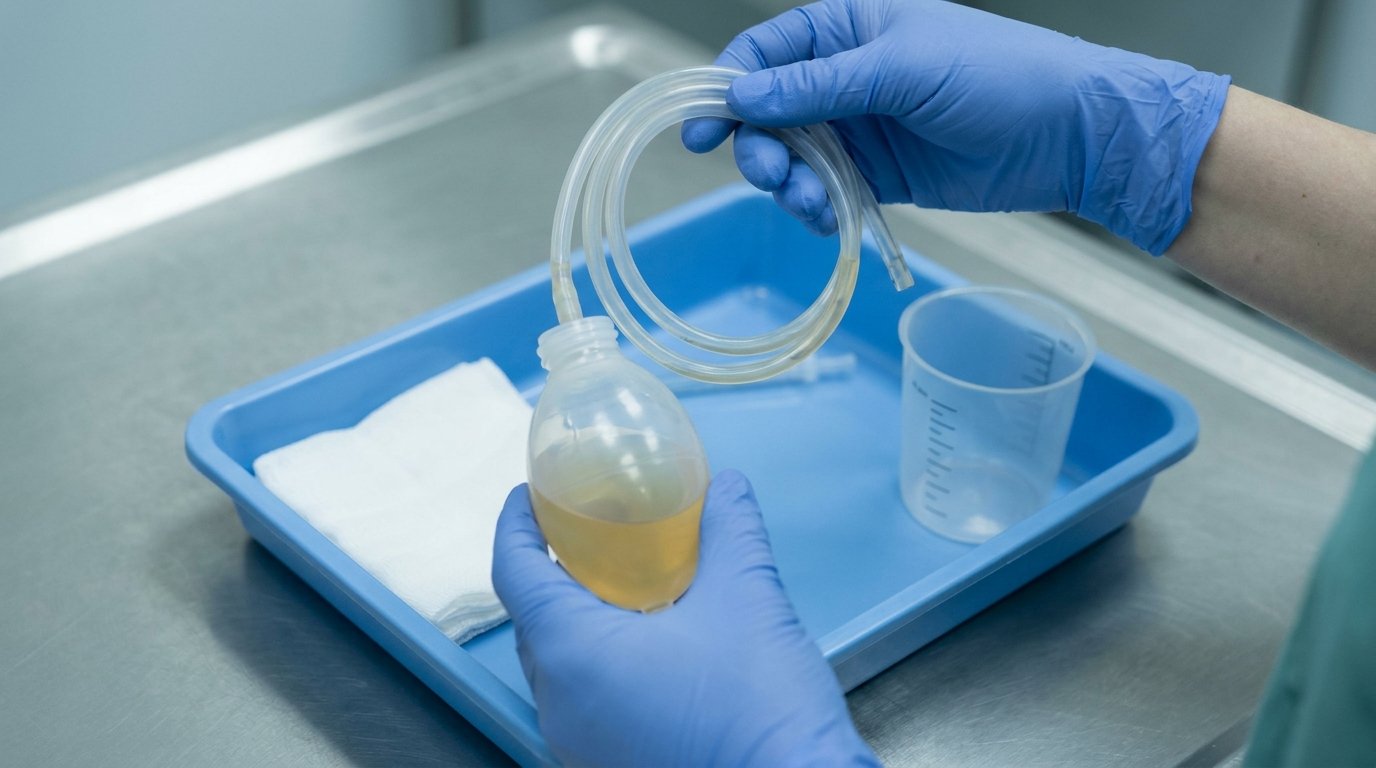
A good revision surgeon will separate urgent treatment from elective improvement. That distinction matters, especially for medical travellers, because an early flight home or a long gap in follow-up can make a manageable problem harder to treat.
⚠️ Get urgent medical advice for clot symptoms Chest pain, sudden breathlessness, fainting, or a painful swollen calf after surgery need urgent medical assessment. These are emergency symptoms, not routine recovery concerns.
Elective revision is often delayed if swelling, firmness, numbness, or scar tissue are still changing, because operating too soon can lead to poor judgement and harder healing. Earlier treatment may be needed for urgent problems such as infection, tissue loss, fluid collections, or severe contour issues that need prompt medical review.
What does a surgeon need to assess before deciding on revision?
Revision BBL is not just a repeat of the first operation. It is often more complex. The surgeon has to work around scar tissue, changes from earlier liposuction, and the simple fact that the donor fat available for transfer may now be limited.
A proper assessment usually looks at several things together. First is the real problem: is it loss of volume, unevenness, dents, a droop, hard lumps, or a mismatch between the waist and buttock shape? Second is tissue quality. Thick scar tissue, poor skin stretch, and areas that feel tethered can change what is possible.
Third is donor supply. Some patients want more volume than their body can safely provide through fat transfer. In those cases, the honest discussion may include limits of another fat grafting procedure or alternatives such as focusing on contour rather than size alone. If you want background on the primary operation and how fat transfer works, this overview of a Brazilian butt lift procedure can help frame that conversation.
Your surgeon should also ask about weight changes, smoking or nicotine use, diabetes, blood-thinner medicines, previous clotting history, and how your first recovery went. NICE guidance on venous thromboembolism, which means blood clots in the veins, underlines the need to assess clot risk around surgery and reduced mobility. That is especially relevant in body contouring patients and for anyone planning long-distance travel.
Good revision planning also means managing expectations. Some second surgeries improve contour but do not create a dramatic increase in size. In other cases, the safest advice may be not to operate again until the tissue is more settled, or at all if the risks outweigh the likely benefit.
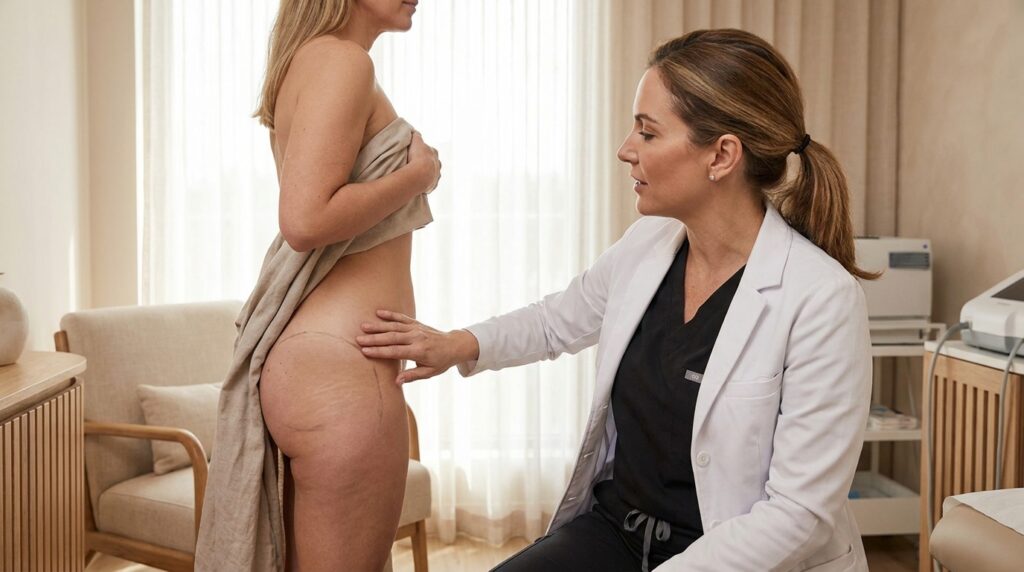
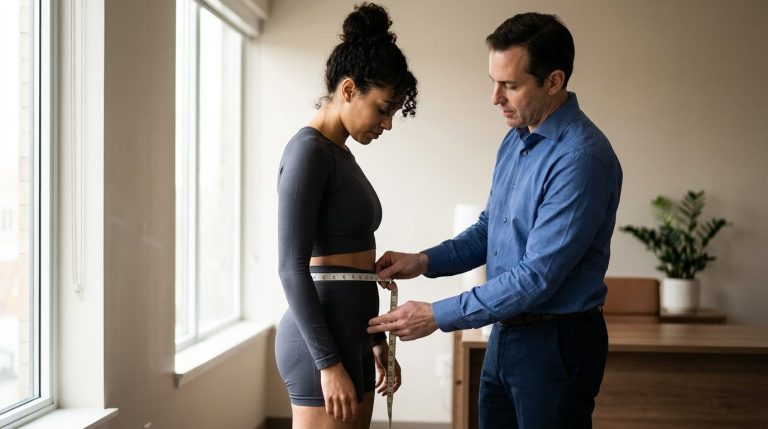
The surgeon examines you in person, reviews operative history, checks donor fat and scar tissue, discusses clot risk and travel plans, and explains what revision can and cannot realistically change.
A fixed revision plan based only on online photos, pressure to book quickly, or vague answers about emergency cover and aftercare are signs to slow down and ask more questions.
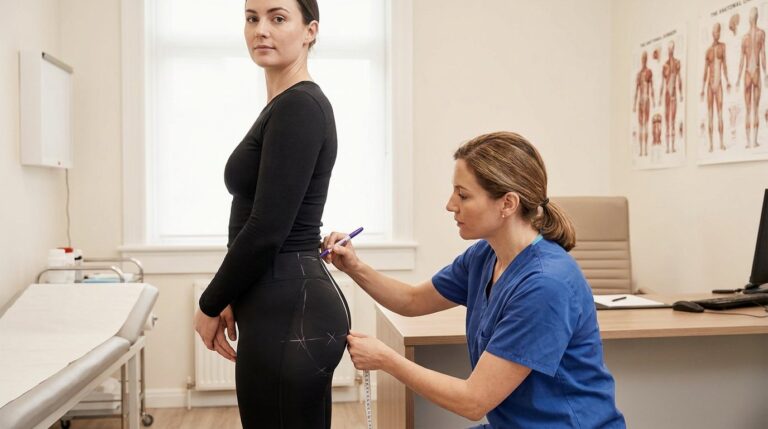
Before recommending BBL revision, a surgeon usually checks whether the issue is truly stable, whether enough donor fat remains, how the skin and scar tissue feel, and whether your overall health makes another operation sensible. Photos alone are rarely enough for a safe final plan.
How long is recovery after BBL revision, and when can you travel?
Revision recovery is not always faster just because you have done it before. In fact, some people find it more demanding. Scar tissue can make surgery more involved, and recovery can include swelling, bruising, pressure, numb patches, and temporary unevenness. If liposuction is repeated, the donor areas may feel tighter and more tender than expected.
The NHS notes that after cosmetic surgery you may need time away from work and normal activity, and recovery varies by the operation and the person. That is especially true with revision surgery, where the tissue history is more complicated. You should assume that your body may need longer, not shorter, than the most optimistic social media timeline.
Travel needs extra thought. Long periods sitting still after surgery can increase clot risk. NICE recommends assessing venous thromboembolism risk in surgical patients and using preventive steps where needed. For international patients, that means discussing flight timing, mobility on the journey, compression garments if advised, hydration, and whether blood-thinning medicine is appropriate for your individual risk. The NHS also advises moving regularly during long journeys to reduce clot risk.
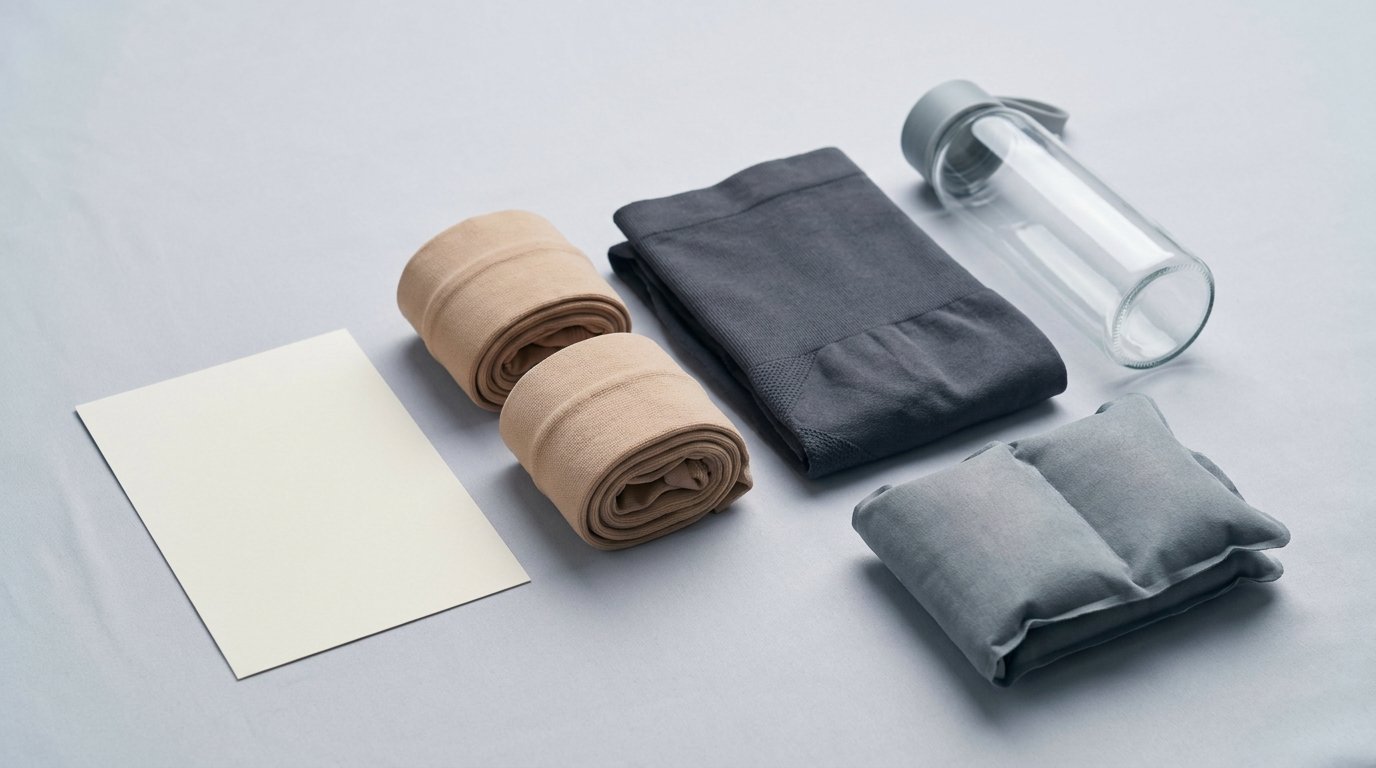
Many medical travellers find it wiser to stay long enough for early checks, drain or dressing reviews if relevant, and a first safety assessment before flying home. The right length of stay depends on the extent of surgery and your surgeon’s protocol, but a same-week return after a revision is often not the most cautious plan.
If you are comparing body contouring procedures, note that a revision BBL may also be combined with liposuction planning or discussed alongside other contour options such as liposuction or, in selected cases, a buttock augmentation with implants. Combining procedures is not automatically safer or better; it should be judged on operating time, clot risk, tissue condition, and aftercare needs.
📋 Travel planning matters For patients flying after surgery, ask specifically about clot prevention, airport assistance, seating, movement during the journey, and who will review you if a problem starts after you return home.
Recovery after BBL revision is often similar to, and sometimes a little harder than, the first surgery because scar tissue and repeat liposuction can increase swelling and soreness. Many people need at least a couple of weeks before normal light activity feels comfortable, and longer before final shape can be judged.
How is the cost of BBL revision worked out?
Revision surgery is usually priced case by case. That is the only honest way to do it. A small touch-up for minor asymmetry is very different from a larger revision involving new liposuction, scarred donor areas, treatment of contour deformities, or staged correction.
The main cost drivers are the complexity of the correction, how long the operation is likely to take, whether enough donor fat is available, what type of anaesthetic and facility support is needed, and how much follow-up care is sensible. Travel logistics can also affect the overall spend for international patients, especially if a longer stay is recommended for safer recovery.
A careful clinic should avoid giving a definitive price from a few photos alone. Your final quote should follow a proper review of your first operation, current anatomy, goals, medical history, and travel plans. If you want to start that process, the sensible route is a formal surgical consultation rather than trying to compare revision cases as if they were identical.
There is no single standard price for BBL revision because the cost depends on why you need it, how much liposuction or fat grafting is involved, whether scar tissue makes it more complex, and what aftercare is needed. A personalised quote should only be confirmed after consultation.
How do you choose a safe clinic and surgeon for revision abroad?
This is where many patients make the biggest difference to their own safety. Revision BBL is not a good procedure to buy on speed or price alone. You want a surgeon who performs revision body contouring regularly, can explain your limits clearly, and does not promise an idealised result.
Ask about the surgeon’s specialist training, registration, and revision experience. Ask where the operation takes place and whether the facility is appropriately licensed and equipped for the level of anaesthesia planned. Ask who monitors you after surgery, whether there is an out-of-hours contact number, and what the pathway is if you develop a complication at night or after discharge.
For health tourism, aftercare arrangements deserve just as much attention as the operation itself. You should know how many in-person reviews are expected before you fly, what written instructions you will receive, who can assess you if you return home with a concern, and whether your local doctor has enough information if you need help later. The ASPS stresses that patient safety in BBL depends on careful technique and proper training; as a patient, your part is choosing a team that treats revision as a medical decision, not a sales package.
If you want to review a provider’s team and background before booking a consultation, you can look at the clinic’s doctor profiles and about page, then use the contact page to ask specific questions about revision assessment, aftercare, and emergency cover.
The best sign of a trustworthy consultation is not a promise. It is a balanced explanation of timing, likely benefit, limits, risks, and whether waiting is safer than operating now.
⚠️ Do not rely on photos alone Online images can help start the conversation, but safe revision planning usually needs an in-person examination or a very detailed clinical review before surgery is confirmed.
- ✓Ask who will perform the operation and who will review you after surgery
- ✓Confirm the operating facility and anaesthesia arrangements
- ✓Ask how urgent problems are handled outside office hours
- ✓Check how long you are advised to stay locally before flying
- ✓Request a clear written aftercare and follow-up plan
For revision surgery abroad, safety depends less on marketing and more on credentials, facility standards, realistic planning, and what happens if something goes wrong. Ask who performs the surgery, where it takes place, what emergency arrangements exist, and how follow-up works once you are back home.
Frequently Asked Questions
References
- 📎American Society of Plastic Surgeons – Brazilian Butt Lift (Buttock Augmentation with Fat Grafting)
- 📎NHS – Cosmetic surgery
- 📎NICE Guideline NG89 – Venous thromboembolism in over 16s: reducing the risk of hospital-acquired deep vein thrombosis or pulmonary embolism
- 📎NHS – Deep vein thrombosis
Related Articles


You Might Also Like



Related articles

Our specialists
 Clineca SpecialistErkan PinegözPlastic & Reconstructive Surgery
 Clineca SpecialistHakan AktaşPlastic & Reconstructive Surgery
 Clineca SpecialistOrkun UzuneyüpoğluPlastic & Reconstructive Surgery
 Clineca SpecialistSalim İskenderPlastic & Reconstructive Surgery
 Clineca SpecialistEngin SelamioğluPlastic & Reconstructive Surgery
 Clineca SpecialistCem AydınPlastic & Reconstructive Surgery
 Clineca SpecialistAlperen ÖnalEar, Nose & Throat (ENT)