In this article
- What is rhinoplasty and who is it for?
- How much does rhinoplasty cost in Turkey?
- How long does it take to recover from rhinoplasty?
- How long should you stay in Turkey and when is it safe to fly home?
- Is rhinoplasty in Turkey safe?
- What affects your result and when is revision more likely?
- How do you choose the right clinic and surgeon for rhinoplasty in Turkey?
Rhinoplasty in Turkey typically costs €2,500–€6,500, with the final quote confirmed after consultation, and most people need around 7–10 days in Turkey before flying home. It can be a safe option when surgery is planned with a properly qualified surgeon and realistic aftercare, but recovery is not quick, swelling lasts longer than many people expect, and revision cases are usually more complex.
What is rhinoplasty and who is it for?
Rhinoplasty is nose surgery that changes the shape of the nose, improves breathing, or both. It may suit people who want cosmetic change, functional correction, or revision of an earlier result, but it works best when goals are realistic and facial balance matters more than copying a photo.
Rhinoplasty, often called a nose job or nose surgery, is an operation to reshape the nose. Some people want cosmetic changes, such as a straighter bridge, a smaller hump, a more refined tip, or better symmetry. Others need help with airflow because of a bent septum, previous injury, or internal narrowing.
In real life, many operations are a mix of both. A surgeon may change the outer shape while also correcting structures inside the nose to support breathing. That matters because a nose that looks smaller but functions worse is not a good result.
Common reasons people consider rhinoplasty in Turkey include:
- ✓Reducing a dorsal hump
- ✓Refining a wide or bulbous tip
- ✓Straightening a crooked nose
- ✓Improving breathing as part of surgery
- ✓Correcting a nose after injury
- ✓Revision rhinoplasty after earlier nose jobs
A good candidate is usually someone who is in stable health, does not smoke or can stop, and understands that rhinoplasty before and after photos show possibilities, not guarantees. The nose heals slowly, and the final shape can take many months to settle.
If you are mainly focused on one tiny detail from close-up mirror views, it helps to pause and discuss the whole face. Sometimes another facial procedure, such as chin augmentation, changes balance more than aggressive nose reduction. That does not make rhinoplasty the wrong choice; it just means planning should be based on proportion, not trends.
📋 A useful mindset before surgery The best rhinoplasty plan usually starts with what bothers you in daily life, not with trying to copy someone else’s nose.
- ✓Cosmetic rhinoplasty changes shape
- ✓Functional rhinoplasty aims to improve breathing
- ✓Many operations combine both goals
- ✓Revision surgery is usually harder than first-time surgery
How much does rhinoplasty cost in Turkey?
The usual indicative cost for rhinoplasty in Turkey is €2,500–€6,500, with the final price confirmed after consultation. Within that range, first-time and revision cases can still differ in complexity, because revision surgery often takes longer and may need cartilage grafting or more advanced reconstruction.
For most international patients, the first question is simple: how much is rhinoplasty? The indicative price commonly quoted for rhinoplasty in Turkey is €2,500–€6,500, but that is not a fixed price list. The final fee should be confirmed only after a surgeon has reviewed your anatomy, breathing issues, goals, and whether this is a first-time or revision procedure.
That last point matters. Revision rhinoplasty is often more difficult than primary surgery. Scar tissue, altered cartilage, and the need to rebuild support can all make planning more complex. Even if a clinic uses the same broad indicative range for consistency, you should expect a more detailed explanation of why your case sits where it does within that range rather than a one-line quote.
Ask what is included and what is not. A clear quote should spell out whether it covers:
- ✓Surgeon and hospital fees
- ✓Anaesthesia
- ✓Pre-op tests
- ✓Hotel and transfers, if offered
- ✓Medicines after surgery
- ✓Follow-up checks in Turkey
- ✓Remote follow-up after you return home
- ✓Revision policy if healing is uneven or goals are not met
It is also worth asking what would increase complexity. For example, thick skin, major deviation, breathing repair, trauma history, or a previous nose job can all affect planning.
If you want procedure-specific details rather than general travel information, see the clinic’s rhinoplasty treatment page or arrange a review through the consultation page.
⚠️ Be careful with very fast quotes A price offered without a proper review of your nose, breathing and surgical history may be too simple to be useful, especially for revision cases.
How long does it take to recover from rhinoplasty?
Most people are presentable for light social activity after about 10–14 days, but recovery from rhinoplasty is much longer than that. Bruising usually improves first, swelling fades in stages, and the final shape often keeps refining for months, especially at the nasal tip.
This is where expectations often drift from reality. People usually look for the point when they can go out, work on a laptop, or fly home. That is very different from the point when the nose is fully healed.
In the early phase, you can expect congestion, swelling, tenderness and a blocked feeling. A splint is commonly worn for about a week, depending on the surgeon’s plan. Bruising around the eyes often settles earlier than nasal swelling.
The NHS notes that after rhinoplasty, it can take several weeks for swelling to go down and many months for the nose to fully settle. The American Society of Plastic Surgeons (ASPS) also explains that swelling can continue to improve for up to a year or longer, especially in the tip. Those are more useful benchmarks than dramatic day-by-day social media updates.
A practical recovery timeline
The first week is the least comfortable. Weeks two to four are easier, but the nose still feels swollen and stiff. By a few months, most people see a clear result, though subtle refinement continues.
📋 The common surprise Most people are less bothered by bruising than by how long swelling lasts. Tip swelling is especially slow to settle.
- ✓Sleep with your head raised at first
- ✓Do not wear heavy glasses on the nose unless your surgeon says it is fine
- ✓Avoid blowing your nose until you are told it is safe
- ✓Keep follow-up photos; they help track gradual change
How long should you stay in Turkey and when is it safe to fly home?
A stay of around 7–10 days is common for rhinoplasty in Turkey because you need time for checks, splint care and early healing before travel. Fitness to fly is individual, though, and your own surgeon should confirm it based on bleeding, swelling, breathing and general recovery.
Travel planning is not a side issue with medical tourism. It affects comfort, safety and what happens if swelling or bleeding needs review.
For rhinoplasty, many international patients plan to stay around 7–10 days. That usually gives enough time for:
- ✓Your pre-op assessment
- ✓The operation itself
- ✓The first recovery days, when swelling and oozing are most likely
- ✓Splint review or removal, depending on timing
- ✓A post-op check before flying
Some people stay longer, especially if they have had revision surgery, combined procedures, significant swelling, or a long-haul flight. It is sensible to build in a little flexibility rather than booking a tightly timed return the moment surgery is done.
On flying home, there is no one-rule answer that suits everyone. Surgeons often want to see that:
- ✓Bleeding has settled
- ✓Pain is controlled
- ✓You are eating, drinking and moving around normally
- ✓There are no early signs of infection or worsening swelling
- ✓Your nasal support or splint plan is secure for travel
The NHS advises people recovering from surgery to follow their surgeon’s advice about travel and activity, because risks vary by procedure and by person. In practical terms, ask for a direct fitness-to-fly recommendation rather than assuming you will be ready on a set day.
Travel tips that make recovery easier
Book an aisle seat if possible, carry saline or approved aftercare items in line with your surgeon’s instructions, and avoid lifting heavy luggage. If you can, have someone travel with you or at least meet you at home. The first day back can feel more tiring than expected.
If you are comparing providers, ask who you can contact after you leave Turkey, how quickly messages are answered, and whether remote follow-up is included. That often matters more than extras like hotel style or airport pickup.
⚠️ Do not treat airline timing as medical advice A return ticket date is only a travel booking. Your surgeon’s clearance is what matters if recovery is slower than expected.
A clinic or coordinator gives you a written timeline for surgery day, review appointments, expected stay and when fitness to fly is usually assessed.
You are pushed to fly very soon after surgery without a clear medical review or without any plan for dealing with bleeding, pain or concern after discharge.
Is rhinoplasty in Turkey safe?
Rhinoplasty in Turkey can be safe, but safety depends far more on surgeon skill, hospital standards, case selection and aftercare than on the country alone. Check credentials carefully, ask where surgery takes place, and make sure there is a clear plan for follow-up and complications.
The honest answer is that rhinoplasty in Turkey can be safe, but it is not automatically safe just because a provider is popular online. Nose surgery is technically demanding. Small changes can affect both appearance and breathing, and revision surgery can be especially challenging.
When checking safety, look beyond marketing photos. Ask about the surgeon’s training in facial plastic or plastic surgery, how often they perform rhinoplasty, and whether they regularly manage functional issues as well as cosmetic changes.
For patients travelling from the UK or Europe, a few credential checks are especially useful:
- ✓In Turkey, ask whether the surgeon is registered with the Turkish Medical Association and what their specialist training is.
- ✓If a surgeon states international membership, verify it on the body’s own directory rather than trusting a badge on a website.
- ✓The General Medical Council (GMC) can help UK patients understand how specialist registration works in the UK, which is useful as a benchmark when comparing credentials and titles.
- ✓The ASPS advises patients to check that surgery is performed by a properly trained surgeon in an accredited facility and to ask specific questions about risks, recovery and emergency arrangements.
The hospital or surgical facility matters too. You want to know:
- ✓Where the operation takes place
- ✓Who gives the anaesthetic
- ✓What happens if you need overnight observation
- ✓How out-of-hours problems are handled
- ✓Who you contact once you return home
The Mayo Clinic notes that rhinoplasty carries risks such as bleeding, infection, breathing difficulty, asymmetry, numbness and the possibility of further surgery. That does not mean complications are common in every case; it means they should be discussed clearly before you commit.
A useful starting point for checking background information is the clinic’s doctors page and about page, but independent verification is still important.
🚨 High-pressure sales is a warning sign If you are rushed to pay a deposit before your questions are answered, step back. Good surgical planning should not feel like impulse buying.
- ✓Verify the surgeon’s full name and specialty
- ✓Ask where surgery is performed and who provides anaesthesia
- ✓Check who handles emergencies and aftercare
- ✓Request realistic before-and-after examples similar to your nose type
- ✓Ask how breathing is protected during cosmetic changes
What affects your result and when is revision more likely?
Rhinoplasty results depend on anatomy, skin thickness, healing, surgical technique and how well the nose is supported. Revision is more likely when goals are too aggressive, breathing was not fully considered, or healing produces asymmetry, scar-related distortion or persistent dissatisfaction.
The best-looking rhinoplasty nose job is not always the smallest nose. Long-term stability matters. A nose that is over-reduced can look pinched, collapse internally, or age poorly as tissues settle.
Things that affect the result include:
- ✓Your starting anatomy
- ✓Thick or thin skin
- ✓Previous trauma
- ✓Prior surgery
- ✓Cartilage strength
- ✓Healing patterns and scar formation
- ✓Whether you smoke or have poor wound healing
Revision does not always mean something went wrong. Sometimes a nose heals unevenly, or a small irregularity only becomes visible once swelling fades. In other cases, the original plan may not have matched the patient’s goals well enough.
Ask direct questions during consultation:
- ✓What can realistically change in my nose?
- ✓What should I expect to stay the same?
- ✓Could my breathing worsen if the nose is made smaller?
- ✓If I need revision later, how is that handled?
This is also where honest nose job before and after discussions matter. Good before-and-after galleries should show a range of noses, not just easy cases with dramatic lighting.
If your main goal keeps changing from week to week, it may be better to delay surgery until your priorities are clearer.
A natural result is not one fixed look. It usually means the nose fits your face and does not draw attention for the wrong reasons.
How do you choose the right clinic and surgeon for rhinoplasty in Turkey?
Choose a surgeon and clinic by checking credentials, hospital standards, case experience, communication quality and aftercare planning. Clear answers, independent verification and a realistic discussion of limits are better signs than heavy discounts, celebrity-style marketing or promises of a perfect nose.
When people search for rhinoplasty near me or compare Turkey with local options, they often focus on photos and price first. A safer order is the reverse: credentials, planning, facility, aftercare, then cost.
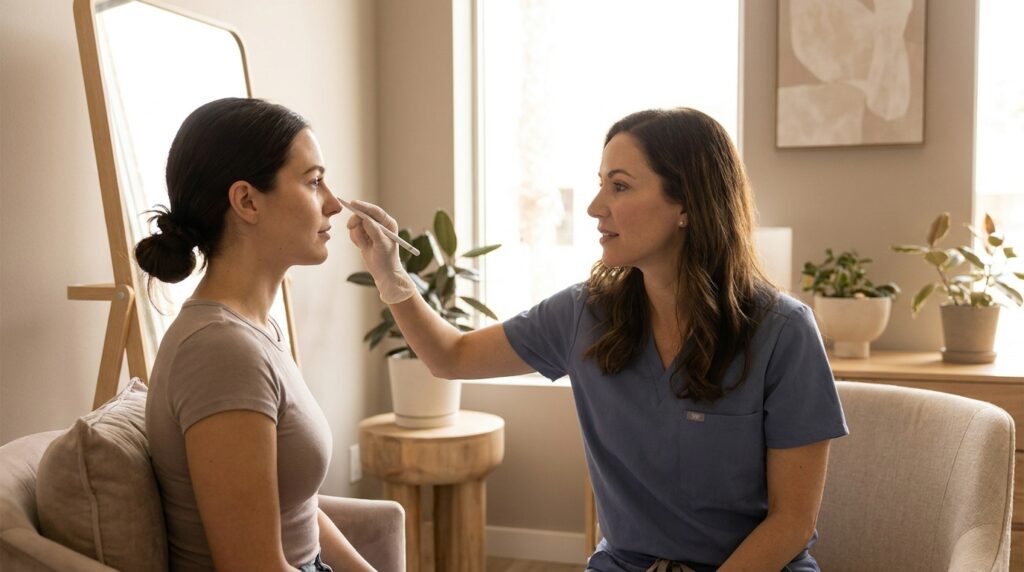
Look for a provider who is comfortable discussing trade-offs. A surgeon who explains what should not be changed may be more trustworthy than one who agrees to every request.
Questions worth asking before you book
- ✓How often do you perform rhinoplasty and revision rhinoplasty?
- ✓Do you assess breathing as well as shape?
- ✓Where will surgery take place?
- ✓Who will I see after surgery before I fly home?
- ✓If I have concerns once I am back home, who replies and how quickly?
- ✓What happens if I need in-person review later?
You should also know who your main point of contact is. Coordinators can be very helpful, but they do not replace a surgeon’s medical judgment. Make sure your medical questions are answered by the treating team, not only by sales staff.
If you want to make contact or ask for a case review, use the official contact page rather than social media messages alone.
- →Credentials first: Verify surgical specialty, registration and rhinoplasty experience.
- →Then facility: Confirm where surgery happens and what support exists if something goes wrong.
- →Then planning: Make sure your stay length, reviews and fitness-to-fly advice are clear.
- →Then price: Use cost as one factor, not the only factor.
Frequently Asked Questions
References
- 📎NHS – Cosmetic procedures: Rhinoplasty
- 📎American Society of Plastic Surgeons – Rhinoplasty
- 📎Mayo Clinic – Rhinoplasty
- 📎General Medical Council – Specialist register