In this article
- What is rhinoplasty and what can it realistically change?
- How much does rhinoplasty cost in Turkey?
- Why do people choose Turkey for a nose job, and what are the trade-offs?
- Who is a good candidate for rhinoplasty, and who should wait or avoid it?
- How long does it take to recover from rhinoplasty?
- How long should you stay in Turkey for rhinoplasty?
- Is rhinoplasty in Turkey safe?
- What are the main risks, uncertainties, and revision issues?
- How does Turkey compare with having a nose job closer to home?
- How do you choose a surgeon and clinic without relying on marketing alone?
A nose job in Turkey typically costs an indicative €2,500–€6,500, recovery usually takes about 1–2 weeks for the early visible stage and many months for the final shape, and safety depends far more on the surgeon, hospital standards, and aftercare than on the country itself. If you are researching a nose job in Turkey, the key is to treat it as real surgery rather than a travel bargain, because results are not guaranteed and revision cases can be more complex than first-time rhinoplasty.
What is rhinoplasty and what can it realistically change?
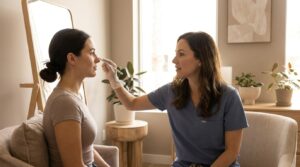
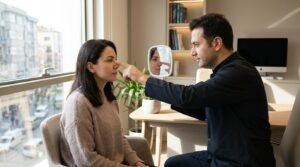
Rhinoplasty is surgery to change the shape, size, or function of the nose. It can reduce a hump, refine the tip, straighten part of the nose, or improve breathing in selected cases, but it cannot guarantee a “perfect” nose or copy someone else’s before-and-after result.
Rhinoplasty, often called a nose job or nose surgery, is an operation that reshapes the nose. Some people want a cosmetic change, such as a smaller hump or a more defined tip. Others also need functional work, such as correcting a bent septum inside the nose to help airflow.
The procedure is highly individual. A surgeon may work on bone, cartilage, skin, or all three, and that is why online rhinoplasty before and after photos only tell part of the story. Thick skin, prior injury, healing patterns, and facial balance all affect what is possible.
There are also two broad ways surgeons perform a rhinoplasty nose job:
- ✓Closed rhinoplasty: cuts are made inside the nose, so there is no external scar line
- ✓Open rhinoplasty: includes a small cut across the tissue between the nostrils, which gives the surgeon a wider view for more complex reshaping
Neither approach is automatically better. The right choice depends on the anatomy, the changes planned, and whether this is first-time or revision surgery.
If you are also comparing other facial procedures, it can help to read about related options such as chin augmentation, because nose shape and chin projection are often assessed together for facial balance.
What rhinoplasty can usually help with
- ✓A dorsal hump or bridge bump
- ✓A drooping, bulbous, or wide tip
- ✓Mild asymmetry
- ✓A nose that looks too large or too prominent for the face
- ✓Some breathing problems when combined with internal nasal work
What it may not fully fix
- ✓Very thick skin that hides fine tip definition
- ✓Marked asymmetry caused by complex trauma
- ✓Unrealistic requests based on edited photos or celebrity features
- ✓Ongoing breathing symptoms caused by allergy or sinus disease rather than structure alone
The NHS describes rhinoplasty as surgery to change the shape of the nose, and notes that final results take time to settle. That is important, because the early swollen look is not the final outcome.
📋 Before-and-after photos need context Useful galleries show multiple angles, similar skin types, and healed results over time. A few dramatic pictures alone are not enough to judge quality.
- ✓Ask what part of your nose the surgeon plans to change: bridge, tip, nostrils, septum, or all of these
- ✓Ask whether your goals are cosmetic, functional, or both
- ✓Request a clear explanation of what is achievable and what is not
How much does rhinoplasty cost in Turkey?
For international patients, a nose job in Turkey is typically quoted at an indicative €2,500–€6,500. That figure is variable and the final price is confirmed after consultation, because primary versus revision surgery, functional work, surgeon experience, hospital fees, and aftercare needs all affect the quote.
If your main question is how much is the rhinoplasty, the practical answer is that most patients researching Turkey see indicative pricing in the €2,500–€6,500 range. This should be treated as a guide only. The final price is confirmed after consultation once the surgeon has reviewed your nose structure, your goals, and whether the surgery is first-time or revision.
A lower headline quote is not always the better value. In rhinoplasty, the cheaper option can become expensive if it leaves unresolved breathing problems, visible irregularities, or the need for revision surgery later.
What usually changes the quote:
- ✓Whether it is primary rhinoplasty or revision rhinoplasty
- ✓Whether you also need work inside the nose for function
- ✓The complexity of tip reshaping and asymmetry correction
- ✓The surgeon’s training and case volume in nasal surgery
- ✓Whether surgery is carried out in a fully equipped hospital setting
- ✓The level of follow-up and aftercare included
If you want to compare a provider’s general medical team information before booking a consultation, you can review the listed doctors and request the exact surgeon’s credentials for your case, rather than relying on a brand name alone.
⚠️ Treat package language carefully Travel or hotel arrangements may be offered by coordinators, but they do not replace surgical safety. Ask for the medical part of the quote to be explained separately.
Why do people choose Turkey for a nose job, and what are the trade-offs?
People look for a nose job in Turkey for a few practical reasons: the indicative cost can be lower than in some other countries, surgeons may see a high volume of rhinoplasty cases, and Istanbul in particular has a well-developed medical tourism pathway for international patients.
That said, volume alone is not proof of quality. The real trade-off is distance. When you have surgery away from home, the short-term logistics may feel straightforward, but the long tail of recovery happens after you fly back.
Benefits people often look for:
- ✓Access to surgeons who focus heavily on facial surgery and nose jobs procedure planning
- ✓The indicative €2,500–€6,500 cost range
- ✓Easier scheduling than in some countries
- ✓Coordinated support in English for consultation and travel planning
Trade-offs to think through honestly:
- ✓Follow-up becomes harder once you return home
- ✓If a concern appears after flying back, local doctors may not know your operation details
- ✓Revision surgery is more difficult than primary surgery
- ✓Swelling can make early results misleading, so you may not feel reassured right away
- ✓Pressure to book quickly is a red flag when you are making a face-changing decision
This is why your checklist should focus less on “rhinoplasty near me versus abroad” and more on continuity of care. Who will answer if you have a breathing concern at day 10, a persistent asymmetry at month 6, or a scar issue that needs assessment?
A useful starting point for understanding a provider’s background is the about page, but for a surgery decision you should go further and ask for the exact operating hospital, the named surgeon, and the written aftercare plan.
The provider gives the surgeon’s full name, training, hospital location, and clear follow-up steps before you pay a deposit.
You are pushed to book based on limited photos, vague promises, or sales language without a proper surgeon assessment.
Who is a good candidate for rhinoplasty, and who should wait or avoid it?
Good candidates are usually healthy adults with a stable idea of what they want changed, realistic expectations, and enough time for recovery. The best patients are often not the ones asking for the most dramatic transformation. They are the ones who understand that small structural changes can make a big difference to the face.
You may be a reasonable candidate if:
- ✓Your facial growth is complete
- ✓You dislike a specific feature, such as a hump or tip shape, rather than “everything” about your nose
- ✓You understand that swelling can last many months
- ✓You are medically fit for surgery and anaesthesia
- ✓You can stop smoking or vaping before and after surgery if advised
You may need to delay or reconsider surgery if:
- ✓You have untreated body image concerns or expect surgery to fix wider life problems
- ✓You have uncontrolled medical conditions
- ✓You smoke and are not prepared to stop around surgery
- ✓You have active infection, severe sinus issues, or unstable nasal disease
- ✓You want a result that is not realistic for your anatomy or skin thickness
Revision rhinoplasty deserves special mention. If you have already had a nose job, the tissue may be scarred, cartilage may be limited, and breathing issues may be more complex. That does not mean revision is impossible, but it does mean you should be even more selective about the surgeon.
The American Society of Plastic Surgeons (ASPS) notes that candidates should be in good health and have realistic expectations. That sounds simple, but it matters. Unrealistic expectations are one of the most common reasons people feel disappointed even when surgery is technically successful.
⚠️ A surgeon should be willing to say no If a clinician never talks about limits, alternatives, or reasons to postpone surgery, that is not reassuring. Careful assessment is part of safe practice.
- ✓Bring old records if this is revision surgery: Operation notes, scans, and pre-op photos can be genuinely useful.
- ✓Mention breathing symptoms clearly: Cosmetic goals should not overshadow airway problems.
- ✓Disclose all supplements and medicines: Some increase bleeding risk and may need to be stopped under medical advice.
How long does it take to recover from rhinoplasty?
Most people need about 1–2 weeks away from work or social events, with bruising and a splint usually settling in that early period. However, rhinoplasty recovery is slow in a deeper sense: swelling improves over months, and the final shape can take up to a year or longer, especially at the tip.
If you are asking how long does it take to recover from rhinoplasty, it helps to separate social recovery from final healing.
Social recovery is the stage when the cast is off, bruising has faded enough, and you feel comfortable being seen. For many patients that is around 1–2 weeks. Final healing is much longer. The nose continues to settle, soften, and refine for many months.
The Mayo Clinic notes that swelling after rhinoplasty can persist and that subtle swelling may take many months to resolve. That is why an early opinion of the result is often unreliable.
What early recovery often feels like:
- ✓The first few days: blocked nose, pressure, tiredness, mild to moderate discomfort rather than sharp pain for most people
- ✓Around 1 week: splint removal is common, bruising may still be present
- ✓Around 2 weeks: many patients feel presentable, though swelling remains
- ✓Weeks to months: tip stiffness and uneven swelling can come and go
Travel planning matters here. Flying home too soon can make the experience more stressful if you need an urgent review. Most international patients should plan enough time in Turkey for the immediate post-op check and splint period, based on the surgeon’s protocol.
📋 Swelling is not failure One side can look puffier than the other for a while. That can be normal during healing, but persistent concerns should still be reviewed.
How long should you stay in Turkey for rhinoplasty?
For most international patients, the safe answer is: long enough for pre-op assessment, surgery, and the first post-op review or splint removal, according to the surgeon’s protocol. The exact stay varies, so it should be confirmed case by case rather than assumed from a package outline.
A short stay may sound convenient, but it can create avoidable stress. You want time for:
- ✓A proper face-to-face assessment if the surgeon requires it
- ✓The operation and immediate recovery
- ✓At least one formal post-op check before flying
- ✓Extra buffer days if swelling, nausea, or travel fatigue make you feel unready
Ask specifically:
- ✓On which day after surgery is the first key review?
- ✓When is splint removal planned?
- ✓What symptoms would delay flying?
- ✓Who reviews you if the surgeon is unavailable?
This is also where aftercare standards matter. A responsible team should give written instructions on wound care, taping if used, cleaning inside the nose, emergency contact details, and guidance about exercise, glasses, sun exposure, and smoking.
- →Do not book return flights before you know the post-op review schedule
- →Keep your first few days after arrival home light and flexible
- →Make sure you know how to send clear progress photos if remote follow-up is used
Is rhinoplasty in Turkey safe?
Rhinoplasty in Turkey can be safe when it is performed by a properly qualified surgeon in an accredited hospital or surgical facility with clear aftercare, but it is not automatically safe just because a clinic is popular online. Safety depends on credentials, assessment quality, operating standards, and follow-up plans.
The country is not the only safety question. The better question is whether your surgeon, your facility, and your aftercare system are safe.
Trust signals worth looking for include:
- ✓The operating surgeon is clearly named before booking
- ✓You can verify specialist training and experience in nasal surgery
- ✓Surgery takes place in an accredited hospital or licensed surgical facility
- ✓A qualified anaesthetist is involved where appropriate
- ✓You receive a full medical assessment, not just a sales call
- ✓Risks, limitations, and possible need for revision are discussed openly
- ✓There is a documented aftercare pathway, including out-of-hours contact
The NHS advises that all surgery carries risks such as bleeding, infection, and problems linked to anaesthetic. Rhinoplasty also has procedure-specific risks, including asymmetry, breathing difficulty, persistent swelling, dissatisfaction with appearance, scar issues, and the possibility of further surgery.
NICE does not provide a simple “approved destination” list for cosmetic travel. That is why you need to verify the provider’s details yourself rather than assuming that online reviews or influencer posts reflect medical standards.
Questions to ask about credentials and accreditation
- ✓Is the surgeon an ENT surgeon, plastic surgeon, or maxillofacial surgeon with substantial rhinoplasty experience?
- ✓Where was the surgeon trained, and in what specialty?
- ✓How often do they perform primary and revision rhinoplasty?
- ✓In which hospital will the operation take place?
- ✓Is the hospital accredited or licensed by the relevant national authority?
- ✓Who provides anaesthesia?
- ✓What happens if I have a complication after I return home?
Questions to ask about aftercare standards
- ✓How many post-op reviews are included?
- ✓Will I receive written recovery instructions in English?
- ✓Is there a 24/7 emergency contact during the immediate recovery period?
- ✓Who answers clinical questions: a surgeon, nurse, or coordinator?
- ✓What is the policy if a concern appears months later?
A consultation request should not feel like a sales funnel. If you want to start that process carefully, use a neutral step such as a consultation request and ask for surgeon-specific information in writing before making travel plans.
🚨 Safety red flags Avoid any provider that refuses to name the surgeon, promises a perfect result, dismisses risks, or cannot explain where surgery will take place and who manages complications.
You are given time to think, a clear consent process, and realistic discussion of uncertainty, swelling, and revision risk.
The focus stays on hotel, transfers, or social media photos while medical questions remain vague.
What are the main risks, uncertainties, and revision issues?
The main risks of rhinoplasty include bleeding, infection, anaesthetic problems, asymmetry, breathing issues, numbness, scarring, prolonged swelling, and dissatisfaction with the appearance. Revision surgery is sometimes needed, but no ethical surgeon should quote certainty about your personal risk because it varies with anatomy, healing, and surgical complexity.
One reason patients struggle after a nose job is that they expected a straight line from surgery to final result. In reality, rhinoplasty has more uncertainty than many other cosmetic procedures because the nose heals in layers and tiny changes can show on the face.
Common concerns that may improve with time:
- ✓Uneven swelling from side to side
- ✓A tip that feels stiff or over-rotated early on
- ✓Temporary numbness
- ✓Internal crusting and blocked breathing during early healing
Problems that deserve proper medical review:
- ✓Heavy bleeding
- ✓Fever or signs of infection
- ✓Worsening breathing problems after the initial recovery period
- ✓Marked collapse, visible irregularity, or persistent asymmetry
- ✓Severe pain not controlled by prescribed advice
Revision rhinoplasty is not rare in the wider field of nasal surgery, but personal outcomes vary so much that it is more honest to discuss revision as a possibility rather than attach a simple number to your case. A careful surgeon should explain whether your anatomy, skin thickness, previous surgery, or airway issues raise the chance of needing further treatment.
This is also why “surgery inside nose” matters. Internal support structures affect both shape and breathing. A nose can look smaller in a front photo while functioning worse if support is over-reduced. Good planning respects both appearance and airway.
⚠️ Do not judge the result too early What looks too high, too wide, or too uneven in the first weeks may change substantially as swelling settles. Revision discussions are usually delayed unless there is a clear functional problem.
How does Turkey compare with having a nose job closer to home?
Turkey may offer the same operation at an indicative €2,500–€6,500, often with easier access to high-volume rhinoplasty surgeons, but local surgery can make assessment and follow-up simpler. The better choice depends on surgeon quality, your comfort with travel, and how you want aftercare handled if recovery becomes slower than expected.
When patients compare a nose job in Turkey with surgery at home, cost is only one part of the decision. Convenience, language, continuity of care, and your tolerance for uncertainty matter just as much.
If you are the kind of patient who wants in-person reviews throughout healing, local surgery may feel more secure. If you are comfortable with travel and remote follow-up, Turkey may still be a reasonable option, provided the surgeon and hospital checks are strong.
What matters most is not whether it is “abroad” or “near me,” but whether you can answer the practical follow-up questions with confidence.
How do you choose a surgeon and clinic without relying on marketing alone?
The safest way to choose is to slow the process down. You are not buying a product. You are selecting the person who will alter a central facial feature and manage your recovery if things do not go exactly to plan.
Use this practical checklist.
- ✓Get the full name of the operating surgeon
- ✓Verify their specialty background and rhinoplasty experience
- ✓Ask where the operation will take place and whether the facility is accredited or licensed
- ✓Request a proper consultation that discusses limits, risks, and healing time
- ✓Review before-and-after photos from patients with similar noses, skin type, and goals
- ✓Ask how breathing is assessed, not just appearance
- ✓Ask what aftercare is included and who responds after hours
- ✓Be cautious if the conversation stays vague on revision policy
If you want background details on the wider care team, you can review the team and doctors pages, but for a real decision you should still ask for surgeon-specific answers in writing.
Good consultation questions
- ✓What technique would you use for my nose and why?
- ✓What changes do you think are realistic in my case?
- ✓What concerns you most about my anatomy?
- ✓Could surgery improve or worsen breathing?
- ✓How long should I stay locally after surgery?
- ✓What would make you advise against operating?
The right consultation often feels measured, not exciting. That is a good thing.
- ✓Named surgeon
- ✓Accredited or licensed operating facility
- ✓Clear anaesthesia plan
- ✓Written aftercare instructions
- ✓Emergency contact route
- ✓Realistic discussion of uncertainty and revision
Frequently Asked Questions
References
- 📎NHS – Cosmetic surgery – Rhinoplasty (nose job)
- 📎Mayo Clinic – Rhinoplasty
- 📎American Society of Plastic Surgeons – Rhinoplasty
- 📎NICE – Cosmetic procedures: guidance and advice